
 My Inquiry
 My Account


Microchip Technology KSZ8342Q
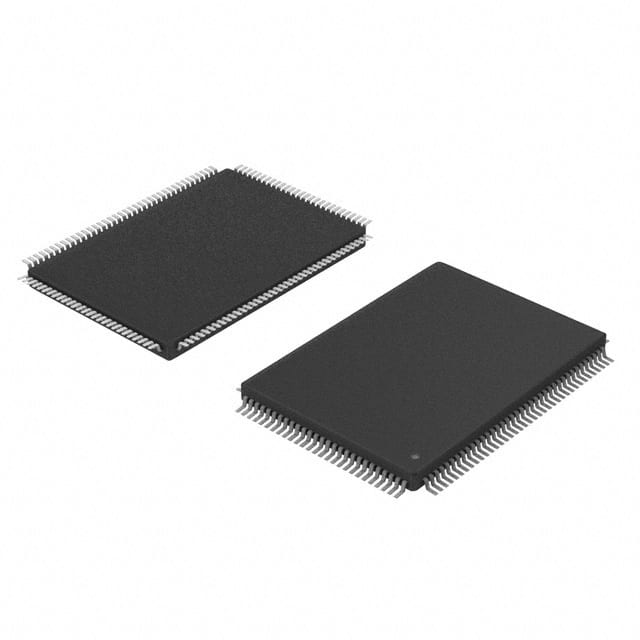
- Part No.:
- KSZ8342Q
- Manufacturer:
- Microchip Technology
- Category:
- Telecom
- Package:
- 128-BFQFP
- Datasheet:
-
 KSZ8342Q.pdf
- Description:
- IC TELECOM INTERFACE 128QFP
- Quantity:
- Payment:

- Shipping:

Inventory:4,116
Please send an inquiry. Send us your inquiry, and we will respond immediately.
Product details
Overview
KSZ8342Q from Micrel is a highly integrated VoIP system-on-chip combining a MIPS32 4KEc CPU core, ZSP voice DSP engine, and a 3-port Ethernet switch with IEEE 802.3u 10/100BASE-TX PHYs. It supports Energy Efficient Ethernet (EEE), IEEE 802.1Q VLAN, IGMP snooping, and hardware-accelerated PCM/SPI SLIC interfaces for analog telephony gateways and IP PBX systems.
For engineers reviewing the KSZ8342Q datasheet, KSZ8342Q pinout, KSZ8342Q application, or KSZ8342Q equivalent, this page delivers verified technical context on its dual-processor architecture, 128-pin PQFP package, embedded switch QoS features, SDRAM/Flash memory interface timing, and real-time voice processing capabilities - all critical for VoIP gateway BOM validation and layout design.
Technical Context
The KSZ8342Q implements a tightly coupled dual-core architecture: a MIPS32 4KEc RISC processor handles protocol stack execution (SIP, RTP, TCP/IP), while a dedicated ZSP500 DSP core performs real-time voice coding (G.711, G.729A/B), echo cancellation, and DTMF detection. Both cores share a unified memory map via an internal AXI-like bus fabric.
Its integrated 3-port switch includes two 10/100BASE-TX PHYs (Ports 1–2) and one MII/RMII interface (Port 0), supporting port-based and 802.1p priority queuing, tail-tagging mode for external switch cascading, and hardware-assisted IGMPv2/v3 snooping - enabling deterministic latency for voice traffic in multi-device VoIP deployments.
Key Specifications
| Parameter | Value and Actual Design Meaning |
|---|---|
| CPU Core | MIPS32 4KEc @ 200 MHz - provides deterministic real-time SIP stack execution and Linux kernel support |
| Voice DSP | ZSP500 @ 100 MHz - enables concurrent G.711/G.729A encoding/decoding and acoustic echo cancellation |
| Ethernet Switch | 3-port, non-blocking 10/100 Mbps - Ports 1 & 2 integrate full PHYs; Port 0 supports MII/RMII to external MAC |
| Memory Interface | 16-bit SDRAM (up to 64 MB) + SPI Flash (up to 16 MB) - supports boot-from-flash and runtime code/data partitioning |
| Audio Interface | PCM (master/slave, 8 kHz/16 kHz sampling) + SPI SLIC - directly drives single/dual-channel analog line cards |
| Power Management | Energy Efficient Ethernet (EEE), port-based power-down, and dynamic clock gating - reduces idle power to ≤1.2 W typical |
| Package | 128-pin PQFP (20 mm × 20 mm, 0.65 mm pitch) - RoHS-compliant, compatible with standard reflow profiles |
Pinout & Package
KSZ8342Q uses a 128-pin Plastic Quad Flat Package (PQFP) with 0.65 mm lead pitch and 20 mm × 20 mm body size. Pin assignments are defined in Table 2 of the official datasheet (Rev. 1.0, p.14), covering dedicated signal groups for CPU, ZSP, switch PHYs, memory, and peripheral interfaces.
| Pin/Terminal | Circuit Role | Design Meaning |
|---|---|---|
| CLKIN | Reference Clock Input | Accepts 25 MHz crystal or oscillator input for system clock generation and PHY timing synchronization |
| MDIO / MDC | PHY Management Interface | Serial bus for configuring internal PHY registers (IEEE 802.3 clause 22) without CPU intervention |
| TXD[3:0] / RXD[3:0] | SDRAM Data Bus | 16-bit bidirectional data path for external SDRAM with burst-length-4 support and auto-precharge |
| PCM_CLK / PCM_FS / PCM_DIN / PCM_DOUT | PCM Audio Interface | Master-mode synchronous serial interface for connecting to codec or SLIC with frame sync at 8/16 kHz |
| GPIO[15:0] | General-Purpose I/O | 16 configurable pins with interrupt capability - used for LED control, button sensing, or SLIC reset signaling |
Key Features
| Feature | Design Value |
|---|---|
| Dual-Core Voice Processing | Independent MIPS CPU (control plane) and ZSP DSP (data plane) eliminate software-only voice bottlenecks in multi-channel VoIP gateways |
| Hardware IGMP Snooping | Enables multicast optimization for SIP registration and audio streaming without requiring external switch management |
| Tail-Tagging Mode | Allows KSZ8342Q to act as a managed edge switch by appending 2-byte tag to frames forwarded to external switches |
| Energy Efficient Ethernet (EEE) | Reduces PHY power during idle periods per IEEE 802.3az - cuts link-layer energy use by up to 50% in low-traffic VoIP sessions |
| Integrated SPI SLIC Interface | Direct connection to SPI-based SLIC chips (e.g., Si3217x) eliminates external glue logic and simplifies analog line card design |
Applications
| VoIP Residential Gateway | Small-Office IP PBX |
|---|---|
Use Scenario: Single-line residential gateway converting POTS telephone signals to SIP over broadband. IC Role / Device Role / Timing Role: KSZ8342Q serves as the central SoC handling voice digitization, packetization, SIP signaling, and Ethernet bridging. Use Value: Integrated PCM + SPI SLIC + dual PHY eliminates need for discrete codec, PHY, and switch ICs - reducing BOM count by ≥7 components. |
Use Scenario: 4–8 port IP PBX for small business with local extension dialing and PSTN failover. IC Role / Device Role / Timing Role: KSZ8342Q executes call control firmware, manages VLAN-separated voice/data traffic, and provides hardware-accelerated echo cancellation. Use Value: Hardware IGMP snooping and 802.1p prioritization ensure jitter-free voice delivery even during concurrent data transfers. |
| Hotel/Multi-Dwelling Unit Gateway | VoIP Fax Server Appliance |
Use Scenario: Centralized analog line aggregation for 16–32 hotel rooms using shared PSTN lines. IC Role / Device Role / Timing Role: KSZ8342Q operates in multi-channel mode with time-sliced PCM and dynamic resource allocation across ZSP voice channels. Use Value: ZSP500 DSP core supports simultaneous G.711 encoding for up to 8 channels - enabling cost-effective channel density scaling. |
Use Scenario: Dedicated fax-over-IP server converting T.30/T.38 fax signals between analog lines and SIP networks. IC Role / Device Role / Timing Role: KSZ8342Q performs real-time T.38 fax relay with adaptive jitter buffer, HDLC framing, and error correction. Use Value: Hardware-accelerated PCM interface and low-latency DMA paths reduce end-to-end fax transmission delay to <150 ms - meeting ITU-T T.38 compliance thresholds. |
Equivalent & Alternatives
The following parts are listed as comparable options for similar VoIP SoC applications.
| Alternative Part | Technical Difference | Application Difference | Selection Advice |
|---|---|---|---|
| KSZ8863ML | Single-core ARM926EJ-S @ 200 MHz; no integrated ZSP DSP; only 2-port switch with MII-only Port 0 | Lacks hardware voice processing - requires external DSP or software-based codecs; suitable for data-centric VoIP bridges | Select when voice channel count ≤2 and G.729 offload is not required. |
| BCM6368KPFBG | ARM11 @ 400 MHz; integrated ADSL2+ PHY; no native PCM interface; requires external SLIC and codec | Targets DSL-based VoIP gateways; lacks integrated Ethernet switch PHYs and ZSP acceleration | Prefer for broadband access integration where ADSL/ADSL2+ is mandatory and analog line count is low. |
Compared with KSZ8342Q, KSZ8863ML trades voice DSP capability for lower cost and smaller footprint in light-duty VoIP bridges, while BCM6368KPFBG adds DSL connectivity at the expense of analog telephony integration - making KSZ8342Q uniquely suited for standalone Ethernet-based analog gateway designs.
Availability
KSZ8342Q is available at Aetrix Electronics and suitable for VoIP residential gateways, small-office IP PBX systems, and hotel multi-dwelling unit telephony platforms requiring stable component supply, long-lifecycle support, and RoHS-compliant manufacturing.
Supply support for KSZ8342Q includes scheduled delivery planning, volume procurement assistance, BOM continuity management, traceable sourcing, and lifecycle availability coordination for OEM customers, industrial embedded developers, connected-device designers, and electronics production programs.
Manufacturer
Micrel Inc. was a U.S.-based semiconductor company specializing in analog, mixed-signal, and communications ICs before its acquisition by Microchip Technology in 2015. Known for high-reliability Ethernet PHYs and VoIP SoCs.
The KSZ8342Q belongs to Micrel's KSZ83xx VoIP processor family, designed specifically for carrier-grade analog telephony gateways requiring integrated voice DSP, Ethernet switching, and low-power operation in compact form factors.
FAQ
What is the primary function of the KSZ8342Q in a VoIP system?
The KSZ8342Q functions as a complete VoIP system-on-chip, integrating a MIPS32 CPU for protocol stack execution (SIP, RTP), a ZSP500 DSP for real-time voice coding (G.711/G.729A), and a 3-port 10/100 Mbps Ethernet switch with embedded PHYs. In a typical deployment, the KSZ8342Q digitizes analog voice, encapsulates it into IP packets, and forwards them over Ethernet - eliminating the need for separate processor, DSP, and switch ICs. Its unified architecture ensures deterministic latency critical for voice quality.
Does the KSZ8342Q support Energy Efficient Ethernet (EEE)?
Yes, the KSZ8342Q supports IEEE 802.3az Energy Efficient Ethernet (EEE) on both integrated 10/100BASE-TX PHYs (Ports 1 and 2). EEE enables dynamic power reduction during link idle periods by transitioning the PHY into low-power idle (LPI) mode while maintaining link synchronization. This feature reduces average power consumption by up to 50% in lightly loaded VoIP sessions - a key advantage for fanless residential gateways where thermal headroom is limited. The KSZ8342Q implements EEE compliant with clause 78 of IEEE 802.3.
What memory types does the KSZ8342Q support for boot and runtime operation?
The KSZ8342Q supports booting from SPI Flash memory (up to 16 MB) and runtime execution from external 16-bit SDRAM (up to 64 MB). Its flash interface operates at up to 33 MHz with 1-/2-/4-bit SPI modes, while the SDRAM controller complies with JEDEC-standard SDR SDRAM timing (tRCD = 20 ns, tRP = 20 ns). The KSZ8342Q uses a unified memory map where boot code resides in flash, and application code/voice buffers execute from SDRAM - enabling efficient separation of persistent storage and volatile working memory.
Can the KSZ8342Q interface directly with SLIC chips?
Yes, the KSZ8342Q includes a dedicated SPI SLIC interface compliant with industry-standard SPI protocols used by common SLIC devices such as the Silicon Labs Si3217x series. This interface supports full-duplex SPI communication at up to 25 MHz, with configurable CS polarity and clock phase - allowing direct connection to SLIC without level shifters or glue logic. The KSZ8342Q also provides GPIO-controlled reset and power-down signaling for SLIC management, simplifying analog line card design.
What is the package type and pin count of the KSZ8342Q?
The KSZ8342Q is packaged in a 128-pin Plastic Quad Flat Package (PQFP) with 0.65 mm lead pitch and 20 mm × 20 mm body dimensions. This RoHS-compliant package is specified in Figure 32 of the official datasheet (Rev. 1.0, p.92) and uses standard land patterns per Figure 33. The 128-pin count accommodates dedicated buses for SDRAM, Flash, PCM, SPI SLIC, UART, and GPIO - ensuring signal integrity for high-speed digital and sensitive analog telephony interfaces within the KSZ8342Q.
KSZ8342Q Specifications
- Product attributes
- Attribute value
- Manufacturer:
- Microchip Technology
- Series:
- -
- Package/Case:
- 128-BFQFP
- Packaging:
- Tray
- Product Status:
- Active
- Function:
- Adapter
- Interface:
- PCM
- Number of Circuits:
- 1
- Voltage - Supply:
- 1.2V, 3.3V
- Current - Supply:
- -
- Power (Watts):
- -
- Operating Temperature:
- -40°C ~ 85°C
- Grade:
- -
- Qualification:
- -
- Mounting Type:
- Surface Mount
- Supplier Device Package:
- 128-PQFP (14x20)
KSZ8342Q FAQ
1.How can I place an order for KSZ8342Q through Aetrix?
Please submit a Request for Quotation (RFQ) for KSZ8342Q on Aetrix. Our sales agent will provide a competitive quotation and guide you through the order confirmation once you accept the terms.
2.Are the price and stock information for KSZ8342Q reliable?
The price and inventory of KSZ8342Q are updated periodically and may fluctuate due to market conditions. Stock and pricing data are typically refreshed every 24 hours. Quotation validity for KSZ8342Q is usually 5 days.
3.What payment methods are accepted for KSZ8342Q?
We accept Wire Transfer, PayPal, Credit Card, Western Union, MoneyGram, and Escrow for KSZ8342Q transactions.
Note: Certain payment methods may incur a processing fee.
4.How is shipping managed for KSZ8342Q?
KSZ8342Q orders can be shipped via leading logistics carriers, including DHL, UPS, FedEx, TNT, or Registered Mail.
Once your KSZ8342Q order is processed, you will receive an email with the shipment details and tracking number.
Note: Tracking information may take up to 24 hours to appear. Express delivery typically takes 3–5 business days.
5.How can I obtain technical support or documentation for KSZ8342Q?
For technical support, including KSZ8342Q datasheets, pinout diagrams, or application guidance, please contact our engineering support team. They can provide detailed documentation and assistance for your KSZ8342Q requirements.
6.How does Aetrix verify that KSZ8342Q is sourced from the original manufacturer or authorized distributors?
All KSZ8342Q products on Aetrix are procured from qualified distributors and authorized channels. Our dedicated quality assurance team conducts strict verification, including traceability checks and, if necessary, third-party testing. This ensures that KSZ8342Q meets industry standards.
7.What is the process for return or replacement of KSZ8342Q?
All KSZ8342Q units undergo pre-shipment inspection (PSI). If there is an issue with KSZ8342Q, returns or replacements are accepted under the following conditions:
1.Quantity discrepancies, incorrect items, or visible external defects (such as breakage or corrosion), acknowledged by Aetrix.
2.The issue is reported within 90 days of delivery.
3.The KSZ8342Q part is unused and in its original packaging.
Return procedure for KSZ8342Q:
1.Submit a request within 90 days.
2.Obtain a Return Material Authorization (RMA) from Aetrix.
KSZ8342Q Tags

-
LMC567CMX/NOPB
Texas Instruments
-
LM567CMX/NOPB
Texas Instruments
-
LM567CM/NOPB
Texas Instruments
-
VSC8531XMW-02
Microchip Technology
-
VSC8531XMW-05
Microchip Technology

-
GPY115C0VI
MaxLinear, Inc.
-
SI32185-A-FMR
Skyworks Solutions Inc.
-
VSC8541XMV-05
Microchip Technology
-
SI32178-B-FM1R
Skyworks Solutions Inc.
-
GPY215C0VI
MaxLinear, Inc.
-
CPC7514ZTR
Littelfuse Inc.
-
VSC8502XML-03
Microchip Technology
Tech Hub

TTL and CMOS logic families differ in thresholds, loading, output drive, power and timing. This engineering guide compares 74HC and 74HCT, calculates noise margins and checks 3.3 V/5 V compatibility.

A practical engineering guide to 3.3V and 5V logic compatibility, input thresholds, resistor dividers, translator ICs, MOSFET level shifting, I2C pull-ups, timing limits and power-sequencing risks.

The 74HC595 uses push-pull logic outputs, while the TPIC6B595 uses 50 V open-drain DMOS sinks for higher-power loads. This guide compares timing, current limits, 3.3 V interfacing, load wiring, thermal…

The 74HC595 converts serial data into eight stable parallel outputs. This guide covers pin functions, shift and storage timing, OE and MR behavior, drive-current limits, cascading, voltage compatibilit…

A technical comparison of level-sensitive latches and edge-triggered flip-flops, covering timing windows, setup and hold limits, master–slave operation, time borrowing, race-through, HDL inference and…

A D latch stores one bit while Enable controls when data can pass. This reference covers gate-level operation, truth tables, transparency, setup and hold timing, LE versus OE, common ICs and practical …

An SR latch stores one bit through cross-coupled feedback. This engineering reference covers NOR and NAND implementations, truth tables, forbidden-state recovery, gated operation, switch debouncing, fa…

Latch circuits retain one bit through feedback. This technical reference covers SR and D latches, truth tables, transparency, timing limits, latch-versus-flip-flop behavior, applications and common log…

An engineering guide to LED driver operation, constant-current and constant-voltage outputs, linear and switching topologies, dimming, IC selection, calculations, replacement compatibility, and fault c…

Operational amplifier guide covering op amp basics, feedback, ideal vs real op amps, common configurations, buffer circuits, offset, bias current, gain-bandwidth, slew rate, rail-to-rail limits and sel…


