
 My Inquiry
 My Account


Microchip Technology KSZ8382L
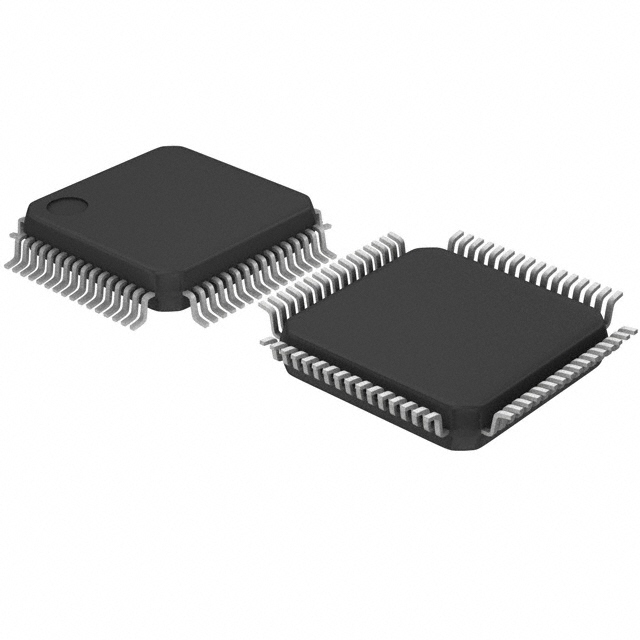
- Part No.:
- KSZ8382L
- Manufacturer:
- Microchip Technology
- Category:
- Telecom
- Package:
- 176-LQFP
- Datasheet:
-
 KSZ8382L.pdf
- Description:
- IC TELECOM INTERFACE 176LQFP
- Quantity:
- Payment:

- Shipping:

Inventory:2,166
Please send an inquiry. Send us your inquiry, and we will respond immediately.
Product details
Overview
KSZ8382L from Microchip (acquired Micrel) is a VoIP System-on-Chip integrating a 166MHz MIPS32 4KEc CPU, 125MHz ZSP400 DSP, dual 10/100 Base-T MAC/PHY with IEEE 802.3az Energy Efficient Ethernet, and a 3-port switch - enabling IP phone endpoints with HD wideband voice (G.722.2, G.711.1), echo cancellation (G.167, 128ms tail), and SIP/RTP stack support.
For engineers reviewing the KSZ8382L datasheet, KSZ8382L pinout, KSZ8382L application, or KSZ8382L equivalent, key selection considerations include integrated EEE-compliant Ethernet switching, dual-channel telephony processing, DDR2/SDRAM memory controller support, and firmware-accessible DSP resources for custom media transport or call control.
Technical Context
The KSZ8382L implements a multiprocessor architecture with tightly coupled MIPS32 CPU and ZSP400 DSP cores, enabling concurrent SIP signaling (RFC 3261–3264), RTP/RTCP packetization (RFC 3550/3551), and real-time wideband voice processing including G.722.2 decoding and adaptive jitter buffering.
Its integrated 3-port Ethernet switch supports IEEE 802.1p QoS, 802.1Q VLANs, and IGMP v1/v2 snooping, while on-chip power management delivers sub-1W standby per EU Ecodesign Directive 2005/32/EC via hardware-accelerated EEE operation.
Key Specifications
| Parameter | Value and Actual Design Meaning |
|---|---|
| CPU Core | MIPS32 4KEc @ 166MHz - executes Linux kernel, SIP stack, and web server without external processor |
| DSP Core | ZSP400 @ 125MHz - handles concurrent G.722.2 decode, G.711 encode, echo cancellation, and noise reduction |
| Ethernet Interface | 2× integrated 10/100 Base-T MAC/PHY + 3rd port switch - enables daisy-chain topology with no external PHY or switch IC |
| Voice Processing | G.711, G.722.2, G.729A/B, iLBC, DTMF generation (TIA-464B), 128ms G.167 echo canceller |
| Memory Support | DDR2 & SDRAM controllers, parallel NAND, serial NOR (quad-SPI), parallel NOR - eliminates need for external memory bus logic |
| Power Compliance | Energy Efficient Ethernet (802.3az) - achieves <1W standby power, meeting EU Ecodesign Directive 2005/32/EC |
Pinout & Package
KSZ8382L is housed in a 256-pin LFBGA package (15 mm × 15 mm, 0.8 mm pitch) with dedicated ball assignments for DDR2 SDRAM interface (32-bit data, 13-bit address), three Ethernet PHY interfaces (MDI pairs + MII/RMII), and dual audio codec I/O (I²S, PCM, DAC/ADC lines).
| Pin/Terminal | Circuit Role | Design Meaning |
|---|---|---|
| MDIO/MDC | Management Data I/O | Configures internal switch registers and PHY status via IEEE 802.3 clause 22/45 |
| REFCLK | Reference Clock Input | 25 MHz input for Ethernet PHY timing synchronization and internal PLL lock |
| SDRAM_CAS/SDRAM_RAS | SDRAM Control Signals | Directly drive standard SDRAM chips without glue logic or address multiplexing |
| I2S_DOUT/I2S_BCLK | Digital Audio Output | Transmit G.722.2-decoded PCM stream to external stereo DAC or codec |
| GPIO_0–GPIO_15 | General-Purpose I/O | Support keypad scanning, LED control, relay drivers, or system reset sequencing |
Key Features
| Feature | Design Value |
|---|---|
| Integrated 3-Port Switch | Enables connection of PC, IP phone, and upstream switch on single board - eliminates discrete switch IC and associated magnetics |
| Hardware EEE Engine | Reduces link-layer power during idle periods without software intervention - meets EU <1W standby requirement |
| Programmable Keypad Scanner | Scans up to 8×8 matrix without CPU overhead - frees MIPS core for SIP signaling and media processing |
| Multi-Flash Support | Boot from serial NOR (quad-SPI), execute firmware from DDR2, store configuration in NAND - simplifies field updates and redundancy |
| SRTP & SIP TLS | On-die AES-128 encryption engine secures RTP media and SIP signaling - eliminates need for external crypto co-processor |
Applications
| IP Phones | Emergency Systems |
|---|---|
Use Scenario: Enterprise desk phone with dual-line SIP registration, speakerphone, and LCD display. IC Role / Device Role / Timing Role: Primary SoC handling SIP call control, G.722.2 wideband voice decode/encode, echo cancellation, and 3-port Ethernet switching. Use Value: Single-chip integration reduces BOM count by >12 components versus discrete CPU+DSP+PHY+switch solution. | Use Scenario: Wall-mounted emergency intercom in hospital corridor with PoE-powered LAN uplink and local audio alert. IC Role / Device Role / Timing Role: Real-time voice processing endpoint with low-latency DTMF detection, STUN traversal, and EEE-enabled PoE power budgeting. Use Value: Sub-1W standby ensures compliance with building-wide energy codes while maintaining always-on readiness. |
| Intercom Systems | Cloud-Based Kiosks |
Use Scenario: Two-way audio/video intercom at building entry with door release control and remote monitoring. IC Role / Device Role / Timing Role: Full-stack VoIP processor managing SIP registration, G.711/G.722.2 transcoding, GPIO-based relay control, and IGMP-snooped multicast paging. Use Value: Integrated LCD interface and keypad scanner eliminate separate display controller and input interface ICs. | Use Scenario: Public self-service kiosk with cloud-hosted call routing, secure payment audio prompts, and remote diagnostics. IC Role / Device Role / Timing Role: Secure endpoint executing TLS-encrypted SIP, SRTP-encrypted media, and TFTP-based firmware updates over managed Ethernet. Use Value: On-die AES-128 and SIP TLS engine prevent media interception without adding latency or external security IC. |
Equivalent & Alternatives
The following parts are listed as comparable options for similar VoIP SoC applications.
| Alternative Part | Technical Difference | Application Difference | Selection Advice |
|---|---|---|---|
| KSZ8382Q | CPU clock reduced to 125MHz; identical DSP, Ethernet, and codec support | Suitable for cost-sensitive narrowband-only deployments where G.722.2 processing headroom is not required | Select KSZ8382Q when wideband voice quality is not mandatory and lower CPU throughput suffices |
| KSZ8381 | No wideband codec support (G.722.2, G.711.1); same 125MHz CPU/DSP clocks; lacks EEE hardware | Targeted at legacy narrowband (G.711/G.729) IP phones where EU Ecodesign compliance is not enforced | Choose KSZ8381 only for retrofit analog-to-digital transition where wideband and EEE are excluded by spec |
Compared with KSZ8382Q and KSZ8381, the KSZ8382L uniquely delivers full wideband voice capability plus hardware-accelerated EEE - making it the sole option for new IP phone designs requiring both HD audio and sub-1W standby compliance.
Availability
KSZ8382L is available at Aetrix Electronics and suitable for IP phones, emergency intercom systems, cloud kiosks, and door access terminals requiring stable component supply across multi-year production cycles.
Supply support for KSZ8382L includes scheduled delivery planning, volume procurement assistance, BOM continuity management, traceable sourcing, and lifecycle availability coordination for OEM customers, industrial embedded developers, connected-device designers, and electronics production programs.
Manufacturer
Microchip Technology acquired Micrel in 2015 and maintains full support for the KSZ8382 family, providing validated reference designs, Linux BSPs, and SIP firmware stacks.
The KSZ8382L belongs to Micrel's VoIP SoC product line, engineered specifically for single-chip IP telephony endpoints demanding integrated processing, switching, wideband voice, and regulatory-compliant power efficiency.
FAQ
What is the primary function of the KSZ8382L in an IP phone design?
The KSZ8382L serves as the central VoIP SoC in IP phone designs, integrating CPU, DSP, dual 10/100 Ethernet MAC/PHY, 3-port switch, memory controllers, and audio subsystems. It executes SIP signaling, processes wideband voice codecs (G.722.2), performs echo cancellation, and manages Ethernet traffic - eliminating the need for multiple discrete ICs in the KSZ8382L-based system architecture.
Does the KSZ8382L support Energy Efficient Ethernet (EEE) and what is its compliance status?
Yes, the KSZ8382L implements hardware-accelerated IEEE 802.3az Energy Efficient Ethernet and is certified compliant with EU Ecodesign Directive 2005/32/EC for standby power - delivering <1W system-level standby consumption. This EEE capability is built into the KSZ8382L's Ethernet MAC/PHY and requires no external power management IC or firmware polling.
Which voice codecs are natively supported by the KSZ8382L DSP?
The KSZ8382L's ZSP400 DSP natively supports G.711, G.722.2, G.729A/B, iLBC, G.723, G.726, and G.711.1 wideband codecs, along with G.167 echo cancellation (128ms tail), VAD, CNG, PLC, and adaptive jitter buffering. All codec operations run in real time on the KSZ8382L without host CPU intervention.
Can the KSZ8382L boot directly from serial NOR flash, and what interface modes does it support?
Yes, the KSZ8382L supports direct boot from serial NOR flash using single, dual, or quad SPI interfaces - with quad-SPI enabling faster boot times and reduced firmware load latency. The KSZ8382L's SSP controller handles all timing and command sequences autonomously, allowing the KSZ8382L to initialize and begin executing code without external boot ROM or FPGA assistance.
How does the KSZ8382L handle security for SIP and RTP traffic?
The KSZ8382L integrates dedicated hardware engines for SIP TLS (signaling encryption) and SRTP (AES-128 media encryption per RFC 3711), enabling end-to-end security without CPU overhead. STUN support allows NAT traversal, and all security functions operate within the KSZ8382L's trusted execution environment - ensuring that KSZ8382L-based devices meet HIPAA and GDPR-compliant voice transmission requirements.
KSZ8382L Specifications
- Product attributes
- Attribute value
- Manufacturer:
- Microchip Technology
- Series:
- -
- Package/Case:
- 176-LQFP
- Packaging:
- Tray
- Product Status:
- Obsolete
- Function:
- Telecom Circuit
- Interface:
- LCD
- Number of Circuits:
- 1
- Voltage - Supply:
- -
- Current - Supply:
- -
- Power (Watts):
- -
- Operating Temperature:
- 0°C ~ 70°C
- Grade:
- -
- Qualification:
- -
- Mounting Type:
- Surface Mount
- Supplier Device Package:
- 176-LQFP
KSZ8382L FAQ
1.How can I place an order for KSZ8382L through Aetrix?
Please submit a Request for Quotation (RFQ) for KSZ8382L on Aetrix. Our sales agent will provide a competitive quotation and guide you through the order confirmation once you accept the terms.
2.Are the price and stock information for KSZ8382L reliable?
The price and inventory of KSZ8382L are updated periodically and may fluctuate due to market conditions. Stock and pricing data are typically refreshed every 24 hours. Quotation validity for KSZ8382L is usually 5 days.
3.What payment methods are accepted for KSZ8382L?
We accept Wire Transfer, PayPal, Credit Card, Western Union, MoneyGram, and Escrow for KSZ8382L transactions.
Note: Certain payment methods may incur a processing fee.
4.How is shipping managed for KSZ8382L?
KSZ8382L orders can be shipped via leading logistics carriers, including DHL, UPS, FedEx, TNT, or Registered Mail.
Once your KSZ8382L order is processed, you will receive an email with the shipment details and tracking number.
Note: Tracking information may take up to 24 hours to appear. Express delivery typically takes 3–5 business days.
5.How can I obtain technical support or documentation for KSZ8382L?
For technical support, including KSZ8382L datasheets, pinout diagrams, or application guidance, please contact our engineering support team. They can provide detailed documentation and assistance for your KSZ8382L requirements.
6.How does Aetrix verify that KSZ8382L is sourced from the original manufacturer or authorized distributors?
All KSZ8382L products on Aetrix are procured from qualified distributors and authorized channels. Our dedicated quality assurance team conducts strict verification, including traceability checks and, if necessary, third-party testing. This ensures that KSZ8382L meets industry standards.
7.What is the process for return or replacement of KSZ8382L?
All KSZ8382L units undergo pre-shipment inspection (PSI). If there is an issue with KSZ8382L, returns or replacements are accepted under the following conditions:
1.Quantity discrepancies, incorrect items, or visible external defects (such as breakage or corrosion), acknowledged by Aetrix.
2.The issue is reported within 90 days of delivery.
3.The KSZ8382L part is unused and in its original packaging.
Return procedure for KSZ8382L:
1.Submit a request within 90 days.
2.Obtain a Return Material Authorization (RMA) from Aetrix.
KSZ8382L Tags

-
LMC567CMX/NOPB
Texas Instruments
-
LM567CMX/NOPB
Texas Instruments
-
LM567CM/NOPB
Texas Instruments
-
VSC8531XMW-02
Microchip Technology
-
VSC8531XMW-05
Microchip Technology

-
GPY115C0VI
MaxLinear, Inc.
-
SI32185-A-FMR
Skyworks Solutions Inc.
-
VSC8541XMV-05
Microchip Technology
-
SI32178-B-FM1R
Skyworks Solutions Inc.
-
GPY215C0VI
MaxLinear, Inc.
-
CPC7514ZTR
Littelfuse Inc.
-
VSC8502XML-03
Microchip Technology
Tech Hub

TTL and CMOS logic families differ in thresholds, loading, output drive, power and timing. This engineering guide compares 74HC and 74HCT, calculates noise margins and checks 3.3 V/5 V compatibility.

A practical engineering guide to 3.3V and 5V logic compatibility, input thresholds, resistor dividers, translator ICs, MOSFET level shifting, I2C pull-ups, timing limits and power-sequencing risks.

The 74HC595 uses push-pull logic outputs, while the TPIC6B595 uses 50 V open-drain DMOS sinks for higher-power loads. This guide compares timing, current limits, 3.3 V interfacing, load wiring, thermal…

The 74HC595 converts serial data into eight stable parallel outputs. This guide covers pin functions, shift and storage timing, OE and MR behavior, drive-current limits, cascading, voltage compatibilit…

A technical comparison of level-sensitive latches and edge-triggered flip-flops, covering timing windows, setup and hold limits, master–slave operation, time borrowing, race-through, HDL inference and…

A D latch stores one bit while Enable controls when data can pass. This reference covers gate-level operation, truth tables, transparency, setup and hold timing, LE versus OE, common ICs and practical …

An SR latch stores one bit through cross-coupled feedback. This engineering reference covers NOR and NAND implementations, truth tables, forbidden-state recovery, gated operation, switch debouncing, fa…

Latch circuits retain one bit through feedback. This technical reference covers SR and D latches, truth tables, transparency, timing limits, latch-versus-flip-flop behavior, applications and common log…

An engineering guide to LED driver operation, constant-current and constant-voltage outputs, linear and switching topologies, dimming, IC selection, calculations, replacement compatibility, and fault c…

Operational amplifier guide covering op amp basics, feedback, ideal vs real op amps, common configurations, buffer circuits, offset, bias current, gain-bandwidth, slew rate, rail-to-rail limits and sel…


