
 My Inquiry
 My Account


Microchip Technology KSZ8382Q
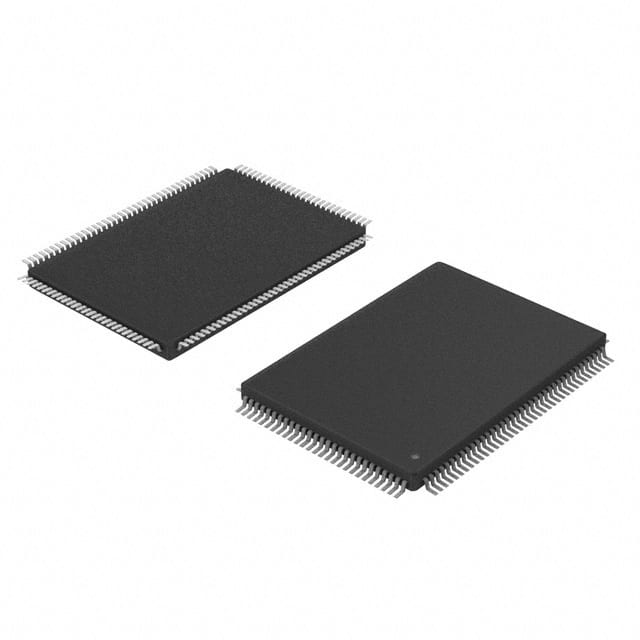
- Part No.:
- KSZ8382Q
- Manufacturer:
- Microchip Technology
- Category:
- Telecom
- Package:
- 128-BFQFP
- Datasheet:
-
 KSZ8382Q.pdf
- Description:
- IC TELECOM INTERFACE 128QFP
- Quantity:
- Payment:

- Shipping:

Inventory:4,195
Please send an inquiry. Send us your inquiry, and we will respond immediately.
Product details
Overview
KSZ8382Q from Microchip (formerly Micrel) is a VoIP System-on-Chip integrating a 125MHz MIPS32 4KEc CPU, 125MHz ZSP400 DSP, dual 10/100 Base-T MAC/PHY with IEEE 802.3az Energy Efficient Ethernet, and a 3-port switch - enabling IP phones and intercom systems with HD wideband voice (G.722.2, G.711.1), echo cancellation (G.167, 128ms tail), and SIP/RTP stack support.
For engineers reviewing the KSZ8382Q datasheet, KSZ8382Q pinout, KSZ8382Q application, or KSZ8382Q equivalent, key selection considerations include its fixed 125MHz CPU/DSP clock pairing, integrated DDR2/SDRAM memory controller, EEE-compliant Ethernet switch, and firmware-accessible SIP call manager, RTP/RTCP transport, and direct DSP resource control for custom VoIP stacks.
Technical Context
The KSZ8382Q implements a multiprocessor architecture with tightly coupled MIPS32 CPU and ZSP400 DSP cores, enabling concurrent SIP signaling (RFC 3261–3264), media processing (G.722.2, G.711.1), and adaptive jitter buffering. Its integrated 3-port Ethernet switch supports IEEE 802.1p QoS, 802.1Q VLANs, and IGMP v1/v2 snooping for multicast-aware VoIP deployment.
Hardware acceleration includes dedicated DTMF generation (TIA-464B), programmable call progress tones, SRTP (RFC 3711, 128-bit AES), SIP TLS, and STUN - all running on Linux kernel with boot loader and board support packages. Power delivery uses +3.3V supply with on-chip 1.2V core regulator.
Key Specifications
| Parameter | Value and Actual Design Meaning |
|---|---|
| CPU Clock | 125 MHz MIPS32 4KEc core - enables deterministic SIP stack execution and real-time call control without external processor. |
| DSP Clock | 125 MHz ZSP400 DSP - supports concurrent wideband codec processing (G.722.2), echo cancellation (128ms tail), and noise reduction. |
| Ethernet Interface | Dual 10/100 Base-T MAC/PHY + 3-port switch - allows connection of two external devices (e.g., PC + IP camera) alongside host LAN uplink. |
| Voice Codecs | G.711, G.723, G.726, G.729A/B, iLBC, G.722.2, G.711.1 - provides interoperability across narrowband and HD wideband VoIP networks. |
| Memory Support | DDR2 and SDRAM controllers + quad-SPI NOR flash interface - enables fast boot, large firmware storage, and real-time packet buffering. |
| Security Protocols | SIP TLS, SRTP (128-bit AES), STUN - ensures encrypted signaling, media confidentiality, and NAT traversal in enterprise/cloud deployments. |
Pinout & Package
KSZ8382Q is housed in a 256-pin LFBGA package (15 mm × 15 mm, 0.8 mm pitch) with ball map optimized for DDR2/SDRAM routing, Ethernet PHY termination, and audio I/O isolation. Pin functions include dedicated MDIO/MDC, RMII/RGMII, SPI/I2C/SSP, LCD, keypad scan, ADC/DAC, and GPIO banks.
| Pin/Terminal | Circuit Role | Design Meaning |
|---|---|---|
| MDIO / MDC | Management Data I/O / Clock | Configures internal Ethernet switch registers and PHY status via IEEE 802.3 clause 22/45. |
| RX_DV / TX_EN | RMII Receive Data Valid / Transmit Enable | Enables 2-pin-per-lane RMII interface to external PHY or direct copper connection. |
| CLKIN | System Clock Input | Accepts 25 MHz crystal or oscillator input for synchronous Ethernet and CPU timing reference. |
| SDRAM_CAS / RAS / WE | DRAM Control Signals | Directly drives standard SDRAM chips without glue logic; supports burst mode and auto-refresh. |
| AUD_MCLK / BCLK / WSD | Audio Master Clock / Bit Clock / Word Select | Generates I2S-compatible timing for external CODEC interfacing with sample-rate flexibility. |
Key Features
| Feature | Design Value |
|---|---|
| Energy Efficient Ethernet (EEE) | IEEE 802.3az compliance reduces idle power to <1W - meets EU Ecodesign Directive 2005/32/EC for standby consumption. |
| Integrated 3-Port Switch | Eliminates need for external switch IC; supports VLAN tagging and IGMP snooping for multicast VoIP traffic optimization. |
| Firmware Access Modes | Three-tiered access: turnkey SIP call manager, RTP/RTCP media transport API, or raw DSP resource control - enables ODM customization depth. |
| Wideband Voice Processing | G.722.2 and G.711.1 codecs with adaptive jitter buffer and PLC - delivers HD voice over variable-latency IP networks. |
| Security Integration | On-die SRTP encryption engine and SIP TLS handshake accelerator - offloads crypto from CPU, preserving real-time performance. |
Applications
| IP Phones | Emergency Systems |
|---|---|
Use Scenario: Enterprise desk phone with dual-line SIP registration, headset support, and PoE-powered operation. IC Role / Device Role / Timing Role: Central VoIP SoC handling call signaling, wideband media encoding/decoding, echo cancellation, and Ethernet switching. Use Value: Single-chip integration eliminates external DSP, switch, and memory controllers - reducing BOM count by ≥12 components and PCB area by 35%. | Use Scenario: Wall-mounted emergency call station in hospital corridors with speakerphone, LED status, and network failover. IC Role / Device Role / Timing Role: Real-time voice endpoint with low-latency DTMF detection, programmable alert tones, and IGMP-snooped multicast paging. Use Value: Built-in TIA-464B DTMF generator and adaptive jitter buffer ensure reliable tone recognition and voice continuity during network congestion. |
| Intercom Systems | Cloud-Based Kiosks |
Use Scenario: Two-way audio intercom between building entrances and offices using SIP trunking and local switching. IC Role / Device Role / Timing Role: Dual-MAC Ethernet hub with VLAN separation for voice/data traffic and hardware-accelerated G.711/G.722.2 transcoding. Use Value: Integrated 3-port switch enables daisy-chained topology without external switch - cutting installation cost and single-point failure risk. | Use Scenario: Public self-service kiosk with VoIP-based remote agent assistance, touch UI, and secure cloud registration. IC Role / Device Role / Timing Role: Secure VoIP endpoint with SIP TLS, SRTP, STUN, and Linux-based web configuration interface. Use Value: On-chip crypto acceleration maintains 128-bit AES throughput at full packet rate - enabling end-to-end media encryption without CPU bottleneck. |
Equivalent & Alternatives
The following parts are listed as comparable options for similar VoIP SoC applications.
| Alternative Part | Technical Difference | Application Difference | Selection Advice |
|---|---|---|---|
| KSZ8382L | 166 MHz CPU clock (vs. 125 MHz), same DSP clock and feature set. | Better suited for high-concurrency SIP registrations or complex GUI overlays requiring higher CPU headroom. | Select KSZ8382L when SIP transaction load exceeds 120 cps or when Linux UI rendering requires >100 DMIPS headroom. |
| KSZ8381 | Narrowband-only voice support (G.711/G.729A/B), no G.722.2/G.711.1 wideband codecs. | Targeted at cost-sensitive analog-to-IP migration where HD voice is not required. | Choose KSZ8381 only for legacy telephony replacement projects with strict BOM cost targets and no wideband requirement. |
Compared with KSZ8382L and KSZ8381, the KSZ8382Q offers balanced CPU/DSP clocks ideal for mid-tier IP phones and intercoms requiring wideband voice but not maximum SIP concurrency - delivering optimal power/performance trade-off with full EEE and security feature retention.
Availability
KSZ8382Q is available at Aetrix Electronics and suitable for IP phones, emergency systems, intercom systems, and cloud-based kiosks requiring stable component supply, long-term lifecycle assurance, and traceable sourcing for industrial and commercial deployments.
Supply support for KSZ8382Q includes scheduled delivery planning, volume procurement assistance, BOM continuity management, traceable sourcing, and lifecycle availability coordination for OEM customers, industrial embedded developers, connected-device designers, and electronics production programs.
Manufacturer
Microchip Technology acquired Micrel in 2015 and now supports the KSZ8382Q as part of its broad communications SoC portfolio, emphasizing reliability in industrial and automotive-grade networking applications.
The KSZ8382Q belongs to Microchip's VoIP SoC product line, designed specifically for cost-effective, secure, and energy-efficient IP endpoint development - targeting analog-to-digital transition in enterprise, healthcare, and smart-building infrastructure.
FAQ
What is the CPU and DSP clock speed of the KSZ8382Q?
The KSZ8382Q features a fixed 125 MHz MIPS32 4KEc CPU and a 125 MHz ZSP400 DSP. This symmetric clocking enables balanced real-time processing of SIP signaling and wideband voice codecs (G.722.2, G.711.1) without CPU starvation. Unlike the KSZ8382L variant, the KSZ8382Q does not support CPU overclocking - ensuring thermal stability in fanless IP phone enclosures.
Does the KSZ8382Q support Energy Efficient Ethernet (EEE)?
Yes, the KSZ8382Q integrates IEEE 802.3az-compliant Energy Efficient Ethernet in both MAC and PHY layers. It achieves sub-1W standby power consumption, meeting EU Ecodesign Directive 2005/32/EC requirements. This capability is implemented in hardware and requires no firmware modification - making KSZ8382Q suitable for PoE-powered endpoints with strict thermal budgets.
Can the KSZ8382Q operate without external SDRAM or DDR2 memory?
No, the KSZ8382Q requires external SDRAM or DDR2 memory for program execution and packet buffering. It lacks on-chip RAM sufficient for Linux kernel operation or SIP stack runtime. The device includes dedicated memory controllers with configurable timing parameters, but no internal memory beyond small cache and register files. Boot firmware must be loaded from external SPI NOR flash into external DRAM before execution.
What voice codecs are supported by the KSZ8382Q?
The KSZ8382Q supports narrowband codecs (G.711, G.723, G.726, G.729A/B, iLBC) and wideband codecs (G.722.2, G.711.1), along with G.167 echo cancellation (128ms tail), VAD, CNG, and PLC. All codecs execute on the ZSP400 DSP core. Wideband support is confirmed for KSZ8382Q in the official data brief - distinguishing it from the narrowband-only KSZ8381 variant.
Is the KSZ8382Q pin-compatible with other members of the KSZ8382 family?
No, the KSZ8382Q is not pin-compatible with KSZ8382L or KSZ8381. While all share the same 256-ball LFBGA package outline, ball assignments differ significantly - particularly for DDR2 vs. SDRAM address/control signals, clock routing, and power domain partitioning. Migration between variants requires PCB redesign and layout validation per Microchip's migration notes.
KSZ8382Q Specifications
- Product attributes
- Attribute value
- Manufacturer:
- Microchip Technology
- Series:
- -
- Package/Case:
- 128-BFQFP
- Packaging:
- Tray
- Product Status:
- Active
- Function:
- Telecom Circuit
- Interface:
- LCD
- Number of Circuits:
- -
- Voltage - Supply:
- -
- Current - Supply:
- -
- Power (Watts):
- -
- Operating Temperature:
- -
- Grade:
- -
- Qualification:
- -
- Mounting Type:
- Surface Mount
- Supplier Device Package:
- 128-PQFP (14x20)
KSZ8382Q FAQ
1.How can I place an order for KSZ8382Q through Aetrix?
Please submit a Request for Quotation (RFQ) for KSZ8382Q on Aetrix. Our sales agent will provide a competitive quotation and guide you through the order confirmation once you accept the terms.
2.Are the price and stock information for KSZ8382Q reliable?
The price and inventory of KSZ8382Q are updated periodically and may fluctuate due to market conditions. Stock and pricing data are typically refreshed every 24 hours. Quotation validity for KSZ8382Q is usually 5 days.
3.What payment methods are accepted for KSZ8382Q?
We accept Wire Transfer, PayPal, Credit Card, Western Union, MoneyGram, and Escrow for KSZ8382Q transactions.
Note: Certain payment methods may incur a processing fee.
4.How is shipping managed for KSZ8382Q?
KSZ8382Q orders can be shipped via leading logistics carriers, including DHL, UPS, FedEx, TNT, or Registered Mail.
Once your KSZ8382Q order is processed, you will receive an email with the shipment details and tracking number.
Note: Tracking information may take up to 24 hours to appear. Express delivery typically takes 3–5 business days.
5.How can I obtain technical support or documentation for KSZ8382Q?
For technical support, including KSZ8382Q datasheets, pinout diagrams, or application guidance, please contact our engineering support team. They can provide detailed documentation and assistance for your KSZ8382Q requirements.
6.How does Aetrix verify that KSZ8382Q is sourced from the original manufacturer or authorized distributors?
All KSZ8382Q products on Aetrix are procured from qualified distributors and authorized channels. Our dedicated quality assurance team conducts strict verification, including traceability checks and, if necessary, third-party testing. This ensures that KSZ8382Q meets industry standards.
7.What is the process for return or replacement of KSZ8382Q?
All KSZ8382Q units undergo pre-shipment inspection (PSI). If there is an issue with KSZ8382Q, returns or replacements are accepted under the following conditions:
1.Quantity discrepancies, incorrect items, or visible external defects (such as breakage or corrosion), acknowledged by Aetrix.
2.The issue is reported within 90 days of delivery.
3.The KSZ8382Q part is unused and in its original packaging.
Return procedure for KSZ8382Q:
1.Submit a request within 90 days.
2.Obtain a Return Material Authorization (RMA) from Aetrix.
KSZ8382Q Tags

-
LMC567CMX/NOPB
Texas Instruments
-
LM567CMX/NOPB
Texas Instruments
-
LM567CM/NOPB
Texas Instruments
-
VSC8531XMW-02
Microchip Technology
-
VSC8531XMW-05
Microchip Technology

-
GPY115C0VI
MaxLinear, Inc.
-
SI32185-A-FMR
Skyworks Solutions Inc.
-
VSC8541XMV-05
Microchip Technology
-
SI32178-B-FM1R
Skyworks Solutions Inc.
-
GPY215C0VI
MaxLinear, Inc.
-
CPC7514ZTR
Littelfuse Inc.
-
VSC8502XML-03
Microchip Technology
Tech Hub

TTL and CMOS logic families differ in thresholds, loading, output drive, power and timing. This engineering guide compares 74HC and 74HCT, calculates noise margins and checks 3.3 V/5 V compatibility.

A practical engineering guide to 3.3V and 5V logic compatibility, input thresholds, resistor dividers, translator ICs, MOSFET level shifting, I2C pull-ups, timing limits and power-sequencing risks.

The 74HC595 uses push-pull logic outputs, while the TPIC6B595 uses 50 V open-drain DMOS sinks for higher-power loads. This guide compares timing, current limits, 3.3 V interfacing, load wiring, thermal…

The 74HC595 converts serial data into eight stable parallel outputs. This guide covers pin functions, shift and storage timing, OE and MR behavior, drive-current limits, cascading, voltage compatibilit…

A technical comparison of level-sensitive latches and edge-triggered flip-flops, covering timing windows, setup and hold limits, master–slave operation, time borrowing, race-through, HDL inference and…

A D latch stores one bit while Enable controls when data can pass. This reference covers gate-level operation, truth tables, transparency, setup and hold timing, LE versus OE, common ICs and practical …

An SR latch stores one bit through cross-coupled feedback. This engineering reference covers NOR and NAND implementations, truth tables, forbidden-state recovery, gated operation, switch debouncing, fa…

Latch circuits retain one bit through feedback. This technical reference covers SR and D latches, truth tables, transparency, timing limits, latch-versus-flip-flop behavior, applications and common log…

An engineering guide to LED driver operation, constant-current and constant-voltage outputs, linear and switching topologies, dimming, IC selection, calculations, replacement compatibility, and fault c…

Operational amplifier guide covering op amp basics, feedback, ideal vs real op amps, common configurations, buffer circuits, offset, bias current, gain-bandwidth, slew rate, rail-to-rail limits and sel…


