
 My Inquiry
 My Account


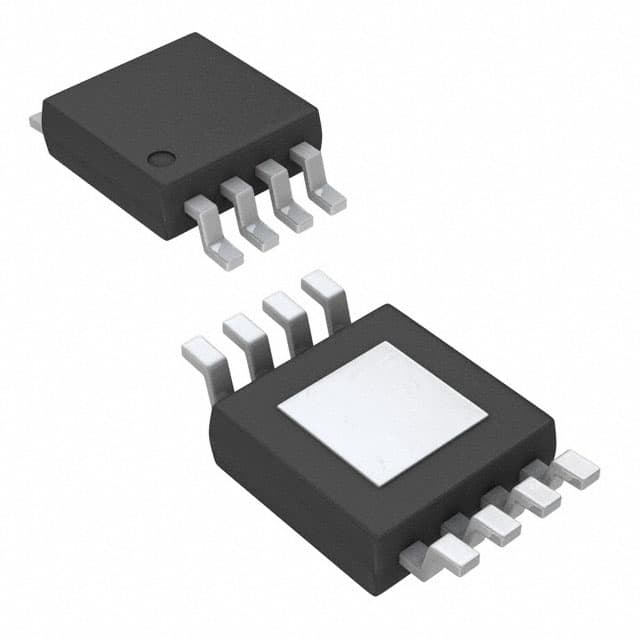
STMicroelectronics L3751PUR
- Part No.:
- L3751PUR
- Manufacturer:
- STMicroelectronics
- Category:
- DC DC Switching Controllers
- Package:
- 20-VFQFN Exposed Pad
- Datasheet:
-
 L3751PUR.pdf
- Description:
- WIDE 6 V TO 75 V INPUT VOLTAGE S
- Quantity:
- Payment:

- Shipping:

Inventory:822
Please send an inquiry. Send us your inquiry, and we will respond immediately.
Product details
Overview
L3751PUR from STMicroelectronics is a wide-input synchronous buck controller IC designed for high-voltage DC-DC conversion in telecom and industrial power supplies. It supports 6 V to 75 V input, delivers adjustable 0.8 V–60 V output, operates at 100 kHz–1 MHz, features 40 ns minimum on-time, and integrates 7.5 V gate drivers for standard-threshold MOSFETs - enabling efficient step-down from unregulated 48 V bus rails to 12 V/5 V system rails.
For engineers reviewing the L3751PUR datasheet, L3751PUR pinout, L3751PUR application, or L3751PUR equivalent, key selection considerations include its precision enable/UVLO threshold programming, diode emulation vs. forced PWM mode selection via SYNCIN, programmable current sensing (RSENSE or RDS(on)), Power Good validation timing (10/FSW filter), and thermal shutdown at 175 °C with 20 °C hysteresis.
Technical Context
The L3751PUR implements constant-frequency voltage-mode control with feedforward-adjusted ramp slope (kFF = 30 V/V) to maintain stable PWM gain across input voltage and switching frequency variations. Its internal 0.8 V reference error amplifier drives COMP, comparing FB voltage against a sawtooth ramp generated by an RRT-programmable oscillator or external SYNCIN clock.
It embeds dual-mode operation: diode emulation (DEM) for light-load efficiency via pulse skipping, and forced PWM (FPWM) for fixed-frequency, low-ripple regulation. The SS/TRK pin supports both soft-start (10 µA charge current) and input voltage tracking, while ILIM enables valley-current limiting with hiccup-mode short-circuit protection.
Key Specifications
| Parameter | Value and Actual Design Meaning |
|---|---|
| Input Voltage Range | 6 V to 75 V - supports direct regulation from telecom 48 V or industrial 24 V unregulated buses without pre-regulation. |
| Output Voltage Range | 0.8 V to 60 V - adjustable via external resistor divider on FB, enabling single-controller flexibility across multiple rail voltages. |
| Switching Frequency | 100 kHz to 1 MHz - set by RRT resistor or synchronized externally; enables optimization of size (high FSW) vs. efficiency (low FSW). |
| Min. On-Time | 40 ns - enables extreme duty-cycle operation (e.g., 75 V → 5 V at 400 kHz), critical for high-input/low-output conversions. |
| Gate Drive Voltage | 7.5 V - sufficient to fully enhance standard-threshold N-channel MOSFETs, reducing conduction losses without requiring external level shifters. |
| Power Good Accuracy | ±2% window (92–108% of VREF) with 10/FSW filtering - ensures reliable sequencing of digital ICs during power-up and fault detection. |
| Thermal Protection | 175 °C shutdown with 20 °C hysteresis - prevents thermal runaway in enclosed or high-ambient industrial environments. |
Pinout & Package
The L3751PUR is housed in a QFN-20 package (3.5 mm × 4.5 mm) with wettable flanks for automated optical inspection and robust solder joint reliability.
| Pin/Terminal | Circuit Role | Design Meaning |
|---|---|---|
| EN/UVLO | Enable & input UVLO threshold input | Resistor-divider tap sets turn-on (≥1.2 V) and shutdown (≤0.42 V) thresholds referenced to VIN; 10 µA hysteresis current enables precise hysteresis design. |
| RT | Oscillator frequency programming | Pull-down resistor to AGND sets FSW from 100 kHz to 1 MHz; enables feedforward-stable PWM gain across operating range. |
| SS/TRK | Soft-start capacitor charge / voltage tracking input | 10 µA internal current source charges CSS for monotonic startup; clamped to FB+115 mV during OCP recovery for controlled re-start. |
| COMP | Error amplifier output | Drives external Type II/III compensation network between COMP and FB to stabilize loop response across load and line transients. |
| FB | Inverting error amplifier input | Connects to resistor divider from VOUT; senses regulated output with 800 mV ±1% reference and 0.1 µA bias current for minimal divider error. |
| SYNCIN | External clock input / DEM/FPWM select | Logic-high or clock signal enables FPWM; logic-low forces DEM; supports smooth transition and 100 kHz–1 MHz sync with ±20%/+50% tolerance. |
| PGOOD | Open-collector output validation | Sinks when FB deviates >8% above or >8% below 0.8 V; 2 mA sink capability allows direct interfacing with FPGA/CPU reset controllers. |
| ILIM | Valley current limit sense input | Accepts voltage from external RSENSE or direct RDS(on) sensing; 100 µA typical source current enables accurate threshold setting. |
| HO / LO | High-side / low-side gate drivers | 7.5 V drive with 0.9 Ω low-side and 1.5 Ω high-side pull-down resistance; 7 ns rise/4 ns fall times support high-frequency MOSFET switching. |
| BST | Bootstrap supply node | Requires 100 nF capacitor to SW; internal BST UVLO (3.4 V) prevents shoot-through during bootstrap capacitor discharge. |
Key Features
| Feature | Design Value |
|---|---|
| Adjustable soft-start or input voltage tracking | 10 µA SS/TRK current source enables <100 ms startup time or precise multi-rail sequencing via external voltage source. |
| Diode emulation (DEM) + forced PWM (FPWM) | Automatic DEM-to-FPWM transition minimizes light-load ripple while maintaining high efficiency - no external mode-select circuitry required. |
| Precision enable with programmable UVLO hysteresis | Single-resistor-divider interface on EN/UVLO allows independent setting of VIN turn-on/off thresholds with built-in 50 mV hysteresis. |
| Lossless or resistive current sensing | ILIM pin supports either RSENSE shunt or RDS(on)-based sensing - eliminates sense resistor power loss in high-current applications. |
| Improved line transient response | VIN feedforward (kFF = 30 V/V) maintains constant PWM gain across 6–75 V input, reducing output deviation during fast input steps. |
Applications
| Telecom Power Supply | Industrial PLC Power Module |
|---|---|
Use Scenario: Regulating 48 V telecom bus to generate isolated 12 V and 5 V rails for baseband processors and interface ICs. IC Role / Device Role / Timing Role: Primary synchronous buck controller managing high-step-down ratio (48 V → 5 V) with 40 ns min-on-time and feedforward-stabilized loop. Use Value: Eliminates need for cascaded converters; achieves >92% efficiency at full load while meeting ETSI transient immunity requirements. | Use Scenario: Generating 24 V and 5 V outputs from 72 V battery in ruggedized programmable logic controller chassis. IC Role / Device Role / Timing Role: High-reliability buck controller with thermal shutdown (175 °C), hiccup-mode SCP, and wettable-flank QFN for automotive-grade manufacturing. Use Value: Sustains operation under 85 °C ambient with 30 °C/W RthJA; PGOOD sequencing ensures deterministic boot of ARM Cortex-M7 MCU and FPGA. |
| Failsafe Sensor Interface | Networking Switch Midplane |
Use Scenario: Powering redundant sensor signal conditioners in safety-critical industrial monitoring systems requiring fail-safe brownout detection. IC Role / Device Role / Timing Role: Controller with precision EN/UVLO (±50 mV hysteresis) and PGOOD validation (±2% window) for ASIL-B compatible power supervision. Use Value: Detects input sag below 42 V within 10 µs and asserts PGOOD fault within 25 µs - enabling sub-100 µs system-level failover. | Use Scenario: Distributed 12 V regulation across 1RU switch midplane with tight EMI constraints and multi-phase synchronization. IC Role / Device Role / Timing Role: Master/slave synchronizable buck controller using SYNCOUT/SYNCIN pins to align switching edges and reduce input RMS current. Use Value: Enables 180° phase shift between adjacent controllers, cutting input capacitor RMS current by 30% and easing Class B EMI compliance. |
Equivalent & Alternatives
The following parts are listed as comparable options for similar synchronous buck controller applications.
| Alternative Part | Technical Difference | Application Difference | Selection Advice |
|---|---|---|---|
| LM5116PWPR | Wider 6–100 V input, but fixed 1.22 V reference and no integrated 7.5 V gate driver - requires external driver or logic-level MOSFETs. | Supports higher VIN max but lacks PGOOD accuracy (±5%) and DEM/FPWM mode flexibility. | Select when >75 V input is mandatory and board space allows discrete driver; avoid if 0.8 V reference or seamless light-load mode transition is required. |
| MPQ4316GLED | Integrated power stage (40 V max), not a controller - no external MOSFET flexibility or 75 V capability; uses current-mode control. | Targeted at compact, lower-power (<10 A) applications; lacks RRT-programmable frequency and VIN feedforward. | Choose only for space-constrained 24 V input designs where integration outweighs flexibility; unsuitable for 48/72 V telecom or industrial inputs. |
Compared with LM5116PWPR and MPQ4316GLED, the L3751PUR uniquely combines ultra-wide 6–75 V input, 40 ns min-on-time, integrated 7.5 V gate drivers, and dual DEM/FPWM operation - making it the only option supporting high-ratio, high-reliability buck conversion with programmable sequencing and thermal robustness in a single QFN package.
Availability
L3751PUR is available at Aetrix Electronics and suitable for telecom power supplies, industrial PLC modules, failsafe sensor interfaces, and networking switch midplanes requiring stable component supply, long-term lifecycle assurance, and traceable sourcing.
Supply support for L3751PUR includes scheduled delivery planning, volume procurement assistance, BOM continuity management, traceable sourcing, and lifecycle availability coordination for OEM customers, industrial embedded developers, connected-device designers, and electronics production programs.
Manufacturer
STMicroelectronics is a global semiconductor leader headquartered in Geneva, specializing in power management, microcontrollers, and analog ICs for industrial, automotive, and communications markets.
The L3751PUR belongs to ST's high-voltage synchronous buck controller product line, engineered specifically for robust, high-efficiency DC-DC conversion in telecom infrastructure, industrial automation, and mission-critical power systems operating from unregulated 24 V/48 V/72 V inputs.
FAQ
What is the minimum recommended input voltage for reliable startup?
The L3751PUR requires ≥6 V on VIN to initiate internal VCC regulator operation and enable functional startup. Below 6 V, the VCC LDO cannot sustain 7.5 V output, preventing gate driver activation and PWM generation. Startup is guaranteed at 6 V with full specification compliance, including EN/UVLO thresholds and soft-start functionality.
How does the ILIM pin support both resistive and lossless current sensing?
The ILIM pin accepts either a voltage drop across an external sense resistor (RSENSE mode, 100 µA source current) or the drain-source voltage of the low-side MOSFET (RDS(on) mode, 200 µA source current). Internal circuitry scales the sensed voltage to match the same 0–4.5 mV comparator threshold, enabling accurate valley-current limiting without added power loss in high-current designs.
Can the L3751PUR operate without an external bootstrap diode?
No - the BST pin requires an external Schottky diode (e.g., 1N5819) between VCC and BST to charge the bootstrap capacitor during LO conduction. Omitting the diode prevents high-side gate drive, causing continuous LO-only operation and immediate overcurrent failure. The diode must support ≥100 mA peak current and ≤0.5 V forward drop.
What is the maximum allowable voltage difference between BST and SW pins?
The absolute maximum BST-to-SW voltage difference is 13 V per datasheet Table 3. Exceeding this risks permanent damage to the high-side driver. During normal operation, BST voltage is ~7.5 V above SW; the internal BST UVLO (3.4 V min differential) disables HO if the bootstrap capacitor discharges below safe margin, preventing shoot-through.
L3751PUR Specifications
- Product attributes
- Attribute value
- Manufacturer:
- STMicroelectronics
- Series:
- -
- Package/Case:
- 20-VFQFN Exposed Pad
- Packaging:
- Tape & Reel (TR)
- Product Status:
- Active
- Output Type:
- Transistor Driver
- Function:
- Step-Down
- Output Configuration:
- Positive
- Topology:
- Buck
- Number of Outputs:
- 1
- Output Phases:
- 1
- Voltage - Supply (Vcc/Vdd):
- 6V ~ 75V
- Frequency - Switching:
- 100kHz ~ 1MHz
- Duty Cycle (Max):
- 99%
- Synchronous Rectifier:
- Yes
- Clock Sync:
- Yes
- Serial Interfaces:
- -
- Control Features:
- Current Limit, Dead Time Control, Enable, Frequency Control, Power Good, Soft Start, Sync, Tracking
- Operating Temperature:
- -40°C ~ 125°C (TJ)
- Grade:
- -
- Qualification:
- -
- Mounting Type:
- Surface Mount, Wettable Flank
- Supplier Device Package:
- 20-QFN (3.5x4.5)
L3751PUR FAQ
1.How can I place an order for L3751PUR through Aetrix?
Please submit a Request for Quotation (RFQ) for L3751PUR on Aetrix. Our sales agent will provide a competitive quotation and guide you through the order confirmation once you accept the terms.
2.Are the price and stock information for L3751PUR reliable?
The price and inventory of L3751PUR are updated periodically and may fluctuate due to market conditions. Stock and pricing data are typically refreshed every 24 hours. Quotation validity for L3751PUR is usually 5 days.
3.What payment methods are accepted for L3751PUR?
We accept Wire Transfer, PayPal, Credit Card, Western Union, MoneyGram, and Escrow for L3751PUR transactions.
Note: Certain payment methods may incur a processing fee.
4.How is shipping managed for L3751PUR?
L3751PUR orders can be shipped via leading logistics carriers, including DHL, UPS, FedEx, TNT, or Registered Mail.
Once your L3751PUR order is processed, you will receive an email with the shipment details and tracking number.
Note: Tracking information may take up to 24 hours to appear. Express delivery typically takes 3–5 business days.
5.How can I obtain technical support or documentation for L3751PUR?
For technical support, including L3751PUR datasheets, pinout diagrams, or application guidance, please contact our engineering support team. They can provide detailed documentation and assistance for your L3751PUR requirements.
6.How does Aetrix verify that L3751PUR is sourced from the original manufacturer or authorized distributors?
All L3751PUR products on Aetrix are procured from qualified distributors and authorized channels. Our dedicated quality assurance team conducts strict verification, including traceability checks and, if necessary, third-party testing. This ensures that L3751PUR meets industry standards.
7.What is the process for return or replacement of L3751PUR?
All L3751PUR units undergo pre-shipment inspection (PSI). If there is an issue with L3751PUR, returns or replacements are accepted under the following conditions:
1.Quantity discrepancies, incorrect items, or visible external defects (such as breakage or corrosion), acknowledged by Aetrix.
2.The issue is reported within 90 days of delivery.
3.The L3751PUR part is unused and in its original packaging.
Return procedure for L3751PUR:
1.Submit a request within 90 days.
2.Obtain a Return Material Authorization (RMA) from Aetrix.
L3751PUR Tags

-
UCC28C45DR
Texas Instruments
-
UCC28C40DR
Texas Instruments
-
UCC28C43DR
Texas Instruments

-
ZXSC410E6TA
Diodes Incorporated
-
LM3524DMX/NOPB
Texas Instruments
-
LM3489MMX/NOPB
Texas Instruments
-
MIC2102YML-TR
Microchip Technology

-
LM5148RGYR
Texas Instruments
-
TL598CDR
Texas Instruments
-
LM5155DSSR
Texas Instruments
-
LM25085MYX/NOPB
Texas Instruments
-
UCC2813DTR-0
Texas Instruments
Tech Hub

Jumper cables guide covering safe connection order, red and black clamp placement, final ground connection, cable gauge, length, clamp quality, copper vs CCA cables, jump starter comparison and battery…

LDO regulator guide covering low dropout voltage, power dissipation, thermal design, PSRR, output noise, capacitor stability, adjustable LDO circuits, LDO vs buck converter and datasheet selection chec…

Conditional Access Module guide covering CAM meaning, CI/CI+ interface, smart card authorization, DVB security workflow, TV and set-top box compatibility, internal electronics, ESD protection, connecto…

Guide to electronic component obsolescence covering EOL risk, PCN/PDN notices, last-time buy planning, replacement options, form-fit-function validation, counterfeit risk and BOM lifecycle management.

18650 battery guide covering lithium-ion cell basics, 3.6V/3.7V voltage, 4.2V charging, mAh and Wh capacity, protected cells, chargers, BMS, series-parallel packs, holders, welding and sourcing checks.…

Hall effect sensor guide covering working principle, linear and digital sensors, Arduino circuits, current sensing, speed detection, automotive applications, A3144 examples, signal filtering and datash…

Product Change Notification guide for electronic components, covering PCN meaning, PCN vs PDN/EOL, common change types, risk levels, form-fit-function review, engineering validation, BOM control, LTB/L…

A practical guide to blend door actuators, covering HVAC function, symptoms, location, AC and heater issues, reset and calibration, replacement cost, electrical diagnosis, compatibility checks, and rep…

Engineering guide to Raspberry Pi alternatives, covering chip-level differences, Orange Pi, ROCK, Jetson, Banana Pi, NanoPi, Compute Module, Pico, GPIO, camera, HAT compatibility, and replacement risks…
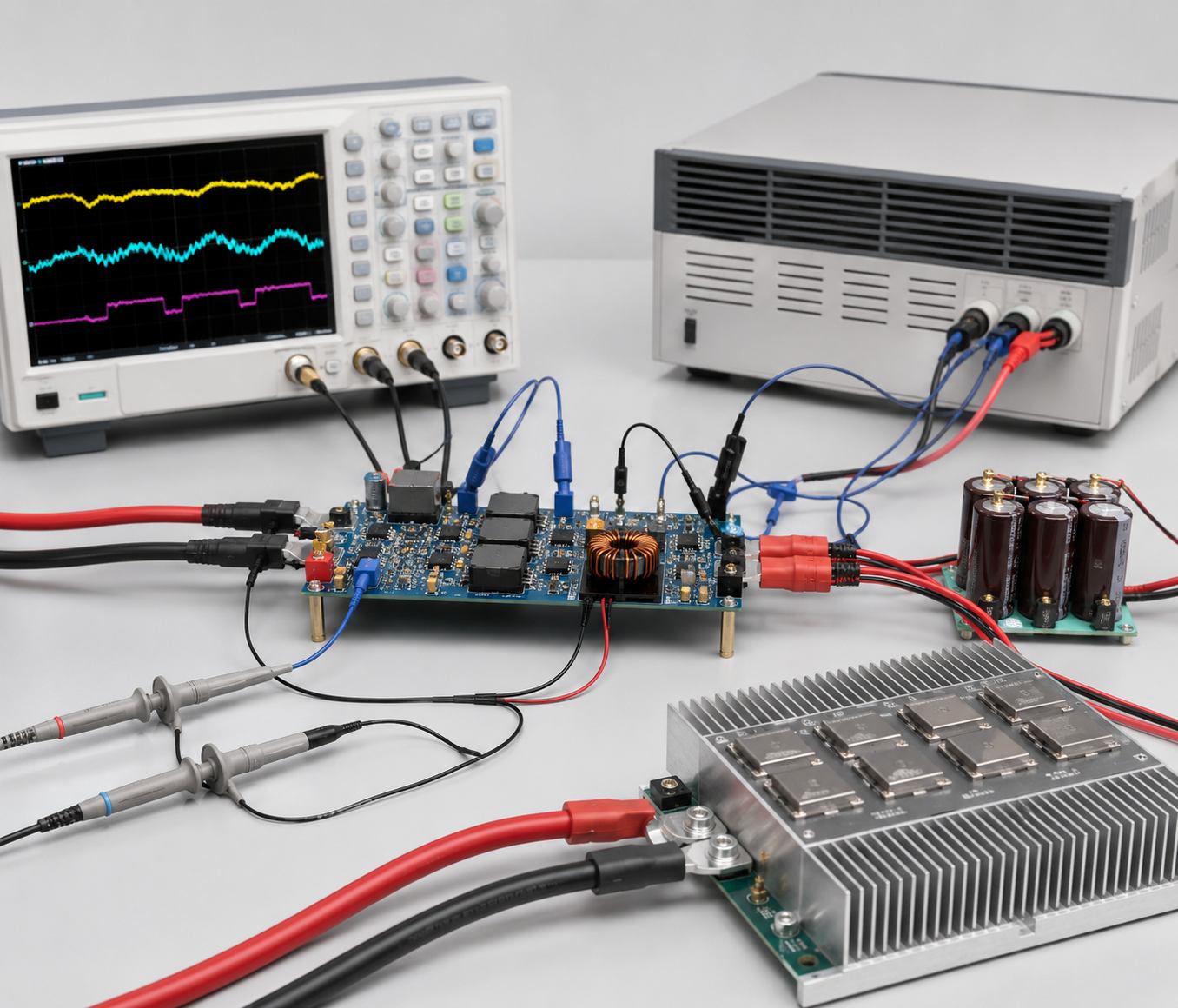
Engineering guide to dynamic load response testing for high-current buck converters, covering load step setup, slew rate, Vcore undershoot, overshoot, recovery time, probe location, output capacitors a…


