
 My Inquiry
 My Account


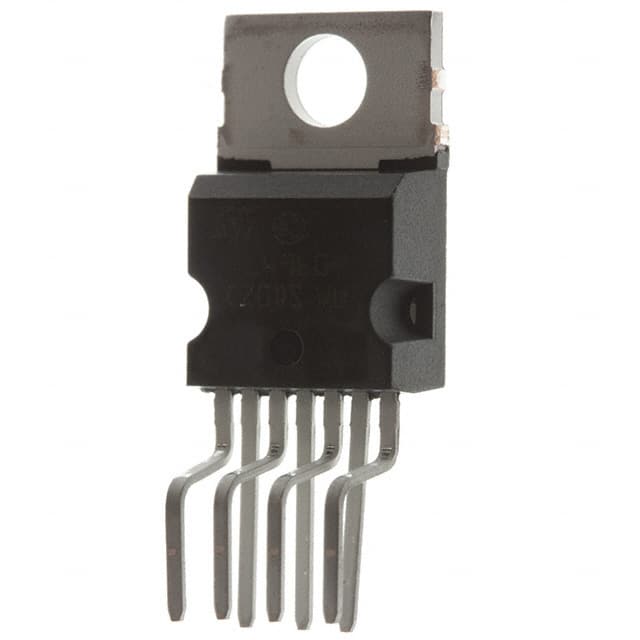
STMicroelectronics L4937N
- Part No.:
- L4937N
- Manufacturer:
- STMicroelectronics
- Package:
- Heptawatt-7 (Vertical, Bent and Staggered Leads)
- Datasheet:
-
 L4937N.pdf
- Description:
- IC REG LIN 5V 7HEPTAWATT
- Quantity:
- Payment:

- Shipping:

Inventory:4,444
Please send an inquiry. Send us your inquiry, and we will respond immediately.
Product details
Overview
L4937N from STMicroelectronics is a dual monolithic low-dropout voltage regulator IC designed for automotive microcomputer power supply systems. It provides a precision 5V ±2% standby output (VO1 = 5.00 V, IO1 = 50 mA) and a tracked main output (VO2 = VO1 ±25 mV, IO2 = 500 mA), with integrated power-on reset, enable-controlled standby mode, and transient tolerance up to 40 V - used in engine control units and body electronics.
For engineers reviewing the L4937N datasheet, L4937N pinout, L4937N application, or L4937N equivalent, key selection considerations include dropout voltage (VDP1 ≤ 0.4 V at 50 mA), quiescent current in standby (<250 µA), reset delay programmability via external capacitor, thermal shutdown, and automotive-grade transient immunity.
Technical Context
The L4937N integrates two independent LDO regulators on a single die: VO1 uses an isolated-collector vertical PNP pass element enabling sub-2V operation and <0.4 V dropout at full load; VO2 tracks VO1 with ±25 mV error and supports enable-based disable for ultra-low-power standby states. Both outputs feature foldback current limiting and operate across –40°C to +125°C junction temperature.
Its internal reset circuit monitors VO1 with a 4.7 V threshold (±0.3 V hysteresis), generating a programmable delay pulse (tRD = CT × 2 V / 2 µA) and fast reaction time (tRR ≤ 50 µs at CT = 100 nF). Input voltage sense and ESD protection per MIL-STD-883C support robust automotive deployment.
Key Specifications
| Parameter | Value and Actual Design Meaning |
|---|---|
| Standby Output Voltage | 5.00 V ±2% - stable reference for microcontroller core and reset logic |
| VO2 Tracking Error | ±25 mV - ensures precise voltage relationship between main and standby rails |
| VDP1 Dropout (VO1) | 0.4 V max at 50 mA - enables regulation down to VS = 5.4 V in worst-case conditions |
| VDP2 Dropout (VO2) | 0.6 V max at 500 mA - sustains 5 V output with input as low as 5.6 V |
| Quiescent Current (Standby) | 210–290 µA - meets automotive ISO 8859-3 sleep-mode current budgets |
| Reset Threshold | 4.7 V ±0.3 V - triggers system reset before MCU brownout during battery sag |
| Transient Supply Tolerance | 40 V for <1 s - survives load-dump pulses without latch-up or damage |
Pinout & Package
Package: Heptawatt (7-pin, vertical mounting, Rthj-case = 3 °C/W), standardized mechanical outline per STMicroelectronics HEPTAWATT™ trademark.
| Pin/Terminal | Circuit Role | Design Meaning |
|---|---|---|
| 1 - GND | Ground Reference | Common return for both regulators and reset circuit; requires low-impedance PCB plane |
| 2 - VO1 | Standby Output | 5 V ±2% regulated rail for MCU standby logic and reset supervisor |
| 3 - EN | Enable Input | Active-low control: pulls VO2 low when <1.5 V; hysteresis ≥30 mV prevents chatter |
| 4 - VS | Main Supply Input | Accepts 6–25 V DC or transient pulses up to 40 V for 1 s |
| 5 - VO2 | Main Output | 500 mA tracked output, disabled when EN = LOW; supports external ADJ resistor divider |
| 6 - RES | Reset Output | Open-collector active-low signal; sinks ≥5 mA at 0.4 V for direct MCU RESET pin drive |
| 7 - CT | Reset Delay Capacitor | Connects external capacitor (e.g., 100 nF) to set tRD = 100 ms nominal |
Key Features
| Feature | Design Value |
|---|---|
| Dual LDO architecture with tracking | VO2 maintains ±25 mV accuracy relative to VO1 across load/temperature - eliminates need for separate reference IC |
| Programmable power-on reset delay | tRD set by single external capacitor (CT) - enables design-specific reset timing without firmware dependency |
| Ultra-low standby quiescent current | 210–290 µA with VO2 disabled - extends battery life in always-on vehicle modules |
| Automotive transient resilience | Withstands 40 V transients for 1 s - meets ISO 7637-2 Pulse 5a requirements without external TVS |
| Foldback current limiting | ILIM1 = 25–100 mA, ILIM2 = 550–1700 mA - protects pass transistors during short-circuit while minimizing thermal stress |
Applications
| Engine Control Unit (ECU) | Body Control Module (BCM) |
|---|---|
Use Scenario: Powering 16-bit MCU and CAN transceiver during cold cranking and load dump events. IC Role / Device Role / Timing Role: Dual-regulator power source with VO1 supplying MCU core and VO2 powering peripherals; RES asserts reset during battery sag. Use Value: Maintains 5 V regulation down to VS = 5.4 V and survives 40 V transients - eliminates need for external surge protection. | Use Scenario: Supplying door module MCU and LIN transceiver in low-power sleep mode. IC Role / Device Role / Timing Role: VO1 powers real-time clock and wake-up logic; EN disables VO2 to reduce system quiescent draw. Use Value: Achieves <300 µA total system standby current - meets OEM requirements for <100 µA per module over 10-year service life. |
| Instrument Cluster | Telematics Control Unit (TCU) |
Use Scenario: Providing clean, tracked 5 V rails for analog gauges and digital display drivers. IC Role / Device Role / Timing Role: VO1 stabilizes ADC reference; VO2 supplies display backlight driver; tracking minimizes differential noise. Use Value: ±25 mV VO2 tracking error ensures consistent brightness and gauge linearity across temperature. | Use Scenario: Powering GPS baseband processor and cellular modem during ignition-off telematics wake-up. IC Role / Device Role / Timing Role: VO1 powers RTC and wake interrupt controller; RES generates reliable boot-ready signal after battery recovery. Use Value: Programmable tRD (55–180 ms) allows synchronization with modem boot sequence - avoids race conditions. |
Equivalent & Alternatives
The following parts are listed as comparable options for similar dual-LDO automotive regulator applications.
| Alternative Part | Technical Difference | Application Difference | Selection Advice |
|---|---|---|---|
| TLF4937DGV50 | Single-chip dual LDO with identical VO1/VO2 specs but integrated watchdog timer and SPI configuration interface | Requires SPI host for setup; adds diagnostic capability but increases BOM count and firmware overhead | Select when functional safety (ASIL-B) monitoring or dynamic voltage adjustment is required |
| MAX16910ATP+ | Higher VO2 current (600 mA), lower IQSB (120 µA), but no internal reset circuit - requires external supervisor | Lacks integrated reset; needs discrete reset IC and capacitor network for delay tuning | Select when lowest possible standby current is critical and board space permits external reset components |
Compared with TLF4937DGV50 and MAX16910ATP+, the L4937N offers the simplest implementation for cost-sensitive automotive modules needing only basic dual-rail regulation and programmable reset - no firmware, no extra ICs, and proven field reliability in legacy ECUs.
Availability
L4937N is available at Aetrix Electronics and suitable for engine control units, body control modules, instrument clusters, and telematics control units requiring stable component supply under automotive qualification and long-term lifecycle support.
Supply support for L4937N includes scheduled delivery planning, volume procurement assistance, BOM continuity management, traceable sourcing, and lifecycle availability coordination for OEM customers, industrial embedded developers, connected-device designers, and electronics production programs.
Manufacturer
STMicroelectronics is a global semiconductor leader headquartered in Geneva, Switzerland, specializing in automotive, industrial, and power management ICs with broad manufacturing and quality certifications including AEC-Q100.
The L4937N belongs to ST's legacy automotive power management portfolio, engineered specifically for microcomputer-based vehicle subsystems requiring dual-rail LDOs with integrated reset and transient resilience - not intended for general-purpose or consumer applications.
FAQ
What is the minimum input voltage required for L4937N to regulate VO1 at 5 V with 50 mA load?
The L4937N maintains VO1 regulation down to VS = VO1 + VDP1 = 5.0 V + 0.4 V = 5.4 V at 50 mA. Its PNP-based architecture allows operation as low as 2 V input, but regulation ceases below 5.4 V under full load. Below that, VO1 follows VS minus dropout, which degrades linearly.
Can VO2 be adjusted to a voltage other than VO1?
Yes - VO2 can be increased above VO1 using an external resistor divider connected to the ADJ pin (pin 5), as noted in the datasheet footnote. The standard configuration tracks VO1, but the ADJ function allows setting VO2 to higher values while retaining enable control and current limiting.
How does the reset delay capacitor (CT) affect system reliability?
CT sets the reset pulse width (tRD ≈ CT × 2 V / 2 µA); larger CT increases immunity to brief voltage sags but delays system restart. At CT = 100 nF, tRD = 100 ms nominal - sufficient to ignore alternator ripple while ensuring reset assertion during sustained brownout.
Is L4937N still recommended for new designs despite its "Obsolete Product(s)" label in documentation?
Yes - the "Obsolete Product(s)" header appears on archived ST datasheet pages but reflects document status, not part discontinuation. L4937N remains actively manufactured and stocked by ST and major distributors with full AEC-Q100 compliance and no announced EOL notice as of 2024.
L4937N Specifications
- Product attributes
- Attribute value
- Manufacturer:
- STMicroelectronics
- Series:
- -
- Package/Case:
- Heptawatt-7 (Vertical, Bent and Staggered Leads)
- Packaging:
- Tube
- Product Status:
- Obsolete
- Output Configuration:
- Positive
- Output Type:
- Fixed
- Number of Regulators:
- 2
- Voltage - Input (Max):
- 25V
- Voltage - Output (Min/Fixed):
- 5V, Tracking
- Voltage - Output (Max):
- -
- Voltage Dropout (Max):
- 0.4V @ 50mA, 0.6V @ 500mA
- Current - Output:
- 50mA, 500mA
- Current - Quiescent (Iq):
- -
- Current - Supply (Max):
- -
- PSRR:
- -
- Control Features:
- Enable, Reset
- Protection Features:
- Over Temperature, Short Circuit
- Operating Temperature:
- -40°C ~ 125°C
- Grade:
- -
- Qualification:
- -
- Mounting Type:
- Through Hole
- Supplier Device Package:
- 7-HEPTAWATT
L4937N FAQ
1.How can I place an order for L4937N through Aetrix?
Please submit a Request for Quotation (RFQ) for L4937N on Aetrix. Our sales agent will provide a competitive quotation and guide you through the order confirmation once you accept the terms.
2.Are the price and stock information for L4937N reliable?
The price and inventory of L4937N are updated periodically and may fluctuate due to market conditions. Stock and pricing data are typically refreshed every 24 hours. Quotation validity for L4937N is usually 5 days.
3.What payment methods are accepted for L4937N?
We accept Wire Transfer, PayPal, Credit Card, Western Union, MoneyGram, and Escrow for L4937N transactions.
Note: Certain payment methods may incur a processing fee.
4.How is shipping managed for L4937N?
L4937N orders can be shipped via leading logistics carriers, including DHL, UPS, FedEx, TNT, or Registered Mail.
Once your L4937N order is processed, you will receive an email with the shipment details and tracking number.
Note: Tracking information may take up to 24 hours to appear. Express delivery typically takes 3–5 business days.
5.How can I obtain technical support or documentation for L4937N?
For technical support, including L4937N datasheets, pinout diagrams, or application guidance, please contact our engineering support team. They can provide detailed documentation and assistance for your L4937N requirements.
6.How does Aetrix verify that L4937N is sourced from the original manufacturer or authorized distributors?
All L4937N products on Aetrix are procured from qualified distributors and authorized channels. Our dedicated quality assurance team conducts strict verification, including traceability checks and, if necessary, third-party testing. This ensures that L4937N meets industry standards.
7.What is the process for return or replacement of L4937N?
All L4937N units undergo pre-shipment inspection (PSI). If there is an issue with L4937N, returns or replacements are accepted under the following conditions:
1.Quantity discrepancies, incorrect items, or visible external defects (such as breakage or corrosion), acknowledged by Aetrix.
2.The issue is reported within 90 days of delivery.
3.The L4937N part is unused and in its original packaging.
Return procedure for L4937N:
1.Submit a request within 90 days.
2.Obtain a Return Material Authorization (RMA) from Aetrix.
L4937N Tags
-
MIC5504-1.8YM5-TR
Microchip Technology
-
MIC5504-3.3YM5-TR
Microchip Technology
-
MIC5365-3.0YC5-TR
Microchip Technology
-
MIC5365-1.8YC5-TR
Microchip Technology
-
MIC5365-2.5YC5-TR
Microchip Technology
-
MIC5365-3.3YC5-TR
Microchip Technology
-
MIC5365-3.3YD5-TR
Microchip Technology
-
MIC5317-3.3YM5-TR
Microchip Technology
-
TLV1117LV33DCYR
Texas Instruments
-
MIC5317-3.3YMT-TZ
Microchip Technology
-
MIC5528-3.3YMT-TR
Microchip Technology
-
TLV75801PDRVR
Texas Instruments
Tech Hub
A D latch stores one bit while Enable controls when data can pass. This reference covers gate-level operation, truth tables, transparency, setup and hold timing, LE versus OE, common ICs and practical …
An SR latch stores one bit through cross-coupled feedback. This engineering reference covers NOR and NAND implementations, truth tables, forbidden-state recovery, gated operation, switch debouncing, fa…

Latch circuits retain one bit through feedback. This technical reference covers SR and D latches, truth tables, transparency, timing limits, latch-versus-flip-flop behavior, applications and common log…

An engineering guide to LED driver operation, constant-current and constant-voltage outputs, linear and switching topologies, dimming, IC selection, calculations, replacement compatibility, and fault c…

Operational amplifier guide covering op amp basics, feedback, ideal vs real op amps, common configurations, buffer circuits, offset, bias current, gain-bandwidth, slew rate, rail-to-rail limits and sel…

Jumper cables guide covering safe connection order, red and black clamp placement, final ground connection, cable gauge, length, clamp quality, copper vs CCA cables, jump starter comparison and battery…

LDO regulator guide covering low dropout voltage, power dissipation, thermal design, PSRR, output noise, capacitor stability, adjustable LDO circuits, LDO vs buck converter and datasheet selection chec…

Conditional Access Module guide covering CAM meaning, CI/CI+ interface, smart card authorization, DVB security workflow, TV and set-top box compatibility, internal electronics, ESD protection, connecto…

Guide to electronic component obsolescence covering EOL risk, PCN/PDN notices, last-time buy planning, replacement options, form-fit-function validation, counterfeit risk and BOM lifecycle management.

18650 battery guide covering lithium-ion cell basics, 3.6V/3.7V voltage, 4.2V charging, mAh and Wh capacity, protected cells, chargers, BMS, series-parallel packs, holders, welding and sourcing checks.…


