
 My Inquiry
 My Account


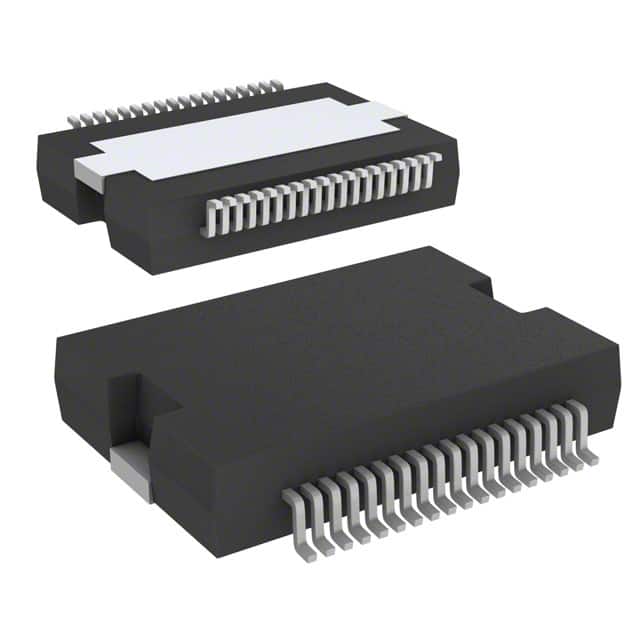
STMicroelectronics L6228PDTR
- Part No.:
- L6228PDTR
- Manufacturer:
- STMicroelectronics
- Category:
- Motor Drivers, Controllers
- Package:
- 36-PowerBSSOP (0.433", 11.00mm Width)
- Datasheet:
-
 L6228PDTR.pdf
- Description:
- IC MTR DRV BIPOLAR 8-52V 36PWRSO
- Quantity:
- Payment:

- Shipping:

Inventory:277
Please send an inquiry. Send us your inquiry, and we will respond immediately.
Product details
Overview
L6228PDTR from STMicroelectronics is a DMOS dual full-bridge stepper motor driver IC designed for bipolar stepper motor control in industrial motion systems. It delivers 2.8 A peak (1.4 A RMS) output current per bridge, operates from 8–52 V supply, features non-dissipative overcurrent protection, and supports full/half-step excitation with fast/slow decay mode selection.
For engineers reviewing the L6228PDTR datasheet, L6228PDTR pinout, L6228PDTR application, or L6228PDTR equivalent, key selection criteria include its constant tOFF PWM current control architecture, bootstrap gate drive requirement (VBOOT), dual independent RC-timed off-time configuration, and thermal shutdown at 165 °C - all critical for precision open-loop stepper positioning in CNC, robotics, and automated instrumentation.
Technical Context
The L6228PDTR integrates two independent DMOS full bridges with RDS(ON) = 0.73 Ω (typ, Tj = 25 °C), intrinsic fast freewheeling diodes, and cross-conduction protection via 1 µs deadtime. Its phase sequence generator implements full-step (two-phase-on/wave-drive) and half-step modes using CLOCK, CW/CCW, and HALF/FULL logic inputs.
PWM current regulation uses external sense resistors on SENSEA/SENSEB pins, with reference voltages applied to VREFA/VREFB (0–5 V range). Off-time is set by RC networks on RCA/RCB (20–100 kΩ + 0.47–100 nF), yielding tOFF from 6.6 µs to 6 ms; blanking time (1 µs) suppresses diode reverse-recovery spikes during turn-on.
Key Specifications
| Parameter | Value and Actual Design Meaning |
|---|---|
| Supply voltage | 8–52 V - supports wide-range industrial DC bus operation without external regulators. |
| Peak output current | 2.8 A per bridge - enables direct driving of NEMA 23-class bipolar stepper motors at full torque. |
| RDS(ON) (HS+LS) | 1.47 Ω typ (Tj = 25 °C) - determines conduction loss and thermal design margin at rated load. |
| Switching frequency | Up to 100 kHz - allows high-resolution microstepping when paired with external indexer logic. |
| Thermal shutdown | 165 °C - protects against sustained overload or inadequate heatsinking in enclosed enclosures. |
| tOFF range | 6.6 µs – 6 ms - configurable via external RC to match motor inductance and target current ripple. |
| Logic compatibility | TTL/CMOS - interfaces directly with 3.3 V or 5 V microcontrollers without level-shifting. |
Pinout & Package
Available in PowerSO-36 package with exposed thermal slug (internally connected to pins 1, 18, 19, 36 - GND). Pin layout optimized for dual-bridge motor drive with separate power, sense, and control domains.
| Pin/Terminal | Circuit Role | Design Meaning |
|---|---|---|
| CLOCK (Pin 10 / 11) | Step timing input | Rising-edge-triggered state machine advance - defines step rate and synchronizes with host controller. |
| CW/CCW (Pin 11 / 12) | Direction control | Static logic level selects rotation direction - eliminates need for bidirectional pulse sequencing. |
| HALF/FULL (Pin 12 / 27) | Excitation mode select | Configures internal sequencer for half-step (higher resolution) or full-step (higher torque) operation. |
| CONTROL (Pin 13 / 28) | Decay mode control | Selects FAST decay (quasi-synchronous rectification) or SLOW decay (recirculation) for optimal torque/current stability. |
| SENSEA / SENSEB (Pins 3/10 / 13/25) | Current sense return | Connects to low-side shunt resistor - enables closed-loop current regulation without external op-amps. |
| VREFA / VREFB (Pins 24/11 / 26/11) | PWM reference input | Analog voltage (0–5 V) sets target RMS current - allows dynamic torque scaling via DAC or potentiometer. |
| VSA / VSB (Pins 20/4 / 17/33) | Bridge A/B power supply | Must be tied together externally - ensures matched rail voltage for balanced dual-bridge operation. |
| VBOOT (Pin 15 / 30) | Bootstrap supply | Drives high-side N-MOS gates above VS - requires external charge pump (VCP oscillator + CBOOT, D1, D2). |
Key Features
| Feature | Design Value |
|---|---|
| Dual independent constant tOFF PWM controllers | Enables precise, decoupled current regulation for each motor phase - essential for smooth half-step and microstepping. |
| Non-dissipative overcurrent protection | Shuts down high-side MOSFETs without external sensing resistors or power-wasting foldback - preserves efficiency during stall events. |
| Fast/slow decay mode selection | Optimizes back-EMF handling and current recirculation path - reduces audible noise and improves low-speed torque linearity. |
| Integrated fast freewheeling diodes | Eliminates need for 8 external Schottky diodes - reduces BOM count, PCB area, and reverse-recovery losses. |
| Cross-conduction protection | 1 µs programmable deadtime prevents shoot-through - ensures robust operation across temperature and supply voltage variation. |
Applications
| Industrial CNC Positioning | Medical Infusion Pumps |
|---|---|
Use Scenario: Open-loop X/Y/Z axis control in desktop CNC mills with 1.8° bipolar stepper motors. IC Role / Device Role / Timing Role: Dual full-bridge driver executing full/half-step sequences under microcontroller clock command; regulates phase current to maintain torque across speed range. Use Value: 2.8 A peak current capability delivers full holding torque up to 300 RPM; non-dissipative OCP prevents thermal runaway during axis jamming. | Use Scenario: Precision syringe actuation in battery-powered portable infusion devices requiring silent, low-vibration delivery. IC Role / Device Role / Timing Role: Stepper driver implementing slow-decay mode for smooth current ramp-down - minimizing mechanical resonance and audible coil whine. Use Value: 1 µs blanking time rejects diode recovery noise; integrated freewheeling diodes reduce EMI vs discrete solutions - critical for EMC-compliant medical designs. |
| Automated Laboratory Analyzers | 3D Printer Extruder Control |
Use Scenario: Reagent carousel indexing and pipette arm positioning in clinical analyzers operating in temperature-controlled environments. IC Role / Device Role / Timing Role: Motor driver with thermal shutdown (165 °C) and undervoltage lockout - ensures fail-safe stop during HVAC failure or brownout. Use Value: Wide 8–52 V supply range accommodates 24 V industrial rails and 48 V high-power modules; PowerSO-36 package enables direct heatsink mounting for continuous 1.4 A RMS operation. | Use Scenario: Filament feed control in FDM 3D printers where rapid direction reversal and microstep accuracy impact print quality. IC Role / Device Role / Timing Role: Constant tOFF PWM controller with user-configurable RC network - allows tuning of current ripple to match extruder motor inductance (typically 1–5 mH). Use Value: tOFF range (6.6 µs–6 ms) supports both high-frequency microstepping (≥1/16) and high-torque full-step modes - adaptable across nozzle sizes and material types. |
Equivalent & Alternatives
The following parts are listed as comparable options for similar bipolar stepper motor driver applications.
| Alternative Part | Technical Difference | Application Difference | Selection Advice |
|---|---|---|---|
| TB6600HG | Higher 4.5 A peak current; external current sense amplifiers required; no integrated freewheeling diodes. | Better suited for high-torque NEMA 34 motors; requires more board space and external components. | Choose when >3 A peak current is mandatory and thermal management allows discrete diode placement. |
| DRV8825 | Lower 2.2 A peak current; integrated current sense; microstepping up to 1/32; 4.5–45 V supply range. | Targeted at compact, low-noise consumer-grade printers; lacks non-dissipative OCP and bootstrap gate drive. | Prefer for space-constrained designs needing fine microstepping but not industrial-grade fault protection. |
Compared with TB6600HG and DRV8825, the L6228PDTR uniquely combines non-dissipative overcurrent protection, integrated freewheeling diodes, and bootstrap gate drive in a thermally enhanced PowerSO-36 package - making it optimal for industrial stepper systems demanding reliability, efficiency, and simplified layout.
Availability
L6228PDTR is available at Aetrix Electronics and suitable for industrial CNC positioning, medical infusion pumps, automated laboratory analyzers, and 3D printer extruder control requiring stable component supply, long-term lifecycle support, and traceable sourcing.
Supply support for L6228PDTR includes scheduled delivery planning, volume procurement assistance, BOM continuity management, traceable sourcing, and lifecycle availability coordination for OEM customers, industrial embedded developers, connected-device designers, and electronics production programs.
Manufacturer
STMicroelectronics is a global semiconductor leader headquartered in Geneva, Switzerland, specializing in power management, motion control, and industrial interface ICs.
The L6228PDTR belongs to ST's L62xx family of intelligent motor drivers, engineered specifically for robust, integrated bipolar stepper motor control in harsh industrial and medical environments - emphasizing thermal resilience, fault tolerance, and minimal external component count.
FAQ
What is the minimum recommended external RC network for tOFF configuration?
The minimum recommended RC values are ROFF = 20 kΩ and COFF = 0.47 nF, yielding tOFF(MIN) ≈ 6.6 µs. This setting supports high switching frequencies (>50 kHz) and low-inductance motors, but requires careful PCB layout to minimize noise coupling on RCA/RCB pins due to reduced filtering.
How does the L6228PDTR handle motor stall conditions?
During stall, the device triggers non-dissipative overcurrent protection when sensed current exceeds 2.8 A (typ), disabling high-side MOSFETs without external sensing resistors or power-wasting foldback circuits. Thermal shutdown activates at 165 °C if prolonged stall causes excessive junction heating - providing dual-layer fault coverage.
Can the L6228PDTR drive unipolar stepper motors?
No - the L6228PDTR is designed exclusively for two-phase bipolar stepper motors with center-tapped windings. Its dual full-bridge topology requires four-wire (A+, A−, B+, B−) connection and cannot interface with five- or six-wire unipolar configurations that rely on single-ended switching or series/parallel winding reconfiguration.
What is the role of the VCP pin and how is it used?
VCP (Pin 22 / 7) outputs a 600 kHz square wave (10 V amplitude) that drives the external charge pump circuit (CBOOT, D1, D2) to generate VBOOT. This bootstrap voltage enables gate drive for the high-side N-MOSFETs in both bridges - eliminating need for isolated supplies while maintaining efficient 100% duty-cycle capability for low-speed torque hold.
L6228PDTR Specifications
- Product attributes
- Attribute value
- Manufacturer:
- STMicroelectronics
- Series:
- STSPIN L62
- Package/Case:
- 36-PowerBSSOP (0.433", 11.00mm Width)
- Packaging:
- Tape & Reel (TR)
- Product Status:
- Active
- Motor Type - Stepper:
- Bipolar
- Motor Type - AC, DC:
- -
- Function:
- Driver - Fully Integrated, Control and Power Stage
- Output Configuration:
- Half Bridge (4)
- Interface:
- Parallel
- Technology:
- DMOS
- Step Resolution:
- 1, 1/2
- Applications:
- General Purpose
- Current - Output:
- 1.4A
- Voltage - Supply:
- 8V ~ 52V
- Voltage - Load:
- 8V ~ 52V
- Operating Temperature:
- -25°C ~ 125°C (TJ)
- Grade:
- -
- Qualification:
- -
- Mounting Type:
- Surface Mount
- Supplier Device Package:
- PowerSO-36 Slug Up
L6228PDTR FAQ
1.How can I place an order for L6228PDTR through Aetrix?
Please submit a Request for Quotation (RFQ) for L6228PDTR on Aetrix. Our sales agent will provide a competitive quotation and guide you through the order confirmation once you accept the terms.
2.Are the price and stock information for L6228PDTR reliable?
The price and inventory of L6228PDTR are updated periodically and may fluctuate due to market conditions. Stock and pricing data are typically refreshed every 24 hours. Quotation validity for L6228PDTR is usually 5 days.
3.What payment methods are accepted for L6228PDTR?
We accept Wire Transfer, PayPal, Credit Card, Western Union, MoneyGram, and Escrow for L6228PDTR transactions.
Note: Certain payment methods may incur a processing fee.
4.How is shipping managed for L6228PDTR?
L6228PDTR orders can be shipped via leading logistics carriers, including DHL, UPS, FedEx, TNT, or Registered Mail.
Once your L6228PDTR order is processed, you will receive an email with the shipment details and tracking number.
Note: Tracking information may take up to 24 hours to appear. Express delivery typically takes 3–5 business days.
5.How can I obtain technical support or documentation for L6228PDTR?
For technical support, including L6228PDTR datasheets, pinout diagrams, or application guidance, please contact our engineering support team. They can provide detailed documentation and assistance for your L6228PDTR requirements.
6.How does Aetrix verify that L6228PDTR is sourced from the original manufacturer or authorized distributors?
All L6228PDTR products on Aetrix are procured from qualified distributors and authorized channels. Our dedicated quality assurance team conducts strict verification, including traceability checks and, if necessary, third-party testing. This ensures that L6228PDTR meets industry standards.
7.What is the process for return or replacement of L6228PDTR?
All L6228PDTR units undergo pre-shipment inspection (PSI). If there is an issue with L6228PDTR, returns or replacements are accepted under the following conditions:
1.Quantity discrepancies, incorrect items, or visible external defects (such as breakage or corrosion), acknowledged by Aetrix.
2.The issue is reported within 90 days of delivery.
3.The L6228PDTR part is unused and in its original packaging.
Return procedure for L6228PDTR:
1.Submit a request within 90 days.
2.Obtain a Return Material Authorization (RMA) from Aetrix.
L6228PDTR Tags
-
DRV2603RUNR
Texas Instruments
-
DRV8837CDSGR
Texas Instruments
-
DRV8837DSGR
Texas Instruments
-
DRV8838DSGR
Texas Instruments
-
DRV8839DSSR
Texas Instruments
-
EMC2301-1-ACZL-TR
Microchip Technology
-
DRV8231ADSGR
Texas Instruments
-
EMC2302-2-AIZL-TR
Microchip Technology
-
DRV8800PWPR
Texas Instruments
-
DRV8835DSSR
Texas Instruments
-
EMC2303-1-KP-TR
Microchip Technology
-
DRV8876PWPR
Texas Instruments
Tech Hub

Operational amplifier guide covering op amp basics, feedback, ideal vs real op amps, common configurations, buffer circuits, offset, bias current, gain-bandwidth, slew rate, rail-to-rail limits and sel…

Jumper cables guide covering safe connection order, red and black clamp placement, final ground connection, cable gauge, length, clamp quality, copper vs CCA cables, jump starter comparison and battery…

LDO regulator guide covering low dropout voltage, power dissipation, thermal design, PSRR, output noise, capacitor stability, adjustable LDO circuits, LDO vs buck converter and datasheet selection chec…

Conditional Access Module guide covering CAM meaning, CI/CI+ interface, smart card authorization, DVB security workflow, TV and set-top box compatibility, internal electronics, ESD protection, connecto…

Guide to electronic component obsolescence covering EOL risk, PCN/PDN notices, last-time buy planning, replacement options, form-fit-function validation, counterfeit risk and BOM lifecycle management.

18650 battery guide covering lithium-ion cell basics, 3.6V/3.7V voltage, 4.2V charging, mAh and Wh capacity, protected cells, chargers, BMS, series-parallel packs, holders, welding and sourcing checks.…

Hall effect sensor guide covering working principle, linear and digital sensors, Arduino circuits, current sensing, speed detection, automotive applications, A3144 examples, signal filtering and datash…

Product Change Notification guide for electronic components, covering PCN meaning, PCN vs PDN/EOL, common change types, risk levels, form-fit-function review, engineering validation, BOM control, LTB/L…

A practical guide to blend door actuators, covering HVAC function, symptoms, location, AC and heater issues, reset and calibration, replacement cost, electrical diagnosis, compatibility checks, and rep…

Engineering guide to Raspberry Pi alternatives, covering chip-level differences, Orange Pi, ROCK, Jetson, Banana Pi, NanoPi, Compute Module, Pico, GPIO, camera, HAT compatibility, and replacement risks…


