
 My Inquiry
 My Account


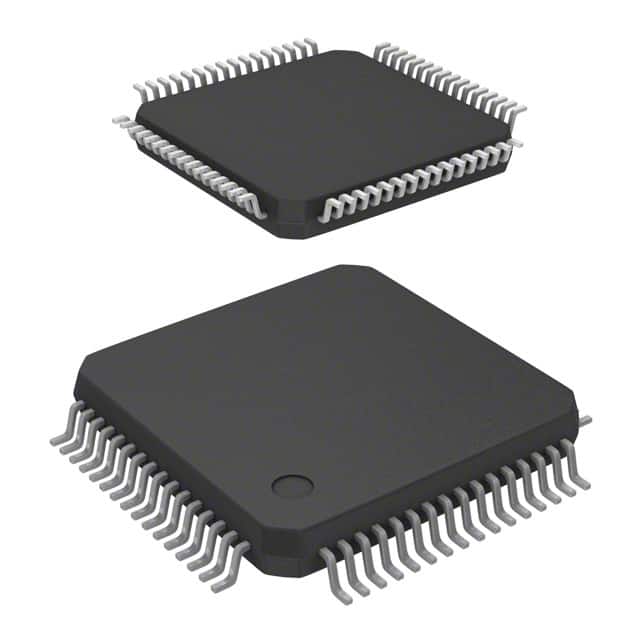
STMicroelectronics L9678P-S
- Part No.:
- L9678P-S
- Manufacturer:
- STMicroelectronics
- Category:
- Specialized
- Package:
- 64-LQFP
- Datasheet:
-
 L9678P-S.pdf
- Description:
- IC INTERFACE SPECIALIZED 64LQFP
- Quantity:
- Payment:

- Shipping:

Inventory:1,436
Please send an inquiry. Send us your inquiry, and we will respond immediately.
Product details
Overview
L9678P-S from STMicroelectronics is an AEC-Q100 qualified automotive IC for airbag system control and battery cut-off management. It integrates a 1.882 MHz boost regulator (23 V/33 V), dual linear regulators (5.0 V/7.2 V, 3.3 V), four-channel squib/pyroswitch drivers (1.2 A @ 2 ms), two-channel PSI-5 remote sensor interface, ISO9141 transceiver, and configurable safing logic - deployed in low-end airbag control units requiring functional safety compliance.
For engineers reviewing the L9678P-S datasheet, L9678P-S pinout, L9678P-S application, or L9678P-S equivalent, this page delivers verified technical context on deployment driver timing profiles, PSI-5 interface configuration, ERBOOST regulation stability, and safing algorithm register mapping - critical for ASIL-B system integration and diagnostic coverage validation.
Technical Context
The L9678P-S implements a dual-domain power architecture: high-frequency (1.882 MHz) boost converter supplies energy reserve voltage (23 V or 33 V ±5%) for pyro deployment, while independent linear regulators deliver 5.0 V ±4%, 7.2 V ±4%, and 3.3 V ±4% rails for MCU, sensors, and communication peripherals. Its PSI-5 interface supports asynchronous remote sensor polling with CRC-protected data fields and fault detection for short-to-ground, short-to-battery, and cross-link conditions.
Squib driver control uses configurable HSD/LSD pairs with integrated safing FET (20 V/25 V nominal), current monitoring (Rmeasure, STB, STG), and multi-level diagnostics including leakage, open-circuit, and FET integrity tests. Safing logic is user-customizable via SPI-accessible registers (SAF_ALGO_CONF, LOOP_MATRIX_ARMx, SAF_THRESHOLD_x) enabling deterministic arming pulse generation and in-frame/out-of-frame response validation.
Key Specifications
| Parameter | Value and Actual Design Meaning |
|---|---|
| Operating Voltage | 6 V minimum supply; enables operation during cranking or brown-out conditions in 12 V automotive systems. |
| Boost Regulator Frequency | 1.882 MHz switching frequency; minimizes external inductor size and improves transient response for energy reserve charging. |
| Squib Driver Current | 1.2 A @ 2 ms and 1.75 A @ 0.5/0.7 ms profiles; meets ISO 21434-compliant deployment timing for dual-stage airbag actuators. |
| PSI-5 Interface | Two-channel asynchronous mode only in L9678P-S variant; supports up to 4 remote crash sensors with CRC-verified data transmission. |
| Diagnostic Coverage | Integrated ADC, Rmeasure, STB/STG monitoring, and safing record compare (SAF_CC) enable >90% DC for ISO 26262 ASIL-B compliance. |
| Temperature Range | −40 °C to +95 °C ambient; validated for under-hood and passenger compartment mounting per AEC-Q100 Grade 2. |
| Package | LQFP64 (10 × 10 × 1.4 mm); RoHS-compliant, thermally enhanced for sustained 600 mA crossover switch operation. |
Pinout & Package
LQFP64 (10 × 10 × 1.4 mm) package with exposed thermal pad; pin-compatible with L9678P but adds dedicated PSI-5 channel pins (PSI5A_IN/OUT, PSI5B_IN/OUT) and disables unused legacy interfaces.
| Pin/Terminal | Circuit Role | Design Meaning |
|---|---|---|
| VDD5 | 5.0 V linear regulator output | Supplies MCU core and internal logic; ±4% tolerance ensures stable digital operation across temperature. |
| ERBOOST_OUT | Energy reserve boost output | Delivers 23 V or 33 V ±5% to squib capacitors; high-frequency switching reduces EMI filtering requirements. |
| PSI5A_IN | PSI-5 channel A input | Asynchronous remote sensor receive line; supports 125 kbps data rate with built-in slew-rate control. |
| PSI5B_OUT | PSI-5 channel B output | Drives second remote sensor bus; integrated current source enables bidirectional communication without external components. |
| COVRACT | Crossover switch activation | Controls 3 Ω max, 600 mA rated switch for battery isolation; monitored via dedicated fault status register (LP_GNDLOSS). |
| ISO_K | ISO9141 K-line transceiver output | Direct connection to vehicle diagnostic bus; compliant with ISO 9141-2 physical layer timing and voltage thresholds. |
Key Features
| Feature | Design Value |
|---|---|
| User-configurable ERBOOST output | Selectable 23 V or 33 V ±5% via SPI register (ER_BOOST_SEL), enabling single-BOM support for multiple airbag module variants. |
| Integrated squib diagnostics | Real-time Rmeasure, STB/STG leakage detection, and FET integrity test (SAFING_STATE command) reduce need for external test circuitry. |
| Configurable safing logic | Programmable threshold comparison (SAF_THRESHOLD_x), arming pulse stretch (AEPSTS_ARMx), and record masking (SAF_REQ_MASK_x) enable custom crash decision trees. |
| Dual-oscillator clock source | 7.5 MHz and 16 MHz internal oscillators eliminate external crystal cost and PCB area; selectable via CLK_CONF register. |
| System voltage diagnostics | 10-bit ADC with analog MUX monitors VSUP, VDD5, VDD3V3, and temperature sensor - all accessible via DIAGCTRL_x registers. |
Applications
| Frontal Airbag Control Unit | Side Impact Sensor Interface |
|---|---|
|
Use Scenario: Central airbag ECU managing dual-stage frontal inflators and seatbelt pretensioners in entry-level vehicles. IC Role / Device Role / Timing Role: Primary deployment controller with ERBOOST-supplied squib voltage, PSI-5-linked acceleration sensors, and ISO9141 diagnostics port. Use Value: Integrated 1.2 A/2 ms squib drivers and safing record compare (SAF_CC) eliminate discrete timing ICs and reduce BOM count by ≥3 components. |
Use Scenario: Remote side-impact sensor node communicating via PSI-5 to main airbag ECU in compact SUV platforms. IC Role / Device Role / Timing Role: PSI-5 transceiver and ADC front-end for crash signal acquisition; performs local diagnostics before SPI forwarding to host. Use Value: Two-channel asynchronous PSI-5 interface enables daisy-chained sensor networks with <10 µs timestamp resolution per event. |
| Battery Cut-off System | Pyro Fuse Management Module |
|
Use Scenario: Post-crash battery isolation system triggered by airbag deployment signal in 48 V mild-hybrid architectures. IC Role / Device Role / Timing Role: COVRACT-controlled crossover switch (3 Ω max, 600 mA) activated via SPI_DEPCOM after confirmed crash event. Use Value: Integrated COVRACT driver and ground-loss monitoring (LP_GNDLOSS) replace external MOSFET gate drivers and sense resistors. |
Use Scenario: Redundant pyro fuse actuation module for high-voltage battery disconnect in EV platforms meeting UNECE R100 requirements. IC Role / Device Role / Timing Role: Dual squib driver (HSD+LSD) with 1.75 A @ 0.5 ms profile and integrated safing FET (20 V/25 V) for fail-safe activation. Use Value: Built-in current monitoring (Rmeasure) and STG leakage diagnostics ensure pyro fuse resistance stays within 1.2–3.5 Ω window pre-deployment. |
Equivalent & Alternatives
The following parts are listed as comparable options for similar airbag system controller applications.
| Alternative Part | Technical Difference | Application Difference | Selection Advice |
|---|---|---|---|
| NXP MC33816 | Single-channel PSI-5 interface; no ERBOOST regulator; requires external 33 V boost stage. | Lacks integrated energy reserve power path; suitable only where external boost is already present. | Choose when leveraging existing 33 V supply and minimizing IC count in non-ASIL-B designs. |
| Renesas RAA278810 | Supports CAN FD instead of ISO9141; includes 12-bit SAR ADC but no COVRACT switch. | Targets next-gen ADAS-integrated airbag ECUs with CAN-based diagnostics and OTA updates. | Prefer for CAN-based vehicle architectures needing higher bandwidth diagnostics and firmware update capability. |
Compared with MC33816 and RAA278810, the L9678P-S uniquely combines PSI-5 dual-channel support, integrated ERBOOST, COVRACT switch, and ISO9141 transceiver - making it the only single-chip solution for cost-sensitive, ASIL-B-compliant low-end airbag systems requiring both sensor interface and battery cut-off functionality.
Availability
L9678P-S is available at Aetrix Electronics and suitable for low-end airbag systems, battery cut-off modules, and pyro fuse management applications requiring stable component supply, long-term automotive lifecycle support, and AEC-Q100 qualification.
Supply support for L9678P-S includes scheduled delivery planning, volume procurement assistance, BOM continuity management, traceable sourcing, and lifecycle availability coordination for OEM customers, industrial embedded developers, connected-device designers, and electronics production programs.
Manufacturer
STMicroelectronics is a global semiconductor leader specializing in automotive, industrial, and power management ICs, with over 30 years of automotive qualification experience and ISO/TS 16949-certified manufacturing.
The L9678P-S belongs to ST's SPC5 automotive safety microcontroller companion family, designed specifically for airbag control units requiring integrated power, diagnostics, and sensor interface functions in ASIL-B systems.
FAQ
What is the key functional difference between L9678P and L9678P-S?
The L9678P-S adds two-channel asynchronous PSI-5 remote sensor interface support - absent in the base L9678P - while disabling legacy interfaces like LIN. It retains identical squib driver specs, ERBOOST regulation, and ISO9141 transceiver functionality, making it the designated variant for modern crash sensor networks requiring bidirectional, low-pin-count communication.
How does the ERBOOST regulator maintain stability during cold-crank conditions?
The ERBOOST regulator operates down to 6 V input and uses 1.882 MHz fixed-frequency PWM control with internal compensation. Its fast transient response (≤5 µs recovery from 50% load step) and ±5% output tolerance ensure consistent 23 V/33 V energy reserve voltage even during 6.5 V cold-crank dips, preventing squib under-voltage deployment failures.
Can the safing logic be reconfigured in-field via SPI without device reset?
Yes - safing parameters (thresholds, arming pulse width, record masking) are updated dynamically via SAF_CONTROL_x and SAF_THRESHOLD_x registers. Configuration changes take effect immediately upon write; no reset or power cycle is required, enabling adaptive crash algorithms during vehicle calibration or software updates.
What diagnostic coverage does the integrated ADC provide for system voltage monitoring?
The 10-bit ADC monitors VSUP, VDD5, VDD3V3, and internal temperature with programmable sampling intervals via DIAGCTRL_x registers. It achieves >95% diagnostic coverage for undervoltage/overvoltage faults per ISO 26262 Annex D, with fault reporting through FLTSR and SYS_STATE registers - eliminating need for external supervisor ICs.
L9678P-S Specifications
- Product attributes
- Attribute value
- Manufacturer:
- STMicroelectronics
- Series:
- -
- Package/Case:
- 64-LQFP
- Packaging:
- Tray
- Product Status:
- Obsolete
- Applications:
- -
- Interface:
- SPI
- Voltage - Supply:
- -
- Supplier Device Package:
- 64-LQFP (10x10)
- Grade:
- Automotive
- Qualification:
- AEC-Q100
- Mounting Type:
- Surface Mount
L9678P-S FAQ
1.How can I place an order for L9678P-S through Aetrix?
Please submit a Request for Quotation (RFQ) for L9678P-S on Aetrix. Our sales agent will provide a competitive quotation and guide you through the order confirmation once you accept the terms.
2.Are the price and stock information for L9678P-S reliable?
The price and inventory of L9678P-S are updated periodically and may fluctuate due to market conditions. Stock and pricing data are typically refreshed every 24 hours. Quotation validity for L9678P-S is usually 5 days.
3.What payment methods are accepted for L9678P-S?
We accept Wire Transfer, PayPal, Credit Card, Western Union, MoneyGram, and Escrow for L9678P-S transactions.
Note: Certain payment methods may incur a processing fee.
4.How is shipping managed for L9678P-S?
L9678P-S orders can be shipped via leading logistics carriers, including DHL, UPS, FedEx, TNT, or Registered Mail.
Once your L9678P-S order is processed, you will receive an email with the shipment details and tracking number.
Note: Tracking information may take up to 24 hours to appear. Express delivery typically takes 3–5 business days.
5.How can I obtain technical support or documentation for L9678P-S?
For technical support, including L9678P-S datasheets, pinout diagrams, or application guidance, please contact our engineering support team. They can provide detailed documentation and assistance for your L9678P-S requirements.
6.How does Aetrix verify that L9678P-S is sourced from the original manufacturer or authorized distributors?
All L9678P-S products on Aetrix are procured from qualified distributors and authorized channels. Our dedicated quality assurance team conducts strict verification, including traceability checks and, if necessary, third-party testing. This ensures that L9678P-S meets industry standards.
7.What is the process for return or replacement of L9678P-S?
All L9678P-S units undergo pre-shipment inspection (PSI). If there is an issue with L9678P-S, returns or replacements are accepted under the following conditions:
1.Quantity discrepancies, incorrect items, or visible external defects (such as breakage or corrosion), acknowledged by Aetrix.
2.The issue is reported within 90 days of delivery.
3.The L9678P-S part is unused and in its original packaging.
Return procedure for L9678P-S:
1.Submit a request within 90 days.
2.Obtain a Return Material Authorization (RMA) from Aetrix.
L9678P-S Tags
-
NVT4857UKAZ
NXP Semiconductors
-
TCA8418RTWR
Texas Instruments
-
PCA9546APWR
Texas Instruments
-
MD0100N8-G
Microchip Technology
-
PCA9548APW,118
NXP Semiconductors
-
PCA9540BDP,118
NXP Semiconductors
-
PCA9548APWR
Texas Instruments
-
PCA9546APW,118
NXP Semiconductors
-
PTN3360DBS,518
NXP Semiconductors
-
PCA9546ABS,118
NXP Semiconductors
-
PCA9518PWR
Texas Instruments
-
PCA9545APW,118
NXP Semiconductors
Tech Hub

A practical engineering guide to 3.3V and 5V logic compatibility, input thresholds, resistor dividers, translator ICs, MOSFET level shifting, I2C pull-ups, timing limits and power-sequencing risks.

The 74HC595 uses push-pull logic outputs, while the TPIC6B595 uses 50 V open-drain DMOS sinks for higher-power loads. This guide compares timing, current limits, 3.3 V interfacing, load wiring, thermal…

The 74HC595 converts serial data into eight stable parallel outputs. This guide covers pin functions, shift and storage timing, OE and MR behavior, drive-current limits, cascading, voltage compatibilit…

A technical comparison of level-sensitive latches and edge-triggered flip-flops, covering timing windows, setup and hold limits, master–slave operation, time borrowing, race-through, HDL inference and…

A D latch stores one bit while Enable controls when data can pass. This reference covers gate-level operation, truth tables, transparency, setup and hold timing, LE versus OE, common ICs and practical …

An SR latch stores one bit through cross-coupled feedback. This engineering reference covers NOR and NAND implementations, truth tables, forbidden-state recovery, gated operation, switch debouncing, fa…

Latch circuits retain one bit through feedback. This technical reference covers SR and D latches, truth tables, transparency, timing limits, latch-versus-flip-flop behavior, applications and common log…

An engineering guide to LED driver operation, constant-current and constant-voltage outputs, linear and switching topologies, dimming, IC selection, calculations, replacement compatibility, and fault c…

Operational amplifier guide covering op amp basics, feedback, ideal vs real op amps, common configurations, buffer circuits, offset, bias current, gain-bandwidth, slew rate, rail-to-rail limits and sel…

Jumper cables guide covering safe connection order, red and black clamp placement, final ground connection, cable gauge, length, clamp quality, copper vs CCA cables, jump starter comparison and battery…


