
 My Inquiry
 My Account


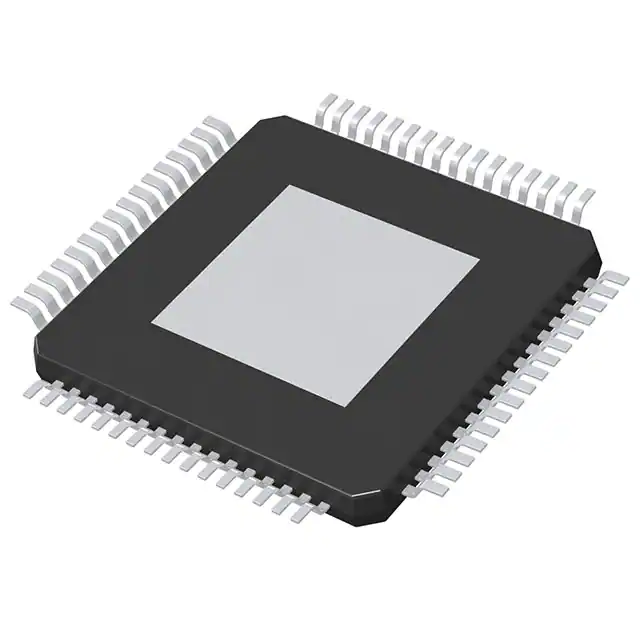
STMicroelectronics L9963
- Part No.:
- L9963
- Manufacturer:
- STMicroelectronics
- Category:
- Battery Management
- Package:
- 64-TQFP Exposed Pad
- Datasheet:
-
 L9963.pdf
- Description:
- IC BATT MON LI-ION 4-14CL 64TQFP
- Quantity:
- Payment:

- Shipping:

Inventory:1,238
Please send an inquiry. Send us your inquiry, and we will respond immediately.
Product details
Overview
L9963 from STMicroelectronics is an AEC-Q100 qualified, ISO 26262 ASIL-D compliant battery monitor IC for automotive and industrial energy storage systems. It measures 4–14 series Li-ion cells with ±2 mV voltage accuracy (1.7–4.7 V), 16-bit resolution, and zero desynchronization delay between samples; integrates coulomb counting, passive balancing (200 mA/channel), 9 GPIOs (7 configurable as NTC inputs), and transformer/capacitive isolated 2.66 Mbps SPI daisy-chain communication.
For engineers reviewing the L9963 datasheet, L9963 pinout, L9963 application, or L9963 equivalent, key selection considerations include cell count scalability (up to 14), dual-access ring latency (<2 µs across 15 devices), silent-balancing mode timing control, redundant ADC path architecture, and hot-plug robustness without external Zeners.
Technical Context
The L9963 implements a fully redundant cell voltage measurement path with ADC swap capability, enabling limp-home operation after single-point failure detection. Its isolated serial interface supports regenerative buffering and dual-access ring topology for deterministic timing in multi-device stacks.
It delivers synchronized voltage and current sampling for precise coulomb counting in both ignition-on and ignition-off states, with integrated 5 V regulators (VCOM: 25 mA; VTREF: 50 mA) and programmable balancing termination via internal timer interrupt.
Key Specifications
| Parameter | Value and Actual Design Meaning |
|---|---|
| Cell Count Range | 4 to 14 series-connected Li-ion cells - enables flexible pack architecture for 48 V and HV systems without re-design. |
| Voltage Accuracy | ±2 mV over 1.7–4.7 V range, full temperature - ensures SOC estimation error <0.5% under worst-case thermal conditions. |
| Isolation Interface | 2.66 Mbps transformer or capacitive isolation - supports >10 m cable runs with <4 ms total latency for 96-cell readout (8 devices). |
| Passive Balancing | 200 mA per channel, normal & silent mode - achieves thermal-safe cell equalization without external FETs or heatsinks. |
| ADC Resolution | 16-bit SAR with redundant path swap - provides fault-tolerant voltage measurement meeting ASIL-D diagnostic coverage requirements. |
| GPIO/NTC Inputs | 9 GPIOs, up to 7 configurable as analog NTC inputs - enables direct thermistor monitoring for up to 7 cell zones without external ADC. |
| Regulator Outputs | VCOM (5 V / 25 mA) and VTREF (5 V / 50 mA) - powers external comparators, level shifters, or isolated gate drivers directly from IC. |
Pinout & Package
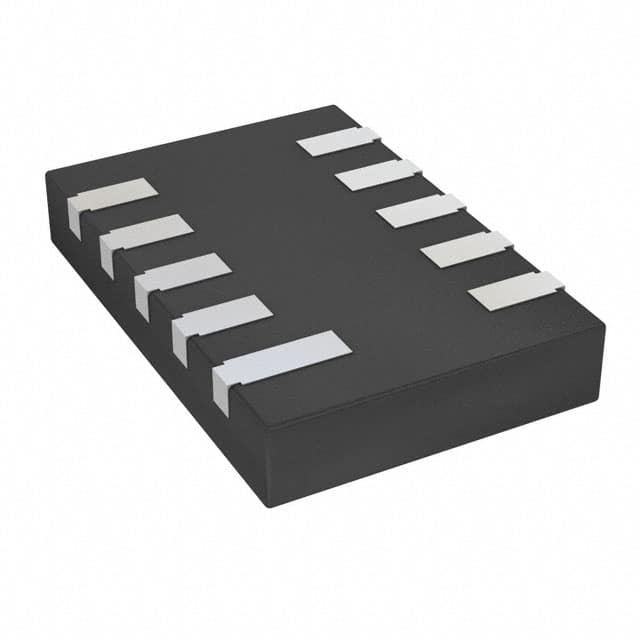
The L9963 is housed in a TQFP64EP (10 × 10 × 1 mm, exposed pad down) package with wettable flank leads for automated optical inspection. The exposed thermal pad improves power dissipation during continuous balancing operation.
| Pin/Terminal | Circuit Role | Design Meaning |
|---|---|---|
| VBAT | High-side supply input | Connects to top of stacked battery string; monitors cell 14 voltage reference and powers internal high-voltage domain. |
| CGND | Cell ground reference | Provides isolated ground reference for cell voltage measurements; enables accurate differential sensing across stack. |
| ISOHp / ISOLp | Isolated SPI data output / input | Transmits/receives daisy-chained SPI frames across transformer-isolated barrier; supports dual-access ring topology. |
| GPIO1/FAULTH | Dedicated high-level fault output | Asserts open-drain active-high signal on critical faults (e.g., overvoltage, ADC mismatch); independent of SPI status. |
| GPIO2/FAULTL | Dedicated low-level fault output | Asserts open-drain active-low signal for same fault set; enables redundant fault signaling per ISO 26262 requirement. |
| VTREF | Reference voltage output | Stable 5 V output with 50 mA drive - supplies precision reference to external ADCs or analog front-ends. |
| VCOM | Communication supply output | 5 V output with 25 mA drive - powers isolated level shifters or digital isolators interfacing with host MCU. |
| ISENSEp / ISENSEm | Current sense differential inputs | Accepts shunt-based bidirectional current measurement for coulomb counting in both charge/discharge and sleep states. |
Key Features
| Feature | Design Value |
|---|---|
| Fully redundant ADC path with swap logic | Enables automatic failover to backup measurement chain upon detected fault, satisfying ASIL-D diagnostic coverage targets. |
| Cyclic wake-up measurement mode | Allows periodic low-power cell voltage and temperature sampling during system sleep, preserving battery autonomy. |
| Hot-plug robustness without Zener clamps | Eliminates need for external TVS/Zener diodes on each cell line, reducing BOM cost and PCB area by ~14 components per device. |
| Intelligent diagnostic routine with dual notification | Validates faults via hardware logic and reports through both SPI Global Status Word and dedicated FAULTH/FAULTL pins. |
| Programmable balancing termination | Auto-stops balancing per channel using internal timer interrupt, preventing over-discharge of weaker cells during long-duration equalization. |
Applications
| 48 V Mild Hybrid Systems | Industrial UPS Battery Packs |
|---|---|
Use Scenario: Monitoring 12–14 cell Li-ion stacks in 48 V P0/P1 mild hybrid architectures with start-stop and regenerative braking. IC Role / Device Role / Timing Role: Primary cell voltage, current, and temperature monitor; provides synchronized sampling for real-time SOC/SOH calculation and ASIL-B/D safety layer. Use Value: Zero desynchronization delay ensures consistent state estimation across all cells during fast transients like engine cranking or brake energy recovery. | Use Scenario: Supervising 8–12 cell backup battery modules in telecom or data center UPS systems requiring >10-year field reliability. IC Role / Device Role / Timing Role: Fault-tolerant pack monitor with redundant ADC path and dual FAULT outputs for fail-safe shutdown coordination. Use Value: Fully redundant measurement path and intelligent diagnostics reduce false trip rate while maintaining compliance with UL 1973 and IEC 62619. |
| E-bike Battery Management | Portable Energy Storage Systems |
Use Scenario: Managing 10–13 cell packs in Class 3 e-bikes with integrated torque sensing and pedal-assist control. IC Role / Device Role / Timing Role: High-accuracy voltage/current sensor feeding MCU-based BMS firmware; supports manual/timed balancing during charging cycles. Use Value: ±2 mV voltage accuracy over temperature enables <1% SOC drift over 500 cycles, extending usable battery life and rider range confidence. | Use Scenario: Monitoring 4–10 cell LiFePO₄ or NMC packs in portable solar generators rated 1–5 kWh. IC Role / Device Role / Timing Role: Isolated daisy-chain monitor enabling modular expansion from 1 to 8 packs via single host interface. Use Value: 2.66 Mbps isolated SPI with regenerative buffer allows reliable communication across >3 m inter-module distances with <4 ms full-system readout latency. |
Equivalent & Alternatives
The following parts are listed as comparable options for similar battery monitor applications.
| Alternative Part | Technical Difference | Application Difference | Selection Advice |
|---|---|---|---|
| BQ76952 (TI) | Integrated high-side N-channel driver for active balancing; no isolated interface; requires external isolator for daisy-chain. | Targeted at cost-sensitive consumer/portable designs where isolation is added externally; lacks ASIL-D certification. | Select when active balancing and lower BOM count outweigh need for certified isolation and automotive qualification. |
| MAX17853 (Analog Devices) | Supports up to 16 cells; uses capacitive isolation only; 1 Mbps max daisy-chain speed; no integrated coulomb counter. | Used in industrial battery racks where higher cell count is prioritized over ultra-low latency and integrated current sensing. | Select when >14-cell support and capacitive isolation sufficiency are primary, and coulomb counting is handled externally. |
Compared with BQ76952 and MAX17853, the L9963 uniquely combines ASIL-D compliance, zero-desync voltage sampling, integrated coulomb counting, and transformer-isolated 2.66 Mbps daisy-chain - making it the only option qualified for safety-critical automotive 48 V systems requiring guaranteed timing determinism and fault containment.
Availability
L9963 is available at Aetrix Electronics and suitable for 48 V mild hybrid vehicles, industrial UPS battery packs, and e-bike energy storage systems requiring stable component supply, long-term lifecycle support, and AEC-Q100/ISO 26262-compliant sourcing.
Supply support for L9963 includes scheduled delivery planning, volume procurement assistance, BOM continuity management, traceable sourcing, and lifecycle availability coordination for OEM customers, industrial embedded developers, connected-device designers, and electronics production programs.
Manufacturer
STMicroelectronics is a global semiconductor leader headquartered in Geneva, Switzerland, designing and manufacturing microcontrollers, power ICs, sensors, and analog products for automotive, industrial, and consumer markets.
The L9963 belongs to ST's automotive-grade battery monitoring IC product line, engineered specifically for functional safety-critical BMS applications in 48 V and high-voltage electric powertrains and energy storage systems.
FAQ
What isolation methods does the L9963 support, and how do they affect system design?
The L9963 supports both transformer-based and capacitive-based isolation for its 2.66 Mbps serial interface. Transformer isolation enables longer cable runs (>10 m), higher common-mode transient immunity, and compatibility with legacy automotive harnesses. Capacitive isolation offers smaller footprint and lower EMI emissions but limits distance to ~3 m. Both methods eliminate the need for external isolators, reducing bill-of-materials and layout complexity in multi-device stacks.
How does the L9963 achieve ASIL-D compliance despite using passive balancing?
ASIL-D compliance is achieved through architectural redundancy-not balancing method. The L9963 implements dual independent ADC paths with automatic swap logic, redundant fault reporting (SPI GSW + dedicated FAULTH/FAULTL pins), and self-validating diagnostic routines. Passive balancing is thermally safe and predictable, avoiding failure modes associated with active FET switching, thereby supporting the required diagnostic coverage metrics for ASIL-D without compromising reliability.
Can the L9963 measure current during vehicle ignition-off states, and how is this implemented?
Yes, the L9963 performs coulomb counting in both ignition-on and ignition-off states using its low-power cyclic wake-up mode. It samples current via ISENSEp/ISENSEm with synchronized voltage acquisition, stores accumulated charge in internal registers, and retains data across sleep cycles using its dedicated low-leakage power domain. This enables accurate parasitic drain monitoring and battery health tracking during extended parking periods without external supervision.
What is the purpose of the VCOM and VTREF regulator outputs, and what loads can they drive?
VCOM (5 V / 25 mA) powers isolated communication interfaces such as digital isolators or level shifters connecting to the host MCU. VTREF (5 V / 50 mA) supplies precision reference voltage to external analog components like current-sense amplifiers or auxiliary ADCs. Neither output is intended for high-current loads; exceeding 25 mA on VCOM or 50 mA on VTREF risks regulation loss and thermal derating, potentially affecting measurement stability.
L9963 Specifications
- Product attributes
- Attribute value
- Manufacturer:
- STMicroelectronics
- Series:
- -
- Package/Case:
- 64-TQFP Exposed Pad
- Packaging:
- Tray
- Product Status:
- Active
- Function:
- Battery Monitor
- Battery Chemistry:
- Lithium Ion
- Number of Cells:
- 4 ~ 14
- Fault Protection:
- Over Current
- Interface:
- SPI
- Operating Temperature:
- -
- Grade:
- Automotive
- Qualification:
- AEC-Q100
- Mounting Type:
- Surface Mount
- Supplier Device Package:
- 64-TQFP-EP (10x10)
L9963 FAQ
1.How can I place an order for L9963 through Aetrix?
Please submit a Request for Quotation (RFQ) for L9963 on Aetrix. Our sales agent will provide a competitive quotation and guide you through the order confirmation once you accept the terms.
2.Are the price and stock information for L9963 reliable?
The price and inventory of L9963 are updated periodically and may fluctuate due to market conditions. Stock and pricing data are typically refreshed every 24 hours. Quotation validity for L9963 is usually 5 days.
3.What payment methods are accepted for L9963?
We accept Wire Transfer, PayPal, Credit Card, Western Union, MoneyGram, and Escrow for L9963 transactions.
Note: Certain payment methods may incur a processing fee.
4.How is shipping managed for L9963?
L9963 orders can be shipped via leading logistics carriers, including DHL, UPS, FedEx, TNT, or Registered Mail.
Once your L9963 order is processed, you will receive an email with the shipment details and tracking number.
Note: Tracking information may take up to 24 hours to appear. Express delivery typically takes 3–5 business days.
5.How can I obtain technical support or documentation for L9963?
For technical support, including L9963 datasheets, pinout diagrams, or application guidance, please contact our engineering support team. They can provide detailed documentation and assistance for your L9963 requirements.
6.How does Aetrix verify that L9963 is sourced from the original manufacturer or authorized distributors?
All L9963 products on Aetrix are procured from qualified distributors and authorized channels. Our dedicated quality assurance team conducts strict verification, including traceability checks and, if necessary, third-party testing. This ensures that L9963 meets industry standards.
7.What is the process for return or replacement of L9963?
All L9963 units undergo pre-shipment inspection (PSI). If there is an issue with L9963, returns or replacements are accepted under the following conditions:
1.Quantity discrepancies, incorrect items, or visible external defects (such as breakage or corrosion), acknowledged by Aetrix.
2.The issue is reported within 90 days of delivery.
3.The L9963 part is unused and in its original packaging.
Return procedure for L9963:
1.Submit a request within 90 days.
2.Obtain a Return Material Authorization (RMA) from Aetrix.
L9963 Tags
-
BQ29700DSER
Texas Instruments
-
S-8241ABKMC-GBKT2G
ABLIC Inc.
-
S-8241ABPMC-GBPT2G
ABLIC Inc.

-
BQ27427YZFR
Texas Instruments
-
BQ27426YZFR
Texas Instruments
-
STC3117IJT
STMicroelectronics
-
STC3115IJT
STMicroelectronics
-
BQ76925RGER
Texas Instruments
-
NPM1100-QDAA-R
Nordic Semiconductor ASA
-
BQ27441DRZR-G1A
Texas Instruments
-
STC3115AIQT
STMicroelectronics

-
S-8252AAL-M6T1U
ABLIC Inc.
Tech Hub

Jumper cables guide covering safe connection order, red and black clamp placement, final ground connection, cable gauge, length, clamp quality, copper vs CCA cables, jump starter comparison and battery…

LDO regulator guide covering low dropout voltage, power dissipation, thermal design, PSRR, output noise, capacitor stability, adjustable LDO circuits, LDO vs buck converter and datasheet selection chec…

Conditional Access Module guide covering CAM meaning, CI/CI+ interface, smart card authorization, DVB security workflow, TV and set-top box compatibility, internal electronics, ESD protection, connecto…

Guide to electronic component obsolescence covering EOL risk, PCN/PDN notices, last-time buy planning, replacement options, form-fit-function validation, counterfeit risk and BOM lifecycle management.

18650 battery guide covering lithium-ion cell basics, 3.6V/3.7V voltage, 4.2V charging, mAh and Wh capacity, protected cells, chargers, BMS, series-parallel packs, holders, welding and sourcing checks.…

Hall effect sensor guide covering working principle, linear and digital sensors, Arduino circuits, current sensing, speed detection, automotive applications, A3144 examples, signal filtering and datash…

Product Change Notification guide for electronic components, covering PCN meaning, PCN vs PDN/EOL, common change types, risk levels, form-fit-function review, engineering validation, BOM control, LTB/L…

A practical guide to blend door actuators, covering HVAC function, symptoms, location, AC and heater issues, reset and calibration, replacement cost, electrical diagnosis, compatibility checks, and rep…

Engineering guide to Raspberry Pi alternatives, covering chip-level differences, Orange Pi, ROCK, Jetson, Banana Pi, NanoPi, Compute Module, Pico, GPIO, camera, HAT compatibility, and replacement risks…
Engineering guide to dynamic load response testing for high-current buck converters, covering load step setup, slew rate, Vcore undershoot, overshoot, recovery time, probe location, output capacitors a…


