
 My Inquiry
 My Account


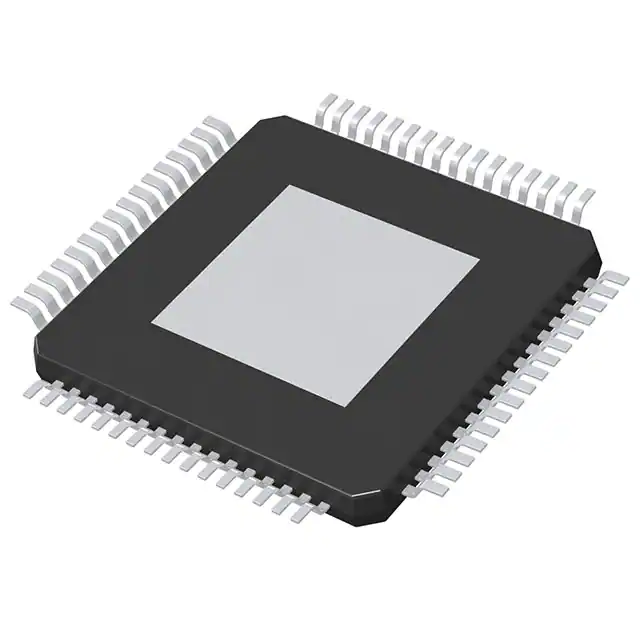
STMicroelectronics L9963E-TR
- Part No.:
- L9963E-TR
- Manufacturer:
- STMicroelectronics
- Category:
- Battery Management
- Package:
- 64-TQFP Exposed Pad
- Datasheet:
-
 L9963E-TR.pdf
- Description:
- AUTOMOTIVE CHIP FOR BATTERY MANA
- Quantity:
- Payment:

- Shipping:

Inventory:1,422
Please send an inquiry. Send us your inquiry, and we will respond immediately.
Product details
Overview
L9963E-TR from STMicroelectronics is an AEC-Q100 qualified, ISO 26262 ASIL-D compliant battery monitor IC for automotive and industrial Li-ion battery packs. It measures 4–14 series-connected cells with ±2 mV voltage accuracy (0.5–4.3 V, −40 to +105 °C), performs synchronized coulomb counting, supports transformer/capacitor-based isolation, and delivers 200 mA passive balancing per cell. Used in 48 V mild-hybrid systems for real-time cell voltage, current, and temperature monitoring.
For engineers reviewing the L9963E-TR datasheet, L9963E-TR pinout, L9963E-TR application, or L9963E-TR equivalent, this page provides verified technical context, validated pin functions, confirmed safety architecture (ADC swap, dual FAULT signaling), and real-world timing performance across daisy-chained topologies - critical for BMS functional safety validation and stack scalability planning.
Technical Context
The L9963E-TR implements a fully redundant analog measurement path with ADC swap capability, enabling limp-home operation after single-point failure detection. Its dual isolated serial interface (ISOHp/ISOHm and ISOLp/ISOLm) supports regenerative buffering and <4 µs inter-device desynchronization delay in daisy chains up to 31 devices.
It integrates two independent 5 V regulators (VCOM: 25 mA; VTREF: 50 mA), nine GPIOs (seven configurable as NTC analog inputs), and a hardware self-check (HWSC) that validates ADC comparators, bandgap references, and fault propagation paths - all required for ASIL-D compliance in high-voltage battery management.
Key Specifications
| Parameter | Value and Actual Design Meaning |
|---|---|
| Cell count range | 4 to 14 series cells per device; scalable to 434 cells via 31-device daisy chain |
| Voltage ADC accuracy | ±2 mV max error over 0.5–4.3 V range, after soldering, −40 to +105 °C junction temp |
| Isolated comms speed | 2.66 Mbps with regenerative buffer; <4 µs latency between 1st and 31st device in chain |
| Passive balancing | 200 mA per cell, programmable in normal and silent-balancing modes |
| Current sensing | Fully synchronized coulomb counting with pack overcurrent detection in ignition-on/off states |
| Safety certification | AEC-Q100 Grade 0 qualified; ISO 26262 ASIL-D ready with dual FAULT signaling and HWSC |
| Regulators | VCOM (5 V, 25 mA), VTREF (5 V, 50 mA), VREG (6.5 V), all with UV/OV detection and self-validation |
Pinout & Package
TQFP-64EP (10 mm × 10 mm, exposed pad down) package with 64 pins, optimized for thermal dissipation and automotive PCB layout robustness.
| Pin/Terminal | Circuit Role | Design Meaning |
|---|---|---|
| C0–C14 | Cell voltage inputs | C0 = bottom cell negative; C1–C14 = positive terminals of cells 1–14; support busbar connection without calibration shift |
| S1–S14, B2_1–B14_13 | Cell balancing control outputs | 14 dedicated balancing drivers with common terminals (e.g., B2_1 shared by S1/S2); enable simultaneous multi-channel discharge |
| ISENSEp / ISENSEm | Coulomb counting differential inputs | High-precision current sense interface supporting open-wire and overcurrent detection in sleep mode |
| ISOHp / ISOHm / ISOLp / ISOLm | Isolated SPI physical layer | Supports transformer- or capacitor-coupled isolation; enables daisy-chain communication with <4 ms full-system readout (96 cells) |
| GPIO1–GPIO9 | Configurable I/O | Up to 7 support NTC thermistor sensing; GPIO7 doubles as wake-up input; GPIO1/2 provide FAULTH/FAULTL signaling |
Key Features
| Feature | Design Value |
|---|---|
| Fully redundant measurement path | ADC swap architecture ensures continuous cell voltage reporting after single ADC failure - mandatory for ASIL-D limp-home operation |
| Integrated dual FAULT signaling | Dedicated FAULTH (input) and FAULTL (output) pins enable cascaded fault propagation across daisy chains with heartbeat integrity check |
| Programmable silent balancing | 200 mA balancing continues during low-power mode without drawing from main pack - preserves SOC during idle periods |
| Transformer/capacitor isolation support | Single IC supports both XFMR and CAP isolation topologies without external transceiver; reduces BOM count and EMI footprint |
| Hardware self-check (HWSC) | Automatically validates ADCs, comparators, bandgaps, and regulator monitors upon fault detection - eliminates need for software-initiated diagnostics |
Applications
| 48 V Mild-Hybrid Vehicle BMS | High-Voltage Energy Storage System |
|---|---|
Use Scenario: Monitoring 10-cell 48 V Li-ion stack in start-stop and regenerative braking systems. IC Role / Device Role / Timing Role: Primary cell voltage, current, and temperature monitor with <4 µs inter-device synchronization for precise state-of-charge calculation. Use Value: Enables real-time balancing and overcurrent detection during ignition-off, meeting LV 148 transient immunity and ASIL-D diagnostic coverage requirements. | Use Scenario: Scalable monitoring of 210-cell battery string (15 × L9963E) in grid-tied UPS with thermal runaway prevention. IC Role / Device Role / Timing Role: Distributed cell supervisor in vertical daisy chain; executes cyclic wake-up measurements every 10 s to minimize standby current. Use Value: Achieves <8 ms full-stack conversion time while maintaining ±2 mV accuracy across −40 to +105 °C - critical for SOH estimation in wide-temp environments. |
| E-Bike Battery Pack Management | Industrial Portable Power Tool Pack |
Use Scenario: 14-cell Li-ion pack in IP67-rated e-bike with NTC-based thermal derating and hot-plug resilience. IC Role / Device Role / Timing Role: Standalone monitor handling cell balancing, coulomb counting, and 7-channel NTC sensing without external MCU intervention. Use Value: Robust hot-plug performance eliminates need for parallel Zener diodes per cell - reduces component count and improves field reliability. | Use Scenario: 8-cell 29.6 V pack in cordless power tools requiring fast charge/discharge cycle logging and cell-level fault isolation. IC Role / Device Role / Timing Role: High-speed voltage acquisition engine with 16-bit ADC and zero-desync sampling for dynamic load profiling. Use Value: Delivers <4.3 V full-scale range with ±2 mV error at end-of-life - ensures accurate capacity tracking over 500+ cycles under mechanical stress. |
Equivalent & Alternatives
The following parts are listed as comparable options for similar multicell battery monitoring applications.
| Alternative Part | Technical Difference | Application Difference | Selection Advice |
|---|---|---|---|
| BQ76952 | 16-bit ADC with ±1.5 mV typical error; no integrated VCOM/VTREF regulators; requires external LDOs | Targeted at cost-sensitive consumer-grade e-bikes; lacks AEC-Q100 qualification and ASIL-D architecture | Select for non-automotive designs where regulator integration and functional safety are not required |
| MAX17853 | Supports up to 16 cells; uses SPI-only interface (no isolated PHY); 200 mA balancing but no silent-balancing mode | Designed for industrial UPS with shorter daisy chains (<12 devices); no built-in HWSC or dual FAULT line | Choose when transformer isolation and ASIL-D fault propagation are unnecessary, and board space allows discrete isolation |
Compared with BQ76952 and MAX17853, the L9963E-TR uniquely integrates dual 5 V regulators, transformer-capacitor isolation PHY, and hardware self-check - delivering a complete, ASIL-D-ready solution for automotive 48 V systems without external support components or safety software overhead.
Availability
L9963E-TR is available at Aetrix Electronics and suitable for automotive BMS, energy storage system (ESS) rack monitoring, and e-mobility battery pack development requiring stable component supply, long-term lifecycle assurance, and AEC-Q100 traceability.
Supply support for L9963E-TR includes scheduled delivery planning, volume procurement assistance, BOM continuity management, traceable sourcing, and lifecycle availability coordination for OEM customers, industrial embedded developers, connected-device designers, and electronics production programs.
Manufacturer
STMicroelectronics is a global semiconductor leader headquartered in Geneva, Switzerland, specializing in automotive, industrial, and power management ICs with deep expertise in functional safety and high-reliability analog design.
The L9963E belongs to ST's automotive-grade battery monitor product line, engineered specifically for ASIL-D compliant BMS in 48 V mild-hybrids and high-voltage traction systems - emphasizing measurement redundancy, isolated communication, and seamless daisy-chain scalability.
FAQ
What isolation topologies does the L9963E-TR support?
The L9963E-TR natively supports both transformer-based (XFMR) and capacitor-based (CAP) isolation through its ISOHp/ISOHm and ISOLp/ISOLm pins. It operates as a transceiver bridge between standard SPI and isolated interfaces without requiring external isolators, reducing bill-of-materials and PCB area while maintaining 2.66 Mbps throughput and <4 µs inter-device latency.
How does the L9963E-TR achieve ASIL-D compliance?
The L9963E-TR achieves ASIL-D readiness through hardware-enforced redundancy: dual independent FAULT signaling lines (FAULTH/FAULTL), ADC swap capability for continued voltage measurement after failure, hardware self-check (HWSC) of analog blocks, and triple-redundant stack voltage OV/UV detection. All safety mechanisms operate autonomously without MCU intervention and are validated per ISO 26262 Part 5 Annex D.
Can the L9963E-TR perform cell balancing while in low-power mode?
Yes - the L9963E-TR supports "silent balancing", where 200 mA passive balancing continues during low-power modes including Sleep and Cyclic Wakeup OFF phases. Balancing is controlled by internal timers and remains active without waking the host MCU, preserving battery SOC while maintaining cell voltage uniformity during extended idle periods.
What is the maximum number of cells supported in a daisy chain using L9963E-TR?
A single L9963E-TR monitors up to 14 cells. Up to 31 devices can be daisy-chained vertically using transformer-isolated interfaces, supporting a total of 434 series-connected cells. Full-system conversion and readout time is <16 ms for 434 cells, with <4 µs desynchronization between first and last device in the chain - verified per DS13636 Rev 12 test data.
L9963E-TR Specifications
- Product attributes
- Attribute value
- Manufacturer:
- STMicroelectronics
- Series:
- -
- Package/Case:
- 64-TQFP Exposed Pad
- Packaging:
- Tape & Reel (TR)
- Product Status:
- Active
- Function:
- Battery Monitor
- Battery Chemistry:
- Lithium Ion
- Number of Cells:
- 4 ~ 14
- Fault Protection:
- Over Current
- Interface:
- SPI
- Operating Temperature:
- -
- Grade:
- Automotive
- Qualification:
- AEC-Q100
- Mounting Type:
- Surface Mount
- Supplier Device Package:
- 64-TQFP-EP (10x10)
L9963E-TR FAQ
1.How can I place an order for L9963E-TR through Aetrix?
Please submit a Request for Quotation (RFQ) for L9963E-TR on Aetrix. Our sales agent will provide a competitive quotation and guide you through the order confirmation once you accept the terms.
2.Are the price and stock information for L9963E-TR reliable?
The price and inventory of L9963E-TR are updated periodically and may fluctuate due to market conditions. Stock and pricing data are typically refreshed every 24 hours. Quotation validity for L9963E-TR is usually 5 days.
3.What payment methods are accepted for L9963E-TR?
We accept Wire Transfer, PayPal, Credit Card, Western Union, MoneyGram, and Escrow for L9963E-TR transactions.
Note: Certain payment methods may incur a processing fee.
4.How is shipping managed for L9963E-TR?
L9963E-TR orders can be shipped via leading logistics carriers, including DHL, UPS, FedEx, TNT, or Registered Mail.
Once your L9963E-TR order is processed, you will receive an email with the shipment details and tracking number.
Note: Tracking information may take up to 24 hours to appear. Express delivery typically takes 3–5 business days.
5.How can I obtain technical support or documentation for L9963E-TR?
For technical support, including L9963E-TR datasheets, pinout diagrams, or application guidance, please contact our engineering support team. They can provide detailed documentation and assistance for your L9963E-TR requirements.
6.How does Aetrix verify that L9963E-TR is sourced from the original manufacturer or authorized distributors?
All L9963E-TR products on Aetrix are procured from qualified distributors and authorized channels. Our dedicated quality assurance team conducts strict verification, including traceability checks and, if necessary, third-party testing. This ensures that L9963E-TR meets industry standards.
7.What is the process for return or replacement of L9963E-TR?
All L9963E-TR units undergo pre-shipment inspection (PSI). If there is an issue with L9963E-TR, returns or replacements are accepted under the following conditions:
1.Quantity discrepancies, incorrect items, or visible external defects (such as breakage or corrosion), acknowledged by Aetrix.
2.The issue is reported within 90 days of delivery.
3.The L9963E-TR part is unused and in its original packaging.
Return procedure for L9963E-TR:
1.Submit a request within 90 days.
2.Obtain a Return Material Authorization (RMA) from Aetrix.
L9963E-TR Tags
-
BQ29700DSER
Texas Instruments
-
S-8241ABKMC-GBKT2G
ABLIC Inc.
-
S-8241ABPMC-GBPT2G
ABLIC Inc.

-
BQ27427YZFR
Texas Instruments

-
BQ27426YZFR
Texas Instruments
-
STC3117IJT
STMicroelectronics
-
STC3115IJT
STMicroelectronics
-
BQ76925RGER
Texas Instruments
-
NPM1100-QDAA-R
Nordic Semiconductor ASA
-
BQ27441DRZR-G1A
Texas Instruments
-
STC3115AIQT
STMicroelectronics

-
S-8252AAL-M6T1U
ABLIC Inc.
Tech Hub

Jumper cables guide covering safe connection order, red and black clamp placement, final ground connection, cable gauge, length, clamp quality, copper vs CCA cables, jump starter comparison and battery…

LDO regulator guide covering low dropout voltage, power dissipation, thermal design, PSRR, output noise, capacitor stability, adjustable LDO circuits, LDO vs buck converter and datasheet selection chec…

Conditional Access Module guide covering CAM meaning, CI/CI+ interface, smart card authorization, DVB security workflow, TV and set-top box compatibility, internal electronics, ESD protection, connecto…

Guide to electronic component obsolescence covering EOL risk, PCN/PDN notices, last-time buy planning, replacement options, form-fit-function validation, counterfeit risk and BOM lifecycle management.

18650 battery guide covering lithium-ion cell basics, 3.6V/3.7V voltage, 4.2V charging, mAh and Wh capacity, protected cells, chargers, BMS, series-parallel packs, holders, welding and sourcing checks.…

Hall effect sensor guide covering working principle, linear and digital sensors, Arduino circuits, current sensing, speed detection, automotive applications, A3144 examples, signal filtering and datash…

Product Change Notification guide for electronic components, covering PCN meaning, PCN vs PDN/EOL, common change types, risk levels, form-fit-function review, engineering validation, BOM control, LTB/L…

A practical guide to blend door actuators, covering HVAC function, symptoms, location, AC and heater issues, reset and calibration, replacement cost, electrical diagnosis, compatibility checks, and rep…

Engineering guide to Raspberry Pi alternatives, covering chip-level differences, Orange Pi, ROCK, Jetson, Banana Pi, NanoPi, Compute Module, Pico, GPIO, camera, HAT compatibility, and replacement risks…
Engineering guide to dynamic load response testing for high-current buck converters, covering load step setup, slew rate, Vcore undershoot, overshoot, recovery time, probe location, output capacitors a…


