
 My Inquiry
 My Account


STMicroelectronics L99MC6TR
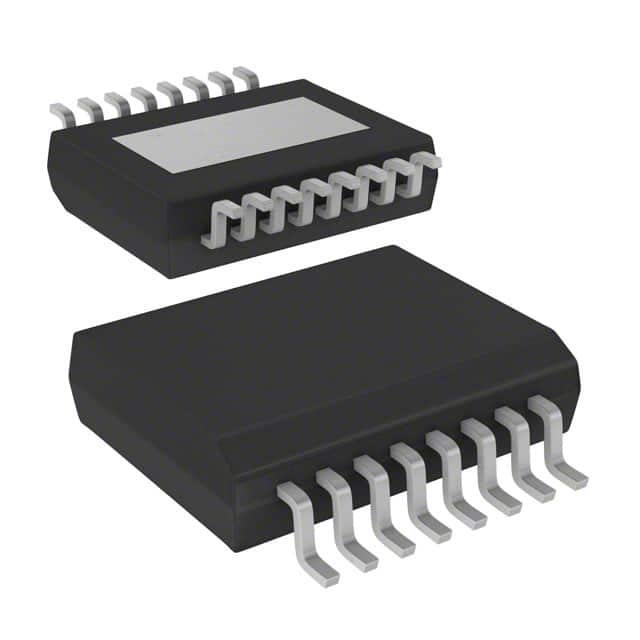
- Part No.:
- L99MC6TR
- Manufacturer:
- STMicroelectronics
- Package:
- 16-PowerFSOP (0.154", 3.90mm Width)
- Datasheet:
-
 L99MC6TR.pdf
- Description:
- IC PWR DRVR N-CHAN 1:6 PWRSSO16
- Quantity:
- Payment:

- Shipping:

Inventory:1,962
Please send an inquiry. Send us your inquiry, and we will respond immediately.
Product details
Overview
L99MC6TR from STMicroelectronics is a configurable 6-channel monolithic medium-current driver IC with three self-configuring high-/low-side outputs (CH1–CH3) and three dedicated low-side outputs (CH4–CH6), RON = 0.7 Ω (typ), current limit ≥0.6 A per channel, and SPI-controlled diagnostics. It drives relays, LEDs, incandescent bulbs, and mirror-adjustment motors in automotive body electronics.
For engineers reviewing the L99MC6TR datasheet, L99MC6TR pinout, L99MC6TR application, or L99MC6TR equivalent, key selection factors include configurable channel topology (HS/LS/bi-directional bridge), integrated open-load detection in off-state, PWM direct mode on CH2 via IN/PWM pin, and crank voltage operation down to 3 V.
Technical Context
The L99MC6TR implements a dual-supply architecture: VCC (3.0–5.25 V) powers logic and SPI interface, while VS (connected via DRN1 in HS mode) supplies power to high-side channels. Its 16-bit SPI interface supports command write, status read, and diagnostic clearing with CSN-active-low framing and MSB-first data transfer.
Each channel features independent protection: overtemperature shutdown, short-circuit current limiting, and configurable open-load detection in off-state. Bridge mode enables crosscurrent protection between paired channels (e.g., CH1/CH4), and LED mode includes programmable slew rate control for EMI reduction.
Key Specifications
| Parameter | Value and Actual Design Meaning |
|---|---|
| RON (typ) | 0.7 Ω at Tj = 25 °C - Enables <1 W conduction loss at 1.2 A load current, suitable for thermally constrained automotive modules. |
| Current limit (min) | 0.6 A per output - Guarantees robust overload handling without external current-sense resistors. |
| VCC range | 3.0 V to 5.25 V - Supports direct connection to 3.3 V or 5 V microcontroller I/O rails and survives cold-crank conditions. |
| Standby current (typ) | 5 µA - Minimizes battery drain in always-on vehicle domains like door modules or lighting controllers. |
| VS operating min | 3 V - Allows reliable operation during engine cranking when battery voltage dips below 6 V. |
| SPI interface | 16-bit standard serial peripheral interface - Enables full configuration, real-time diagnostics, and fault logging without additional GPIO overhead. |
| Thermal protection | Integrated temperature warning + thermal shutdown - Prevents latch-up or silicon damage under sustained overload or poor PCB heatsinking. |
Pinout & Package
Package: PowerSSO-16 (exposed thermal pad, GND-connected tab), RoHS-compliant, ECOPACK® certified.
| Pin/Terminal | Circuit Role | Design Meaning |
|---|---|---|
| 1 / TAB | GND | Power and signal reference ground; exposed thermal pad must be soldered to PCB GND plane for thermal dissipation. |
| 3, 15, 13 | SRC1–SRC3 | Sources for self-configurable channels 1–3 - Enable high-side operation when paired with corresponding DRN pins as VS supply paths. |
| 4, 5, 12, 2, 16, 14 | DRN1–DRN6 | Drains for all six channels - DRN1 also serves as VS input in high-side mode; DRN4–DRN6 are fixed low-side drains. |
| 6 | IN/PWM | Direct PWM input for CH2 - Bypasses SPI for time-critical motor or LED dimming control; other channels require SPI configuration. |
| 8 | VCC | Logic supply input - Requires local 100 nF ceramic decoupling to GND for stable SPI and register operation. |
| 11 | DI | SPI data input - Accepts CMOS-level 16-bit control words (MSB first) for channel enable, mode selection, and diagnostic mask setup. |
| 9 | DO | SPI data output - Tri-state when CSN high; returns global status register and per-channel fault flags (open-load, overtemp, short-circuit). |
| 7 | CSN | SPI chip select (active low) - Must be driven low to initiate SPI frame; synchronizes internal shift register clocking with SCK. |
| 10 | SCK | SPI clock input - CMOS-compatible; defines timing for DI sampling and DO output; supports up to 2 MHz clock rate per datasheet AC specs. |
Key Features
| Feature | Design Value |
|---|---|
| Bulb mode with soft start | Programmable inrush current limiting for incandescent loads - Prevents fuse blowing and contact arcing during cold filament turn-on. |
| LED mode with slew rate control | Adjustable edge rate on CH1–CH3 outputs - Reduces EMI emissions and prevents LED current overshoot during fast switching. |
| Bridge mode with crosscurrent protection | Hardware-enforced dead-time between complementary channel pairs (e.g., CH1/CH4) - Eliminates shoot-through current in H-bridge motor drive. |
| Configurable open-load detection (off-state) | Detects open circuits on all outputs while disabled - Enables fail-safe diagnostics without powering the load, critical for safety-critical lighting systems. |
| Internal clamp diodes | Integrated freewheeling diodes on all outputs - Removes need for external flyback diodes when driving inductive loads like relays or solenoids. |
Applications
| Automotive Relay Control | LED Lighting Management |
|---|---|
|
Use Scenario: Driving 12 V automotive relays for seat adjustment, window lift, or HVAC actuators in door modules. IC Role / Device Role / Timing Role: High-/low-side configurable driver providing controlled turn-on/turn-off sequencing and inductive kickback suppression. Use Value: Eliminates external freewheeling diodes and reduces PCB area by 30% versus discrete MOSFET + driver solutions. |
Use Scenario: Controlling interior ambient lighting and exterior position lamps with precise dimming and fault reporting. IC Role / Device Role / Timing Role: LED driver with programmable slew rate and open-load detection to ensure lamp integrity monitoring. Use Value: Meets UNECE R149 EMI limits via controlled edge rates and provides real-time LED open-circuit alerts via SPI status register. |
| Mirror Adjustment Actuation | Incandescent Bulb Driver |
|
Use Scenario: Bidirectional DC motor control for electric side-view mirror positioning in compact ECUs. IC Role / Device Role / Timing Role: Half-bridge driver using CH1/CH4 pair with crosscurrent protection and PWM direct mode on CH2 for speed regulation. Use Value: Enables compact, single-chip mirror actuator design with stall detection and thermal foldback during jam conditions. |
Use Scenario: Powering dashboard backlighting and license plate lamps with high inrush current tolerance. IC Role / Device Role / Timing Role: Bulb mode driver with programmable soft-start to limit peak inrush to ≤2× steady-state current. Use Value: Extends filament life by >40% versus hard-switched drivers and avoids nuisance fuse trips during cold startup. |
Equivalent & Alternatives
The following parts are listed as comparable options for similar medium-current configurable driver applications.
| Alternative Part | Technical Difference | Application Difference | Selection Advice |
|---|---|---|---|
| TPIC2101QPWPRQ1 | Single 1.5 A low-side driver; no high-side or bridge capability; no integrated open-load detection in off-state. | Limited to fixed low-side loads; requires external circuitry for relay coil polarity reversal or bulb soft-start. | Select when only basic low-side switching is needed and system-level diagnostics are handled externally. |
| VNQ7E100AJTR | Quad-channel high-side driver with 140 mΩ RON; lacks self-configurable topology, SPI diagnostics, and bulb/LED-specific modes. | Supports only high-side loads; no native bridge or PWM direct mode; diagnostics limited to overtemp/short-circuit flags. | Choose for cost-sensitive high-side-only applications where advanced load-type adaptation is unnecessary. |
Compared with TPIC2101QPWPRQ1 and VNQ7E100AJTR, the L99MC6TR uniquely integrates mixed high-/low-side configurability, load-type-specific modes (bulb/LED/bridge), and comprehensive SPI-accessible diagnostics - enabling fewer components, higher functional safety compliance, and faster development of multi-load automotive ECUs.
Availability
L99MC6TR is available at Aetrix Electronics and suitable for automotive body control modules, mirror actuation systems, and LED lighting controllers requiring stable component supply across extended temperature ranges and long production lifecycles.
Supply support for L99MC6TR includes scheduled delivery planning, volume procurement assistance, BOM continuity management, traceable sourcing, and lifecycle availability coordination for OEM customers, industrial embedded developers, connected-device designers, and electronics production programs.
Manufacturer
STMicroelectronics is a global semiconductor leader headquartered in Geneva, Switzerland, designing and manufacturing analog, MCU, power, and automotive-grade ICs for industrial and transportation markets.
The L99MC6TR belongs to ST's automotive smart-power driver product line, engineered specifically for intelligent load control in 12 V vehicle electrical architectures with emphasis on functional safety, thermal resilience, and diagnostic completeness.
FAQ
What is the maximum operating junction temperature for the L99MC6TR?
The L99MC6TR has a maximum junction temperature of +150 °C, with thermal shutdown activation at +165 °C ± 10 °C. Temperature warning flag asserts at +145 °C to allow host MCU pre-emptive derating. Thermal performance depends on PCB copper area and heatsinking; PowerSSO-16 package requires minimum 2 cm² of 2 oz Cu connected to the exposed tab for rated 0.6 A continuous per channel.
Can the L99MC6TR drive a unipolar stepper motor?
Yes - the L99MC6TR can drive unipolar stepper motors using CH1–CH4 in two-phase excitation: CH1/CH2 as high-side phases and CH4/CH5 as low-side returns. Bridge mode is not required; each phase is independently controlled via SPI with synchronized PWM timing. Diagnostics report open-load or overcurrent per winding, supporting stall detection.
Does the IN/PWM pin support hardware PWM frequency scaling?
No - the IN/PWM pin accepts TTL/CMOS-level square-wave signals but does not scale or interpret frequency. It directly gates CH2 output with 1:1 duty-cycle replication. Frequency response is limited by CH2's turn-on/off delays (typ. 1.2 µs/1.5 µs), supporting PWM up to ~300 kHz before significant duty-cycle distortion occurs.
How is open-load detection implemented in off-state for high-side channels?
During off-state, the L99MC6TR applies a low-current (~10 µA) test pulse between SRCx and DRNx pins and monitors resulting voltage. If voltage exceeds threshold (indicating open circuit), the global status register bit OLx is set. This works for both high-side (SRCx as source) and low-side (DRNx as sink) configurations without load power applied.
L99MC6TR Specifications
- Product attributes
- Attribute value
- Manufacturer:
- STMicroelectronics
- Package/Case:
- 16-PowerFSOP (0.154", 3.90mm Width)
- Series:
- -
- Packaging:
- Tape & Reel (TR)
- Product Status:
- Not For New Designs
- Switch Type:
- General Purpose
- Number of Outputs:
- 6
- Ratio - Input:Output:
- 1:6
- Output Configuration:
- High Side or Low Side
- Output Type:
- N-Channel
- Interface:
- SPI
- Voltage - Load:
- 6V ~ 28V
- Voltage - Supply (Vcc/Vdd):
- 3V ~ 5.25V
- Current - Output (Max):
- 600mA
- Rds On (Typ):
- 700mOhm
- Input Type:
- Non-Inverting
- Features:
- PWM Input, Slew Rate Controlled
- Fault Protection:
- Current Limiting (Fixed), Open Load Detect, Over Temperature
- Operating Temperature:
- -40°C ~ 150°C (TJ)
- Grade:
- -
- Qualification:
- -
- Mounting Type:
- Surface Mount
- Supplier Device Package:
- PowerSSO-16
L99MC6TR FAQ
1.How can I place an order for L99MC6TR through Aetrix?
Please submit a Request for Quotation (RFQ) for L99MC6TR on Aetrix. Our sales agent will provide a competitive quotation and guide you through the order confirmation once you accept the terms.
2.Are the price and stock information for L99MC6TR reliable?
The price and inventory of L99MC6TR are updated periodically and may fluctuate due to market conditions. Stock and pricing data are typically refreshed every 24 hours. Quotation validity for L99MC6TR is usually 5 days.
3.What payment methods are accepted for L99MC6TR?
We accept Wire Transfer, PayPal, Credit Card, Western Union, MoneyGram, and Escrow for L99MC6TR transactions.
Note: Certain payment methods may incur a processing fee.
4.How is shipping managed for L99MC6TR?
L99MC6TR orders can be shipped via leading logistics carriers, including DHL, UPS, FedEx, TNT, or Registered Mail.
Once your L99MC6TR order is processed, you will receive an email with the shipment details and tracking number.
Note: Tracking information may take up to 24 hours to appear. Express delivery typically takes 3–5 business days.
5.How can I obtain technical support or documentation for L99MC6TR?
For technical support, including L99MC6TR datasheets, pinout diagrams, or application guidance, please contact our engineering support team. They can provide detailed documentation and assistance for your L99MC6TR requirements.
6.How does Aetrix verify that L99MC6TR is sourced from the original manufacturer or authorized distributors?
All L99MC6TR products on Aetrix are procured from qualified distributors and authorized channels. Our dedicated quality assurance team conducts strict verification, including traceability checks and, if necessary, third-party testing. This ensures that L99MC6TR meets industry standards.
7.What is the process for return or replacement of L99MC6TR?
All L99MC6TR units undergo pre-shipment inspection (PSI). If there is an issue with L99MC6TR, returns or replacements are accepted under the following conditions:
1.Quantity discrepancies, incorrect items, or visible external defects (such as breakage or corrosion), acknowledged by Aetrix.
2.The issue is reported within 90 days of delivery.
3.The L99MC6TR part is unused and in its original packaging.
Return procedure for L99MC6TR:
1.Submit a request within 90 days.
2.Obtain a Return Material Authorization (RMA) from Aetrix.
L99MC6TR Tags
-
TPS22919DCKR
Texas Instruments
-
MIC2091-1YM5-TR
Microchip Technology
-
MIC2090-1YM5-TR
Microchip Technology

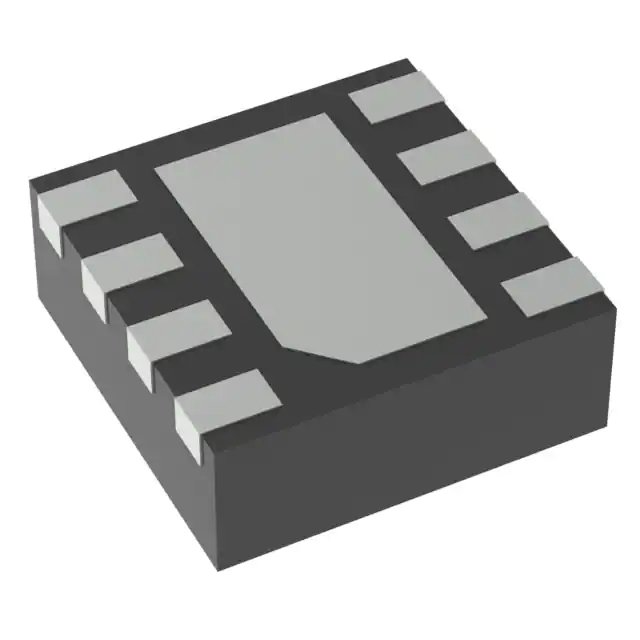
-
TPS22995RZFR
Texas Instruments
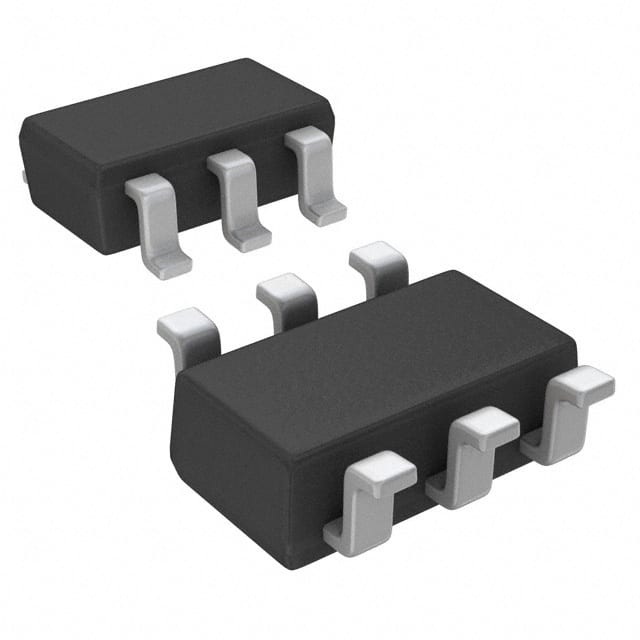
-
TPS22975DSGR
Texas Instruments
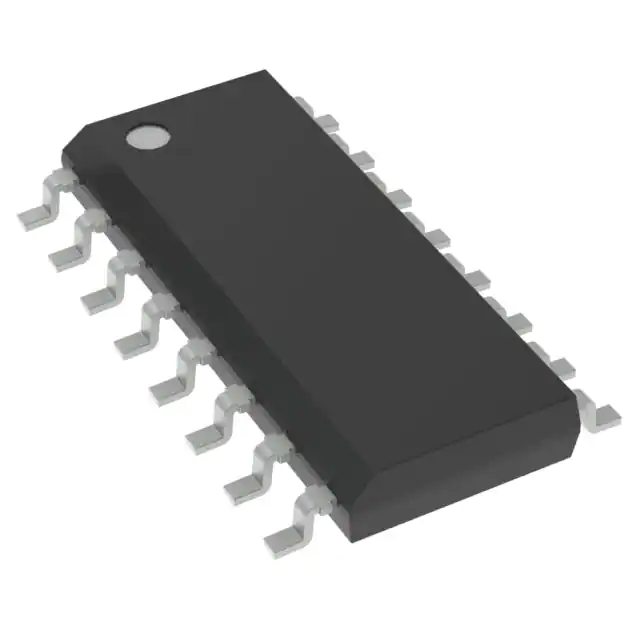
-
SIP32510DT-T1-GE3
Vishay Siliconix
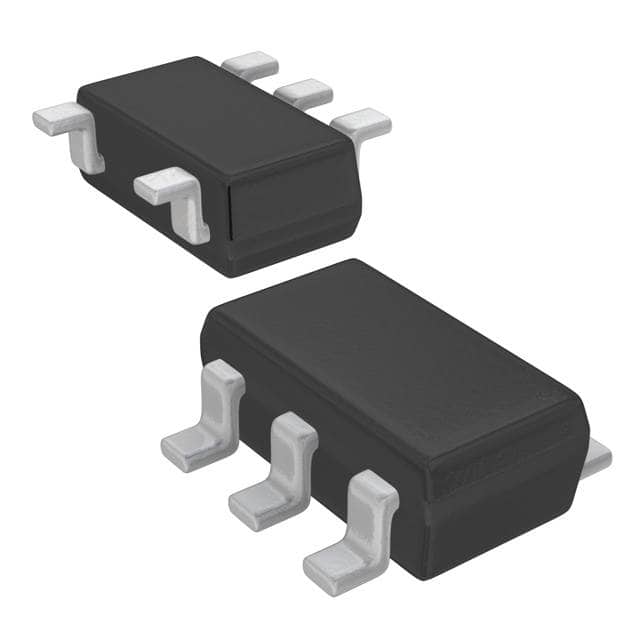
-
ULN2003D1013TR
STMicroelectronics
-
MIC2005A-1YM5-TR
Microchip Technology

-
MIC2005A-1YM6-TR
Microchip Technology
-
TPS22916BYFPR
Texas Instruments

-
TPS22917DBVR
Texas Instruments
-
ULN2003APWR
Texas Instruments
Tech Hub

Operational amplifier guide covering op amp basics, feedback, ideal vs real op amps, common configurations, buffer circuits, offset, bias current, gain-bandwidth, slew rate, rail-to-rail limits and sel…

Jumper cables guide covering safe connection order, red and black clamp placement, final ground connection, cable gauge, length, clamp quality, copper vs CCA cables, jump starter comparison and battery…

LDO regulator guide covering low dropout voltage, power dissipation, thermal design, PSRR, output noise, capacitor stability, adjustable LDO circuits, LDO vs buck converter and datasheet selection chec…

Conditional Access Module guide covering CAM meaning, CI/CI+ interface, smart card authorization, DVB security workflow, TV and set-top box compatibility, internal electronics, ESD protection, connecto…

Guide to electronic component obsolescence covering EOL risk, PCN/PDN notices, last-time buy planning, replacement options, form-fit-function validation, counterfeit risk and BOM lifecycle management.

18650 battery guide covering lithium-ion cell basics, 3.6V/3.7V voltage, 4.2V charging, mAh and Wh capacity, protected cells, chargers, BMS, series-parallel packs, holders, welding and sourcing checks.…

Hall effect sensor guide covering working principle, linear and digital sensors, Arduino circuits, current sensing, speed detection, automotive applications, A3144 examples, signal filtering and datash…

Product Change Notification guide for electronic components, covering PCN meaning, PCN vs PDN/EOL, common change types, risk levels, form-fit-function review, engineering validation, BOM control, LTB/L…

A practical guide to blend door actuators, covering HVAC function, symptoms, location, AC and heater issues, reset and calibration, replacement cost, electrical diagnosis, compatibility checks, and rep…

Engineering guide to Raspberry Pi alternatives, covering chip-level differences, Orange Pi, ROCK, Jetson, Banana Pi, NanoPi, Compute Module, Pico, GPIO, camera, HAT compatibility, and replacement risks…


