
 My Inquiry
 My Account


Vishay Semiconductor Opto Division LH1520AAC
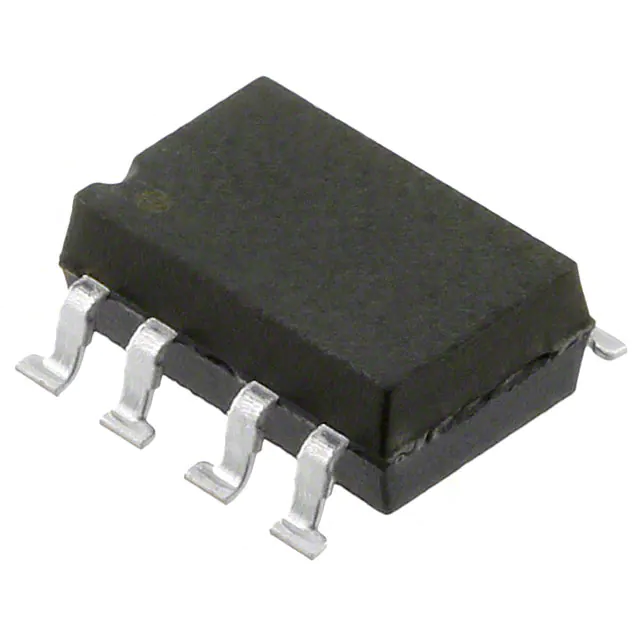
- Part No.:
- LH1520AAC
- Manufacturer:
- Vishay Semiconductor Opto Division
- Category:
- Solid State Relays (SSR)
- Package:
- 8-SMD (0.300", 7.62mm)
- Datasheet:
-
 LH1520AAC.pdf
- Description:
- SSR RELAY SPST-NO 110MA 0-350V
- Quantity:
- Payment:

- Shipping:

Inventory:1,977
Please send an inquiry. Send us your inquiry, and we will respond immediately.
Product details
Overview
LH1520AAC from Vishay Semiconductors is a dual-channel, 1 Form A solid-state relay (SSR) featuring GaAlAs LED input control and MOSFET output switches. It delivers 350 V load voltage capability, 140 mA per-channel DC load current at 25 °C, and 22 Ω typical on-resistance - replacing electromechanical relays in telecom line interface and industrial control applications requiring bounce-free switching and 5300 VRMS isolation.
For engineers reviewing the LH1520AAC datasheet, LH1520AAC pinout, LH1520AAC application, or LH1520AAC equivalent, this device is selected for high-isolation AC/DC load switching where low power consumption, clean turn-on/turn-off timing (0.13 ms / 0.05 ms typ.), and SMD-8 surface-mount compatibility are critical design requirements.
Technical Context
The LH1520AAC integrates two independent optically isolated SPST-NO SSR channels in a single SMD-8 package. Each channel uses a GaAlAs infrared LED to drive a pair of back-to-back MOSFETs, enabling bidirectional AC or unidirectional DC load switching up to 350 V with <1 nA off-state leakage at ±100 V.
Its safety-rated insulation complies with UL 1577 (5300 VRMS), DIN EN 60747-5-5 (VIORM = 890 Vpeak), and CQC GB4943.1, supported by ≥7 mm creepage/clearance and ≥0.4 mm insulation thickness - making it suitable for reinforced insulation in telecom and industrial equipment operating across –40 to +85 °C ambient.
Key Specifications
| Parameter | Value and Actual Design Meaning |
|---|---|
| Isolation Voltage | 5300 VRMS - enables reinforced insulation per UL/cUL/VDE standards without external barrier design |
| Load Voltage Rating | 350 V - supports direct switching of POTS line voltages, ring signals, and industrial AC/DC control loads |
| Per-Channel Load Current | 140 mA at 25 °C - sufficient for on/off hook detection, dial pulse generation, and ground start circuits |
| On-Resistance | 22 Ω typical - limits I²R heating to <220 mW at 100 mA, enabling compact PCB layout without heatsinking |
| Turn-On/Off Time | 0.13 ms / 0.05 ms typical - ensures precise timing for telecom signaling (e.g., dial pulse width control) |
| Input Forward Current (Turn-On) | 0.25 mA typical - allows direct drive from low-power microcontrollers or logic gates without buffer stages |
| Off-State Leakage | <1 nA at ±100 V - prevents false triggering in high-impedance instrumentation and fault detection circuits |
Pinout & Package
SMD-8 package (9.80 × 6.65 mm, 1.00 mm height), RoHS-compliant, moisture sensitivity level 1, lead-free reflow compatible per J-STD-020.
| Pin/Terminal | Circuit Role | Design Meaning |
|---|---|---|
| 1, 2 | LED Anode / Cathode (Channel 1) | Optically isolates input control signal; requires series resistor for 5–10 mA drive |
| 3, 4 | LED Anode / Cathode (Channel 2) | Independent second control path; enables dual-line supervision or redundant switching |
| 5, 6 | Output Terminal A / B (Channel 1) | MOSFET switch terminals - bidirectional for AC, polarity-insensitive for DC loads |
| 7, 8 | Output Terminal A / B (Channel 2) | Electrically isolated from Channel 1 outputs; supports independent load control |
Key Features
| Feature | Design Value |
|---|---|
| Dual independent SSR channels | Reduces component count vs. two discrete SSRs; enables synchronized or isolated load control in single footprint |
| 5300 VRMS isolation rating | Meets reinforced insulation requirements for telecom interface circuits without additional creepage barriers |
| Clean bounce-free switching | Eliminates contact arcing and EMI in sensitive analog/digital systems - critical for dial pulse and ring delay accuracy |
| Low 0.25 mA turn-on LED current | Enables direct interfacing with 3.3 V/5 V GPIOs or open-collector drivers without level-shifting or amplification |
| 140 mA per-channel load current | Supports full POTS line interface functions including on-hook/off-hook detection and ground fault monitoring |
Applications
| Telecom Line Interface | Industrial PLC I/O Module |
|---|---|
|
Use Scenario: Controlling analog telephone line states (on-hook/off-hook), ring delay, and dial pulse generation in VoIP gateways and PBX systems. IC Role / Device Role / Timing Role: Dual-channel solid-state relay providing galvanically isolated, bounce-free switching of 48 V DC and 90 V AC ring signals. Use Value: Enables precise 20–60 ms dial pulse widths and sub-100 µs state transitions - meeting ITU-T Q.931 timing compliance without mechanical relay wear. |
Use Scenario: Isolating and switching 24–230 V AC/DC sensor/actuator loads in programmable logic controller output modules. IC Role / Device Role / Timing Role: Reinforced-insulation SSR channel handling field-side load switching with 5300 VRMS barrier integrity. Use Value: Eliminates contact welding and lifetime degradation seen in EM relays - supporting >10⁹ operations in harsh industrial environments. |
| Test Equipment Signal Routing | Medical Device Isolation Barrier |
|
Use Scenario: Multiplexing low-current analog signals (e.g., thermocouple inputs, calibration references) in automated test equipment. IC Role / Device Role / Timing Role: Low-leakage (<1 nA), low-capacitance (6–39 pF) SSR channel acting as a high-Z, low-crosstalk signal path selector. Use Value: Prevents measurement drift and cross-talk between channels - maintaining µV-level accuracy in precision DMMs and data acquisition systems. |
Use Scenario: Providing patient-isolated power switching for auxiliary functions (e.g., display backlight, fan control) in Class II medical devices. IC Role / Device Role / Timing Role: Safety-certified SSR delivering reinforced insulation per IEC 60601-1, with CTI ≥175 and ≥7 mm creepage. Use Value: Meets mandatory 2×MOPP requirements without external isolation components - reducing BOM cost and board space. |
Equivalent & Alternatives
The following parts are listed as comparable options for similar solid-state relay applications.
| Alternative Part | Technical Difference | Application Difference | Selection Advice |
|---|---|---|---|
| Vishay LH1520AACTR | Identical electrical specs and pinout; supplied in tape-and-reel (1000 units/reel) vs. tube packaging | No functional difference; selected for automated SMT assembly lines requiring reel-fed placement | Choose LH1520AACTR for high-volume production; LH1520AAC for prototyping or low-volume hand-soldering |
| Vishay LH1520AB | DIP-8 through-hole package (7.62 mm pitch); identical internal die, same 5300 VRMS isolation and 350 V load rating | Used where manual assembly, socketing, or legacy board layouts require through-hole mounting | Select LH1520AB when board design mandates DIP-8 footprint or thermal/mechanical robustness outweighs SMT density |
Compared with LH1520AACTR and LH1520AB, the LH1520AAC offers identical performance in an SMD-8 package optimized for space-constrained, high-density PCBs - making it the preferred choice for modern telecom and industrial edge devices where miniaturization and automated assembly are priorities.
Availability
LH1520AAC is available at Aetrix Electronics and suitable for telecom infrastructure, industrial PLC I/O modules, and medical auxiliary power switching requiring stable component supply, long-term lifecycle support, and traceable sourcing.
Supply support for LH1520AAC includes scheduled delivery planning, volume procurement assistance, BOM continuity management, traceable sourcing, and lifecycle availability coordination for OEM customers, industrial embedded developers, connected-device designers, and electronics production programs.
Manufacturer
Vishay Semiconductors is a global leader in discrete semiconductors and passive components, specializing in high-reliability optoelectronics, power management, and sensing solutions.
The LH1520AAC belongs to Vishay's LH15xx family of dual-channel solid-state relays designed specifically for telecom line interface, industrial control, and safety-critical isolation applications demanding long life, zero bounce, and certified reinforcement insulation.
FAQ
What is the maximum ambient temperature for continuous operation of the LH1520AAC?
The LH1520AAC operates continuously across –40 °C to +85 °C ambient temperature. At +85 °C, its per-channel load current derates to 100 mA (dual-channel operation) or 140 mA (single-channel), as specified in the Absolute Maximum Ratings table. Thermal design must ensure junction temperature remains within safe limits using the provided safety power dissipation curves.
Does the LH1520AAC support AC load switching?
Yes, the LH1520AAC supports bidirectional AC load switching up to 350 V peak due to its back-to-back MOSFET output configuration. Its 5300 VRMS isolation rating and 890 Vpeak repetitive peak isolation voltage meet safety requirements for AC mains-connected telecom and industrial applications.
What is the minimum LED forward current required to turn on the LH1520AAC?
The LH1520AAC turns on with as little as 0.05 mA LED forward current (IFoff min), and typical turn-on occurs at 0.25 mA (IFon typ) under standard test conditions (IL = 100 mA, t = 10 ms). This ultra-low drive requirement allows direct connection to low-power microcontrollers without external drivers.
How does the LH1520AAC achieve bounce-free switching?
The LH1520AAC achieves bounce-free switching through its solid-state MOSFET output architecture - eliminating mechanical contacts entirely. Unlike electromechanical relays, it has no contact wear, arcing, or vibration-induced transient states, delivering deterministic turn-on (0.13 ms typ) and turn-off (0.05 ms typ) timing every cycle.
Is the LH1520AAC RoHS-compliant and halogen-free?
Yes, the LH1520AAC is RoHS-compliant and halogen-free per Vishay's material categorization standard (document 99912). Its SMD-8 package uses lead-free terminations and conforms to JEDEC J-STD-020 reflow profiles, with moisture sensitivity level 1 for unlimited floor life under controlled humidity conditions.
LH1520AAC Specifications
- Product attributes
- Attribute value
- Manufacturer:
- Vishay Semiconductor Opto Division
- Series:
- LH1520
- Packaging:
- Tube
- Product Status:
- Active
- Mounting Type:
- Surface Mount
- Circuit:
- SPST-NO (1 Form A) x 2
- Output Type:
- AC, DC
- Voltage - Input:
- 1.26VDC
- Voltage - Load:
- 0 V ~ 350 V
- Load Current:
- 110 mA
- On-State Resistance (Max):
- 20 Ohms
- Termination Style:
- Gull Wing
- Operating Temperature:
- -40°C ~ 85°C
- Supplier Device Package:
- 8-SMD
- Approval Agency:
- BSI, CQC, cUL, DIN, FIMKO, UL
- Grade:
- -
- Qualification:
- -
LH1520AAC FAQ
1.How can I place an order for LH1520AAC through Aetrix?
Please submit a Request for Quotation (RFQ) for LH1520AAC on Aetrix. Our sales agent will provide a competitive quotation and guide you through the order confirmation once you accept the terms.
2.Are the price and stock information for LH1520AAC reliable?
The price and inventory of LH1520AAC are updated periodically and may fluctuate due to market conditions. Stock and pricing data are typically refreshed every 24 hours. Quotation validity for LH1520AAC is usually 5 days.
3.What payment methods are accepted for LH1520AAC?
We accept Wire Transfer, PayPal, Credit Card, Western Union, MoneyGram, and Escrow for LH1520AAC transactions.
Note: Certain payment methods may incur a processing fee.
4.How is shipping managed for LH1520AAC?
LH1520AAC orders can be shipped via leading logistics carriers, including DHL, UPS, FedEx, TNT, or Registered Mail.
Once your LH1520AAC order is processed, you will receive an email with the shipment details and tracking number.
Note: Tracking information may take up to 24 hours to appear. Express delivery typically takes 3–5 business days.
5.How can I obtain technical support or documentation for LH1520AAC?
For technical support, including LH1520AAC datasheets, pinout diagrams, or application guidance, please contact our engineering support team. They can provide detailed documentation and assistance for your LH1520AAC requirements.
6.How does Aetrix verify that LH1520AAC is sourced from the original manufacturer or authorized distributors?
All LH1520AAC products on Aetrix are procured from qualified distributors and authorized channels. Our dedicated quality assurance team conducts strict verification, including traceability checks and, if necessary, third-party testing. This ensures that LH1520AAC meets industry standards.
7.What is the process for return or replacement of LH1520AAC?
All LH1520AAC units undergo pre-shipment inspection (PSI). If there is an issue with LH1520AAC, returns or replacements are accepted under the following conditions:
1.Quantity discrepancies, incorrect items, or visible external defects (such as breakage or corrosion), acknowledged by Aetrix.
2.The issue is reported within 90 days of delivery.
3.The LH1520AAC part is unused and in its original packaging.
Return procedure for LH1520AAC:
1.Submit a request within 90 days.
2.Obtain a Return Material Authorization (RMA) from Aetrix.
LH1520AAC Tags
.jpg)
-
G3VM-21UR11(TR05)
Omron Electronics Inc-EMC Div
-
G3VM-61VY3(TR05)
Omron Electronics Inc-EMC Div
-
CPC1017NTR
Littelfuse Inc.
-
CPC1017N
Littelfuse Inc.
-
CPC1006N
Littelfuse Inc.
-
VO1400AEFTR
Vishay Semiconductor Opto Division
-
CPC1006NTR
Littelfuse Inc.
-
TLP175A(TPL,E
Toshiba Semiconductor and Storage
-
CPC1002NTR
Littelfuse Inc.
-
AQY280S
Panasonic Electric Works
-
CPC1117NTR
Littelfuse Inc.
-
CPC1106NTR
Littelfuse Inc.
Tech Hub
Counterfeit components can hide behind convincing markings and passing basic function tests. This engineering reference covers source traceability, external inspection, X-ray, XRF, electrical testing, …

A practical engineering and sourcing framework covering lifecycle verification, lifetime-buy calculations, replacement qualification, supplier checks and counterfeit-risk controls.

TTL and CMOS logic families differ in thresholds, loading, output drive, power and timing. This engineering guide compares 74HC and 74HCT, calculates noise margins and checks 3.3 V/5 V compatibility.

A practical engineering guide to 3.3V and 5V logic compatibility, input thresholds, resistor dividers, translator ICs, MOSFET level shifting, I2C pull-ups, timing limits and power-sequencing risks.

The 74HC595 uses push-pull logic outputs, while the TPIC6B595 uses 50 V open-drain DMOS sinks for higher-power loads. This guide compares timing, current limits, 3.3 V interfacing, load wiring, thermal…

The 74HC595 converts serial data into eight stable parallel outputs. This guide covers pin functions, shift and storage timing, OE and MR behavior, drive-current limits, cascading, voltage compatibilit…

A technical comparison of level-sensitive latches and edge-triggered flip-flops, covering timing windows, setup and hold limits, master–slave operation, time borrowing, race-through, HDL inference and…

A D latch stores one bit while Enable controls when data can pass. This reference covers gate-level operation, truth tables, transparency, setup and hold timing, LE versus OE, common ICs and practical …

An SR latch stores one bit through cross-coupled feedback. This engineering reference covers NOR and NAND implementations, truth tables, forbidden-state recovery, gated operation, switch debouncing, fa…

Latch circuits retain one bit through feedback. This technical reference covers SR and D latches, truth tables, transparency, timing limits, latch-versus-flip-flop behavior, applications and common log…


