
 My Inquiry
 My Account


Texas Instruments LM1894MX/NOPB
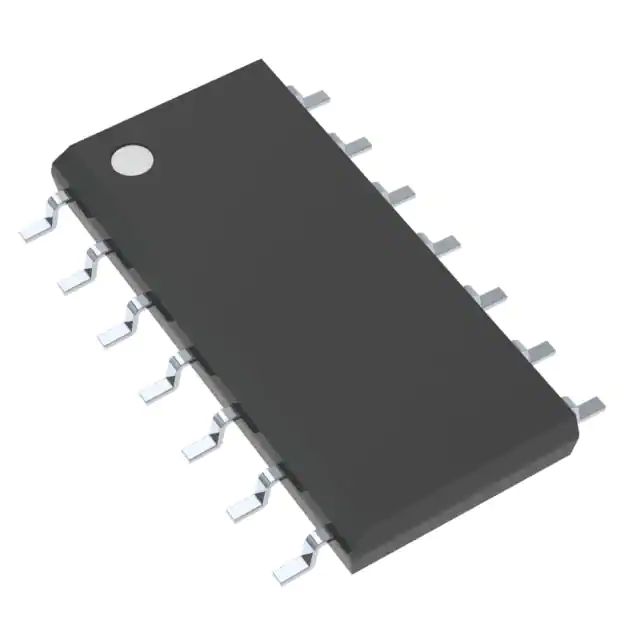
- Part No.:
- LM1894MX/NOPB
- Manufacturer:
- Texas Instruments
- Category:
- Audio Special Purpose
- Package:
- 14-SOIC (0.154", 3.90mm Width)
- Datasheet:
-
 LM1894MX/NOPB.pdf
- Description:
- IC NOISE REDUCTION 14SOIC
- Quantity:
- Payment:

- Shipping:

Inventory:1,691
Please send an inquiry. Send us your inquiry, and we will respond immediately.
Product details
Overview
LM1894MX/NOPB from Texas Instruments is a stereo dynamic noise reduction (DNR) IC for analog audio playback systems, implementing non-complementary psychoacoustic masking with adaptive bandwidth control. It delivers 10 dB CCIR/ARM-weighted tape noise reduction, operates from 4.5 V to 18 V, supports 1 Vrms input overload, and achieves 77–88 dB signal-to-noise ratio across its 27–46 kHz main-path bandwidth.
For engineers reviewing the LM1894MX/NOPB datasheet, LM1894MX/NOPB pinout, LM1894MX/NOPB application, or LM1894MX/NOPB equivalent, this device is selected for legacy analog audio noise suppression where minimal external components, wide supply tolerance, and compatibility with prerecorded tapes/FM broadcasts are critical design requirements.
Technical Context
The LM1894MX/NOPB integrates two parallel signal paths: a main audio path using a transconductance-based integrator low-pass filter with −1 V/V DC gain, and a shared stereo control path comprising summing amplifier, gain amplifier, and peak detector that generates a voltage-controlled bandwidth signal. Bandwidth adapts from ~1 kHz (minimum) to ~46 kHz (maximum) based on real-time noise/music energy detection.
Control path gain is 60 dB (24 V/V × 33 V/V), attack time is 300–700 μs, decay time is 45–75 ms, and bandwidth sensitivity is 33 Hz/μA. Pin 9 (peak detector input) and Pin 10 (control voltage output) enable external tuning of minimum/maximum bandwidth via capacitor scaling, while DC grounding of Pin 9 forces maximum bandwidth mode.
Key Specifications
| Parameter | Value and Actual Design Meaning |
|---|---|
| Supply Voltage Range | 4.5 V to 18 V - Enables direct use in automotive (12 V), portable (6–9 V), and HI-FI (15 V) audio rails without regulation. |
| Effective Noise Reduction | −10 dB CCIR/ARM-weighted - Measured noise floor improvement under typical tape playback conditions, not peak theoretical value. |
| Main Path Bandwidth | 27–46 kHz (typ) - Adjustable range ensures full audio fidelity during program material while attenuating high-frequency tape hiss during silence. |
| Input Overload Capability | 1.0 Vrms - Sustains undistorted operation at line-level signals without clipping or compression artifacts. |
| Signal-to-Noise Ratio | 77–88 dB (CCIR/ARM-weighted) - Confirmed measurement referenced to 300 mV input, defining usable dynamic range in noise-sensitive applications. |
| Supply Current | 17–30 mA at 8 V - Low quiescent draw suitable for battery-powered portable tape players and automotive head units. |
| Operating Temperature | 0°C to +70°C - Commercial-grade rating aligned with automotive cabin and consumer electronics ambient limits. |
Pinout & Package
LM1894MX/NOPB is housed in a 14-pin SOIC (D) package, 8.75 mm × 3.91 mm footprint, 1.75 mm max height, RoHS-compliant matte tin (SN) lead finish, MSL Level-1.
| Pin/Terminal | Circuit Role | Design Meaning |
|---|---|---|
| Pin 1 | Right Channel Input | Main signal path input for right stereo channel; 20 kΩ input impedance enables direct coupling from line-level sources. |
| Pin 2 | Right Channel Output | Main path buffered output; DC-biased at VS/2, requires AC-coupling capacitor (C4) to downstream stage. |
| Pin 6 | Control Path Summing Input | Combined left+right channel sum point; sets noise threshold sensitivity via R1/R2 divider network. |
| Pin 8 | FM Pilot Filter Input | Optional 19 kHz pilot tone input for FM stereo decoding; used only when L8/CL filter network is installed. |
| Pin 9 | Peak Detector Input | AC- or DC-groundable node controlling bandwidth range; DC ground → max bandwidth (~46 kHz), AC ground → min bandwidth (~1 kHz). |
| Pin 10 | Bandwidth Control Voltage | Analog control output (1.1–3.8 V range); directly drives gm-block current to set main-path cutoff frequency. |
| Pin 13 | Left Channel Input | Main signal path input for left stereo channel; identical electrical characteristics to Pin 1. |
| Pin 14 | Ground Reference | Primary analog ground reference for internal biasing and output DC level; must be low-impedance connection. |
Key Features
| Feature | Design Value |
|---|---|
| Non-complementary DNR architecture | Eliminates need for encoded source material-works with standard prerecorded tapes, FM broadcasts, and VCR outputs without modification. |
| Adaptive psychoacoustic bandwidth control | Uses ear-modelled masking principles to open bandwidth only when music energy masks tape noise, preserving ambience and transient detail. |
| Low external component count | Requires only 10 passive components (resistors/capacitors) for full stereo operation-no precision matching or trimming needed. |
| Wide supply voltage tolerance | Operates over 4.5–18 V range-supports 6 V portable, 12 V automotive, and 15 V HI-FI power supplies without external regulators. |
| Integrated stereo-summed control path | Single control loop for both channels prevents stereo image shift during noise reduction transitions-critical for spatial fidelity. |
Applications
| Automotive Radio/Tape Players | Compact Portable Tape Players |
|---|---|
Use Scenario: Reducing tape hiss and FM static in vehicle audio systems with limited PCB space and variable 12 V supply. IC Role / Device Role / Timing Role: Analog front-end noise suppressor placed before tone/volume controls to preserve signal integrity and prevent control-induced noise floor modulation. Use Value: Delivers 10 dB measurable noise reduction without requiring source encoding or digital processing-enabling cost-effective analog upgrade path. |
Use Scenario: Extending battery life and improving perceived audio quality in handheld cassette players powered by 6 V alkaline packs. IC Role / Device Role / Timing Role: Low-quiescent-current (≤30 mA) DNR processor that adapts bandwidth in real time to music dynamics, minimizing power waste during silence. Use Value: Maintains >77 dB SNR across 20 Hz–20 kHz while drawing <30 mA-enabling >10-hour playback on AA batteries without audible hiss. |
| Quality HI-FI Tape Systems | VCR Playback Noise Reduction |
Use Scenario: Enhancing fidelity of professional reel-to-reel and cassette decks where tape noise limits dynamic range below 60 dB. IC Role / Device Role / Timing Role: High-fidelity analog signal conditioner with 46 kHz max bandwidth and <0.1% THD-preserving harmonic content while suppressing broadband noise. Use Value: Achieves CCIR/ARM-weighted SNR up to 88 dB, effectively restoring 10 dB of lost dynamic range without introducing artifacts or phase distortion. |
Use Scenario: Cleaning analog audio tracks from VCR playback where tracking errors and tape wear increase high-frequency noise floor. IC Role / Device Role / Timing Role: Wideband (27–46 kHz) noise gate synchronized to audio energy-suppressing tape flutter and dropouts without affecting dialogue intelligibility. Use Value: Reduces audible hiss during quiet scenes while maintaining full transient response for percussive sounds-verified in broadcast-quality video dubbing setups. |
Equivalent & Alternatives
The following parts are listed as comparable options for similar stereo analog noise reduction applications.
| Alternative Part | Technical Difference | Application Difference | Selection Advice |
|---|---|---|---|
| NJM2035M | Fixed 20 kHz bandwidth; no adaptive control path; lower SNR (72 dB); requires external op-amps for full stereo implementation. | Limited to fixed-gain noise gating-unsuitable for dynamic music passages where bandwidth adaptation is required. | Select NJM2035M only for cost-sensitive, low-fidelity applications where 10 dB noise reduction is not required and PCB area permits discrete support circuitry. |
| LA3600N | Single-channel DNR IC; 8-pin package; 8 V max supply; 6 dB typical noise reduction; no FM pilot filtering capability. | Requires dual devices and external summing for stereo-increases BOM cost and layout complexity versus single-chip LM1894MX/NOPB solution. | Choose LA3600N only when designing mono audio paths or when legacy board space constraints prohibit 14-pin SOIC footprint. |
Compared with NJM2035M and LA3600N, LM1894MX/NOPB provides integrated stereo processing, adaptive bandwidth control, and 10 dB verified noise reduction in a single 14-pin SOIC-reducing component count by ≥40%, eliminating inter-channel timing mismatch, and enabling true plug-and-play analog noise suppression.
Availability
LM1894MX/NOPB is available at Aetrix Electronics and suitable for automotive infotainment systems, portable audio recorders, and legacy analog playback equipment requiring stable component supply and long-term obsolescence management.
Supply support for LM1894MX/NOPB includes scheduled delivery planning, volume procurement assistance, BOM continuity management, traceable sourcing, and lifecycle availability coordination for OEM customers, industrial embedded developers, connected-device designers, and electronics production programs.
Manufacturer
Texas Instruments is a global semiconductor leader founded in 1930, specializing in analog, embedded processing, and power management technologies with broad industrial and automotive qualification.
The LM1894MX/NOPB belongs to TI's legacy analog audio signal conditioning product line, designed specifically for high-fidelity tape, FM, and VCR noise reduction in pre-digital consumer and automotive audio systems.
FAQ
What is the primary function of the LM1894MX/NOPB in an audio system?
The LM1894MX/NOPB functions as a stereo dynamic noise reduction (DNR) IC that reduces tape hiss and FM broadcast noise using psychoacoustic masking principles. It dynamically adjusts its main signal path bandwidth between ~1 kHz and ~46 kHz based on real-time audio content, delivering up to 10 dB of CCIR/ARM-weighted noise reduction without requiring encoded source material. This makes LM1894MX/NOPB ideal for upgrading legacy analog playback systems.
Can the LM1894MX/NOPB operate from a 12 V automotive supply?
Yes, the LM1894MX/NOPB operates over a 4.5 V to 18 V supply range, making it fully compatible with nominal 12 V automotive electrical systems. Its absolute maximum supply rating is 20 V, and thermal derating guidelines specify junction-to-ambient resistance of 105°C/W for the SOIC package-ensuring reliable operation under sustained 12 V conditions with proper PCB copper pour.
How does the LM1894MX/NOPB achieve noise reduction without requiring special encoded tapes?
The LM1894MX/NOPB uses non-complementary noise reduction: it analyzes the incoming audio signal in real time using a shared stereo control path, detects spectral energy distribution, and adaptively narrows the main signal path bandwidth during low-energy passages to suppress high-frequency tape noise. Because it does not rely on pre-encoded signals, LM1894MX/NOPB works with all standard prerecorded tapes and FM broadcasts.
What is the role of Pin 9 on the LM1894MX/NOPB?
Pin 9 is the peak detector input terminal of the LM1894MX/NOPB. When AC-grounded (via 0.1 μF capacitor), it selects minimum bandwidth (~1 kHz); when DC-grounded, it forces maximum bandwidth (~46 kHz). Its 560–840 Ω input impedance allows direct connection to resistor dividers (R1/R2) that set noise threshold sensitivity-making Pin 9 central to tuning LM1894MX/NOPB behavior for specific source types.
Is the LM1894MX/NOPB RoHS compliant and what is its moisture sensitivity level?
Yes, the LM1894MX/NOPB is RoHS compliant with matte tin (SN) lead finish and carries JEDEC MSL Level-1 rating (unlimited floor life at ≤30°C/60% RH), meaning it can be stored indefinitely without dry-pack requirements. This MSL Level-1 classification simplifies handling and reflow for LM1894MX/NOPB in standard SMT assembly lines without baking or humidity-controlled storage.
LM1894MX/NOPB Specifications
- Product attributes
- Attribute value
- Manufacturer:
- Texas Instruments
- Series:
- -
- Package/Case:
- 14-SOIC (0.154", 3.90mm Width)
- Packaging:
- Tape & Reel (TR)
- Product Status:
- Active
- Function:
- Noise Reduction
- Applications:
- Audio
- Number of Channels:
- 2
- Interface:
- Analog
- Voltage - Supply:
- 4.5V ~ 18V
- Operating Temperature:
- 0°C ~ 70°C (TA)
- Specifications:
- 10dB
- Mounting Type:
- Surface Mount
- Grade:
- Automotive
LM1894MX/NOPB FAQ
1.How can I place an order for LM1894MX/NOPB through Aetrix?
Please submit a Request for Quotation (RFQ) for LM1894MX/NOPB on Aetrix. Our sales agent will provide a competitive quotation and guide you through the order confirmation once you accept the terms.
2.Are the price and stock information for LM1894MX/NOPB reliable?
The price and inventory of LM1894MX/NOPB are updated periodically and may fluctuate due to market conditions. Stock and pricing data are typically refreshed every 24 hours. Quotation validity for LM1894MX/NOPB is usually 5 days.
3.What payment methods are accepted for LM1894MX/NOPB?
We accept Wire Transfer, PayPal, Credit Card, Western Union, MoneyGram, and Escrow for LM1894MX/NOPB transactions.
Note: Certain payment methods may incur a processing fee.
4.How is shipping managed for LM1894MX/NOPB?
LM1894MX/NOPB orders can be shipped via leading logistics carriers, including DHL, UPS, FedEx, TNT, or Registered Mail.
Once your LM1894MX/NOPB order is processed, you will receive an email with the shipment details and tracking number.
Note: Tracking information may take up to 24 hours to appear. Express delivery typically takes 3–5 business days.
5.How can I obtain technical support or documentation for LM1894MX/NOPB?
For technical support, including LM1894MX/NOPB datasheets, pinout diagrams, or application guidance, please contact our engineering support team. They can provide detailed documentation and assistance for your LM1894MX/NOPB requirements.
6.How does Aetrix verify that LM1894MX/NOPB is sourced from the original manufacturer or authorized distributors?
All LM1894MX/NOPB products on Aetrix are procured from qualified distributors and authorized channels. Our dedicated quality assurance team conducts strict verification, including traceability checks and, if necessary, third-party testing. This ensures that LM1894MX/NOPB meets industry standards.
7.What is the process for return or replacement of LM1894MX/NOPB?
All LM1894MX/NOPB units undergo pre-shipment inspection (PSI). If there is an issue with LM1894MX/NOPB, returns or replacements are accepted under the following conditions:
1.Quantity discrepancies, incorrect items, or visible external defects (such as breakage or corrosion), acknowledged by Aetrix.
2.The issue is reported within 90 days of delivery.
3.The LM1894MX/NOPB part is unused and in its original packaging.
Return procedure for LM1894MX/NOPB:
1.Submit a request within 90 days.
2.Obtain a Return Material Authorization (RMA) from Aetrix.
LM1894MX/NOPB Tags
-
SA571DR2G
onsemi
-
ADAU7002ACBZ-R7
Analog Devices Inc.

-
DRV135UA/2K5
Texas Instruments
-
DRV134UA/1K
Texas Instruments
-
DRV134PA
Texas Instruments
-
DRV134UA
Texas Instruments
-
DRV135UA
Texas Instruments
-
SA572DR2G
onsemi
-
PGA2311U/1K
Texas Instruments
-
SI8244BB-D-IS1R
Skyworks Solutions Inc.

-
CS8416K-CZZR
Cirrus Logic Inc.
-
SRC4392IPFBR
Texas Instruments
Tech Hub

A practical engineering and sourcing framework covering lifecycle verification, lifetime-buy calculations, replacement qualification, supplier checks and counterfeit-risk controls.

TTL and CMOS logic families differ in thresholds, loading, output drive, power and timing. This engineering guide compares 74HC and 74HCT, calculates noise margins and checks 3.3 V/5 V compatibility.

A practical engineering guide to 3.3V and 5V logic compatibility, input thresholds, resistor dividers, translator ICs, MOSFET level shifting, I2C pull-ups, timing limits and power-sequencing risks.

The 74HC595 uses push-pull logic outputs, while the TPIC6B595 uses 50 V open-drain DMOS sinks for higher-power loads. This guide compares timing, current limits, 3.3 V interfacing, load wiring, thermal…

The 74HC595 converts serial data into eight stable parallel outputs. This guide covers pin functions, shift and storage timing, OE and MR behavior, drive-current limits, cascading, voltage compatibilit…

A technical comparison of level-sensitive latches and edge-triggered flip-flops, covering timing windows, setup and hold limits, master–slave operation, time borrowing, race-through, HDL inference and…

A D latch stores one bit while Enable controls when data can pass. This reference covers gate-level operation, truth tables, transparency, setup and hold timing, LE versus OE, common ICs and practical …

An SR latch stores one bit through cross-coupled feedback. This engineering reference covers NOR and NAND implementations, truth tables, forbidden-state recovery, gated operation, switch debouncing, fa…

Latch circuits retain one bit through feedback. This technical reference covers SR and D latches, truth tables, transparency, timing limits, latch-versus-flip-flop behavior, applications and common log…

An engineering guide to LED driver operation, constant-current and constant-voltage outputs, linear and switching topologies, dimming, IC selection, calculations, replacement compatibility, and fault c…


