
 My Inquiry
 My Account


Texas Instruments LM1971M
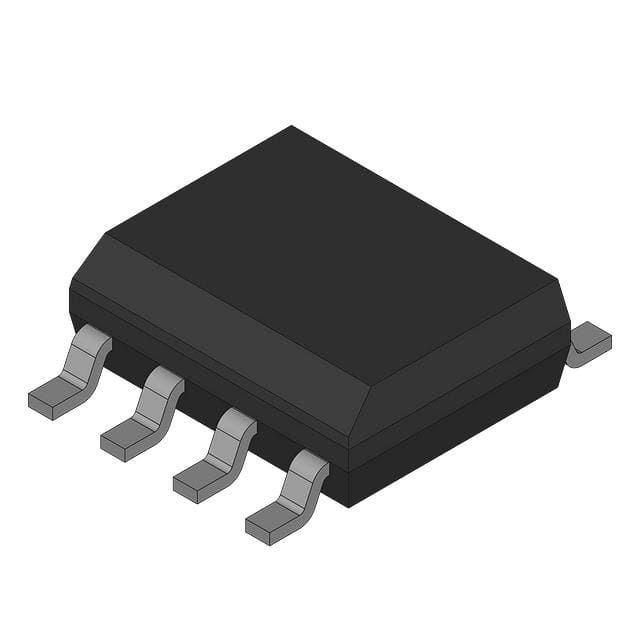
- Part No.:
- LM1971M
- Manufacturer:
- Texas Instruments
- Category:
- Audio Special Purpose
- Package:
- 8-SOIC (0.154", 3.90mm Width)
- Datasheet:
-
 LM1971M.pdf
- Description:
- IC VOLUME CONTROL 8SOIC
- Quantity:
- Payment:

- Shipping:

Inventory:1,855
Please send an inquiry. Send us your inquiry, and we will respond immediately.
Product details
Overview
LM1971M from Texas Instruments is a digitally controlled single-channel audio attenuator IC with 3-wire serial interface, 62 dB attenuation range in 1 dB steps, mute function delivering 102 dB isolation, and 0.0008% THD - deployed in PC audio control, sound reinforcement systems, and electronic music (MIDI) signal path management.
For engineers reviewing the LM1971M datasheet, LM1971M pinout, LM1971M application, or LM1971M equivalent, key selection criteria include click-and-pop-free digital attenuation, single-supply operation (4.5–12 V), SOIC-8 package thermal resistance (θJA = 167°C/W), and TTL/CMOS-compatible serial control timing.
Technical Context
The LM1971M implements a logarithmic resistor ladder architecture with discrete CMOS switches selecting tap points - ensuring constant 40 kΩ input impedance while output impedance varies nonlinearly (25–35 kΩ) across attenuation levels. It operates exclusively in unipolar mode with half-supply biasing at VREFIN (Pin 1).
Control uses a 16-bit serial frame: 8-bit address (fixed to 00000000 for channel selection) followed by 8-bit attenuation data, latched on LOAD low and clocked on rising CLOCK edges. Mute is activated by any data value ≥ 00111111 (63 decimal), physically disconnecting IN from OUT and grounding OUT through ~2 kΩ.
Key Specifications
| Parameter | Value and Actual Design Meaning |
|---|---|
| Attenuation Range | 0 to −62 dB in precise 1 dB steps - enables fine-grained volume control without audible stepping artifacts. |
| Mute Attenuation | 102 dB typical - achieves near-total signal blocking via physical disconnection and output grounding. |
| Total Harmonic Distortion | 0.0008% typical at 1 kHz - preserves audio fidelity in high-fidelity mixing and PC audio applications. |
| Dynamic Range | 115 dB typical - supports wide signal swing from quiet passages to peaks without noise floor intrusion. |
| Frequency Response | >200 kHz (−3 dB) - maintains flat response across full audio band and beyond, suitable for ultrasonic-capable systems. |
| Supply Voltage Range | 4.5 V to 12 V - accommodates standard logic rails and battery-backed audio subsystems. |
| Junction Temperature Max | +150°C - defines absolute thermal limit; derating required above ambient due to θJA = 167°C/W in SOIC package. |
Pinout & Package
LM1971M is housed in an 8-pin SOIC (D) package per JEDEC MS-012 variation AA, with 1.27 mm lead pitch, 3.91 mm body width, and 1.75 mm max height. Thermal resistance θJA = 167°C/W when board-mounted.
| Pin/Terminal | Circuit Role | Design Meaning |
|---|---|---|
| VREFIN (1) | Analog reference input | Bias point for AC-coupled input; must be held at VDD/2 using resistor divider or active buffer to enable rail-to-rail signal handling. |
| OUT (2) | Analog output | Attenuated signal output; requires high-impedance buffering (JFET/CMOS op amp) to prevent linearity errors from output impedance variation (25–35 kΩ). |
| GND (3) | Digital/analog common reference | Single-point ground for all digital inputs (LOAD/DATA/CLOCK) and analog return; not split - mandates unipolar supply configuration. |
| LOAD (4) | Serial data latch enable | Active-low control: must go low ≥150 ns before first CLOCK rising edge and remain low during full 16-bit transfer. |
| DATA (5) | Serial data input | TTL/CMOS-compatible input receiving MSB-first 16-bit frame (8-bit address + 8-bit attenuation/mute code) on CLOCK rising edges. |
| CLOCK (6) | Serial timing input | Accepts up to 2 MHz clock; rising edge clocks each bit into internal shift register; falling edge must precede LOAD falling edge by ≤20 ns. |
| VDD (7) | Positive supply | 4.5–12 V unregulated input; powers analog ladder and digital interface; decoupling capacitor mandatory at pin. |
| IN (8) | Analog input | AC-coupled audio input; 40 kΩ constant impedance; requires 1 μF coupling cap for full 20 Hz low-frequency response. |
Key Features
| Feature | Design Value |
|---|---|
| Click-and-pop-free attenuation | Guaranteed by synchronized switch activation and internal zero-crossing detection - eliminates transient artifacts during real-time volume changes. |
| Logarithmic resistor ladder | Fixed 40 kΩ input impedance across all settings - ensures consistent source loading and avoids tone coloration in multi-channel systems. |
| Integrated mute function | Hardware-level signal kill via physical disconnection + 2 kΩ output pull-down - provides deterministic silence independent of microcontroller state. |
| Single-supply biasing | VREFIN pin accepts externally generated VDD/2 reference - eliminates need for dual supplies while supporting full-scale ±6 Vpk signals. |
| 3-wire serial interface | LOAD/DATA/CLOCK protocol with no external pull-ups required - simplifies MCU GPIO usage and reduces BOM count in space-constrained designs. |
Applications
| Communication Systems | Cellular Phones and Pagers |
|---|---|
Use Scenario: Level-matching analog voice paths between RF transceivers and baseband processors in legacy 2G/3G handsets. IC Role / Device Role / Timing Role: Digitally programmable gain control element in receive chain, replacing mechanical potentiometers and reducing PCB area. Use Value: 62 dB range and 1 dB resolution allow precise compensation of variable antenna coupling losses without audible clicks during call setup. | Use Scenario: Ringer volume adjustment and alert tone attenuation in compact pager modules with tight power budgets. IC Role / Device Role / Timing Role: Low-quiescent-current (1.8 mA typ) audio attenuator interfaced directly to 3.3 V microcontroller GPIOs. Use Value: Mute function (102 dB) silences alerts instantly upon incoming SMS, meeting EN 301 489-32 radiated emission requirements for burst suppression. |
| Personal Computer Audio Control | Audio Mixing Automation |
Use Scenario: Front-panel headphone volume control in desktop motherboards with HD Audio codec integration. IC Role / Device Role / Timing Role: Serial-controlled analog attenuator placed between codec line-out and jack amplifier, driven by EC firmware. Use Value: 0.0008% THD preserves SNR in high-resolution playback; SOIC-8 footprint allows routing beneath audio codec ICs. | Use Scenario: Remote-controllable channel fader in analog broadcast mixing consoles with motorized pot emulation. IC Role / Device Role / Timing Role: Digitally addressed attenuation node in distributed analog signal path, updated via RS-485-to-GPIO bridge. Use Value: 115 dB dynamic range supports professional-grade headroom; 200 kHz bandwidth prevents phase shift in subharmonic processing chains. |
Equivalent & Alternatives
The following parts are listed as comparable options for similar digitally controlled audio attenuator applications.
| Alternative Part | Technical Difference | Application Difference | Selection Advice |
|---|---|---|---|
| PGA2310U | Two-channel, I²C interface, ±15 V dual supply only; no mute function; 0.0003% THD. | Requires dual supply and external mute circuitry; suited for studio-grade stereo preamp designs. | Select PGA2310U only if dual-channel simultaneous control and ultra-low THD outweigh single-supply convenience. |
| DS1669S+ | Single-channel, SPI interface, 5 V only, 0.0015% THD, 90 dB dynamic range, no hardware mute. | Lacks true mute; relies on software-driven zero-gain setting; lower dynamic range limits use in high-SNR systems. | Choose DS1669S+ only for cost-sensitive 5 V-only embedded audio where mute is handled upstream. |
Compared with PGA2310U and DS1669S+, the LM1971M uniquely combines single-supply operation, hardware mute, and 115 dB dynamic range in an SOIC-8 package - making it optimal for space-constrained, battery-aware, and safety-critical audio mute applications.
Availability
LM1971M is available at Aetrix Electronics and suitable for communication systems, personal computer audio control, and sound reinforcement systems requiring stable component supply and long-term industrial availability.
Supply support for LM1971M includes scheduled delivery planning, volume procurement assistance, BOM continuity management, traceable sourcing, and lifecycle availability coordination for OEM customers, industrial embedded developers, connected-device designers, and electronics production programs.
Manufacturer
Texas Instruments is a global semiconductor leader specializing in analog and embedded processing technologies, with over 90 years of innovation in precision signal chain solutions.
The LM1971M belongs to TI's Overture™ Audio Attenuator Series - engineered specifically for high-fidelity, click-free digital volume control in consumer, professional, and communications audio equipment.
FAQ
What is the maximum clock frequency supported by the LM1971M?
The LM1971M supports a maximum clock frequency of 2 MHz, as specified in its Electrical Characteristics table under fCLK. This timing constraint ensures reliable 16-bit serial data capture across temperature and voltage ranges. Exceeding 2 MHz may cause bit errors in the attenuation register, leading to incorrect output levels or failure to enter mute mode. The LM1971M datasheet confirms this limit applies to all operating conditions within the −40°C to +85°C ambient range.
Does the LM1971M require external passive components for basic operation?
Yes, the LM1971M requires three external passive components for functional operation: a 1 μF AC-coupling capacitor on the IN (Pin 8) and OUT (Pin 2) lines to block DC offset, and a bypass capacitor (≥0.1 μF ceramic) on VDD (Pin 7) to suppress supply noise. Additionally, a resistor divider (two equal-value resistors) is needed at VREFIN (Pin 1) to establish VDD/2 bias unless an active buffer is used. These components are mandatory per the Typical Application Circuit in the LM1971M datasheet.
How does the LM1971M achieve click-and-pop-free attenuation transitions?
The LM1971M achieves click-and-pop-free attenuation through synchronized switching of its internal logarithmic resistor ladder and zero-crossing detection logic that delays state changes until the analog signal crosses 0 V. This prevents abrupt voltage discontinuities at the output. The architecture ensures monotonic step response and eliminates transient energy in the audible band. Performance is verified in Figure 5 (THD+N vs Frequency) and Figure 12 (Mute Attenuation vs Frequency) of the LM1971M datasheet, showing no spectral spikes during level changes.
Can the LM1971M be used with a 3.3 V microcontroller interface?
Yes, the LM1971M digital interface (LOAD, DATA, CLOCK) is fully compatible with 3.3 V TTL/CMOS logic: VIH is specified at ≥2.0 V and VIL at ≤0.8 V, providing 0.3 V noise margin for 3.3 V systems. No level-shifting circuitry is required. However, VDD must still be ≥4.5 V for analog performance - meaning the LM1971M operates with mixed-voltage signaling: 3.3 V logic control and ≥4.5 V analog supply. This configuration is validated in the LM1971M datasheet's Electrical Characteristics table.
What is the thermal resistance (θJA) of the LM1971M in its SOIC package?
The LM1971M in SOIC (D) package has a typical junction-to-ambient thermal resistance (θJA) of 167°C/W when board-mounted, as explicitly stated in the Operating Ratings section of the LM1971M datasheet. This value applies specifically to the LM1971M variant (not the PDIP LM1971N, which has θJA = 102°C/W). Power dissipation must be derated above ambient temperature using PD = (150°C − TA)/167°C/W to maintain junction temperature ≤150°C.
LM1971M Specifications
- Product attributes
- Attribute value
- Manufacturer:
- Texas Instruments
- Series:
- Overture™
- Package/Case:
- 8-SOIC (0.154", 3.90mm Width)
- Packaging:
- Bulk
- Product Status:
- Active
- Function:
- Volume Control
- Applications:
- Communication Systems
- Number of Channels:
- 1
- Interface:
- SPI
- Voltage - Supply:
- 4.5V ~ 12V
- Operating Temperature:
- -40°C ~ 85°C (TA)
- Specifications:
- 115dB
- Mounting Type:
- Surface Mount
- Grade:
- -
LM1971M FAQ
1.How can I place an order for LM1971M through Aetrix?
Please submit a Request for Quotation (RFQ) for LM1971M on Aetrix. Our sales agent will provide a competitive quotation and guide you through the order confirmation once you accept the terms.
2.Are the price and stock information for LM1971M reliable?
The price and inventory of LM1971M are updated periodically and may fluctuate due to market conditions. Stock and pricing data are typically refreshed every 24 hours. Quotation validity for LM1971M is usually 5 days.
3.What payment methods are accepted for LM1971M?
We accept Wire Transfer, PayPal, Credit Card, Western Union, MoneyGram, and Escrow for LM1971M transactions.
Note: Certain payment methods may incur a processing fee.
4.How is shipping managed for LM1971M?
LM1971M orders can be shipped via leading logistics carriers, including DHL, UPS, FedEx, TNT, or Registered Mail.
Once your LM1971M order is processed, you will receive an email with the shipment details and tracking number.
Note: Tracking information may take up to 24 hours to appear. Express delivery typically takes 3–5 business days.
5.How can I obtain technical support or documentation for LM1971M?
For technical support, including LM1971M datasheets, pinout diagrams, or application guidance, please contact our engineering support team. They can provide detailed documentation and assistance for your LM1971M requirements.
6.How does Aetrix verify that LM1971M is sourced from the original manufacturer or authorized distributors?
All LM1971M products on Aetrix are procured from qualified distributors and authorized channels. Our dedicated quality assurance team conducts strict verification, including traceability checks and, if necessary, third-party testing. This ensures that LM1971M meets industry standards.
7.What is the process for return or replacement of LM1971M?
All LM1971M units undergo pre-shipment inspection (PSI). If there is an issue with LM1971M, returns or replacements are accepted under the following conditions:
1.Quantity discrepancies, incorrect items, or visible external defects (such as breakage or corrosion), acknowledged by Aetrix.
2.The issue is reported within 90 days of delivery.
3.The LM1971M part is unused and in its original packaging.
Return procedure for LM1971M:
1.Submit a request within 90 days.
2.Obtain a Return Material Authorization (RMA) from Aetrix.
LM1971M Tags
-
SA571DR2G
onsemi
-
ADAU7002ACBZ-R7
Analog Devices Inc.

-
DRV135UA/2K5
Texas Instruments
-
DRV134UA/1K
Texas Instruments
-
DRV134PA
Texas Instruments
-
DRV134UA
Texas Instruments
-
DRV135UA
Texas Instruments
-
SA572DR2G
onsemi
-
PGA2311U/1K
Texas Instruments
-
SI8244BB-D-IS1R
Skyworks Solutions Inc.

-
CS8416K-CZZR
Cirrus Logic Inc.
-
SRC4392IPFBR
Texas Instruments
Tech Hub

A practical engineering guide to 3.3V and 5V logic compatibility, input thresholds, resistor dividers, translator ICs, MOSFET level shifting, I2C pull-ups, timing limits and power-sequencing risks.

The 74HC595 uses push-pull logic outputs, while the TPIC6B595 uses 50 V open-drain DMOS sinks for higher-power loads. This guide compares timing, current limits, 3.3 V interfacing, load wiring, thermal…

The 74HC595 converts serial data into eight stable parallel outputs. This guide covers pin functions, shift and storage timing, OE and MR behavior, drive-current limits, cascading, voltage compatibilit…

A technical comparison of level-sensitive latches and edge-triggered flip-flops, covering timing windows, setup and hold limits, master–slave operation, time borrowing, race-through, HDL inference and…

A D latch stores one bit while Enable controls when data can pass. This reference covers gate-level operation, truth tables, transparency, setup and hold timing, LE versus OE, common ICs and practical …

An SR latch stores one bit through cross-coupled feedback. This engineering reference covers NOR and NAND implementations, truth tables, forbidden-state recovery, gated operation, switch debouncing, fa…

Latch circuits retain one bit through feedback. This technical reference covers SR and D latches, truth tables, transparency, timing limits, latch-versus-flip-flop behavior, applications and common log…

An engineering guide to LED driver operation, constant-current and constant-voltage outputs, linear and switching topologies, dimming, IC selection, calculations, replacement compatibility, and fault c…

Operational amplifier guide covering op amp basics, feedback, ideal vs real op amps, common configurations, buffer circuits, offset, bias current, gain-bandwidth, slew rate, rail-to-rail limits and sel…

Jumper cables guide covering safe connection order, red and black clamp placement, final ground connection, cable gauge, length, clamp quality, copper vs CCA cables, jump starter comparison and battery…


