
 My Inquiry
 My Account


Texas Instruments LM1972MX/NOPB
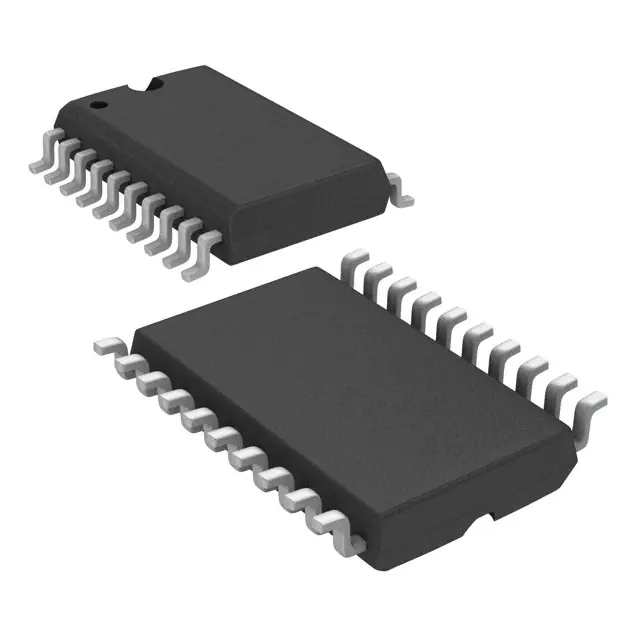
- Part No.:
- LM1972MX/NOPB
- Manufacturer:
- Texas Instruments
- Category:
- Audio Special Purpose
- Package:
- 20-SOIC (0.295", 7.50mm Width)
- Datasheet:
-
 LM1972MX/NOPB.pdf
- Description:
- IC VOLUME CONTROL 20SOIC
- Quantity:
- Payment:

- Shipping:

Inventory:2,627
Please send an inquiry. Send us your inquiry, and we will respond immediately.
Product details
Overview
LM1972MX/NOPB from Texas Instruments (formerly National Semiconductor) is a digitally controlled 2-channel CMOS audio attenuator with logarithmic 0.5 dB/1.0 dB step resolution, 78 dB attenuation range (excluding mute), 104 dB mute isolation, and TTL/CMOS-compatible 3-wire serial interface. It serves as a precision volume control in professional audio signal paths requiring pop-free transitions and high channel separation.
For engineers reviewing the LM1972MX/NOPB datasheet, LM1972MX/NOPB pinout, LM1972MX/NOPB application, or LM1972MX/NOPB equivalent, key selection criteria include its dual-channel mute capability, daisy-chainable serial interface, ±0.25 dB differential attenuation accuracy, 110 dB SNR (A-weighted), and compatibility with ±6 V dual-supply or +12 V single-supply configurations.
Technical Context
The LM1972MX/NOPB implements two independent resistor ladder networks - one per channel - each with digitally addressed tap switches that select attenuation levels per Table 1 of the datasheet. Its architecture maintains constant 40 kΩ input impedance across all steps while output impedance varies nonlinearly (25–35 kΩ), necessitating JFET-input buffering to preserve linearity and prevent loading-induced errors.
Control logic uses an 8-bit channel address followed by 8-bit attenuation data over a rising-edge clocked 3-wire interface (CLOCK, LOAD/SHIFT, DATA-IN); DATA-OUT enables daisy-chaining up to n devices with synchronized 16n-bit shift-and-latch operation. Mute is triggered by any data word ≥ 0x7F (127), physically disconnecting input from output and grounding the output through ~2 kΩ.
Key Specifications
| Parameter | Value and Actual Design Meaning |
|---|---|
| Attenuation Range | 78 dB typical (0–47.5 dB @ 0.5 dB steps; 48–78 dB @ 1.0 dB steps) - defines usable dynamic range for volume control without clipping. |
| Mute Attenuation | 104 dB minimum - ensures near-total signal isolation during mute, critical for studio switching and noise-sensitive systems. |
| THD+N | 0.003% max at 1 kHz, 0 dB attenuation - guarantees low distortion in high-fidelity audio reproduction paths. |
| Signal-to-Noise Ratio | 110 dB min (A-weighted, ref. 4 Vrms) - enables quiet background operation in professional mixing and recording. |
| Channel Separation | 100 dB min at 0 dB attenuation - prevents crosstalk between left/right or multi-zone audio channels. |
| Differential Attenuation Error | ±0.25 dB max (−48 to −78 dB range) - ensures precise balance matching between stereo or multi-channel pairs. |
| Frequency Response | 100 kHz (−3 dB min) - supports full-spectrum audio including ultrasonic content for digital mastering applications. |
Pinout & Package
LM1972MX/NOPB is housed in a 20-pin plastic dual-in-line package (DIP), NS package number N20A, with through-hole mounting and 0.300-inch body width. Pin 1 is index-marked; pins 1, 3, 5, 6, 14, 16 are AC ground connections; pins 4 and 20 are analog inputs (IN1, IN2); pins 2 and 17 are analog outputs (OUT1, OUT2); pins 7 and 18 are negative supply (VSS1, VSS2); pins 13 and 15 are positive supply (VDD1, VDD2); pin 8 is logic ground; pins 9–12 handle serial interface (CLOCK, LOAD/SHIFT, DATA-IN, DATA-OUT).
| Pin/Terminal | Circuit Role | Design Meaning |
|---|---|---|
| 1, 3, 5, 6, 14, 16 | AC Ground | Not bonded internally; must be AC-grounded via 0.1 µF caps to prevent coupling between adjacent signal pins. |
| 2, 17 | Analog Output | High-impedance node requiring JFET-input buffer to avoid loading-induced attenuation error and clicks. |
| 4, 20 | Analog Input | 40 kΩ constant impedance; accepts audio or DC signals up to diode-drop below rails. |
| 7, 18 | Negative Supply | Accepts −6 V (dual supply) or tied to GND (single supply); defines lower rail for analog signal swing. |
| 13, 15 | Positive Supply | Accepts +6 V (dual supply) or +12 V (single supply); sets upper rail and determines headroom. |
| 8 | Logic Ground | Digital reference for CLOCK, LOAD/SHIFT, DATA-IN/OUT; must be isolated from analog grounds to reduce noise coupling. |
| 9 | Clock Input | TTL/CMOS-compatible; rising edge clocks 16-bit serial data (8-bit address + 8-bit attenuation) into internal shift register. |
| 10 | Load/Shift | Active-low enable; held low during full 16-bit shift, then pulsed high to latch decoded attenuation setting. |
| 11 | Data-In | Serial input accepting MSB-first 16-bit frame; connects to microcontroller GPIO or UART TX with level-shifting if needed. |
| 12 | Data-Out | Open-drain compatible; shifts out prior data during daisy-chain operation; terminate with 2 kΩ to GND if unused. |
Key Features
| Feature | Design Value |
|---|---|
| Pop- and click-free attenuation | Eliminates audible artifacts during volume changes via synchronous tap-switch activation and buffered output requirement. |
| Daisy-chain serial interface | Reduces microcontroller I/O count: one DATA and one LOAD/SHIFT line control multiple LM1972MX/NOPB units in series. |
| Software-customizable attenuation curve | Permits re-mapping of step values (e.g., uniform 1 dB steps for panning) within fixed 0–78 dB + mute range using same register format. |
| 104 dB hardware mute | Physically isolates input from output and grounds output pin, enabling silent channel muting without relay wear or timing delays. |
| 100 dB channel separation | Minimizes inter-channel leakage in stereo or multi-zone systems, preserving imaging integrity in studio and live sound applications. |
Applications
| Automated Studio Mixing Consoles | Music Reproduction Systems |
|---|---|
|
Use Scenario: Remote-controlled fader banks in digital audio workstations (DAWs) and broadcast consoles requiring precise, recallable gain staging. IC Role / Device Role / Timing Role: Dual-channel digitally addressed attenuator providing calibrated 0.5 dB resolution volume control per channel with mute synchronization. Use Value: Enables consistent mix recall and automation via microcontroller-driven serial commands, eliminating mechanical pot wear and drift. |
Use Scenario: High-end CD/DAC preamplifier stages where analog volume control must preserve SNR and THD+N performance. IC Role / Device Role / Timing Role: Logarithmic audio attenuator replacing mechanical pots in signal path before power amplification. Use Value: Delivers 110 dB SNR and 0.003% THD+N - exceeding analog potentiometer performance - with zero mechanical wear. |
| Sound Reinforcement Systems | Personal Computer Audio Control |
|
Use Scenario: Zone-level volume management in commercial PA systems with centralized DSP control and remote monitoring. IC Role / Device Role / Timing Role: Channel-isolated attenuator supporting independent level adjustment per speaker zone with daisy-chained configuration. Use Value: Reduces wiring complexity and controller I/O count while maintaining >100 dB inter-zone isolation for clean multi-zone audio distribution. |
Use Scenario: Windows/Mac audio driver-controlled front-panel volume knobs or software mixer backends in consumer motherboards and sound cards. IC Role / Device Role / Timing Role: Serial-interface audio attenuator interfaced to embedded microcontroller or audio codec I²C/SPI bridge. Use Value: Provides jitter-free, pop-free volume control with mute support directly controllable by OS-level audio APIs without analog trimming. |
Equivalent & Alternatives
The following parts are listed as comparable options for similar digitally controlled audio attenuator applications.
| Alternative Part | Technical Difference | Application Difference | Selection Advice |
|---|---|---|---|
| PGA2311U | Single-channel, SPI interface, 90 dB dynamic range, integrated op-amp buffers, ±15 V supply capable. | Requires external op-amps for LM1972MX/NOPB's dual-channel functionality; better suited for high-voltage line-level designs. | Select PGA2311U when system requires on-chip buffering, higher supply voltage tolerance, or SPI-native MCU integration. |
| DS1669S+ | Single-channel, I²C interface, 64-step linear taper, no mute function, 5 V only, 8-pin SOIC package. | Lacks logarithmic taper, mute, and channel separation specs; limited to basic consumer-grade volume control. | Choose DS1669S+ only for cost-sensitive, single-channel, I²C-based designs where 78 dB range and 104 dB mute are not required. |
Compared with PGA2311U and DS1669S+, the LM1972MX/NOPB uniquely delivers dual-channel 78 dB logarithmic attenuation with hardware mute, daisy-chainable 3-wire interface, and 100 dB channel separation - making it optimal for professional audio routing where channel independence and silent muting are mandatory.
Availability
LM1972MX/NOPB is available at Aetrix Electronics and suitable for automated studio mixing consoles, music reproduction systems, and sound reinforcement systems requiring stable component supply, long-term lifecycle support, and traceable sourcing for industrial audio equipment manufacturing.
Supply support for LM1972MX/NOPB includes scheduled delivery planning, volume procurement assistance, BOM continuity management, traceable sourcing, and lifecycle availability coordination for OEM customers, industrial embedded developers, connected-device designers, and electronics production programs.
Manufacturer
Texas Instruments acquired National Semiconductor in 2011 and maintains its legacy precision analog portfolio, including high-performance audio ICs designed for studio, broadcast, and pro-audio applications.
The LM1972MX/NOPB belongs to National Semiconductor's μPot™ family of digitally controlled analog attenuators, engineered specifically for noise-critical, multi-channel audio signal conditioning where mechanical potentiometers fail to meet reliability or precision requirements.
FAQ
What is the maximum clock frequency supported by the LM1972MX/NOPB serial interface?
The LM1972MX/NOPB supports a maximum clock frequency of 2 MHz, as specified in its Electrical Characteristics table. This allows rapid attenuation updates - up to 2 million steps per second - though practical audio control rates typically operate well below this limit to ensure reliable data capture and minimize EMI. The LM1972MX/NOPB's timing diagram confirms setup/hold requirements relative to the rising clock edge.
Does the LM1972MX/NOPB require external op-amps for proper operation?
Yes, the LM1972MX/NOPB requires an external JFET-input op-amp (e.g., LF412ACN) at each output to prevent loading-induced linearity errors, eliminate clicks/pops during attenuation changes, and provide necessary drive capability. Its output impedance varies nonlinearly (25–35 kΩ), and direct connection to low-impedance loads degrades attenuation accuracy and SNR. The LM1972MX/NOPB datasheet explicitly mandates this buffer configuration.
Can the LM1972MX/NOPB operate from a single +12 V supply?
Yes, the LM1972MX/NOPB supports single-supply operation: tie pins 7 and 18 (VSS1/VSS2) to ground and apply +12 V to pins 13 and 15 (VDD1/VDD2). Its Absolute Maximum Ratings specify VDD–VSS up to 15 V, and Operating Ratings confirm 4.5 V to 12 V operation. In single-supply mode, input signals must be biased within the common-mode range, and AC coupling is recommended to block DC offsets.
How does the LM1972MX/NOPB achieve 104 dB mute attenuation?
The LM1972MX/NOPB achieves 104 dB mute attenuation by physically disconnecting the analog input from the output path and simultaneously grounding the output pin through an internal ~2 kΩ resistor. This dual-action method - signal isolation plus active grounding - exceeds standard switch-off attenuation and prevents residual leakage or capacitive coupling. Mute is activated by sending any serial data word ≥ 0x7F (127) to the LM1972MX/NOPB.
Is the LM1972MX/NOPB pin-compatible with other μPot™ devices like the LM1971?
No, the LM1972MX/NOPB is not pin-compatible with the LM1971 or other μPot™ variants. The LM1972MX/NOPB uses a 20-pin DIP package (N20A) with dedicated dual supplies, dual analog I/O, and 3-wire serial interface pins; the LM1971 is a 16-pin device with different pin assignments and functional allocation. Substitution requires PCB layout revision and firmware adaptation due to distinct pinout, register map, and channel count.
LM1972MX/NOPB Specifications
- Product attributes
- Attribute value
- Manufacturer:
- Texas Instruments
- Series:
- -
- Package/Case:
- 20-SOIC (0.295", 7.50mm Width)
- Packaging:
- Tape & Reel (TR)
- Product Status:
- Active
- Function:
- Volume Control
- Applications:
- Consumer Audio, Professional Audio
- Number of Channels:
- 2
- Interface:
- SPI
- Voltage - Supply:
- 4.5V ~ 12V
- Operating Temperature:
- 0°C ~ 70°C (TA)
- Specifications:
- 78dB
- Mounting Type:
- Surface Mount
- Grade:
- -
LM1972MX/NOPB FAQ
1.How can I place an order for LM1972MX/NOPB through Aetrix?
Please submit a Request for Quotation (RFQ) for LM1972MX/NOPB on Aetrix. Our sales agent will provide a competitive quotation and guide you through the order confirmation once you accept the terms.
2.Are the price and stock information for LM1972MX/NOPB reliable?
The price and inventory of LM1972MX/NOPB are updated periodically and may fluctuate due to market conditions. Stock and pricing data are typically refreshed every 24 hours. Quotation validity for LM1972MX/NOPB is usually 5 days.
3.What payment methods are accepted for LM1972MX/NOPB?
We accept Wire Transfer, PayPal, Credit Card, Western Union, MoneyGram, and Escrow for LM1972MX/NOPB transactions.
Note: Certain payment methods may incur a processing fee.
4.How is shipping managed for LM1972MX/NOPB?
LM1972MX/NOPB orders can be shipped via leading logistics carriers, including DHL, UPS, FedEx, TNT, or Registered Mail.
Once your LM1972MX/NOPB order is processed, you will receive an email with the shipment details and tracking number.
Note: Tracking information may take up to 24 hours to appear. Express delivery typically takes 3–5 business days.
5.How can I obtain technical support or documentation for LM1972MX/NOPB?
For technical support, including LM1972MX/NOPB datasheets, pinout diagrams, or application guidance, please contact our engineering support team. They can provide detailed documentation and assistance for your LM1972MX/NOPB requirements.
6.How does Aetrix verify that LM1972MX/NOPB is sourced from the original manufacturer or authorized distributors?
All LM1972MX/NOPB products on Aetrix are procured from qualified distributors and authorized channels. Our dedicated quality assurance team conducts strict verification, including traceability checks and, if necessary, third-party testing. This ensures that LM1972MX/NOPB meets industry standards.
7.What is the process for return or replacement of LM1972MX/NOPB?
All LM1972MX/NOPB units undergo pre-shipment inspection (PSI). If there is an issue with LM1972MX/NOPB, returns or replacements are accepted under the following conditions:
1.Quantity discrepancies, incorrect items, or visible external defects (such as breakage or corrosion), acknowledged by Aetrix.
2.The issue is reported within 90 days of delivery.
3.The LM1972MX/NOPB part is unused and in its original packaging.
Return procedure for LM1972MX/NOPB:
1.Submit a request within 90 days.
2.Obtain a Return Material Authorization (RMA) from Aetrix.
LM1972MX/NOPB Tags
-
SA571DR2G
onsemi
-
ADAU7002ACBZ-R7
Analog Devices Inc.

-
DRV135UA/2K5
Texas Instruments
-
DRV134UA/1K
Texas Instruments
-
DRV134PA
Texas Instruments
-
DRV134UA
Texas Instruments
-
DRV135UA
Texas Instruments
-
SA572DR2G
onsemi
-
PGA2311U/1K
Texas Instruments
-
SI8244BB-D-IS1R
Skyworks Solutions Inc.

-
CS8416K-CZZR
Cirrus Logic Inc.
-
SRC4392IPFBR
Texas Instruments
Tech Hub

A practical engineering guide to 3.3V and 5V logic compatibility, input thresholds, resistor dividers, translator ICs, MOSFET level shifting, I2C pull-ups, timing limits and power-sequencing risks.

The 74HC595 uses push-pull logic outputs, while the TPIC6B595 uses 50 V open-drain DMOS sinks for higher-power loads. This guide compares timing, current limits, 3.3 V interfacing, load wiring, thermal…

The 74HC595 converts serial data into eight stable parallel outputs. This guide covers pin functions, shift and storage timing, OE and MR behavior, drive-current limits, cascading, voltage compatibilit…

A technical comparison of level-sensitive latches and edge-triggered flip-flops, covering timing windows, setup and hold limits, master–slave operation, time borrowing, race-through, HDL inference and…

A D latch stores one bit while Enable controls when data can pass. This reference covers gate-level operation, truth tables, transparency, setup and hold timing, LE versus OE, common ICs and practical …

An SR latch stores one bit through cross-coupled feedback. This engineering reference covers NOR and NAND implementations, truth tables, forbidden-state recovery, gated operation, switch debouncing, fa…

Latch circuits retain one bit through feedback. This technical reference covers SR and D latches, truth tables, transparency, timing limits, latch-versus-flip-flop behavior, applications and common log…

An engineering guide to LED driver operation, constant-current and constant-voltage outputs, linear and switching topologies, dimming, IC selection, calculations, replacement compatibility, and fault c…

Operational amplifier guide covering op amp basics, feedback, ideal vs real op amps, common configurations, buffer circuits, offset, bias current, gain-bandwidth, slew rate, rail-to-rail limits and sel…

Jumper cables guide covering safe connection order, red and black clamp placement, final ground connection, cable gauge, length, clamp quality, copper vs CCA cables, jump starter comparison and battery…


