
 My Inquiry
 My Account


Texas Instruments LM2576S-15/NOPB
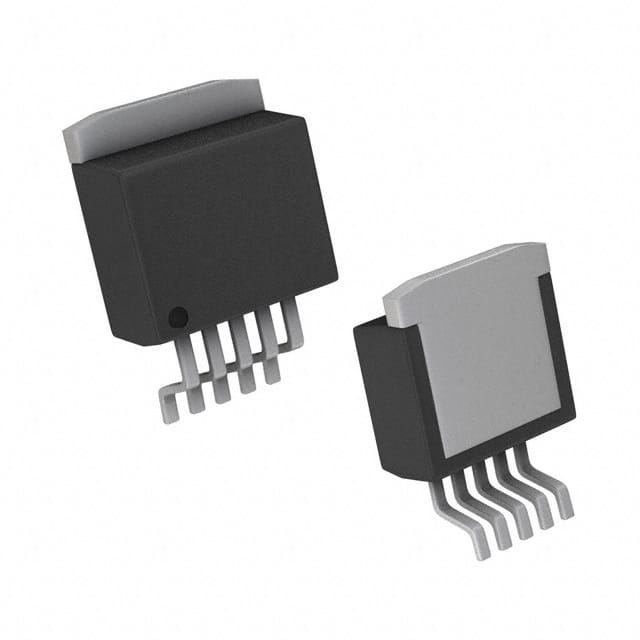
- Part No.:
- LM2576S-15/NOPB
- Manufacturer:
- Texas Instruments
- Package:
- TO-263-6, D2PAK (5 Leads + Tab), TO-263BA
- Datasheet:
-
 LM2576S-15/NOPB.pdf
- Description:
- IC REG BUCK 15V 3A TO263
- Quantity:
- Payment:

- Shipping:

Inventory:4,714
Please send an inquiry. Send us your inquiry, and we will respond immediately.
Product details
Overview
LM2576S-15/NOPB from Texas Instruments is a monolithic 3-A non-synchronous step-down (buck) DC-DC regulator in TO-220-5 package, delivering fixed 15-V output with ±4% tolerance over line and load, 52-kHz fixed-frequency operation, and TTL-compatible ON/OFF control. It replaces linear regulators in medium-power industrial and embedded power supplies where thermal efficiency and minimal external components are critical.
For engineers reviewing the LM2576S-15/NOPB datasheet, LM2576S-15/NOPB pinout, LM2576S-15/NOPB application, or LM2576S-15/NOPB equivalent, key selection criteria include input voltage range (up to 40 V), 3-A continuous output capability, thermal performance in TO-220 package, and compatibility with standard off-the-shelf inductors and catch diodes.
Technical Context
The LM2576S-15/NOPB integrates a high-side NPN switch, fixed-frequency oscillator (47–58 kHz), error amplifier, current-limit comparator, and thermal shutdown circuit. Its feedback loop uses an internal 1.23-V reference and senses output directly at the feedback pin-shorted to VOUT for fixed versions-enabling stable regulation without external resistive dividers.
It operates in continuous conduction mode under full load and transitions to discontinuous mode at light loads. Protection features include cycle-by-cycle current limiting (4.2–6.9 A typical), thermal shutdown, and undervoltage lockout via the ON/OFF pin, which enters low-power standby (50 μA typical) when pulled above 1.4 V.
Key Specifications
| Parameter | Value and Actual Design Meaning |
|---|---|
| Output Voltage | Fixed 15 V ±4% over full operating temperature (−40°C to +125°C) and load (0.5–3 A), eliminating need for external feedback resistors. |
| Input Voltage Range | 4 V to 40 V maximum-supports wide-input industrial rails including 24-V and 36-V systems without pre-regulation. |
| Output Current | 3-A continuous DC load current-enables single-chip replacement of linear regulators in mid-power applications. |
| Switching Frequency | 52 kHz nominal (42–63 kHz over temperature)-balances EMI control, inductor size, and efficiency for cost-sensitive designs. |
| Efficiency | 88% typical at VIN = 18 V, IOUT = 3 A-reduces heat sink requirements versus linear alternatives and enables natural convection cooling in many cases. |
| Standby Current | 50 μA typical at ON/OFF = 5 V-supports low-power system-level sleep modes without auxiliary LDOs. |
| Saturation Voltage | 1.8 V max at IOUT = 3 A-defines minimum dropout (VIN(min) ≈ VOUT + VSAT) and impacts thermal dissipation in high-current, low-VIN scenarios. |
Pinout & Package
LM2576S-15/NOPB uses the KC (TO-220-5) package with 10.16 mm × 8.51 mm body size and integral heat slug connected to GND. The tab is electrically tied to ground and serves as primary thermal path to heatsink or PCB copper pour.
| Pin/Terminal | Circuit Role | Design Meaning |
|---|---|---|
| 1 - VIN | Power input | Connects to high-side transistor collector; requires short, low-inductance path to input capacitor to minimize switching noise and voltage spikes. |
| 2 - OUTPUT | Switching node | Emitter of internal NPN switch; drives external inductor and catch diode cathode-critical for EMI layout and snubber design. |
| 3 - GROUND | Power and signal reference | Common return for input/output capacitors and feedback network; must be low-impedance and thermally coupled to tab for stability. |
| 4 - FEEDBACK | Regulation sense | Internally connected to 15-V output; no external divider needed-simplifies layout and eliminates resistor tolerance errors. |
| 5 - ON/OFF | Enable control | TTL-compatible digital input: <1.2 V = active, >1.4 V = shutdown; supports system-level power sequencing and fault recovery. |
Key Features
| Feature | Design Value |
|---|---|
| Fixed-output architecture | Eliminates feedback resistor selection, placement, and tolerance errors-reduces BOM count and improves production yield. |
| Integrated thermal shutdown | Automatically disables switching if junction temperature exceeds ~150°C, protecting IC and downstream circuitry during overload or poor heatsinking. |
| 52-kHz oscillator | Enables use of low-cost, high-saturation-current toroidal inductors (e.g., 68–100 µH) while keeping EMI below 150 kHz for Class B compliance. |
| Low external component count | Requires only one inductor, one catch diode, one input capacitor, and one output capacitor-reduces board area and assembly cost. |
| TTL shutdown interface | Allows direct connection to microcontroller GPIO or logic-level supervisors without level-shifting-simplifies power sequencing in multi-rail systems. |
Applications
| Industrial Motor Drives | Network Equipment Power |
|---|---|
|
Use Scenario: Powering gate drivers and logic circuits in 24-V DC motor controllers with intermittent peak loads. IC Role / Device Role / Timing Role: Primary 15-V buck regulator supplying isolated gate driver bias and MCU I/O rails. Use Value: Delivers 3-A peak current with 88% efficiency at 18-V input, reducing thermal stress on PCB and enabling compact heatsink-free designs. |
Use Scenario: Generating 15-V auxiliary rail for fan controllers and management ASICs in 1U server PSUs. IC Role / Device Role / Timing Role: Secondary regulated output derived from main 48-V bus, synchronized via fixed 52-kHz clock. Use Value: Stable ±4% output ensures reliable fan speed control across line/load transients, with low standby current (<50 μA) supporting ACPI S5 states. |
| Home Appliance Control Boards | Test Instrumentation Supplies |
|
Use Scenario: Providing clean 15-V supply for display backlight drivers and sensor signal conditioning in smart refrigerators. IC Role / Device Role / Timing Role: Fixed-output DC-DC converter replacing linear regulator to meet energy efficiency standards (e.g., ENERGY STAR). Use Value: Reduces heat generation by >70% vs. linear solution, allowing conformal coating and eliminating thermal derating in sealed enclosures. |
Use Scenario: Generating precision 15-V rail for analog front-end amplifiers and ADC references in portable multimeters. IC Role / Device Role / Timing Role: Low-noise, well-regulated power source with minimized ripple via optimized LC filter design. Use Value: Achieves <100 mVpp output ripple at full load using standard 100-µF electrolytic + 10-µF ceramic output capacitor stack. |
Equivalent & Alternatives
The following parts are listed as comparable options for similar step-down regulator applications.
| Alternative Part | Technical Difference | Application Difference | Selection Advice |
|---|---|---|---|
| LM2576T-15 | Same electrical specs and pinout; differs only in packaging-TO-220-5 with lead finish per MIL-STD-750, Method 2026 (tin-lead), not RoHS-compliant. | Used in legacy industrial systems requiring tin-lead solder compatibility or military qualification traceability. | Select LM2576T-15 only when RoHS exemption applies; LM2576S-15/NOPB is preferred for new designs requiring lead-free compliance. |
| LM2596S-15 | Higher switching frequency (150 kHz), lower quiescent current (5 mA vs. 10 mA), but reduced max input (40 V same) and output current (3 A same); requires smaller inductor. | Better suited for space-constrained applications needing higher frequency operation and tighter ripple control, but less robust under high-temperature or high-dV/dt conditions. | Choose LM2596S-15 when board area is critical and thermal environment is controlled; LM2576S-15/NOPB offers superior ruggedness and proven reliability in harsh environments. |
Compared with LM2576T-15, LM2576S-15/NOPB provides RoHS-compliant packaging without performance trade-offs; compared with LM2596S-15, it delivers greater thermal margin and EMI predictability at the cost of larger passive components-making it preferable for industrial-grade reliability over miniaturization.
Availability
LM2576S-15/NOPB is available at Aetrix Electronics and suitable for industrial motor drives, network equipment power subsystems, and home appliance control boards requiring stable component supply and long-term manufacturability.
Supply support for LM2576S-15/NOPB includes scheduled delivery planning, volume procurement assistance, BOM continuity management, traceable sourcing, and lifecycle availability coordination for OEM customers, industrial embedded developers, connected-device designers, and electronics production programs.
Manufacturer
Texas Instruments is a global semiconductor leader specializing in analog, embedded processing, and power management technologies, with decades of expertise in highly reliable power conversion solutions.
The LM2576 series was designed as a rugged, easy-to-use SIMPLE SWITCHER® alternative to linear regulators-targeting cost-sensitive industrial, appliance, and test equipment applications where thermal efficiency and design simplicity are paramount.
FAQ
What is the maximum input voltage rating for LM2576S-15/NOPB?
The absolute maximum input voltage for LM2576S-15/NOPB is 45 V, but the recommended maximum operating voltage is 40 V per TI's datasheet specifications. Exceeding 40 V may reduce reliability or trigger internal protection circuits, especially at elevated temperatures. Always maintain at least 1-V margin below 45 V in production designs using LM2576S-15/NOPB.
Can LM2576S-15/NOPB be used without a heatsink?
LM2576S-15/NOPB can operate without an external heatsink at moderate loads and ambient temperatures-e.g., 3-A output at 25°C ambient with 12-V input yields ~2.4 W dissipation and junction temperature rise of ~78°C (using RθJA = 32.4°C/W). However, for sustained 3-A operation above 40°C ambient or with input voltages >24 V, a heatsink or large copper pour is strongly recommended to keep TJ < 125°C.
How does the ON/OFF pin function on LM2576S-15/NOPB?
The ON/OFF pin on LM2576S-15/NOPB is a TTL-compatible enable input: pulling it below 1.2 V (typically to GND) activates regulation, while pulling it above 1.4 V (e.g., to 5 V) places LM2576S-15/NOPB in low-power shutdown with 50-μA typical standby current. The pin must never be left floating-it should be tied to GND through a 10-kΩ resistor if unused.
What type of diode is recommended for use with LM2576S-15/NOPB?
Texas Instruments recommends a Schottky diode such as the 1N5822 (3-A, 40-V) or SB560 for LM2576S-15/NOPB due to its low forward voltage (~0.5 V) and fast recovery-minimizing conduction losses and reverse-recovery ringing. For higher efficiency at light loads, a 3-A, 60-V Schottky like MBR360 is also suitable. Avoid standard PN diodes due to excessive power loss and thermal stress.
Is LM2576S-15/NOPB pin-compatible with other LM2576 fixed-output variants?
Yes, LM2576S-15/NOPB is fully pin-compatible with all other LM2576 fixed-output versions (e.g., LM2576S-5.0/NOPB, LM2576S-12/NOPB) in the same TO-220-5 package. They share identical pinout, thermal characteristics, and external component requirements-only the internal feedback network differs, so no PCB redesign is needed when changing output voltage within the LM2576S-xx family.
LM2576S-15/NOPB Specifications
- Product attributes
- Attribute value
- Manufacturer:
- Texas Instruments
- Series:
- SIMPLE SWITCHER®
- Package/Case:
- TO-263-6, D2PAK (5 Leads + Tab), TO-263BA
- Packaging:
- Tube
- Product Status:
- Obsolete
- Function:
- Step-Down
- Output Configuration:
- Positive
- Topology:
- Buck
- Output Type:
- Fixed
- Number of Outputs:
- 1
- Voltage - Input (Min):
- 4V
- Voltage - Input (Max):
- 40V
- Voltage - Output (Min/Fixed):
- 15V
- Voltage - Output (Max):
- -
- Current - Output:
- 3A
- Frequency - Switching:
- 52kHz
- Synchronous Rectifier:
- No
- Operating Temperature:
- -40°C ~ 125°C (TJ)
- Grade:
- -
- Qualification:
- -
- Mounting Type:
- Surface Mount
- Supplier Device Package:
- TO-263 (DDPAK-5)
LM2576S-15/NOPB FAQ
1.How can I place an order for LM2576S-15/NOPB through Aetrix?
Please submit a Request for Quotation (RFQ) for LM2576S-15/NOPB on Aetrix. Our sales agent will provide a competitive quotation and guide you through the order confirmation once you accept the terms.
2.Are the price and stock information for LM2576S-15/NOPB reliable?
The price and inventory of LM2576S-15/NOPB are updated periodically and may fluctuate due to market conditions. Stock and pricing data are typically refreshed every 24 hours. Quotation validity for LM2576S-15/NOPB is usually 5 days.
3.What payment methods are accepted for LM2576S-15/NOPB?
We accept Wire Transfer, PayPal, Credit Card, Western Union, MoneyGram, and Escrow for LM2576S-15/NOPB transactions.
Note: Certain payment methods may incur a processing fee.
4.How is shipping managed for LM2576S-15/NOPB?
LM2576S-15/NOPB orders can be shipped via leading logistics carriers, including DHL, UPS, FedEx, TNT, or Registered Mail.
Once your LM2576S-15/NOPB order is processed, you will receive an email with the shipment details and tracking number.
Note: Tracking information may take up to 24 hours to appear. Express delivery typically takes 3–5 business days.
5.How can I obtain technical support or documentation for LM2576S-15/NOPB?
For technical support, including LM2576S-15/NOPB datasheets, pinout diagrams, or application guidance, please contact our engineering support team. They can provide detailed documentation and assistance for your LM2576S-15/NOPB requirements.
6.How does Aetrix verify that LM2576S-15/NOPB is sourced from the original manufacturer or authorized distributors?
All LM2576S-15/NOPB products on Aetrix are procured from qualified distributors and authorized channels. Our dedicated quality assurance team conducts strict verification, including traceability checks and, if necessary, third-party testing. This ensures that LM2576S-15/NOPB meets industry standards.
7.What is the process for return or replacement of LM2576S-15/NOPB?
All LM2576S-15/NOPB units undergo pre-shipment inspection (PSI). If there is an issue with LM2576S-15/NOPB, returns or replacements are accepted under the following conditions:
1.Quantity discrepancies, incorrect items, or visible external defects (such as breakage or corrosion), acknowledged by Aetrix.
2.The issue is reported within 90 days of delivery.
3.The LM2576S-15/NOPB part is unused and in its original packaging.
Return procedure for LM2576S-15/NOPB:
1.Submit a request within 90 days.
2.Obtain a Return Material Authorization (RMA) from Aetrix.
LM2576S-15/NOPB Tags
-
TPS562201DDCR
Texas Instruments
-
MC34063ABD-TR
STMicroelectronics
-
TPS561201DDCR
Texas Instruments

-
MC33063ADR
Texas Instruments
-
MC34063ADR
Texas Instruments
-
TPS560200DBVR
Texas Instruments
-
AP3012KTR-G1
Diodes Incorporated
-
TLV61048DBVR
Texas Instruments
-
AZ34063UMTR-G1
Diodes Incorporated
-
TPS562200DDCR
Texas Instruments
-
AP62300TWU-7
Diodes Incorporated
-
MC34063EBD-TR
STMicroelectronics
Tech Hub

A practical engineering guide to 3.3V and 5V logic compatibility, input thresholds, resistor dividers, translator ICs, MOSFET level shifting, I2C pull-ups, timing limits and power-sequencing risks.

The 74HC595 uses push-pull logic outputs, while the TPIC6B595 uses 50 V open-drain DMOS sinks for higher-power loads. This guide compares timing, current limits, 3.3 V interfacing, load wiring, thermal…

The 74HC595 converts serial data into eight stable parallel outputs. This guide covers pin functions, shift and storage timing, OE and MR behavior, drive-current limits, cascading, voltage compatibilit…

A technical comparison of level-sensitive latches and edge-triggered flip-flops, covering timing windows, setup and hold limits, master–slave operation, time borrowing, race-through, HDL inference and…

A D latch stores one bit while Enable controls when data can pass. This reference covers gate-level operation, truth tables, transparency, setup and hold timing, LE versus OE, common ICs and practical …

An SR latch stores one bit through cross-coupled feedback. This engineering reference covers NOR and NAND implementations, truth tables, forbidden-state recovery, gated operation, switch debouncing, fa…

Latch circuits retain one bit through feedback. This technical reference covers SR and D latches, truth tables, transparency, timing limits, latch-versus-flip-flop behavior, applications and common log…

An engineering guide to LED driver operation, constant-current and constant-voltage outputs, linear and switching topologies, dimming, IC selection, calculations, replacement compatibility, and fault c…

Operational amplifier guide covering op amp basics, feedback, ideal vs real op amps, common configurations, buffer circuits, offset, bias current, gain-bandwidth, slew rate, rail-to-rail limits and sel…

Jumper cables guide covering safe connection order, red and black clamp placement, final ground connection, cable gauge, length, clamp quality, copper vs CCA cables, jump starter comparison and battery…


