
 My Inquiry
 My Account


STMicroelectronics LM317P
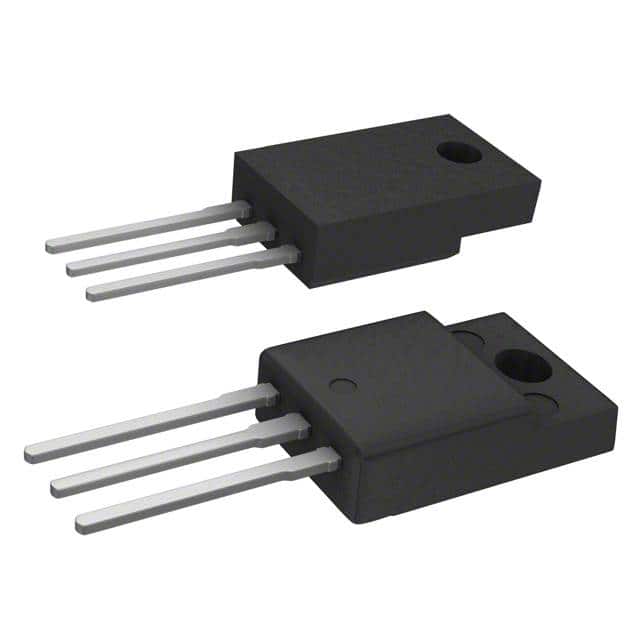
- Part No.:
- LM317P
- Manufacturer:
- STMicroelectronics
- Package:
- TO-220-3 Full Pack
- Datasheet:
-
 LM317P.pdf
- Description:
- IC REG LIN POS ADJ 1.5A TO220FP
- Quantity:
- Payment:

- Shipping:

Inventory:1,288
Please send an inquiry. Send us your inquiry, and we will respond immediately.
Product details
Overview
LM317P from STMicroelectronics is a monolithic adjustable positive voltage regulator in TO-220 single-gauge package, delivering 1.5 A output current with 1.2–37 V adjustable output range, 0.1% line/load regulation, and integrated thermal shutdown, current limiting, and safe operating area (SOA) protection-used in lab power supplies, battery chargers, and industrial DC power rails.
For engineers reviewing the LM317P datasheet, LM317P pinout, LM317P application, or LM317P equivalent, key selection considerations include input-output differential voltage limit (40 V), reference voltage tolerance (1.20–1.30 V), minimum load current requirement (3.5–10 mA), and thermal resistance (RthJA = 50 °C/W for TO-220).
Technical Context
The LM317P operates as a floating three-terminal regulator with an internal 1.25 V bandgap reference between output and adjust pins, enabling precise voltage setting via external resistor divider (VO = 1.25 × (1 + R2/R1) + IADJR2). Its quiescent current returns to the output terminal, imposing a minimum load current to maintain regulation.
It features SOA-controlled pass transistor operation, thermal foldback during overload, and supply voltage rejection of 65–80 dB (120 Hz, with 10 µF CADJ). The device supports high-voltage floating configurations since it only senses VI–VO differential-not absolute input voltage-enabling use in >100 V systems with proper isolation.
Key Specifications
| Parameter | Value and Actual Design Meaning |
|---|---|
| Output voltage range | 1.2 V to 37 V - set by external resistors; enables single BOM part to replace multiple fixed regulators. |
| Output current | 1.5 A typical, up to 2.2 A under derated conditions - sufficient for mid-power analog and digital subsystems. |
| Reference voltage (VREF) | 1.25 V ±0.05 V - tight tolerance ensures predictable output accuracy across temperature and load. |
| Line regulation | 0.01–0.07 %/V - low sensitivity to input ripple or sag, critical for stable biasing in sensitive analog circuits. |
| Load regulation | 5–70 mV (≤5 V) or 0.1–1.5 % (≥5 V) - maintains output stability across full load range without external compensation. |
| Adjust pin current (IADJ) | 50–100 µA - low and stable, minimizing error term in voltage divider calculation. |
| Input-output differential max | 40 V - defines maximum allowable headroom; dictates heatsink sizing and input capacitor voltage rating. |
Pinout & Package
LM317P is supplied in TO-220 single-gauge package (ECOPACK® compliant), with metal tab electrically connected to the output pin and suitable for direct heatsinking.
| Pin/Terminal | Circuit Role | Design Meaning |
|---|---|---|
| Pin 1: Adjust (ADJ) | Reference node for feedback network | Connects to junction of R1–R2 divider; 100 µA max current flows here, requiring careful PCB layout to avoid error. |
| Pin 2: Output (OUT) | Regulated voltage source | Delivers load current; also ties to heatsink tab-requires insulation if heatsink is grounded. |
| Pin 3: Input (IN) | Unregulated DC supply input | Must exceed output by ≥3 V (dropout); subject to 40 V max VI–VO differential, not absolute voltage. |
Key Features
| Feature | Design Value |
|---|---|
| Floating operation capability | Enables high-side regulation in systems where output is referenced above ground (e.g., telecom -48 V bias rails). |
| Integrated SOA protection | Prevents destructive second breakdown during transient overloads without external current-sense circuitry. |
| Thermal shutdown activation | Triggers at TJ ≥ 125 °C (LM317P), automatically recovering after cooldown-eliminates need for external thermal cutoff. |
| Low output noise | 0.003 % of VO (10 Hz–100 kHz) - suitable for low-noise analog references and precision instrumentation supplies. |
| Supply voltage rejection | 65–80 dB at 120 Hz with 10 µF CADJ - suppresses rectified AC ripple without large input filter capacitors. |
Applications
| Lab Bench Power Supply | Battery Charger Controller |
|---|---|
|
Use Scenario: Adjustable benchtop DC supply delivering 1.5–30 V at up to 1.5 A for prototyping and testing. IC Role / Device Role / Timing Role: Primary voltage regulation element, configured with potentiometer and fixed resistors for coarse/fine adjustment. Use Value: Eliminates need for multiple fixed-output regulators; 0.1% regulation ensures stable bias for op-amps and ADC references. |
Use Scenario: Constant-voltage/constant-current lead-acid or Li-ion charger for 6–12 V batteries. IC Role / Device Role / Timing Role: Voltage-set and current-limit regulator, using dual-resistor configuration per Figure 9 and 12 in DS0433. Use Value: Enables programmable charge termination and low-rate top-off via external RS resistor; thermal shutdown prevents cell damage during fault. |
| Industrial Sensor Power Rail | Programmable Reference Generator |
|
Use Scenario: Clean, stable 5 V or 12 V supply for analog sensors (e.g., pressure transducers, RTDs) in PLC I/O modules. IC Role / Device Role / Timing Role: Local post-regulator downstream of bulk DC-DC converter, rejecting switching noise and line transients. Use Value: 65–80 dB SVR and 0.003 % output noise ensure <1 LSB error in 16-bit sensor signal chains. |
Use Scenario: Digitally selectable precision voltage reference (e.g., 2.5 V, 3.3 V, 5 V) using rotary switch or analog mux on R2 leg. IC Role / Device Role / Timing Role: Programmable reference source with 1.25 V internal reference and resistor ladder interface. Use Value: Replaces multiple Zener-based references; 1% tempco and 0.1% line/load regulation enable metrology-grade accuracy. |
Equivalent & Alternatives
The following parts are listed as comparable options for similar adjustable linear regulator applications.
| Alternative Part | Technical Difference | Application Difference | Selection Advice |
|---|---|---|---|
| LM317T | Same electrical specs; TO-220 single-gauge package with identical pinout and thermal performance (RthJA = 50 °C/W). | No functional difference; LM317T and LM317P are functionally interchangeable in all designs. | Select LM317T if standard tape-and-reel or alternate packaging format is required; LM317P is pin-identical and drop-in. |
| TLV1117-33CDCY | Fixed 3.3 V LDO (not adjustable); 800 mA max; 600 mV dropout; no ADJ pin; lower IQ (10 mA vs. ~50 mA). | Only suitable for fixed-voltage, low-dropout, low-power applications-cannot replace LM317P in adjustable or high-VIN–VOUT scenarios. | Choose only when output voltage is fixed, input headroom is limited (<3 V), and load current ≤800 mA; not a functional substitute. |
Compared with LM317T, the LM317P offers identical regulation performance and thermal behavior in the same TO-220 package; compared with TLV1117-33CDCY, it provides full adjustability and higher current but requires greater input-output headroom and dissipates more quiescent power.
Availability
LM317P is available at Aetrix Electronics and suitable for lab power supplies, battery charging circuits, industrial sensor power rails, and programmable reference generators requiring stable component supply, long-term obsolescence management, and traceable sourcing.
Supply support for LM317P includes scheduled delivery planning, volume procurement assistance, BOM continuity management, traceable sourcing, and lifecycle availability coordination for OEM customers, industrial embedded developers, connected-device designers, and electronics production programs.
Manufacturer
STMicroelectronics is a global semiconductor leader headquartered in Geneva, Switzerland, designing and manufacturing analog, power, microcontroller, and sensor solutions for industrial, automotive, and consumer markets.
The LM317 series belongs to ST's legacy linear regulator product line, engineered for robustness, wide operating range, and ease of use in non-switching power applications where low noise and simplicity outweigh efficiency concerns.
FAQ
What is the minimum load current required for stable regulation with LM317P?
The LM317P requires a minimum load current of 3.5–10 mA (depending on VI–VO and temperature) to maintain regulation. This is due to its internal design that routes quiescent current to the output pin. If load current falls below this threshold-such as in light-load or standby conditions-the output voltage may rise uncontrollably. A bleeder resistor from OUT to GND is commonly used to guarantee compliance.
Can LM317P be used in a negative voltage configuration?
No, the LM317P is a positive adjustable regulator only and cannot regulate negative voltages. It lacks the internal architecture for inverted operation. For negative adjustable regulation, ST's LM337P (complementary negative counterpart) must be used instead, with matching pinout and specifications.
How does the adjustment pin current affect output voltage accuracy?
The adjustment pin draws 50–100 µA, which flows through R2 in the feedback divider and introduces an error term (IADJ × R2) in the output equation VO = 1.25 × (1 + R2/R1) + IADJR2. To keep error <1%, R2 should be ≤1 kΩ for 1.25 V reference. Higher R2 values require correction or use of a buffer amplifier.
Is a heat sink always required for LM317P operation?
A heat sink is required whenever power dissipation exceeds the package's natural convection capability. With RthJA = 50 °C/W and max junction temperature of 125 °C, even at 1 A load and 10 V dropout (10 W dissipation), junction temperature rises ~500 °C above ambient-far exceeding limits. Derating curves in DS0433 show heatsinking is mandatory above ~0.5 A at typical dropout voltages.
LM317P Specifications
- Product attributes
- Attribute value
- Manufacturer:
- STMicroelectronics
- Series:
- -
- Package/Case:
- TO-220-3 Full Pack
- Packaging:
- Tube
- Product Status:
- Active
- Output Configuration:
- Positive
- Output Type:
- Adjustable
- Number of Regulators:
- 1
- Voltage - Input (Max):
- 40V
- Voltage - Output (Min/Fixed):
- 1.2V
- Voltage - Output (Max):
- 37V
- Voltage Dropout (Max):
- -
- Current - Output:
- 1.5A
- Current - Quiescent (Iq):
- 10 mA
- Current - Supply (Max):
- -
- PSRR:
- 80dB ~ 65dB (120Hz)
- Control Features:
- -
- Protection Features:
- Over Current, Over Temperature, Short Circuit
- Operating Temperature:
- 0°C ~ 125°C
- Grade:
- -
- Qualification:
- -
- Mounting Type:
- Through Hole
- Supplier Device Package:
- TO-220FP
LM317P FAQ
1.How can I place an order for LM317P through Aetrix?
Please submit a Request for Quotation (RFQ) for LM317P on Aetrix. Our sales agent will provide a competitive quotation and guide you through the order confirmation once you accept the terms.
2.Are the price and stock information for LM317P reliable?
The price and inventory of LM317P are updated periodically and may fluctuate due to market conditions. Stock and pricing data are typically refreshed every 24 hours. Quotation validity for LM317P is usually 5 days.
3.What payment methods are accepted for LM317P?
We accept Wire Transfer, PayPal, Credit Card, Western Union, MoneyGram, and Escrow for LM317P transactions.
Note: Certain payment methods may incur a processing fee.
4.How is shipping managed for LM317P?
LM317P orders can be shipped via leading logistics carriers, including DHL, UPS, FedEx, TNT, or Registered Mail.
Once your LM317P order is processed, you will receive an email with the shipment details and tracking number.
Note: Tracking information may take up to 24 hours to appear. Express delivery typically takes 3–5 business days.
5.How can I obtain technical support or documentation for LM317P?
For technical support, including LM317P datasheets, pinout diagrams, or application guidance, please contact our engineering support team. They can provide detailed documentation and assistance for your LM317P requirements.
6.How does Aetrix verify that LM317P is sourced from the original manufacturer or authorized distributors?
All LM317P products on Aetrix are procured from qualified distributors and authorized channels. Our dedicated quality assurance team conducts strict verification, including traceability checks and, if necessary, third-party testing. This ensures that LM317P meets industry standards.
7.What is the process for return or replacement of LM317P?
All LM317P units undergo pre-shipment inspection (PSI). If there is an issue with LM317P, returns or replacements are accepted under the following conditions:
1.Quantity discrepancies, incorrect items, or visible external defects (such as breakage or corrosion), acknowledged by Aetrix.
2.The issue is reported within 90 days of delivery.
3.The LM317P part is unused and in its original packaging.
Return procedure for LM317P:
1.Submit a request within 90 days.
2.Obtain a Return Material Authorization (RMA) from Aetrix.
LM317P Tags
-
MIC5504-1.8YM5-TR
Microchip Technology
-
MIC5504-3.3YM5-TR
Microchip Technology
-
MIC5365-3.0YC5-TR
Microchip Technology
-
MIC5365-1.8YC5-TR
Microchip Technology
-
MIC5365-2.5YC5-TR
Microchip Technology
-
MIC5365-3.3YC5-TR
Microchip Technology
-
MIC5365-3.3YD5-TR
Microchip Technology
-
MIC5317-3.3YM5-TR
Microchip Technology
-
TLV1117LV33DCYR
Texas Instruments
-
MIC5317-3.3YMT-TZ
Microchip Technology
-
MIC5528-3.3YMT-TR
Microchip Technology
-
TLV75801PDRVR
Texas Instruments
Tech Hub
An SR latch stores one bit through cross-coupled feedback. This engineering reference covers NOR and NAND implementations, truth tables, forbidden-state recovery, gated operation, switch debouncing, fa…

Latch circuits retain one bit through feedback. This technical reference covers SR and D latches, truth tables, transparency, timing limits, latch-versus-flip-flop behavior, applications and common log…

An engineering guide to LED driver operation, constant-current and constant-voltage outputs, linear and switching topologies, dimming, IC selection, calculations, replacement compatibility, and fault c…

Operational amplifier guide covering op amp basics, feedback, ideal vs real op amps, common configurations, buffer circuits, offset, bias current, gain-bandwidth, slew rate, rail-to-rail limits and sel…

Jumper cables guide covering safe connection order, red and black clamp placement, final ground connection, cable gauge, length, clamp quality, copper vs CCA cables, jump starter comparison and battery…

LDO regulator guide covering low dropout voltage, power dissipation, thermal design, PSRR, output noise, capacitor stability, adjustable LDO circuits, LDO vs buck converter and datasheet selection chec…

Conditional Access Module guide covering CAM meaning, CI/CI+ interface, smart card authorization, DVB security workflow, TV and set-top box compatibility, internal electronics, ESD protection, connecto…

Guide to electronic component obsolescence covering EOL risk, PCN/PDN notices, last-time buy planning, replacement options, form-fit-function validation, counterfeit risk and BOM lifecycle management.

18650 battery guide covering lithium-ion cell basics, 3.6V/3.7V voltage, 4.2V charging, mAh and Wh capacity, protected cells, chargers, BMS, series-parallel packs, holders, welding and sourcing checks.…

Hall effect sensor guide covering working principle, linear and digital sensors, Arduino circuits, current sensing, speed detection, automotive applications, A3144 examples, signal filtering and datash…


