
 My Inquiry
 My Account


Texas Instruments LM3290TMX/NOPB
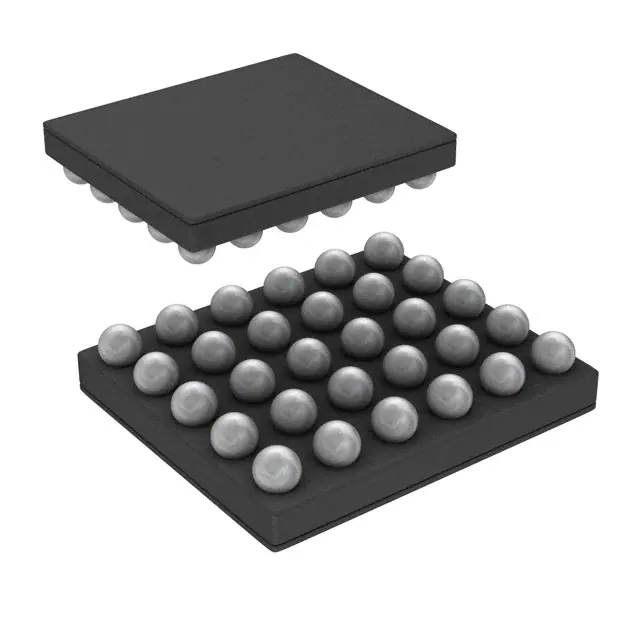
- Part No.:
- LM3290TMX/NOPB
- Manufacturer:
- Texas Instruments
- Category:
- RF Modulators
- Package:
- 30-WFBGA, DSBGA
- Datasheet:
-
 LM3290TMX/NOPB.pdf
- Description:
- RF MODULATOR 30WFBGA/DSBGA
- Quantity:
- Payment:

- Shipping:

Inventory:2,770
Please send an inquiry. Send us your inquiry, and we will respond immediately.
Product details
Overview
LM3290TMX/NOPB from Texas Instruments is a high-efficiency RF envelope supply modulator with integrated DC-DC boost converter, designed for MIPI RFFE 1.1–controlled envelope tracking (ET) and average power tracking (APT) in 3G/4G RF power amplifier systems. It delivers dynamic output voltage (0.6 V to 4.5 V for ET, 0.4 V to 3.81 V for APT), supports 2.5 V–5 V input, and operates at 2.7 MHz PWM or low-power PFM mode.
For engineers reviewing the LM3290TMX/NOPB datasheet, LM3290TMX/NOPB pinout, LM3290TMX/NOPB application, or LM3290TMX/NOPB equivalent, key selection criteria include its dual-mode ET/APT operation, MIPI RFFE 1.1 digital interface (26-MHz write), integrated synchronous rectification (90% typical boost efficiency), DSBGA-30 package, and compatibility with companion LM3291 for differential envelope control in LTE up to 20-MHz bandwidth.
Technical Context
The LM3290TMX/NOPB implements a dual-path power architecture: a high-bandwidth boost converter for ET mode (0.6–4.5 V output, 2.7-MHz PWM, 90% typical efficiency) and a buck regulator path for APT mode (0.4–3.81 V, 95% typical efficiency). It accepts analog envelope reference via LM3291 and executes real-time voltage modulation synchronized to RF signal envelope.
Control is fully managed through a 1.8-V MIPI RFFE 1.1 interface-supporting 26-MHz write and 13-MHz read-with automatic mode switching between ET, APT, PFM, shutdown, and standby. The device integrates internal synchronous rectifiers and offers boost bypass (150 mΩ typ.) for ultra-low-loss operation at high input voltage.
Key Specifications
| Parameter | Value and Actual Design Meaning |
|---|---|
| Input Voltage Range | 2.5 V to 5 V - enables direct battery connection across Li-ion discharge curve without external regulation |
| ET Output Voltage Range | 0.6 V to 4.5 V - tracks RF envelope with sub-100 ns response for LTE up to 20-MHz bandwidth |
| APT Output Voltage Range | 0.4 V to 3.81 V (or VIN – 200 mV) - provides static PA supply with adaptive headroom reduction |
| Switching Frequency | 2.7 MHz PWM - allows use of <1 µH inductors and compact ceramic capacitors |
| Boost Efficiency | 90% typical - minimizes thermal load in space-constrained mobile front-end modules |
| RFFE Interface | 1.8-V MIPI RFFE 1.1 - supports standardized digital control with 26-MHz write capability |
| Operating Temperature | –30°C to +85°C - qualified for smartphone and mobile hotspot RF front-end environments |
Pinout & Package
LM3290TMX/NOPB is housed in a 2.432 mm × 2.808 mm DSBGA-30 (YFQ) package with 0.4-mm pitch, optimized for ultra-thin mobile PCBs and co-packaged RF modules.
| Pin/Terminal | Circuit Role | Design Meaning |
|---|---|---|
| VIN | Boost Converter Input | Primary power input (2.5–5 V); connects directly to battery or system rail |
| VOUT_ET | Envelope Tracking Output | High-dynamic-range output supplying PA collector/drain in ET mode |
| VOUT_APT | Average Power Tracking Output | Stable, programmable output for PA bias in APT mode |
| EN | Enable Input | Active-high logic control for full device power-up/shutdown sequence |
| RFFE_CLK / RFFE_DATA / RFFE_STB | MIPI RFFE 1.1 Interface | 1.8-V digital control bus for mode selection, voltage programming, and status reporting |
| REFP / REFN | Differential Envelope Reference Input | Accepts analog envelope signal from LM3291; defines real-time VOUT_ET trajectory |
Key Features
| Feature | Design Value |
|---|---|
| Dual-mode ET/APT operation | Single IC supports both high-efficiency envelope tracking and static APT, eliminating need for separate modulators or LDOs |
| Integrated synchronous rectification | Eliminates external Schottky diodes; reduces conduction loss and improves boost efficiency to 90% typical |
| PFM mode at light load | Automatically engages during low-TX-power states to cut quiescent current and extend battery life |
| Boost bypass function | 150-mΩ internal switch enables near-lossless pass-through when VIN > VOUT requirement |
| MIPI RFFE 1.1 compliance | Standardized register map and timing allow seamless integration with baseband/RFFE-aware SoCs and RFICs |
Applications
| Smartphone LTE Transmitter | Tablet 4G Front-End Module |
|---|---|
Use Scenario: LTE Band 1/3/7/40 uplink transmission with dynamic power ramping and multi-carrier aggregation. IC Role / Device Role / Timing Role: RF envelope supply modulator generating time-synchronized VCC_PA voltage under MIPI RFFE command. Use Value: Enables >30% improvement in PA system efficiency versus fixed-supply architectures by reducing average PA collector/drain voltage swing. | Use Scenario: High-data-rate TDD-LTE uplink in fan-out wafer-level packaged (FO-WLP) RF front-end modules. IC Role / Device Role / Timing Role: Dual-output power manager delivering independent ET and APT rails to MBMM and SB PA dies on same substrate. Use Value: Reduces thermal density and PCB area vs. discrete boost + LDO solutions while maintaining <100 ns envelope fidelity. |
| Mobile Hotspot Baseband | IoT Cellular Gateway |
Use Scenario: Simultaneous 3G WCDMA and LTE FDD operation requiring fast mode-switching between legacy and modern air interfaces. IC Role / Device Role / Timing Role: Programmable envelope modulator supporting both UMTS HSPA+ and LTE Cat-4 with shared RFFE control bus. Use Value: Eliminates need for dual-PMIC designs; single LM3290TMX/NOPB handles all PA supply requirements across air interface generations. | Use Scenario: Low-duty-cycle NB-IoT or LTE-M uplink bursts in thermally constrained industrial gateways. IC Role / Device Role / Timing Role: APT-only supply controller operating in PFM mode to minimize idle current draw during long receive intervals. Use Value: Achieves <15 µA quiescent current in standby, extending battery life beyond 5 years in sealed deployments. |
Equivalent & Alternatives
The following parts are listed as comparable options for similar RF envelope modulator applications.
| Alternative Part | Technical Difference | Application Difference | Selection Advice |
|---|---|---|---|
| LM3290TME/NOPB | Same silicon die and functionality; differs only in tape-and-reel packaging (250-unit reel vs. 3,000-unit reel) | Identical electrical and thermal performance; suitable for identical RF front-end designs | Select based on production volume and assembly line feed requirements |
| MAX2375ETJ+ | Discrete envelope modulator + external boost; no integrated RFFE interface or PFM mode | Requires external microcontroller for envelope generation and SPI configuration; higher BOM count | Consider only when legacy design reuse or non-MIPI control infrastructure exists |
Compared with LM3290TME/NOPB, the LM3290TMX/NOPB offers identical performance in a smaller-volume tape-and-reel format ideal for prototyping and low-volume production; versus MAX2375ETJ+, it delivers full MIPI RFFE integration, lower component count, and automatic PFM/ET/APT mode management without firmware overhead.
Availability
LM3290TMX/NOPB is available at Aetrix Electronics and suitable for smartphone LTE transmitters, tablet 4G front-end modules, and IoT cellular gateways requiring stable component supply, consistent DSBGA-30 packaging, and MIPI RFFE 1.1–compliant envelope modulation.
Supply support for LM3290TMX/NOPB includes scheduled delivery planning, volume procurement assistance, BOM continuity management, traceable sourcing, and lifecycle availability coordination for OEM customers, industrial embedded developers, connected-device designers, and electronics production programs.
Manufacturer
Texas Instruments is a global semiconductor company specializing in analog, embedded processing, and wireless connectivity technologies, with leadership in power management and RF solutions for mobile and industrial markets.
The LM3290TMX/NOPB belongs to TI's RF power management product line, engineered specifically for envelope tracking and average power tracking in 3G/4G/LTE mobile transmitters to maximize PA efficiency while minimizing thermal and board-area constraints.
FAQ
What is the primary function of the LM3290TMX/NOPB in an RF power amplifier system?
The LM3290TMX/NOPB serves as an integrated RF envelope supply modulator that dynamically adjusts the PA supply voltage in real time to match the RF signal envelope-enabling envelope tracking (ET) mode-or delivers a programmable static voltage for average power tracking (APT) mode. Its dual-path architecture, MIPI RFFE 1.1 interface, and internal synchronous boost converter make LM3290TMX/NOPB essential for maximizing efficiency in 3G/4G/LTE transmitter stages without external controllers or discrete power stages.
Does the LM3290TMX/NOPB require an external companion IC to operate in envelope tracking mode?
Yes-the LM3290TMX/NOPB requires the LM3291 companion IC to operate in full envelope tracking mode. The LM3291 conditions and delivers the differential analog envelope reference signal (REFP/REFN) to LM3290TMX/NOPB, which then generates the high-bandwidth VOUT_ET supply. While LM3290TMX/NOPB can operate standalone in APT mode, ET functionality depends on this paired architecture per TI's reference design and datasheet specification.
What package type and dimensions does the LM3290TMX/NOPB use, and is it compatible with standard DSBGA assembly processes?
The LM3290TMX/NOPB uses a DSBGA-30 (YFQ) package measuring 2.432 mm × 2.808 mm with 0.4-mm ball pitch. It is fully compatible with standard DSBGA reflow profiles, including MSL Level-1 handling and peak reflow up to 260°C. The part marking "3290" appears on the top surface, and the pin-1 quadrant is Q1 per TI's tape-and-reel specification-ensuring reliable automated placement and soldering in high-volume mobile PCB assembly lines.
Can the LM3290TMX/NOPB operate from a 2.5-V input supply, and what is its minimum functional input voltage?
Yes-the LM3290TMX/NOPB is explicitly rated for 2.5 V to 5 V input operation, making it suitable for direct connection to partially discharged Li-ion batteries. Its minimum functional input voltage is 2.5 V across the full temperature range (–30°C to +85°C), and it maintains regulated ET output down to 0.6 V and APT output down to 0.4 V even at this rail. This ensures uninterrupted PA supply during deep battery discharge in smartphones and portable hotspots.
How does the LM3290TMX/NOPB manage power efficiency during low-transmit-power conditions?
The LM3290TMX/NOPB automatically enters Pulse Frequency Modulation (PFM) mode during light-load APT operation, reducing switching frequency and quiescent current to extend battery life. In PFM mode, LM3290TMX/NOPB maintains regulation while drawing <15 µA typical supply current-critical for IoT and standby scenarios. This behavior is fully autonomous and requires no host intervention or register writes, unlike many competing modulators that demand firmware-controlled sleep entry.
LM3290TMX/NOPB Specifications
- Product attributes
- Attribute value
- Manufacturer:
- Texas Instruments
- Series:
- -
- Package/Case:
- 30-WFBGA, DSBGA
- Packaging:
- Tape & Reel (TR)
- Product Status:
- Obsolete
- Function:
- -
- LO Frequency:
- -
- RF Frequency:
- -
- P1dB:
- -
- Noise Floor:
- -
- Output Power:
- -
- Current - Supply:
- -
- Voltage - Supply:
- -
- Test Frequency:
- -
- Mounting Type:
- Surface Mount
- Supplier Device Package:
- 30-DSBGA
LM3290TMX/NOPB FAQ
1.How can I place an order for LM3290TMX/NOPB through Aetrix?
Please submit a Request for Quotation (RFQ) for LM3290TMX/NOPB on Aetrix. Our sales agent will provide a competitive quotation and guide you through the order confirmation once you accept the terms.
2.Are the price and stock information for LM3290TMX/NOPB reliable?
The price and inventory of LM3290TMX/NOPB are updated periodically and may fluctuate due to market conditions. Stock and pricing data are typically refreshed every 24 hours. Quotation validity for LM3290TMX/NOPB is usually 5 days.
3.What payment methods are accepted for LM3290TMX/NOPB?
We accept Wire Transfer, PayPal, Credit Card, Western Union, MoneyGram, and Escrow for LM3290TMX/NOPB transactions.
Note: Certain payment methods may incur a processing fee.
4.How is shipping managed for LM3290TMX/NOPB?
LM3290TMX/NOPB orders can be shipped via leading logistics carriers, including DHL, UPS, FedEx, TNT, or Registered Mail.
Once your LM3290TMX/NOPB order is processed, you will receive an email with the shipment details and tracking number.
Note: Tracking information may take up to 24 hours to appear. Express delivery typically takes 3–5 business days.
5.How can I obtain technical support or documentation for LM3290TMX/NOPB?
For technical support, including LM3290TMX/NOPB datasheets, pinout diagrams, or application guidance, please contact our engineering support team. They can provide detailed documentation and assistance for your LM3290TMX/NOPB requirements.
6.How does Aetrix verify that LM3290TMX/NOPB is sourced from the original manufacturer or authorized distributors?
All LM3290TMX/NOPB products on Aetrix are procured from qualified distributors and authorized channels. Our dedicated quality assurance team conducts strict verification, including traceability checks and, if necessary, third-party testing. This ensures that LM3290TMX/NOPB meets industry standards.
7.What is the process for return or replacement of LM3290TMX/NOPB?
All LM3290TMX/NOPB units undergo pre-shipment inspection (PSI). If there is an issue with LM3290TMX/NOPB, returns or replacements are accepted under the following conditions:
1.Quantity discrepancies, incorrect items, or visible external defects (such as breakage or corrosion), acknowledged by Aetrix.
2.The issue is reported within 90 days of delivery.
3.The LM3290TMX/NOPB part is unused and in its original packaging.
Return procedure for LM3290TMX/NOPB:
1.Submit a request within 90 days.
2.Obtain a Return Material Authorization (RMA) from Aetrix.
LM3290TMX/NOPB Tags
-
LTC5599IUF#TRPBF
Analog Devices Inc.
-
LTC5599IUF#PBF
Analog Devices Inc.
-
LTC5589IUF#PBF
Analog Devices Inc.
-
ADL5375-05ACPZ-R7
Analog Devices Inc.
-
ADL5385ACPZ-R7
Analog Devices Inc.
-
AD8346ARUZ-REEL7
Analog Devices Inc.
-
LTC5588IPF-1#PBF
Analog Devices Inc.
-
ADRF6755ACPZ-R7
Analog Devices Inc.
-
TRF370417IRGET
Texas Instruments

-
HMC631LP3ETR
Analog Devices Inc.
-
TRF3705IRGET
Texas Instruments
-
LTC5589IUF#TRPBF
Analog Devices Inc.
Tech Hub

A practical engineering guide to 3.3V and 5V logic compatibility, input thresholds, resistor dividers, translator ICs, MOSFET level shifting, I2C pull-ups, timing limits and power-sequencing risks.

The 74HC595 uses push-pull logic outputs, while the TPIC6B595 uses 50 V open-drain DMOS sinks for higher-power loads. This guide compares timing, current limits, 3.3 V interfacing, load wiring, thermal…

The 74HC595 converts serial data into eight stable parallel outputs. This guide covers pin functions, shift and storage timing, OE and MR behavior, drive-current limits, cascading, voltage compatibilit…

A technical comparison of level-sensitive latches and edge-triggered flip-flops, covering timing windows, setup and hold limits, master–slave operation, time borrowing, race-through, HDL inference and…

A D latch stores one bit while Enable controls when data can pass. This reference covers gate-level operation, truth tables, transparency, setup and hold timing, LE versus OE, common ICs and practical …

An SR latch stores one bit through cross-coupled feedback. This engineering reference covers NOR and NAND implementations, truth tables, forbidden-state recovery, gated operation, switch debouncing, fa…

Latch circuits retain one bit through feedback. This technical reference covers SR and D latches, truth tables, transparency, timing limits, latch-versus-flip-flop behavior, applications and common log…

An engineering guide to LED driver operation, constant-current and constant-voltage outputs, linear and switching topologies, dimming, IC selection, calculations, replacement compatibility, and fault c…

Operational amplifier guide covering op amp basics, feedback, ideal vs real op amps, common configurations, buffer circuits, offset, bias current, gain-bandwidth, slew rate, rail-to-rail limits and sel…

Jumper cables guide covering safe connection order, red and black clamp placement, final ground connection, cable gauge, length, clamp quality, copper vs CCA cables, jump starter comparison and battery…


