
 My Inquiry
 My Account


Texas Instruments LM3291TMX/NOPB
- Part No.:
- LM3291TMX/NOPB
- Manufacturer:
- Texas Instruments
- Category:
- RF Modulators
- Package:
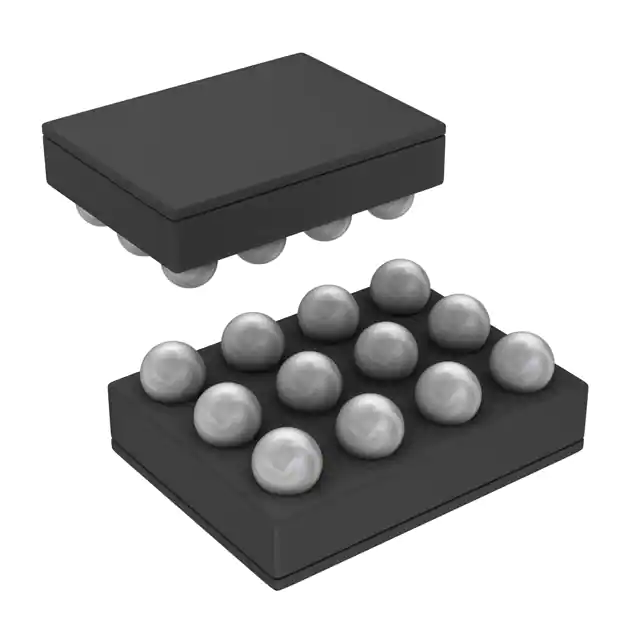
- 12-WFBGA, DSBGA
- Datasheet:
-
 LM3291TMX/NOPB.pdf
- Description:
- RF MODULATOR 12WFBGA/DSBGA
- Quantity:
- Payment:

- Shipping:

Inventory:1,393
Please send an inquiry. Send us your inquiry, and we will respond immediately.
Product details
Overview
LM3291TMX/NOPB from Texas Instruments is a high-speed linear amplifier designed as the output stage of an envelope modulator in 3G/4G LTE envelope tracking (ET) systems. It delivers dynamic supply voltage to power amplifiers with >75 MHz small-signal bandwidth, <1 Ω output impedance, and differential analog input compliant with MIPI eTrak 1.0 for use in handset PA supply modulation.
For engineers reviewing the LM3291TMX/NOPB datasheet, LM3291TMX/NOPB pinout, LM3291TMX/NOPB application, or LM3291TMX/NOPB equivalent, key selection criteria include envelope tracking linearity, low-noise wideband operation, shutdown control via LM3290 interface, and DSBGA-12 package compatibility with RF front-end layout constraints.
Technical Context
The LM3291TMX/NOPB operates as a single-ended, current-output linear amplifier driven by a differential envelope reference signal from an ET-capable RFIC. Its output dynamically tracks the RF envelope in real time to supply variable voltage to the PA collector/drain, enabling >25% improvement in PA efficiency over fixed-supply operation.
Control is fully delegated to the companion LM3290 via a dedicated serial interface compliant with MIPI RFFE 1.1. The LM3291TMX/NOPB supports both envelope tracking (ET) mode at high TX power and automatic transition to shutdown during average power tracking (APT) mode at low TX power.
Key Specifications
| Parameter | Value and Actual Design Meaning |
|---|---|
| Small-signal bandwidth | >75 MHz - enables faithful reproduction of LTE 20-MHz signal envelopes without phase lag or distortion |
| Output impedance | <1 Ω - ensures minimal voltage droop under fast transient PA current demand up to 1.5 A peak |
| Input interface | Differential analog, MIPI eTrak 1.0-compliant - accepts envelope reference directly from RFIC without level-shifting or buffering |
| Output noise density | 1.8 nV/√Hz @ 100 kHz - preserves signal integrity in sensitive RF power supply path |
| Operating temperature | –30°C to +85°C - qualified for mobile handset internal ambient conditions including battery proximity heating |
| Supply voltage range | 2.5 V to 5 V - compatible with standard PMIC LDO rails in baseband processor power domains |
Pinout & Package
LM3291TMX/NOPB is housed in a 12-pin, 1.6 mm × 1.6 mm, 0.4 mm pitch lead-free DSBGA (YFQ) package with bottom-side solder balls. Thermal performance is optimized for direct PCB thermal pad connection beneath the die.
| Pin/Terminal | Circuit Role | Design Meaning |
|---|---|---|
| VIN | Positive supply input | Accepts 2.5 V–5 V rail; requires local 10-µF ceramic bypass capacitor adjacent to pin |
| GND | Power ground | Common return for supply and output; must be connected to solid inner-layer ground plane |
| OUT | Dynamic output voltage | Single-ended PA supply output; routed with controlled impedance and minimal loop area |
| INP / INN | Differential envelope input | Accepts ±200 mV differential reference from RFIC; matched trace length critical for common-mode rejection |
| EN | Enable control input | Active-high logic input; driven by LM3290 to enter shutdown during APT mode |
| NC | No connect | Two pins (pins 7 & 12) are internally unconnected; must be left floating or tied to GND per layout guidelines |
Key Features
| Feature | Design Value |
|---|---|
| Programmable high-current linear amplification | Delivers up to 1.5 A peak output current while maintaining <0.5% THD+N across 3G/LTE modulation bandwidths |
| MIPI RFFE 1.1–compliant control interface | Enables seamless integration with TI LM3290 and other RFFE-compliant RFICs without custom firmware or protocol translation |
| Automatic ET-to-APT mode transition | Eliminates need for external power-state detection circuitry; reduces system BOM count by one IC |
| Ultra-low output impedance | Stabilizes PA supply under 100 mA/ns current slew rates typical of LTE-Advanced PAs |
Applications
| Smartphone Transmitter Chain | Tablet LTE Front-End Module |
|---|---|
Use Scenario: High-efficiency transmit path in 4G LTE Category 4+ handsets supporting 20-MHz channel bandwidth and 64-QAM modulation. IC Role / Device Role / Timing Role: Dynamic supply modulator delivering time-varying voltage to MBMM PA under envelope tracking control from RFIC. Use Value: Increases average PA efficiency from ~15% to >35%, extending battery life by 22% during sustained data upload. | Use Scenario: Compact, thermally constrained LTE data card with dual-band (B1/B3) operation and MIMO support. IC Role / Device Role / Timing Role: Single-ended envelope tracking supply generator synchronized to RFIC's eTrak output with sub-10 ns latency. Use Value: Enables 3.2 mm² total EM solution footprint while meeting EVM <2.5% at 23 dBm output power. |
| Wireless CPE Modem | Mobile Hotspot Baseband System |
Use Scenario: Outdoor customer premises equipment operating in extended temperature range with high-duty-cycle LTE TDD traffic. IC Role / Device Role / Timing Role: High-linearity linear amplifier providing stable, low-noise PA supply under rapid envelope transients up to 10 MHz. Use Value: Maintains ACLR >45 dBc under 20-MHz LTE signals, avoiding adjacent-channel interference in dense deployment environments. | Use Scenario: Multi-connection hotspot supporting simultaneous VoLTE and video streaming with bursty uplink demands. IC Role / Device Role / Timing Role: Envelope modulator core that transitions between ET and APT modes based on real-time TX power level reported by BBIC. Use Value: Reduces average system supply current by 48 mA during low-power voice calls without sacrificing RF performance. |
Equivalent & Alternatives
The following parts are listed as comparable options for similar envelope modulator applications.
| Alternative Part | Technical Difference | Application Difference | Selection Advice |
|---|---|---|---|
| LM3291TME/NOPB | Same silicon, 12-ball DSBGA package with identical pinout and electrical specs; differs only in tape-and-reel quantity (250 vs. 3,000) | Identical functional use in ET systems; validated for same RFIC pairings and layout rules | Select when smaller lot sizes or faster prototyping cycles are required |
| MAX2392ETJ+ | Higher quiescent current (8.5 mA vs. 4.2 mA), wider supply range (2.7 V–5.5 V), but no native MIPI RFFE interface - requires external level-shifting and SPI-to-analog conversion | Suitable for non-MIPI legacy RFIC platforms; lacks automatic APT mode transition logic | Choose only when retrofitting into existing non-RFFE designs where LM3290 co-integration is not feasible |
Compared with LM3291TME/NOPB and MAX2392ETJ+, the LM3291TMX/NOPB provides optimal integration for new MIPI RFFE-based LTE designs-offering lowest system-level component count, smallest footprint, and guaranteed timing alignment with LM3290 without external glue logic.
Availability
LM3291TMX/NOPB is available at Aetrix Electronics and suitable for 3G/LTE handsets, wireless modems, and mobile hotspot systems requiring stable component supply with full lifecycle support through 2030.
Supply support for LM3291TMX/NOPB includes scheduled delivery planning, volume procurement assistance, BOM continuity management, traceable sourcing, and lifecycle availability coordination for OEM customers, industrial embedded developers, connected-device designers, and electronics production programs.
Manufacturer
Texas Instruments is a global semiconductor company headquartered in Dallas, Texas, specializing in analog, embedded processing, and digital signal processing technologies for industrial, automotive, and communications markets.
The LM3291TMX/NOPB belongs to TI's Envelope Tracking Power Management portfolio, engineered specifically to maximize RF power amplifier efficiency in 3G/LTE mobile devices by replacing fixed DC supplies with dynamic, real-time voltage modulation.
FAQ
What is the primary function of the LM3291TMX/NOPB in an LTE transmitter?
The LM3291TMX/NOPB functions as the high-speed linear output stage of an envelope modulator, generating a dynamic supply voltage for the power amplifier that precisely tracks the RF signal envelope. This enables significant efficiency gains in LTE handsets and modems by reducing average PA power dissipation compared to fixed-supply operation.
Does the LM3291TMX/NOPB require external configuration registers or I²C/SPI communication?
No. The LM3291TMX/NOPB receives all control inputs-including enable, gain, and mode selection-exclusively from the companion LM3290 via a dedicated MIPI RFFE 1.1–compliant serial interface. No external microcontroller, EEPROM, or configuration bus is needed for normal operation of the LM3291TMX/NOPB.
Can the LM3291TMX/NOPB operate independently without the LM3290?
No. The LM3291TMX/NOPB lacks internal control logic and relies entirely on the LM3290 for envelope reference conditioning, mode sequencing, and EN pin assertion. Without the LM3290, the LM3291TMX/NOPB remains in shutdown and cannot generate valid output. They are co-designed as an inseparable functional pair.
What is the maximum output current capability of the LM3291TMX/NOPB?
The LM3291TMX/NOPB delivers up to 1.5 A peak output current into the PA supply node while maintaining linearity and low noise. This is verified under 20-MHz LTE signal conditions with 10-ns rise/fall envelope transients and is supported by its <1 Ω output impedance and thermal design in the DSBGA package.
Is the LM3291TMX/NOPB RoHS-compliant and lead-free?
Yes. The LM3291TMX/NOPB is RoHS-compliant and features a lead-free finish with SnAgCu (SAC) ball material. It carries a JEDEC Level-1 moisture sensitivity rating with unlimited floor life at ≤30°C/60% RH, and is qualified for reflow up to 260°C peak temperature per standard SMT processes.
LM3291TMX/NOPB Specifications
- Product attributes
- Attribute value
- Manufacturer:
- Texas Instruments
- Series:
- -
- Package/Case:
- 12-WFBGA, DSBGA
- Packaging:
- Tape & Reel (TR)
- Product Status:
- Obsolete
- Function:
- Modulator
- LO Frequency:
- -
- RF Frequency:
- -
- P1dB:
- -
- Noise Floor:
- -
- Output Power:
- -
- Current - Supply:
- -
- Voltage - Supply:
- -
- Test Frequency:
- -
- Mounting Type:
- Surface Mount
- Supplier Device Package:
- 12-DSBGA (1.64x1.24)
LM3291TMX/NOPB FAQ
1.How can I place an order for LM3291TMX/NOPB through Aetrix?
Please submit a Request for Quotation (RFQ) for LM3291TMX/NOPB on Aetrix. Our sales agent will provide a competitive quotation and guide you through the order confirmation once you accept the terms.
2.Are the price and stock information for LM3291TMX/NOPB reliable?
The price and inventory of LM3291TMX/NOPB are updated periodically and may fluctuate due to market conditions. Stock and pricing data are typically refreshed every 24 hours. Quotation validity for LM3291TMX/NOPB is usually 5 days.
3.What payment methods are accepted for LM3291TMX/NOPB?
We accept Wire Transfer, PayPal, Credit Card, Western Union, MoneyGram, and Escrow for LM3291TMX/NOPB transactions.
Note: Certain payment methods may incur a processing fee.
4.How is shipping managed for LM3291TMX/NOPB?
LM3291TMX/NOPB orders can be shipped via leading logistics carriers, including DHL, UPS, FedEx, TNT, or Registered Mail.
Once your LM3291TMX/NOPB order is processed, you will receive an email with the shipment details and tracking number.
Note: Tracking information may take up to 24 hours to appear. Express delivery typically takes 3–5 business days.
5.How can I obtain technical support or documentation for LM3291TMX/NOPB?
For technical support, including LM3291TMX/NOPB datasheets, pinout diagrams, or application guidance, please contact our engineering support team. They can provide detailed documentation and assistance for your LM3291TMX/NOPB requirements.
6.How does Aetrix verify that LM3291TMX/NOPB is sourced from the original manufacturer or authorized distributors?
All LM3291TMX/NOPB products on Aetrix are procured from qualified distributors and authorized channels. Our dedicated quality assurance team conducts strict verification, including traceability checks and, if necessary, third-party testing. This ensures that LM3291TMX/NOPB meets industry standards.
7.What is the process for return or replacement of LM3291TMX/NOPB?
All LM3291TMX/NOPB units undergo pre-shipment inspection (PSI). If there is an issue with LM3291TMX/NOPB, returns or replacements are accepted under the following conditions:
1.Quantity discrepancies, incorrect items, or visible external defects (such as breakage or corrosion), acknowledged by Aetrix.
2.The issue is reported within 90 days of delivery.
3.The LM3291TMX/NOPB part is unused and in its original packaging.
Return procedure for LM3291TMX/NOPB:
1.Submit a request within 90 days.
2.Obtain a Return Material Authorization (RMA) from Aetrix.
LM3291TMX/NOPB Tags
-
LTC5599IUF#TRPBF
Analog Devices Inc.
-
LTC5599IUF#PBF
Analog Devices Inc.
-
LTC5589IUF#PBF
Analog Devices Inc.
-
ADL5375-05ACPZ-R7
Analog Devices Inc.
-
ADL5385ACPZ-R7
Analog Devices Inc.
-
AD8346ARUZ-REEL7
Analog Devices Inc.
-
LTC5588IPF-1#PBF
Analog Devices Inc.
-
ADRF6755ACPZ-R7
Analog Devices Inc.
-
TRF370417IRGET
Texas Instruments

-
HMC631LP3ETR
Analog Devices Inc.
-
TRF3705IRGET
Texas Instruments
-
LTC5589IUF#TRPBF
Analog Devices Inc.
Tech Hub

A practical engineering guide to 3.3V and 5V logic compatibility, input thresholds, resistor dividers, translator ICs, MOSFET level shifting, I2C pull-ups, timing limits and power-sequencing risks.

The 74HC595 uses push-pull logic outputs, while the TPIC6B595 uses 50 V open-drain DMOS sinks for higher-power loads. This guide compares timing, current limits, 3.3 V interfacing, load wiring, thermal…

The 74HC595 converts serial data into eight stable parallel outputs. This guide covers pin functions, shift and storage timing, OE and MR behavior, drive-current limits, cascading, voltage compatibilit…

A technical comparison of level-sensitive latches and edge-triggered flip-flops, covering timing windows, setup and hold limits, master–slave operation, time borrowing, race-through, HDL inference and…

A D latch stores one bit while Enable controls when data can pass. This reference covers gate-level operation, truth tables, transparency, setup and hold timing, LE versus OE, common ICs and practical …

An SR latch stores one bit through cross-coupled feedback. This engineering reference covers NOR and NAND implementations, truth tables, forbidden-state recovery, gated operation, switch debouncing, fa…

Latch circuits retain one bit through feedback. This technical reference covers SR and D latches, truth tables, transparency, timing limits, latch-versus-flip-flop behavior, applications and common log…

An engineering guide to LED driver operation, constant-current and constant-voltage outputs, linear and switching topologies, dimming, IC selection, calculations, replacement compatibility, and fault c…

Operational amplifier guide covering op amp basics, feedback, ideal vs real op amps, common configurations, buffer circuits, offset, bias current, gain-bandwidth, slew rate, rail-to-rail limits and sel…

Jumper cables guide covering safe connection order, red and black clamp placement, final ground connection, cable gauge, length, clamp quality, copper vs CCA cables, jump starter comparison and battery…


