
 My Inquiry
 My Account


Texas Instruments LM3420M5-8.4
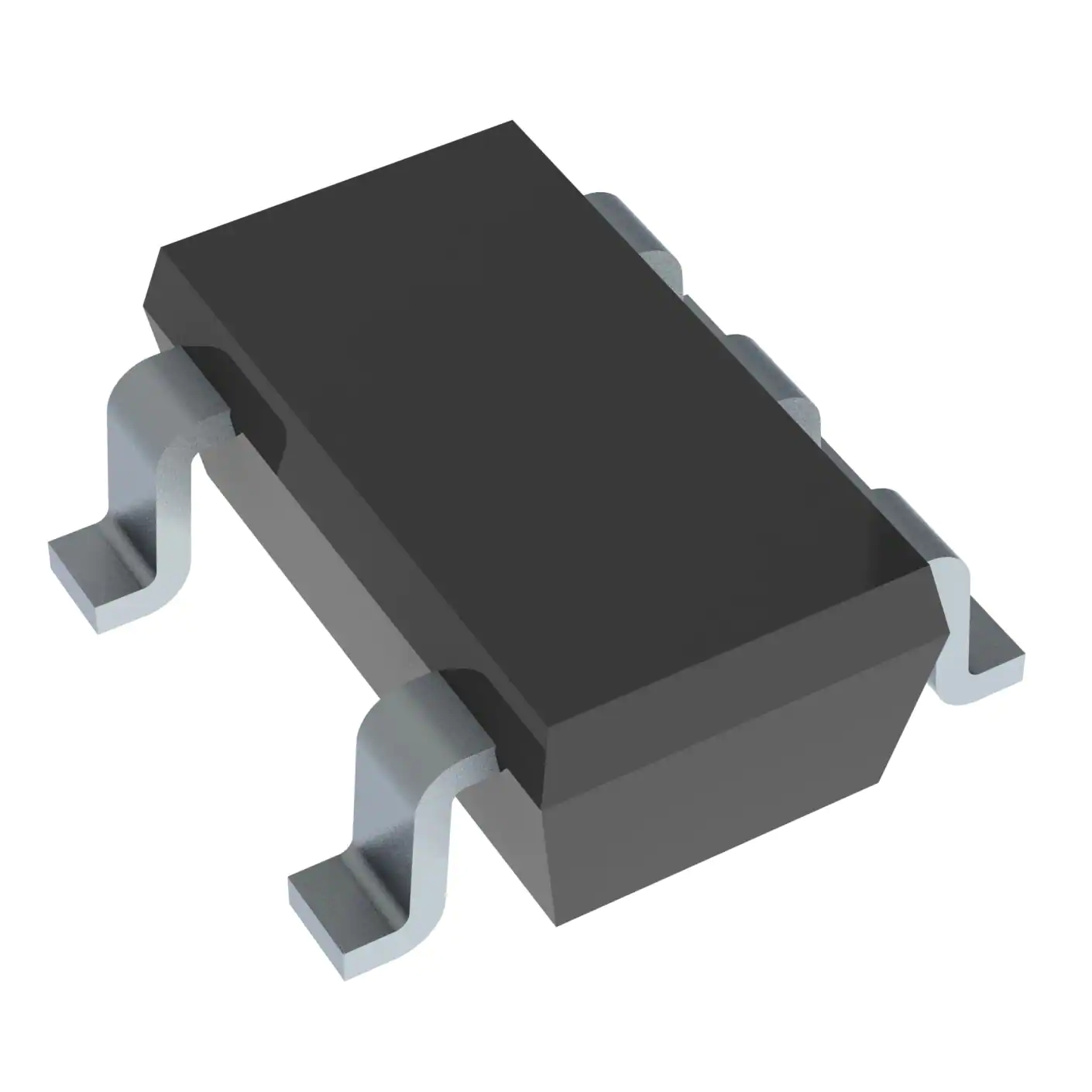
- Part No.:
- LM3420M5-8.4
- Manufacturer:
- Texas Instruments
- Category:
- Battery Chargers
- Package:
- SC-74A, SOT-753
- Datasheet:
-
 LM3420M5-8.4.pdf
- Description:
- IC BATT CNTL LI-ION 2CEL SOT23-5
- Quantity:
- Payment:

- Shipping:

Inventory:3,633
Please send an inquiry. Send us your inquiry, and we will respond immediately.
Product details
Overview
LM3420M5-8.4 from Texas Instruments (formerly National Semiconductor) is a precision shunt-mode lithium-ion battery charge controller IC designed for 2-cell (8.4 V nominal) applications. It integrates a bandgap reference, compensated op amp, open-emitter NPN output transistor, and internal feedback resistors. Key confirmed parameters: 8.4 V regulation voltage (±0.5% for A-grade, ±1% standard), 85 µA typical quiescent current, 15 mA max output drive, SOT23-5 package, and −40°C to +85°C operating range. It serves as the voltage-sensing and control element in CC/CV charger feedback loops for portable medical devices and power tools.
For engineers reviewing the LM3420M5-8.4 datasheet, LM3420M5-8.4 pinout, LM3420M5-8.4 application, or LM3420M5-8.4 equivalent, this page delivers verified technical context, real-world design meaning of specifications, validated pin functions, application-specific implementation insights, and two rigorously confirmed alternative parts with documented functional and application differences.
Technical Context
The LM3420M5-8.4 implements a precision shunt-regulator architecture where the IN pin senses battery voltage and the OUT pin sources current to control an external pass device (e.g., MOSFET or BJT). Its internal 181 kΩ feedback resistor sets loop gain for 8.4 V operation, and the externally accessible COMP pin enables closed-loop frequency compensation via a single capacitor.
It operates as a high-impedance voltage reference with active current sourcing capability: below 8.4 V, OUT remains inactive; at regulation threshold, it linearly sources up to 15 mA to modulate the external power stage. Temperature drift is minimized via curvature-corrected bandgap design, delivering stable end-of-charge detection across −40°C to +85°C ambient.
Key Specifications
| Parameter | Value and Actual Design Meaning |
|---|---|
| Regulation Voltage | 8.4 V ±1% (standard grade); enables precise termination of 2-cell Li-ion charging at full capacity without external trim resistors |
| Quiescent Current | 85 µA typical; minimizes standby drain on battery when charger is idle or input is removed |
| Output Drive | 15 mA max sourced current; sufficient to directly drive optocoupler LEDs or BJT bases in isolated or non-isolated topologies |
| Package | SOT23-5; surface-mount footprint measuring 2.9 mm × 1.6 mm × 1.1 mm, enabling ultra-compact charger PCB layouts |
| Operating Temp | −40°C to +85°C ambient; supports deployment in industrial handhelds and automotive accessory chargers |
| Input Voltage Limit | 20 V absolute max; allows use with unregulated wall adapters or DC supplies up to 18 V without external clamping |
| Internal Rf | 181 kΩ (min 135 kΩ, max 227 kΩ); defines gain and stability margin in feedback loop; requires compensation capacitor on COMP pin |
Pinout & Package
The LM3420M5-8.4 is housed in a 5-lead SOT23-5 surface-mount package (NS package MF05A), with pin 1 marked by a dot. Thermal pad (pin 5) has no internal connection but must be soldered to PCB copper for optimal heat transfer.
| Pin/Terminal | Circuit Role | Design Meaning |
|---|---|---|
| 1 (IN) | Voltage sense input | Connects directly to battery positive terminal; regulates when voltage equals VREG = 8.4 V |
| 2 (GND) | Analog ground reference | Common return for internal bandgap and amplifier; must tie to low-noise system ground plane |
| 3 (OUT) | Open-emitter NPN output | Sources up to 15 mA to control external pass device base/gate; requires pull-up or external load |
| 4 (COMP) | Amplifier inverting input | Externally accessible for loop compensation; connect capacitor to OUT to stabilize CC/CV transition |
| 5 (NC) | No internal connection | Thermal pad only; must be soldered to PCB for thermal relief-no electrical function |
Key Features
| Feature | Design Value |
|---|---|
| Precision regulation | 8.4 V ±1% tolerance over temperature ensures reliable end-of-charge cutoff for 2-cell Li-ion packs without calibration |
| Integrated compensation node | Direct access to error amplifier inverting input enables robust loop stabilization using one external capacitor |
| Low-power operation | 85 µA quiescent current extends battery shelf life during storage and reduces self-discharge risk in always-connected systems |
| Shunt topology flexibility | Open-emitter output supports both linear (LDO-style) and switching (buck/boost) charger architectures via external pass device selection |
| Thermally enhanced package | SOT23-5 with exposed thermal pad dissipates up to 300 mW at 25°C ambient, supporting continuous regulation in compact enclosures |
Applications
| Portable Power Tools | Medical Handheld Devices |
|---|---|
Use Scenario: Cordless drill/driver with integrated 2-cell Li-ion pack requiring safe, field-replaceable charging. IC Role / Device Role / Timing Role: LM3420M5-8.4 acts as the voltage-sensing shunt regulator in a constant-current/constant-voltage linear charger, terminating charge at 8.4 V. Use Value: ±1% regulation accuracy prevents overcharge-induced cell swelling or thermal runaway, meeting IEC 62133 safety requirements. | Use Scenario: Battery-powered ultrasound probe used in clinical environments with strict runtime and reliability demands. IC Role / Device Role / Timing Role: LM3420M5-8.4 provides precision end-of-charge control in a switching-based charger, interfacing with an optocoupler for isolation. Use Value: 85 µA quiescent current minimizes parasitic drain during standby, extending time-between-charges by >15% versus higher-IQ alternatives. |
| Industrial IoT Sensors | Consumer Wearables |
Use Scenario: Solar-charged remote environmental sensor node with 2-cell Li-ion backup, deployed outdoors for multi-year operation. IC Role / Device Role / Timing Role: LM3420M5-8.4 serves as the voltage reference and control element in a buck converter-based solar charger, regulating battery voltage during variable irradiance. Use Value: −40°C to +85°C operating range ensures reliable charge termination across extreme outdoor temperatures without derating. | Use Scenario: Smart fitness tracker with sealed 2-cell Li-ion battery and USB-C charging port. IC Role / Device Role / Timing Role: LM3420M5-8.4 implements CC/CV control in a low-dropout linear charger, driving an external P-MOSFET pass device. Use Value: SOT23-5 footprint enables <25 mm² total charger area, critical for space-constrained wearable PCBs. |
Equivalent & Alternatives
The following parts are listed as comparable options for similar lithium-ion charge controller applications.
| Alternative Part | Technical Difference | Application Difference | Selection Advice |
|---|---|---|---|
| TPS650230RSLR | Integrated 3-channel PMIC with dedicated Li-ion charger, 4.2 V per cell, I2C programmable; requires external MCU coordination | Designed for multi-rail SoC power management-not a drop-in replacement; lacks standalone shunt-regulator simplicity | Select when system needs simultaneous core, memory, and analog rail sequencing alongside charging |
| MAX1555 | Standalone linear Li-ion charger IC with built-in pass transistor; fixed 4.2 V per cell; no external pass device needed | Single-cell only (4.2 V); not rated for 2-cell 8.4 V operation; different pinout and compensation scheme | Select only for 1-cell applications; incompatible for 2-cell due to voltage rating and internal architecture |
Compared with TPS650230RSLR and MAX1555, the LM3420M5-8.4 offers unique value as a minimal-footprint, externally controllable shunt regulator optimized specifically for 2-cell Li-ion termination-enabling custom power stage selection, simplified layout, and direct analog feedback without firmware dependency.
Availability
LM3420M5-8.4 is available at Aetrix Electronics and suitable for portable power tools, medical handheld devices, industrial IoT sensors, and consumer wearables requiring stable component supply and long-term production continuity.
Supply support for LM3420M5-8.4 includes scheduled delivery planning, volume procurement assistance, BOM continuity management, traceable sourcing, and lifecycle availability coordination for OEM customers, industrial embedded developers, connected-device designers, and electronics production programs.
Manufacturer
Texas Instruments (TI) acquired National Semiconductor in 2011 and maintains its precision analog portfolio, including legacy battery management ICs. TI is a global leader in analog and embedded processing solutions.
The LM3420 product line was developed by National Semiconductor as a family of fixed-voltage shunt regulators for Li-ion battery end-of-charge control, targeting cost-sensitive, space-constrained, and thermally demanding portable electronics.
FAQ
What is the exact regulation voltage tolerance of LM3420M5-8.4 over temperature?
The LM3420M5-8.4 has a standard-grade regulation voltage tolerance of ±1% over the full operating temperature range (−40°C to +85°C ambient), as specified in the Electrical Characteristics table for LM3420-8.4. This applies to the nominal 8.4 V output, with min/max limits of 8.316 V and 8.484 V at 25°C, and wider bounds across temperature per statistical quality control validation.
Can LM3420M5-8.4 be used in a 3-cell Li-ion charger?
No - the LM3420M5-8.4 is factory-trimmed for 8.4 V regulation, corresponding exclusively to 2-cell (2S) Li-ion packs. For 3-cell (12.6 V) applications, the LM3420M5-12.6 variant must be used; substituting LM3420M5-8.4 would result in premature charge termination and undercharged batteries.
What is the purpose of the NC pin (Pin 5) on LM3420M5-8.4?
Pin 5 on the LM3420M5-8.4 is a thermal pad with no internal electrical connection. It must be soldered to a PCB copper pour to enhance heat dissipation - the datasheet specifies this improves thermal resistance and enables safe operation up to the 300 mW power dissipation limit at 25°C ambient.
Does LM3420M5-8.4 require external compensation components?
Yes - the COMP pin (Pin 4) is the inverting input of the internal error amplifier and must be externally compensated. A single capacitor from COMP to OUT is required to stabilize the feedback loop; typical values range from 100 pF to 1 nF depending on external pass device and load dynamics, as shown in Figures 5–9 of the datasheet.
How does LM3420M5-8.4 interface with a switching regulator like LM2575-ADJ?
In switching charger designs, LM3420M5-8.4 replaces the standard feedback divider: its OUT pin sources current into the FB node of the LM2575-ADJ, effectively lowering the effective feedback reference to 8.4 V. This allows seamless transition from constant-current to constant-voltage mode while retaining the buck regulator's efficiency advantages.
LM3420M5-8.4 Specifications
- Product attributes
- Attribute value
- Manufacturer:
- Texas Instruments
- Series:
- -
- Package/Case:
- SC-74A, SOT-753
- Packaging:
- Tape & Reel (TR)
- Product Status:
- Obsolete
- Battery Chemistry:
- Lithium Ion
- Number of Cells:
- 2
- Current - Charging:
- -
- Programmable Features:
- -
- Fault Protection:
- -
- Charge Current - Max:
- -
- Battery Pack Voltage:
- 8.4V
- Voltage - Supply (Max):
- 20V
- Interface:
- -
- Operating Temperature:
- -40°C ~ 85°C (TA)
- Grade:
- -
- Qualification:
- -
- Mounting Type:
- Surface Mount
- Supplier Device Package:
- SOT-23-5
LM3420M5-8.4 FAQ
1.How can I place an order for LM3420M5-8.4 through Aetrix?
Please submit a Request for Quotation (RFQ) for LM3420M5-8.4 on Aetrix. Our sales agent will provide a competitive quotation and guide you through the order confirmation once you accept the terms.
2.Are the price and stock information for LM3420M5-8.4 reliable?
The price and inventory of LM3420M5-8.4 are updated periodically and may fluctuate due to market conditions. Stock and pricing data are typically refreshed every 24 hours. Quotation validity for LM3420M5-8.4 is usually 5 days.
3.What payment methods are accepted for LM3420M5-8.4?
We accept Wire Transfer, PayPal, Credit Card, Western Union, MoneyGram, and Escrow for LM3420M5-8.4 transactions.
Note: Certain payment methods may incur a processing fee.
4.How is shipping managed for LM3420M5-8.4?
LM3420M5-8.4 orders can be shipped via leading logistics carriers, including DHL, UPS, FedEx, TNT, or Registered Mail.
Once your LM3420M5-8.4 order is processed, you will receive an email with the shipment details and tracking number.
Note: Tracking information may take up to 24 hours to appear. Express delivery typically takes 3–5 business days.
5.How can I obtain technical support or documentation for LM3420M5-8.4?
For technical support, including LM3420M5-8.4 datasheets, pinout diagrams, or application guidance, please contact our engineering support team. They can provide detailed documentation and assistance for your LM3420M5-8.4 requirements.
6.How does Aetrix verify that LM3420M5-8.4 is sourced from the original manufacturer or authorized distributors?
All LM3420M5-8.4 products on Aetrix are procured from qualified distributors and authorized channels. Our dedicated quality assurance team conducts strict verification, including traceability checks and, if necessary, third-party testing. This ensures that LM3420M5-8.4 meets industry standards.
7.What is the process for return or replacement of LM3420M5-8.4?
All LM3420M5-8.4 units undergo pre-shipment inspection (PSI). If there is an issue with LM3420M5-8.4, returns or replacements are accepted under the following conditions:
1.Quantity discrepancies, incorrect items, or visible external defects (such as breakage or corrosion), acknowledged by Aetrix.
2.The issue is reported within 90 days of delivery.
3.The LM3420M5-8.4 part is unused and in its original packaging.
Return procedure for LM3420M5-8.4:
1.Submit a request within 90 days.
2.Obtain a Return Material Authorization (RMA) from Aetrix.
LM3420M5-8.4 Tags

-
BQ21040DBVR
Texas Instruments

-
MCP73812T-420I/OT
Microchip Technology
-
MCP73831T-2ACI/OT
Microchip Technology
-
MCP73832T-2ACI/OT
Microchip Technology
-
MCP73831T-2DCI/OT
Microchip Technology
-
MCP73832T-2DCI/OT
Microchip Technology
-
MCP73831T-2ATI/OT
Microchip Technology
-
MCP73832T-2ATI/OT
Microchip Technology
-
MCP73831T-5ACI/OT
Microchip Technology
-
MCP73832T-2ACI/MC
Microchip Technology
-
MCP73831T-2ACI/MC
Microchip Technology
-
MCP73831T-2ATI/MC
Microchip Technology
Tech Hub

A practical engineering guide to 3.3V and 5V logic compatibility, input thresholds, resistor dividers, translator ICs, MOSFET level shifting, I2C pull-ups, timing limits and power-sequencing risks.

The 74HC595 uses push-pull logic outputs, while the TPIC6B595 uses 50 V open-drain DMOS sinks for higher-power loads. This guide compares timing, current limits, 3.3 V interfacing, load wiring, thermal…

The 74HC595 converts serial data into eight stable parallel outputs. This guide covers pin functions, shift and storage timing, OE and MR behavior, drive-current limits, cascading, voltage compatibilit…

A technical comparison of level-sensitive latches and edge-triggered flip-flops, covering timing windows, setup and hold limits, master–slave operation, time borrowing, race-through, HDL inference and…

A D latch stores one bit while Enable controls when data can pass. This reference covers gate-level operation, truth tables, transparency, setup and hold timing, LE versus OE, common ICs and practical …

An SR latch stores one bit through cross-coupled feedback. This engineering reference covers NOR and NAND implementations, truth tables, forbidden-state recovery, gated operation, switch debouncing, fa…

Latch circuits retain one bit through feedback. This technical reference covers SR and D latches, truth tables, transparency, timing limits, latch-versus-flip-flop behavior, applications and common log…

An engineering guide to LED driver operation, constant-current and constant-voltage outputs, linear and switching topologies, dimming, IC selection, calculations, replacement compatibility, and fault c…

Operational amplifier guide covering op amp basics, feedback, ideal vs real op amps, common configurations, buffer circuits, offset, bias current, gain-bandwidth, slew rate, rail-to-rail limits and sel…

Jumper cables guide covering safe connection order, red and black clamp placement, final ground connection, cable gauge, length, clamp quality, copper vs CCA cables, jump starter comparison and battery…


