
 My Inquiry
 My Account


Texas Instruments LM3421Q1MH/NOPB
- Part No.:
- LM3421Q1MH/NOPB
- Manufacturer:
- Texas Instruments
- Category:
- LED Drivers
- Package:
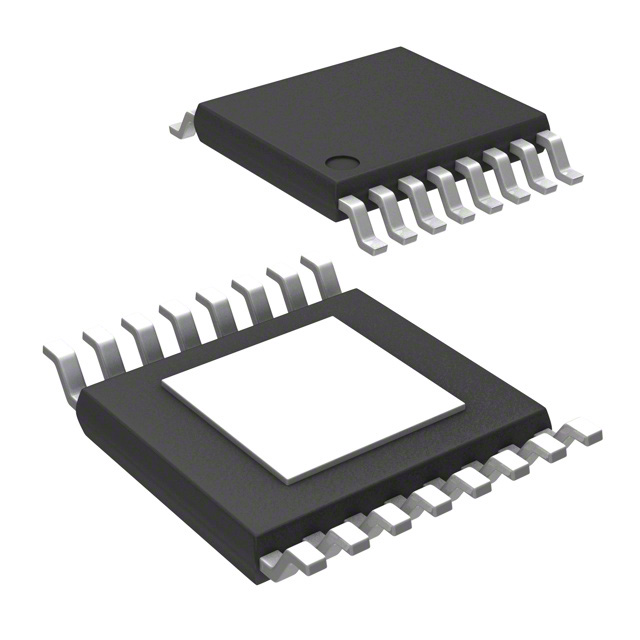
- 16-PowerTSSOP (0.173", 4.40mm Width)
- Datasheet:
-
 LM3421Q1MH/NOPB.pdf
- Description:
- IC LED DRIVER CTRLR PWM 16TSSOP
- Quantity:
- Payment:

- Shipping:

Inventory:2,156
Please send an inquiry. Send us your inquiry, and we will respond immediately.
Product details
Overview
LM3421Q1MH/NOPB from Texas Instruments is an AEC-Q100 Grade 1 qualified high-voltage N-channel MOSFET controller for constant-current LED drivers, supporting buck, boost, buck-boost, and SEPIC topologies. It operates from 4.5 V to 75 V input, features predictive off-time (PRO) control, 2-Ω/1-A peak gate drive, and high-side adjustable current sensing with 1.24 V reference. Used in automotive exterior lighting and industrial LED arrays requiring robust overvoltage/undervoltage protection.
For engineers reviewing the LM3421Q1MH/NOPB datasheet, LM3421Q1MH/NOPB pinout, LM3421Q1MH/NOPB application, or LM3421Q1MH/NOPB equivalent, key selection criteria include its 75 V VIN rating, PRO control architecture, high-side differential current sense interface (HSP/HSN), thermal shutdown at 165°C, and compatibility with external dimming FETs via DDRV and nDIM pins.
Technical Context
The LM3421Q1MH/NOPB implements Predictive Off-Time (PRO) control - a hybrid of peak current-mode regulation and input-voltage-proportional off-timer - enabling stable loop compensation without slope compensation and inherent input feed-forward. Its high-side transconductance amplifier (gM = 20 mA/V) senses LED current differentially across HSP/HSN with ±7 mV offset voltage, referenced to a precision 1.24 V internal bandgap.
It integrates a 6.9 V LDO regulator (VCC) with 20 mA current limit, supports analog dimming via CSH pin biasing and PWM dimming via nDIM, and includes cycle-by-cycle current limiting on IS pin with 245 mV threshold. The device lacks fault flag (FLT) and LED ready (LRDY) pins - distinguishing it from LM3423 variants - and uses RPD for zero-current shutdown resistor divider grounding.
Key Specifications
| Parameter | Value and Actual Design Meaning |
|---|---|
| VIN Range | 4.5 V to 75 V - enables direct operation from 12 V, 24 V, and 48 V automotive/industrial rails without pre-regulation. |
| Switching Frequency | Up to 2 MHz - set by external RCT network; allows compact magnetics and low output ripple in space-constrained designs. |
| Current Sense Reference | 1.24 V ±25 mV - precise high-side differential sense reference enabling tight LED current regulation (±3% typical accuracy). |
| GATE Driver Strength | 2 Ω sourcing / 4.5 Ω sinking - drives N-channel MOSFET gates up to 1 A peak, minimizing switching losses in high-frequency LED drivers. |
| Thermal Shutdown | 165°C ±25°C hysteresis - protects against sustained overload or poor heatsinking in enclosed automotive lamp housings. |
| EN Threshold | 2.4 V turn-on / 0.8 V turn-off - provides clean enable/disable with 1.6 V hysteresis, compatible with standard logic or microcontroller GPIO. |
| OVP Threshold | 1.24 V with 23 µA hysteresis current - sets output overvoltage lockout via resistor divider; prevents LED string open-circuit damage. |
Pinout & Package
LM3421Q1MH/NOPB is housed in a thermally enhanced 16-pin HTSSOP (PWP) package (5.00 mm × 4.40 mm) with exposed thermal pad (DAP) for star-ground connection between AGND and PGND.
| Pin/Terminal | Circuit Role | Design Meaning |
|---|---|---|
| 1 VIN | Main input supply | Bypassed with 100 nF ceramic capacitor to AGND; powers internal start-up regulator and high-voltage circuitry. |
| 2 EN | Enable input | Active-high logic input; internal 0.245–2.85 MΩ pulldown ensures default disable; 2.4 V threshold enables full operation. |
| 3 COMP | Error amplifier output | Connects to AGND via RC network for loop compensation; regulates CSH to 1.24 V for LED current stability. |
| 4 CSH | Current sense high reference | Sinks 100 µA signal current when HSP/HSN are active; used for analog dimming or error amplifier feedback. |
| 5 RCT | Predictive off-time timing | External RC network sets switching frequency and off-time; VIN/25 reference (565 mV @ VIN=14 V) enables input feed-forward. |
| 6 AGND | Analog ground | Reference for CSH, COMP, RCT, OVP; connected to PGND via DAP copper pad for low-noise current sense return. |
| 7 OVP | Output overvoltage sense | Resistor divider from LED string output sets 1.24 V OVLO threshold; 23 µA hysteresis current defines turn-on margin. |
| 8 nDIM | PWM dimming / UVLO input | Accepts 100–500 Hz PWM signal; also programs VIN UVLO with resistor divider (1.24 V threshold, 23 µA hysteresis). |
| 9 VCC | Internal LDO output | 6.9 V regulated supply; bypassed with 2.2–3.3 µF ceramic to PGND; powers gate drivers and logic circuits. |
| 10 GATE | Main MOSFET gate driver | 2 Ω source / 4.5 Ω sink; drives external N-channel switch; requires external bootstrap or isolated gate drive for high-side buck. |
| 11 PGND | Power ground | Return path for GATE and DDRV; connected to AGND via DAP to minimize ground bounce in high di/dt switching. |
| 12 DDRV | Dimming FET gate driver | Drives external N-channel dimming MOSFET; complements nDIM PWM signal for fast LED current modulation. |
| 13 IS | Main switch current sense | Connects to MOSFET drain (RDS(on) sensing) or source resistor; triggers cycle-by-cycle current limit at 245 mV. |
| 14 RPD | Resistor pulldown | Grounds low side of all external resistor dividers (nDIM, OVP); enables zero-current shutdown when EN = 0 V. |
| 15 HSP | High-side sense positive | Positive input to high-side transconductance amplifier; must remain ≤76 V and >3.5 V above HSN for valid operation. |
| 16 HSN | High-side sense negative | Negative input to high-side transconductance amplifier; tied to LED string cathode or sense resistor low side. |
Key Features
| Feature | Design Value |
|---|---|
| Predictive Off-Time (PRO) Control | Eliminates sub-harmonic oscillation at >50% duty cycles; enables stable boost/buck-boost operation without slope compensation. |
| High-Side Differential Current Sense | HSP/HSN inputs support floating LED strings; 20 mA/V transconductance and ±7 mV offset ensure <±3% LED current accuracy. |
| Integrated 6.9 V LDO Regulator | Supplies internal logic and gate drivers; 20 mA current limit prevents latch-up during startup or fault conditions. |
| Programmable Dimming Interface | nDIM accepts PWM signals; DDRV drives external dim FET; CSH enables analog dimming - supporting hybrid dimming schemes. |
| Input UVLO & Output OVLO Protection | Configurable thresholds (1.24 V) with 23 µA hysteresis current; prevents operation outside safe input/output voltage windows. |
Applications
| Automotive Headlamp Drivers | Industrial High-Bay LED Fixtures |
|---|---|
|
Use Scenario: Constant-current driver for 40–100 W LED arrays in sealed headlamp modules with 9–16 V battery input and thermal constraints. IC Role / Device Role / Timing Role: Primary N-channel controller implementing boost topology; regulates LED current via HSP/HSN sense and PRO control loop. Use Value: 75 V VIN rating accommodates load dump transients; thermal shutdown (165°C) prevents failure in confined optics housings. |
Use Scenario: Outdoor-rated LED fixture powering 120–240 V AC-input-derived DC bus (e.g., 48 V) driving multi-string parallel LEDs. IC Role / Device Role / Timing Role: Buck-boost controller managing wide input/output voltage ratios; maintains constant current despite line and temperature drift. Use Value: High-side sensing avoids ground-referenced string limitations; RPD-enabled zero-current shutdown meets energy code standby requirements. |
| Commercial Streetlight Drivers | Architectural LED Accent Lighting |
|
Use Scenario: IP66-rated outdoor driver powering 72 V LED strings from 24–57 V DC input (solar/battery hybrid systems). IC Role / Device Role / Timing Role: SEPIC topology controller providing non-inverting regulation with input/output isolation; handles deep brownouts. Use Value: 2 MHz max switching frequency enables small inductors/capacitors; programmable OVP protects against open-circuit LED failures. |
Use Scenario: Low-noise, flicker-free dimming driver for museum/gallery lighting using 24 V DC input and 36 V LED strings. IC Role / Device Role / Timing Role: Analog + PWM dimming controller; CSH biasing and nDIM/DDRV coordination deliver 1000:1 dimming ratio. Use Value: 1.24 V current sense reference and <±7 mV offset ensure color consistency across dimming range; HTSSOP package aids thermal management. |
Equivalent & Alternatives
The following parts are listed as comparable options for similar N-channel LED controller applications.
| Alternative Part | Technical Difference | Application Difference | Selection Advice |
|---|---|---|---|
| LM3423Q1MH/NOPB | 20-pin HTSSOP; adds FLT (fault flag), LRDY (LED ready), TIMR (fault timer), DPOL (dim polarity), and IADJ (current adjust) pins. | Required where system-level fault reporting, LED status monitoring, or series P-channel dimming is needed. | Select LM3423Q1MH/NOPB only if fault diagnostics or dual-dimming-path control are mandatory; LM3421Q1MH/NOPB reduces BOM count and layout complexity. |
| LM3421MH/NOPB | Identical 16-pin HTSSOP package and pinout; commercial-grade (–40°C to +125°C) vs. AEC-Q100 Grade 1 (–40°C to +125°C). | Approved for non-automotive industrial/commercial use; lacks automotive qualification documentation and stress testing. | Use LM3421MH/NOPB for cost-sensitive non-automotive designs; LM3421Q1MH/NOPB is required for automotive Tier-1 production with PPAP compliance. |
Compared with LM3423Q1MH/NOPB, LM3421Q1MH/NOPB offers identical core control functionality in a smaller footprint but omits diagnostic flags and timers; compared with LM3421MH/NOPB, it delivers full AEC-Q100 Grade 1 qualification for automotive deployment without electrical or thermal derating.
Availability
LM3421Q1MH/NOPB is available at Aetrix Electronics and suitable for automotive lighting, industrial LED drivers, and commercial streetlighting requiring stable component supply, AEC-Q100 compliance, and long-term production continuity.
Supply support for LM3421Q1MH/NOPB includes scheduled delivery planning, volume procurement assistance, BOM continuity management, traceable sourcing, and lifecycle availability coordination for OEM customers, industrial embedded developers, connected-device designers, and electronics production programs.
Manufacturer
Texas Instruments is a global semiconductor leader delivering analog, embedded processing, and connectivity solutions with emphasis on reliability, longevity, and automotive-grade validation.
LM3421Q1MH/NOPB belongs to TI's LED controller product line, designed specifically for high-voltage, constant-current LED driver applications in automotive, industrial, and architectural lighting systems requiring AEC-Q100 qualification and flexible topology support.
FAQ
What topology configurations does the LM3421Q1MH/NOPB support?
The LM3421Q1MH/NOPB supports buck, boost, buck-boost, and SEPIC topologies through external component configuration. Its high-side current sense (HSP/HSN) and predictive off-time control enable stable operation across all four, with boost being most common for automotive headlamps and buck-boost for wide-input industrial drivers. The LM3421Q1MH/NOPB does not require topology-specific IC variants - the same LM3421Q1MH/NOPB part number implements each configuration via schematic design.
How is LED current regulated using the HSP and HSN pins on the LM3421Q1MH/NOPB?
LED current is regulated differentially across HSP and HSN, which feed a high-side transconductance amplifier. The amplifier forces the voltage across the external sense resistor (RSNS) to produce a signal current (ICSH) that flows out of the CSH pin. The error amplifier then regulates CSH to 1.24 V, maintaining precise LED current. For the LM3421Q1MH/NOPB, RSNS placement at the LED string cathode (HSN tied to cathode) is typical in boost configurations to simplify grounding and improve noise immunity.
Does the LM3421Q1MH/NOPB support both PWM and analog dimming simultaneously?
Yes, the LM3421Q1MH/NOPB supports hybrid dimming: nDIM accepts a PWM signal for coarse intensity control, while CSH can be biased with a DC voltage for fine analog adjustment. DDRV drives an external N-channel MOSFET to synchronize with nDIM PWM edges, ensuring fast, low-flicker dimming. This dual-path capability is fully implemented in the LM3421Q1MH/NOPB without requiring additional ICs or firmware coordination.
What is the purpose of the RPD pin on the LM3421Q1MH/NOPB, and how is it used?
The RPD (Resistor Pulldown) pin on the LM3421Q1MH/NOPB grounds the low side of all external resistor dividers - including those for nDIM (UVLO) and OVP - enabling zero-current shutdown when EN is pulled low. Connecting RPD to AGND ensures all divider networks are disabled during shutdown, reducing quiescent current to 0.1 µA. This feature is essential for automotive always-on systems meeting ISO 16750-2 sleep-mode current limits.
Is the LM3421Q1MH/NOPB pin-compatible with the commercial-grade LM3421MH/NOPB?
Yes, the LM3421Q1MH/NOPB is pin-compatible and functionally identical to the LM3421MH/NOPB, sharing the same 16-pin HTSSOP package, pinout, electrical specifications, and thermal characteristics. The sole difference is automotive qualification: LM3421Q1MH/NOPB is AEC-Q100 Grade 1 qualified (–40°C to +125°C), while LM3421MH/NOPB is commercial grade. No PCB or firmware changes are needed when upgrading to LM3421Q1MH/NOPB for automotive production.
LM3421Q1MH/NOPB Specifications
- Product attributes
- Attribute value
- Manufacturer:
- Texas Instruments
- Series:
- -
- Package/Case:
- 16-PowerTSSOP (0.173", 4.40mm Width)
- Packaging:
- Tube
- Product Status:
- Active
- Type:
- DC DC Controller
- Topology:
- SEPIC, Step-Down (Buck), Step-Up (Boost)
- Internal Switch(s):
- No
- Number of Outputs:
- 1
- Voltage - Supply (Min):
- 4.5V
- Voltage - Supply (Max):
- 75V
- Voltage - Output:
- 3V ~ 72V
- Current - Output / Channel:
- -
- Frequency:
- 2MHz
- Dimming:
- Analog, PWM
- Applications:
- -
- Operating Temperature:
- -40°C ~ 125°C (TJ)
- Grade:
- Automotive
- Qualification:
- AEC-Q100
- Mounting Type:
- Surface Mount
- Supplier Device Package:
- 16-HTSSOP
LM3421Q1MH/NOPB FAQ
1.How can I place an order for LM3421Q1MH/NOPB through Aetrix?
Please submit a Request for Quotation (RFQ) for LM3421Q1MH/NOPB on Aetrix. Our sales agent will provide a competitive quotation and guide you through the order confirmation once you accept the terms.
2.Are the price and stock information for LM3421Q1MH/NOPB reliable?
The price and inventory of LM3421Q1MH/NOPB are updated periodically and may fluctuate due to market conditions. Stock and pricing data are typically refreshed every 24 hours. Quotation validity for LM3421Q1MH/NOPB is usually 5 days.
3.What payment methods are accepted for LM3421Q1MH/NOPB?
We accept Wire Transfer, PayPal, Credit Card, Western Union, MoneyGram, and Escrow for LM3421Q1MH/NOPB transactions.
Note: Certain payment methods may incur a processing fee.
4.How is shipping managed for LM3421Q1MH/NOPB?
LM3421Q1MH/NOPB orders can be shipped via leading logistics carriers, including DHL, UPS, FedEx, TNT, or Registered Mail.
Once your LM3421Q1MH/NOPB order is processed, you will receive an email with the shipment details and tracking number.
Note: Tracking information may take up to 24 hours to appear. Express delivery typically takes 3–5 business days.
5.How can I obtain technical support or documentation for LM3421Q1MH/NOPB?
For technical support, including LM3421Q1MH/NOPB datasheets, pinout diagrams, or application guidance, please contact our engineering support team. They can provide detailed documentation and assistance for your LM3421Q1MH/NOPB requirements.
6.How does Aetrix verify that LM3421Q1MH/NOPB is sourced from the original manufacturer or authorized distributors?
All LM3421Q1MH/NOPB products on Aetrix are procured from qualified distributors and authorized channels. Our dedicated quality assurance team conducts strict verification, including traceability checks and, if necessary, third-party testing. This ensures that LM3421Q1MH/NOPB meets industry standards.
7.What is the process for return or replacement of LM3421Q1MH/NOPB?
All LM3421Q1MH/NOPB units undergo pre-shipment inspection (PSI). If there is an issue with LM3421Q1MH/NOPB, returns or replacements are accepted under the following conditions:
1.Quantity discrepancies, incorrect items, or visible external defects (such as breakage or corrosion), acknowledged by Aetrix.
2.The issue is reported within 90 days of delivery.
3.The LM3421Q1MH/NOPB part is unused and in its original packaging.
Return procedure for LM3421Q1MH/NOPB:
1.Submit a request within 90 days.
2.Obtain a Return Material Authorization (RMA) from Aetrix.
LM3421Q1MH/NOPB Tags
-
BCR402RE6327HTSA1
Infineon Technologies

-
BCR430UXTSA2
Infineon Technologies
-
BCR420UE6433HTMA1
Infineon Technologies
-
BCR420UE6327HTSA1
Infineon Technologies
-
BCR421UE6327HTSA1
Infineon Technologies
-
LYT1604D-TL
Power Integrations

-
HV9910CLG-G
Microchip Technology
-
CL2N8-G
Microchip Technology
-
BCR420UW6-7
Diodes Incorporated
-
BCR421UW6-7
Diodes Incorporated
-
BCR420UFD-7
Diodes Incorporated
-
BCR421UFD-7
Diodes Incorporated
Tech Hub

A practical engineering guide to 3.3V and 5V logic compatibility, input thresholds, resistor dividers, translator ICs, MOSFET level shifting, I2C pull-ups, timing limits and power-sequencing risks.

The 74HC595 uses push-pull logic outputs, while the TPIC6B595 uses 50 V open-drain DMOS sinks for higher-power loads. This guide compares timing, current limits, 3.3 V interfacing, load wiring, thermal…

The 74HC595 converts serial data into eight stable parallel outputs. This guide covers pin functions, shift and storage timing, OE and MR behavior, drive-current limits, cascading, voltage compatibilit…

A technical comparison of level-sensitive latches and edge-triggered flip-flops, covering timing windows, setup and hold limits, master–slave operation, time borrowing, race-through, HDL inference and…

A D latch stores one bit while Enable controls when data can pass. This reference covers gate-level operation, truth tables, transparency, setup and hold timing, LE versus OE, common ICs and practical …

An SR latch stores one bit through cross-coupled feedback. This engineering reference covers NOR and NAND implementations, truth tables, forbidden-state recovery, gated operation, switch debouncing, fa…

Latch circuits retain one bit through feedback. This technical reference covers SR and D latches, truth tables, transparency, timing limits, latch-versus-flip-flop behavior, applications and common log…

An engineering guide to LED driver operation, constant-current and constant-voltage outputs, linear and switching topologies, dimming, IC selection, calculations, replacement compatibility, and fault c…

Operational amplifier guide covering op amp basics, feedback, ideal vs real op amps, common configurations, buffer circuits, offset, bias current, gain-bandwidth, slew rate, rail-to-rail limits and sel…

Jumper cables guide covering safe connection order, red and black clamp placement, final ground connection, cable gauge, length, clamp quality, copper vs CCA cables, jump starter comparison and battery…


