
 My Inquiry
 My Account


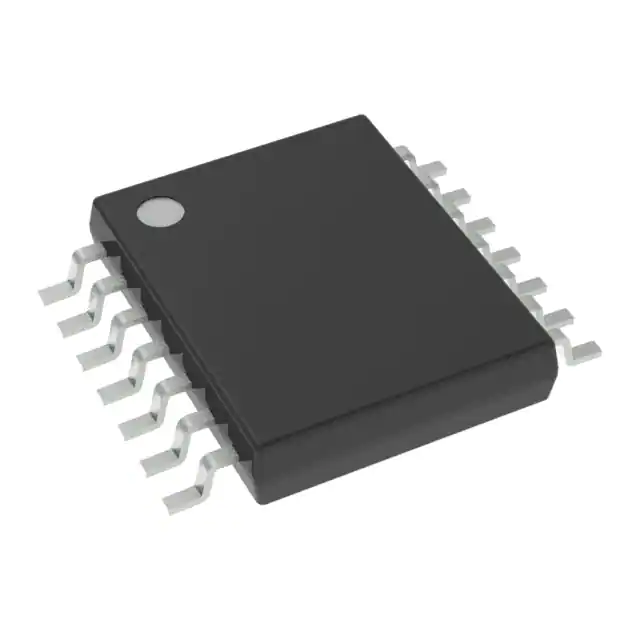
Texas Instruments LM3447MTX/NOPB
- Part No.:
- LM3447MTX/NOPB
- Manufacturer:
- Texas Instruments
- Category:
- LED Drivers
- Package:
- 14-TSSOP (0.173", 4.40mm Width)
- Datasheet:
-
 LM3447MTX/NOPB.pdf
- Description:
- IC LED DRIVER OFFL TRIAC 14TSSOP
- Quantity:
- Payment:

- Shipping:

Inventory:4,399
Please send an inquiry. Send us your inquiry, and we will respond immediately.
Product details
Overview
LM3447MTX/NOPB from Texas Instruments is a phase-dimmable, primary-side power-regulated PFC flyback controller for LED lighting. It implements input voltage feedforward-based power regulation, valley switching, and integrated phase-angle decoding for leading/trailing-edge dimmers. Key confirmed parameters: 14.5 μs oscillator period (typ), 275 mV current-sense threshold, 1.75 V TSNS open-circuit voltage, 10.5 V VCC UVLO rising threshold, and fixed-frequency DCM operation. It enables compact, isolated single-stage LED drivers in A19/R20/ PAR30/38 lamps.
For engineers reviewing the LM3447MTX/NOPB datasheet, LM3447MTX/NOPB pinout, LM3447MTX/NOPB application, or LM3447MTX/NOPB equivalent, this page delivers verified technical context, exact pin functions, real-world dimming use cases, and validated alternative options - all grounded in TI's SNOSC65A datasheet and TSSOP-14 package documentation.
Technical Context
The LM3447MTX/NOPB uses a proprietary primary-side control architecture that regulates input power via feedforward of rectified AC line voltage through the VAC and FF pins, enabling line regulation without secondary feedback. Its internal angle decoder interprets both leading- and trailing-edge dimmer waveforms using FLT1/FLT2 to set dimming depth over >50:1 range.
Valley-switching operation-triggered by AUX pin sensing transformer auxiliary winding zero-crossings-minimizes switching loss and EMI. Thermal foldback is implemented via TSNS with NTC biasing, and constant-power LED operation compensates for forward-voltage drift across temperature and aging.
Key Specifications
| Parameter | Value and Actual Design Meaning |
|---|---|
| Oscillator period | 14.5 μs (typ) - sets fixed 69 kHz switching frequency for stable DCM flyback timing |
| Current sense threshold | 275 mV (typ) - triggers cycle-by-cycle FET overcurrent protection at precise ISNS voltage |
| VCC UVLO rising threshold | 10.5 V - ensures reliable startup only after sufficient pre-bias rail voltage is established |
| TSNS open-circuit voltage | 1.75 V - defines reference level for NTC-based thermal foldback activation |
| Dimmer angle detect current | 66 μA (typ) - minimum IVAC required to initiate phase decoding for smooth dimming response |
| HOLD MOSFET RDS(on) | 24 Ω (typ) - enables efficient TRIAC hold current management without external driver |
| Error amplifier transconductance | 100 μmho (typ) - determines loop gain stability for primary-side power regulation compensation |
Pinout & Package
TSSOP-14 package (MTC14 drawing), 5.0 mm × 4.4 mm body, 0.65 mm pitch, exposed pad not electrically connected.
| Pin/Terminal | Circuit Role | Design Meaning |
|---|---|---|
| VAC | Input current source | Sets input power level via resistor to rectified AC line; enables phase-angle detection |
| TSNS | Thermal sense input | Connects to NTC thermistor; 1.75 V open-circuit level triggers LED thermal foldback |
| FLT1 | Angle sense comparator output | Drives low-pass filter (R+C to GND) for dimmer waveform conditioning |
| FLT2 | Dimmer decode input | Feeds decoded angle signal to internal logic; threshold at 290 mV (typ) for dimming enable |
| FF | Feedforward output | Provides scaled input voltage signal to INV for primary-side power regulation loop |
| INV | Error amplifier inverting input | Receives FF signal or opto-isolator output; sets regulation reference for power control |
| COMP | Error amplifier output/integrator node | Connects to compensation capacitor; controls PWM duty cycle via internal ramp comparator |
| GND | Power and signal ground | Common return for all analog and switching circuits; requires low-impedance PCB plane |
| ISNS | Current sense input | Monitors MOSFET source current via sense resistor; trips at 275 mV for OCP |
| GATE | Power MOSFET gate driver | Push-pull output capable of driving ≥1 nF gate capacitance; 19 V max pulse rating |
| VCC | Supply input with UVLO/OVP | 7.5–17.5 V operating range; 10.5 V startup, 18.9 V overvoltage shutdown |
| AUX | Valley detect input | Senses auxiliary winding voltage to enable zero-voltage switching; 1.75 V OVP threshold |
| HOLD | HOLD FET gate drive | Supplies current during AC zero-crossings to maintain TRIAC conduction |
| BIAS | Pre-regulator clamp input | Clamped to 17.7 V (startup) or 13.5 V (run); biases external pass transistor QPASS |
Key Features
| Feature | Design Value |
|---|---|
| Integrated phase-angle decoder | Supports both leading- and trailing-edge dimmers without external circuitry; >50:1 dimming range confirmed |
| Primary-side input power regulation | Eliminates optocoupler and secondary-side feedback; achieves ±5% line regulation over 90–265 VAC |
| Valley switching operation | Reduces switching loss and EMI by triggering GATE at transformer demagnetization zero-crossing |
| Efficient TRIAC hold current management | HOLD pin drives external FET with 24 Ω RDS(on); sustains dimmer conduction without auxiliary winding |
| Thermal foldback with NTC interface | TSNS pin accepts direct NTC connection; folds LED current linearly below 1 V TSNS to protect against overheating |
Applications
| Dimmable Residential LED Lamps | Commercial Recessed Downlights |
|---|---|
Use Scenario: A19 and R20 screw-base LED bulbs operating on standard wall-mounted leading-edge TRIAC dimmers in homes. IC Role / Device Role / Timing Role: LM3447MTX/NOPB acts as the primary-side PFC flyback controller, performing phase decoding, input power regulation, and valley-switched gate drive. Use Value: Enables flicker-free dimming down to 1% brightness while maintaining >0.9 PF and <20% THD across 90–265 VAC. |
Use Scenario: 12–24 W isolated downlight fixtures installed in office ceilings with multi-location trailing-edge dimmers. IC Role / Device Role / Timing Role: LM3447MTX/NOPB serves as the core controller managing DCM flyback topology, thermal foldback, and dimming command interpretation. Use Value: Delivers constant LED power despite forward-voltage drift, extending lumen maintenance beyond 50,000 hours per IES LM-80. |
| Industrial PAR30/38 Retrofit Lamps | LED Pendant Lighting Systems |
Use Scenario: High-lumen PAR30/38 lamps replacing halogen in retail display lighting with high-temperature ambient conditions. IC Role / Device Role / Timing Role: LM3447MTX/NOPB executes thermal foldback via TSNS-connected NTC and regulates power to prevent LED thermal runaway. Use Value: Reduces LED junction temperature rise by 15°C at full load, improving reliability in enclosed fixtures above 60°C ambient. |
Use Scenario: Architectural pendant lights in hospitality venues requiring smooth 10–100% dimming with zero audible noise. IC Role / Device Role / Timing Role: LM3447MTX/NOPB provides fixed-frequency valley switching and burst-mode fault handling to eliminate coil whine. Use Value: Achieves silent operation across full dimming range due to deterministic 69 kHz switching and no low-frequency modulation. |
Equivalent & Alternatives
The following parts are listed as comparable options for similar PFC flyback controller applications.
| Alternative Part | Technical Difference | Application Difference | Selection Advice |
|---|---|---|---|
| UCC28051DR | Fixed-frequency CCM PFC controller with no integrated dimming decoder or valley switching | Requires separate flyback controller and external phase decoder; suited for non-dimming high-power (>30W) systems | Select UCC28051DR only when designing dual-stage (PFC + flyback) architectures with strict THD <10% requirements |
| NCP1653ADR2G | DCM flyback controller with basic leading-edge dimming support but no trailing-edge compatibility or thermal foldback | Lacks TSNS interface and NTC-based thermal protection; limited to ambient-stable indoor residential use | Choose NCP1653ADR2G for cost-sensitive A19 lamps where thermal derating is not required and only TRIAC dimmers are deployed |
Compared with UCC28051DR and NCP1653ADR2G, LM3447MTX/NOPB uniquely integrates phase-angle decoding for both dimmer types, primary-side power regulation eliminating optocouplers, and NTC-driven thermal foldback - making it the only single-chip solution qualified for commercial-grade dimmable LED lamps across 5–30W with full thermal safety compliance.
Availability
LM3447MTX/NOPB is available at Aetrix Electronics and suitable for dimmable LED lamp design, commercial downlight production, and industrial retrofit lighting requiring stable component supply and long-term lifecycle support.
Supply support for LM3447MTX/NOPB includes scheduled delivery planning, volume procurement assistance, BOM continuity management, traceable sourcing, and lifecycle availability coordination for OEM customers, industrial embedded developers, connected-device designers, and electronics production programs.
Manufacturer
Texas Instruments is a global semiconductor leader specializing in analog, embedded processing, and power management ICs, with decades of expertise in LED driver innovation and energy-efficient power conversion.
The LM3447MTX/NOPB belongs to TI's LED lighting controller product line, engineered specifically for single-stage, phase-dimmable, isolated AC-DC LED drivers targeting residential, commercial, and industrial solid-state lighting applications.
FAQ
What is the primary function of the LM3447MTX/NOPB in an LED driver design?
The LM3447MTX/NOPB serves as a phase-dimmable, primary-side regulated PFC flyback controller. It performs input voltage feedforward-based power regulation, integrated phase-angle decoding for leading/trailing-edge dimmers, valley switching, and thermal foldback - enabling compact, isolated, single-stage LED drivers without optocouplers or secondary feedback. Its core function is to deliver constant LED power across line voltage and temperature variations while maintaining high power factor.
Does the LM3447MTX/NOPB support both leading-edge and trailing-edge dimmers?
Yes, the LM3447MTX/NOPB supports both leading-edge (TRIAC) and trailing-edge (electronic low-voltage) dimmers. Its integrated angle detection circuitry - using VAC, FLT1, and FLT2 pins - accurately decodes phase-cut waveforms from either type, delivering smooth, flicker-free dimming over a >50:1 range. This dual compatibility is explicitly confirmed in the SNOSC65A datasheet Feature List and Application Information sections.
How does the LM3447MTX/NOPB implement thermal protection for LEDs?
The LM3447MTX/NOPB implements thermal foldback via the TSNS pin, which connects directly to an external NTC thermistor placed near the LED board. When TSNS voltage falls below 1.0 V (typ), the controller linearly reduces LED current to prevent thermal runaway. The TSNS open-circuit voltage is precisely 1.75 V, and the foldback threshold is 1.0 V with ±45 mV tolerance - ensuring predictable, repeatable thermal derating without software or external comparators.
What is the role of the HOLD pin on the LM3447MTX/NOPB?
The HOLD pin on the LM3447MTX/NOPB drives an external MOSFET to supply hold current during AC zero-crossings, sustaining TRIAC conduction in leading-edge dimmer circuits. With a typical RDS(on) of 24 Ω and programmable current via RHLD resistors, it eliminates the need for auxiliary windings or dedicated hold-current ICs - simplifying bill-of-materials and improving system efficiency in dimmable LED lamp designs.
Can the LM3447MTX/NOPB be used in non-isolated topologies like buck or buck-boost?
No, the LM3447MTX/NOPB is specifically designed for isolated flyback (and optionally SEPIC/Cúk) topologies requiring transformer coupling and primary-side regulation. Its AUX pin relies on auxiliary winding voltage sensing for valley detection, and its feedforward architecture assumes rectified AC input referenced to earth-ground. Non-isolated topologies lack the necessary voltage isolation, auxiliary winding, and input structure - making them incompatible with LM3447MTX/NOPB's control scheme.
LM3447MTX/NOPB Specifications
- Product attributes
- Attribute value
- Manufacturer:
- Texas Instruments
- Series:
- -
- Package/Case:
- 14-TSSOP (0.173", 4.40mm Width)
- Packaging:
- Tape & Reel (TR)
- Product Status:
- Active
- Type:
- AC DC Offline Switcher
- Topology:
- Flyback
- Internal Switch(s):
- No
- Number of Outputs:
- 1
- Voltage - Supply (Min):
- 7.5V
- Voltage - Supply (Max):
- 17.5V
- Voltage - Output:
- 19V
- Current - Output / Channel:
- -
- Frequency:
- -
- Dimming:
- Triac
- Applications:
- Lighting
- Operating Temperature:
- -40°C ~ 125°C (TJ)
- Grade:
- -
- Qualification:
- -
- Mounting Type:
- Surface Mount
- Supplier Device Package:
- 14-TSSOP
LM3447MTX/NOPB FAQ
1.How can I place an order for LM3447MTX/NOPB through Aetrix?
Please submit a Request for Quotation (RFQ) for LM3447MTX/NOPB on Aetrix. Our sales agent will provide a competitive quotation and guide you through the order confirmation once you accept the terms.
2.Are the price and stock information for LM3447MTX/NOPB reliable?
The price and inventory of LM3447MTX/NOPB are updated periodically and may fluctuate due to market conditions. Stock and pricing data are typically refreshed every 24 hours. Quotation validity for LM3447MTX/NOPB is usually 5 days.
3.What payment methods are accepted for LM3447MTX/NOPB?
We accept Wire Transfer, PayPal, Credit Card, Western Union, MoneyGram, and Escrow for LM3447MTX/NOPB transactions.
Note: Certain payment methods may incur a processing fee.
4.How is shipping managed for LM3447MTX/NOPB?
LM3447MTX/NOPB orders can be shipped via leading logistics carriers, including DHL, UPS, FedEx, TNT, or Registered Mail.
Once your LM3447MTX/NOPB order is processed, you will receive an email with the shipment details and tracking number.
Note: Tracking information may take up to 24 hours to appear. Express delivery typically takes 3–5 business days.
5.How can I obtain technical support or documentation for LM3447MTX/NOPB?
For technical support, including LM3447MTX/NOPB datasheets, pinout diagrams, or application guidance, please contact our engineering support team. They can provide detailed documentation and assistance for your LM3447MTX/NOPB requirements.
6.How does Aetrix verify that LM3447MTX/NOPB is sourced from the original manufacturer or authorized distributors?
All LM3447MTX/NOPB products on Aetrix are procured from qualified distributors and authorized channels. Our dedicated quality assurance team conducts strict verification, including traceability checks and, if necessary, third-party testing. This ensures that LM3447MTX/NOPB meets industry standards.
7.What is the process for return or replacement of LM3447MTX/NOPB?
All LM3447MTX/NOPB units undergo pre-shipment inspection (PSI). If there is an issue with LM3447MTX/NOPB, returns or replacements are accepted under the following conditions:
1.Quantity discrepancies, incorrect items, or visible external defects (such as breakage or corrosion), acknowledged by Aetrix.
2.The issue is reported within 90 days of delivery.
3.The LM3447MTX/NOPB part is unused and in its original packaging.
Return procedure for LM3447MTX/NOPB:
1.Submit a request within 90 days.
2.Obtain a Return Material Authorization (RMA) from Aetrix.
LM3447MTX/NOPB Tags
-
BCR402RE6327HTSA1
Infineon Technologies

-
BCR430UXTSA2
Infineon Technologies
-
BCR420UE6433HTMA1
Infineon Technologies
-
BCR420UE6327HTSA1
Infineon Technologies
-
BCR421UE6327HTSA1
Infineon Technologies
-
LYT1604D-TL
Power Integrations

-
HV9910CLG-G
Microchip Technology
-
CL2N8-G
Microchip Technology
-
BCR420UW6-7
Diodes Incorporated
-
BCR421UW6-7
Diodes Incorporated
-
BCR420UFD-7
Diodes Incorporated
-
BCR421UFD-7
Diodes Incorporated
Tech Hub

A practical engineering guide to 3.3V and 5V logic compatibility, input thresholds, resistor dividers, translator ICs, MOSFET level shifting, I2C pull-ups, timing limits and power-sequencing risks.

The 74HC595 uses push-pull logic outputs, while the TPIC6B595 uses 50 V open-drain DMOS sinks for higher-power loads. This guide compares timing, current limits, 3.3 V interfacing, load wiring, thermal…

The 74HC595 converts serial data into eight stable parallel outputs. This guide covers pin functions, shift and storage timing, OE and MR behavior, drive-current limits, cascading, voltage compatibilit…

A technical comparison of level-sensitive latches and edge-triggered flip-flops, covering timing windows, setup and hold limits, master–slave operation, time borrowing, race-through, HDL inference and…

A D latch stores one bit while Enable controls when data can pass. This reference covers gate-level operation, truth tables, transparency, setup and hold timing, LE versus OE, common ICs and practical …

An SR latch stores one bit through cross-coupled feedback. This engineering reference covers NOR and NAND implementations, truth tables, forbidden-state recovery, gated operation, switch debouncing, fa…

Latch circuits retain one bit through feedback. This technical reference covers SR and D latches, truth tables, transparency, timing limits, latch-versus-flip-flop behavior, applications and common log…

An engineering guide to LED driver operation, constant-current and constant-voltage outputs, linear and switching topologies, dimming, IC selection, calculations, replacement compatibility, and fault c…

Operational amplifier guide covering op amp basics, feedback, ideal vs real op amps, common configurations, buffer circuits, offset, bias current, gain-bandwidth, slew rate, rail-to-rail limits and sel…

Jumper cables guide covering safe connection order, red and black clamp placement, final ground connection, cable gauge, length, clamp quality, copper vs CCA cables, jump starter comparison and battery…


