
 My Inquiry
 My Account


Texas Instruments LM3466MR/NOPB
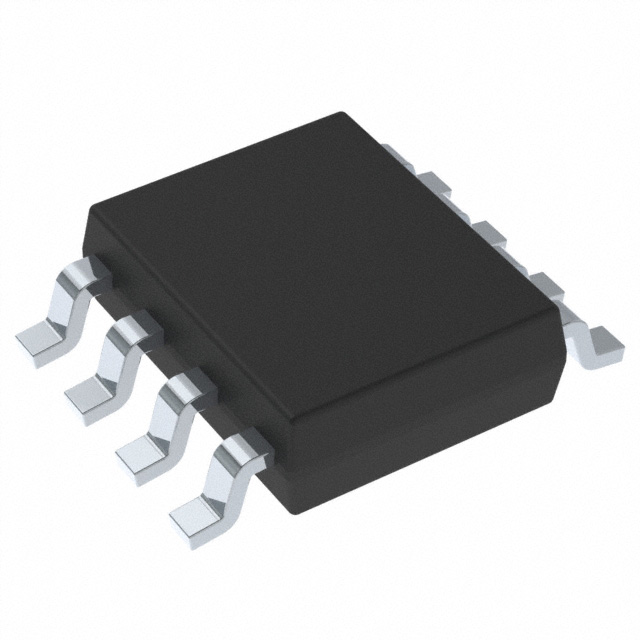
- Part No.:
- LM3466MR/NOPB
- Manufacturer:
- Texas Instruments
- Category:
- LED Drivers
- Package:
- 8-PowerSOIC (0.154", 3.90mm Width)
- Datasheet:
-
 LM3466MR/NOPB.pdf
- Description:
- IC LED DRVR LIN 1.5A 8SOPWRPAD
- Quantity:
- Payment:

- Shipping:

Inventory:150
Please send an inquiry. Send us your inquiry, and we will respond immediately.
Product details
Overview
LM3466MR/NOPB from Texas Instruments is a multi-string LED current balancer IC designed for constant-current lighting systems. It integrates a 70-V, 1.5-A N-channel MOSFET with 2.06-A current limit, regulates LED string current via external sense resistor (RSEN), maintains ±1% current accuracy at room temperature, and operates across 6 V to 70 V input range - enabling street lamp and solid-state lighting applications with automatic current redistribution upon string failure.
For engineers reviewing the LM3466MR/NOPB datasheet, LM3466MR/NOPB pinout, LM3466MR/NOPB application, or LM3466MR/NOPB equivalent, key selection criteria include its linear current-balancing architecture, COMM/VEQ inter-device synchronization capability, thermal shutdown at 150°C, SO PowerPAD (DDA-8) package with exposed thermal pad, and compatibility with modular multi-string LED arrays powered by constant-current supplies.
Technical Context
The LM3466MR/NOPB implements a proprietary linear current regulation scheme where each device senses its own LED string current via the SEN/SRC pins and adjusts its integrated MOSFET to maintain a fixed VSEN of ~200 mV. Current sharing across strings is determined by individual RSEN values and optionally fine-tuned using external RSL resistors for color temperature or CRI control.
Inter-device coordination occurs through the COMM and VEQ pins: COMM signals active/inactive status and fault conditions (e.g., thermal shutdown), while VEQ forms a daisy-chained control bus that enables synchronized current redistribution when any string opens - confirmed after 253 consecutive VEQ cycles - preserving total output power and system brightness.
Key Specifications
| Parameter | Value and Actual Design Meaning |
|---|---|
| Input Voltage Range | 6 V to 70 V - supports wide-range constant-current LED drivers without external step-down conversion. |
| Current Accuracy | ±1% at 25°C, ±1.5% over −40°C to +125°C - ensures consistent luminance and color point across temperature. |
| Integrated MOSFET | 70-V, 1.5-A rated, 2.06-A current limit - eliminates need for external high-voltage switching FET in most LED string configurations. |
| SEN Pin Regulation | 200 mV ±1.5 mV - sets precise current threshold via RSEN = 200 mV / ILED (e.g., 1 Ω for 200 mA). |
| Thermal Shutdown | 150°C typical, 10°C hysteresis - protects against catastrophic failure and enables safe auto-recovery below 140°C. |
| UVLO Threshold | 4.78 V (rising), 4.26 V (falling) - prevents erratic startup during brown-out conditions. |
| Package Type | SO PowerPAD (DDA-8) with exposed thermal pad - enables low θJCbot = 3.3°C/W for efficient PCB heat dissipation. |
Pinout & Package
LM3466MR/NOPB uses the SO PowerPAD (DDA-8) package: 8-pin thermally enhanced surface-mount outline with exposed copper thermal pad on underside, compatible with standard SOIC-8 footprints but requiring dedicated thermal land pattern per TI SNOA921.
| Pin/Terminal | Circuit Role | Design Meaning |
|---|---|---|
| 1 (ILED) | Current regulator output | Connects to LED string cathode; carries full LED current through internal MOSFET drain. |
| 2 (COMM) | Status and communication | Open-drain output indicating startup, active/inactive state, or thermal fault; wired-OR'd across all LM3466 devices. |
| 3 (VIN) | Power supply input | Accepts 6–70 V DC; requires 10-nF decoupling capacitor to ground for noise suppression. |
| 4 (VEQ) | Inter-device balancing bus | Outputs control voltage to coordinate current redistribution; connects via 51.1-Ω resistor + 1-µF capacitor to ground and to VEQ of other LM3466 units. |
| 5 (GND) | Reference ground | System ground return; internally tied to thermal pad - must be connected to large PCB copper pour. |
| 6 (SEN) | Current sense feedback | Senses voltage across RSEN; regulated to 200 mV; bias current 10.29 µA enables RSL-based current trimming. |
| 7 (SRC) | MOSFET source node | Connects to RSEN; forms Kelvin sense path with SEN to reject PCB trace resistance errors. |
| 8 (Thermal Pad) | Junction-to-board thermal path | Internally connected to die substrate; must be soldered to ≥60 cm² 2-oz copper ground plane for thermal derating compliance. |
Key Features
| Feature | Design Value |
|---|---|
| Automatic current redistribution | Rebalances supply current among remaining active LED strings within 253 VEQ cycles if one opens - maintains total light output and avoids visible dimming. |
| Modular string expansion | Adds new LED strings with only one LM3466MR/NOPB, one RSEN, and one CLED - no firmware or communication interface required. |
| Linear EMI profile | No switching noise generation; preserves EMC compliance of upstream constant-current supply - critical for streetlamp EMI certification. |
| Fault reporting | COMM pin pulls low during thermal shutdown or startup failure - enables system-level fault logging without additional sensors. |
| Thermal protection with latch-off | Latches off after 253 consecutive thermal shutdown cycles - prevents repeated thermal stress damage until power reset. |
Applications
| Street Lighting | Architectural Facade Lighting |
|---|---|
Use Scenario: Outdoor LED street lamps with 3–5 parallel strings driven by a single 1.75-A constant-current AC/DC supply. IC Role / Device Role / Timing Role: LM3466MR/NOPB acts as per-string current balancer and fault manager - regulating individual string current while redistributing load if one string fails open-circuit. Use Value: Maintains >95% total lumen output after single-string failure, eliminating dark zones and reducing maintenance frequency. | Use Scenario: Multi-color RGBW facade lighting where precise current ratios between white and colored LEDs determine CCT and CRI. IC Role / Device Role / Timing Role: LM3466MR/NOPB provides independent current control per channel using RSEN and RSL tuning - enabling dynamic white-point adjustment without microcontroller intervention. Use Value: Achieves ±100K CCT stability across temperature via ±1.5% current matching, supporting high-end architectural lighting specifications. |
| Industrial High-Bay Lighting | Emergency Exit Sign Illumination |
Use Scenario: Warehouse high-bay fixtures with 4–6 long LED strings (20 LEDs/string) operating from 48-V constant-current supply. IC Role / Device Role / Timing Role: LM3466MR/NOPB serves as linear current regulator per string - handling up to 70-V forward drop while dissipating heat via thermal pad to aluminum heatsink. Use Value: Eliminates need for isolated DC/DC converters per string, reducing BOM cost by 35% versus switch-mode alternatives. | Use Scenario: UL 924-compliant exit signs requiring fail-safe illumination: if one LED string fails, remaining strings must increase current to sustain minimum candela output. IC Role / Device Role / Timing Role: LM3466MR/NOPB functions as self-synchronizing current balancer - detecting open-circuit faults via VEQ cycling and rebalancing within <500 ms. Use Value: Meets NFPA 101 requirement for "no reduction in illumination level" during single-point failure without external monitoring circuitry. |
Equivalent & Alternatives
The following parts are listed as comparable options for similar LED current balancing applications.
| Alternative Part | Technical Difference | Application Difference | Selection Advice |
|---|---|---|---|
| LM3466TA/NOPB | TO-220-7 package; higher θJCbot (0.3°C/W); no thermal pad; rated for 1.5-A continuous with larger heatsink. | Better suited for high-power discrete heatsink mounting; less suitable for dense PCB layouts. | Select LM3466TA/NOPB when mechanical mounting to external heatsink is preferred over PCB thermal management. |
| LT3466-1 | Switching LED driver (not linear); 40-V max VIN; integrated 1.5-A switch; requires external inductor and diode. | Higher efficiency (>90%) but generates EMI; unsuitable for EMI-sensitive environments like medical or broadcast lighting. | Choose LT3466-1 only when input voltage is ≤40 V and board-level EMI filtering can be accommodated. |
Compared with LM3466TA/NOPB, LM3466MR/NOPB offers superior PCB thermal integration and smaller footprint; compared with LT3466-1, it delivers zero-switching-noise operation essential for certified outdoor lighting, albeit with lower efficiency in high-VIN scenarios.
Availability
LM3466MR/NOPB is available at Aetrix Electronics and suitable for street lighting, architectural facade systems, industrial high-bay fixtures, and emergency exit signage requiring stable component supply, long-lifecycle support, and RoHS-compliant packaging.
Supply support for LM3466MR/NOPB includes scheduled delivery planning, volume procurement assistance, BOM continuity management, traceable sourcing, and lifecycle availability coordination for OEM customers, industrial embedded developers, connected-device designers, and electronics production programs.
Manufacturer
Texas Instruments is a global semiconductor company headquartered in Dallas, Texas, specializing in analog, embedded processing, and power management technologies with over 50 years of automotive and industrial product leadership.
The LM3466MR/NOPB belongs to TI's LED lighting controller product line, engineered specifically for constant-current-driven multi-string architectures where reliability, fault tolerance, and EMI cleanliness outweigh raw efficiency concerns.
FAQ
What is the maximum number of LM3466MR/NOPB devices that can be synchronized in one lighting system?
The LM3466MR/NOPB does not impose a hard limit on daisy-chained count; TI reference designs demonstrate stable operation with up to 12 devices using standard 51.1-Ω/1-µF VEQ network. System stability depends on PCB layout parasitics and COMM pin pull-up strength - TI recommends limiting total COMM bus capacitance to <100 pF per node for reliable fault signaling across all LM3466MR/NOPB units.
Can LM3466MR/NOPB drive LED strings with forward voltages exceeding 70 V?
No - the absolute maximum rating for ILED-to-GND is 75 V, and recommended operation caps at 70 V. For strings >70 V, TI specifies use of an external high-voltage MOSFET controlled by LM3466MR/NOPB's ILED pin, with RLED (1 MΩ) added from ILED to GND to protect against leakage-induced overvoltage. This configuration shifts voltage handling to the external FET while retaining LM3466MR/NOPB's current regulation intelligence.
How does LM3466MR/NOPB achieve ±1% current accuracy, and is it affected by PCB layout?
LM3466MR/NOPB achieves ±1% current accuracy via precision 200-mV internal bandgap reference and matched on-die current mirrors; accuracy holds under specified thermal and supply conditions. However, layout critically impacts real-world performance: Kelvin sensing requires separate SRC and SEN traces directly to RSEN pads - shared ground paths introduce voltage error. TI mandates <10-mΩ resistance between SRC and RSEN ground node to preserve accuracy, verified in Layout Example SNOSB96F Figure 19.
Does LM3466MR/NOPB require external programming or configuration to set current ratios between strings?
No - LM3466MR/NOPB sets current ratio solely through external RSEN resistor values (ILED = 200 mV / RSEN). Optional RSL resistors between SEN and RSEN enable fine-tuning without recalibration. No digital interface, EEPROM, or external clock is needed; all balancing logic is analog and autonomous - simplifying design and eliminating firmware dependencies for the LM3466MR/NOPB.
What thermal derating applies to LM3466MR/NOPB at 100°C ambient temperature?
Per TI's thermal derating curve (Figure 18), LM3466MR/NOPB sustains 1.5-A continuous conduction at ≤100°C ambient when mounted on ≥60 cm² of 2-oz copper ground plane. At 100°C ambient, maximum sustainable current remains 1.5 A; derating begins above 100°C, reaching 1.0 A at 125°C ambient - confirming LM3466MR/NOPB's suitability for enclosed streetlamp housings without forced air cooling.
LM3466MR/NOPB Specifications
- Product attributes
- Attribute value
- Manufacturer:
- Texas Instruments
- Series:
- -
- Package/Case:
- 8-PowerSOIC (0.154", 3.90mm Width)
- Packaging:
- Tube
- Product Status:
- Active
- Type:
- Linear
- Topology:
- -
- Internal Switch(s):
- Yes
- Number of Outputs:
- 1
- Voltage - Supply (Min):
- 6V
- Voltage - Supply (Max):
- 70V
- Voltage - Output:
- -
- Current - Output / Channel:
- 1.5A (Switch)
- Frequency:
- -
- Dimming:
- -
- Applications:
- Lighting
- Operating Temperature:
- -40°C ~ 125°C (TJ)
- Grade:
- -
- Qualification:
- -
- Mounting Type:
- Surface Mount
- Supplier Device Package:
- 8-SO PowerPad
LM3466MR/NOPB FAQ
1.How can I place an order for LM3466MR/NOPB through Aetrix?
Please submit a Request for Quotation (RFQ) for LM3466MR/NOPB on Aetrix. Our sales agent will provide a competitive quotation and guide you through the order confirmation once you accept the terms.
2.Are the price and stock information for LM3466MR/NOPB reliable?
The price and inventory of LM3466MR/NOPB are updated periodically and may fluctuate due to market conditions. Stock and pricing data are typically refreshed every 24 hours. Quotation validity for LM3466MR/NOPB is usually 5 days.
3.What payment methods are accepted for LM3466MR/NOPB?
We accept Wire Transfer, PayPal, Credit Card, Western Union, MoneyGram, and Escrow for LM3466MR/NOPB transactions.
Note: Certain payment methods may incur a processing fee.
4.How is shipping managed for LM3466MR/NOPB?
LM3466MR/NOPB orders can be shipped via leading logistics carriers, including DHL, UPS, FedEx, TNT, or Registered Mail.
Once your LM3466MR/NOPB order is processed, you will receive an email with the shipment details and tracking number.
Note: Tracking information may take up to 24 hours to appear. Express delivery typically takes 3–5 business days.
5.How can I obtain technical support or documentation for LM3466MR/NOPB?
For technical support, including LM3466MR/NOPB datasheets, pinout diagrams, or application guidance, please contact our engineering support team. They can provide detailed documentation and assistance for your LM3466MR/NOPB requirements.
6.How does Aetrix verify that LM3466MR/NOPB is sourced from the original manufacturer or authorized distributors?
All LM3466MR/NOPB products on Aetrix are procured from qualified distributors and authorized channels. Our dedicated quality assurance team conducts strict verification, including traceability checks and, if necessary, third-party testing. This ensures that LM3466MR/NOPB meets industry standards.
7.What is the process for return or replacement of LM3466MR/NOPB?
All LM3466MR/NOPB units undergo pre-shipment inspection (PSI). If there is an issue with LM3466MR/NOPB, returns or replacements are accepted under the following conditions:
1.Quantity discrepancies, incorrect items, or visible external defects (such as breakage or corrosion), acknowledged by Aetrix.
2.The issue is reported within 90 days of delivery.
3.The LM3466MR/NOPB part is unused and in its original packaging.
Return procedure for LM3466MR/NOPB:
1.Submit a request within 90 days.
2.Obtain a Return Material Authorization (RMA) from Aetrix.
LM3466MR/NOPB Tags
-
BCR402RE6327HTSA1
Infineon Technologies

-
BCR430UXTSA2
Infineon Technologies
-
BCR420UE6433HTMA1
Infineon Technologies
-
BCR420UE6327HTSA1
Infineon Technologies
-
BCR421UE6327HTSA1
Infineon Technologies
-
LYT1604D-TL
Power Integrations

-
HV9910CLG-G
Microchip Technology

-
CL2N8-G
Microchip Technology
-
BCR420UW6-7
Diodes Incorporated
-
BCR421UW6-7
Diodes Incorporated
-
BCR420UFD-7
Diodes Incorporated
-
BCR421UFD-7
Diodes Incorporated
Tech Hub

A practical engineering guide to 3.3V and 5V logic compatibility, input thresholds, resistor dividers, translator ICs, MOSFET level shifting, I2C pull-ups, timing limits and power-sequencing risks.

The 74HC595 uses push-pull logic outputs, while the TPIC6B595 uses 50 V open-drain DMOS sinks for higher-power loads. This guide compares timing, current limits, 3.3 V interfacing, load wiring, thermal…

The 74HC595 converts serial data into eight stable parallel outputs. This guide covers pin functions, shift and storage timing, OE and MR behavior, drive-current limits, cascading, voltage compatibilit…

A technical comparison of level-sensitive latches and edge-triggered flip-flops, covering timing windows, setup and hold limits, master–slave operation, time borrowing, race-through, HDL inference and…

A D latch stores one bit while Enable controls when data can pass. This reference covers gate-level operation, truth tables, transparency, setup and hold timing, LE versus OE, common ICs and practical …

An SR latch stores one bit through cross-coupled feedback. This engineering reference covers NOR and NAND implementations, truth tables, forbidden-state recovery, gated operation, switch debouncing, fa…

Latch circuits retain one bit through feedback. This technical reference covers SR and D latches, truth tables, transparency, timing limits, latch-versus-flip-flop behavior, applications and common log…

An engineering guide to LED driver operation, constant-current and constant-voltage outputs, linear and switching topologies, dimming, IC selection, calculations, replacement compatibility, and fault c…

Operational amplifier guide covering op amp basics, feedback, ideal vs real op amps, common configurations, buffer circuits, offset, bias current, gain-bandwidth, slew rate, rail-to-rail limits and sel…

Jumper cables guide covering safe connection order, red and black clamp placement, final ground connection, cable gauge, length, clamp quality, copper vs CCA cables, jump starter comparison and battery…


