
 My Inquiry
 My Account


Texas Instruments LM346N
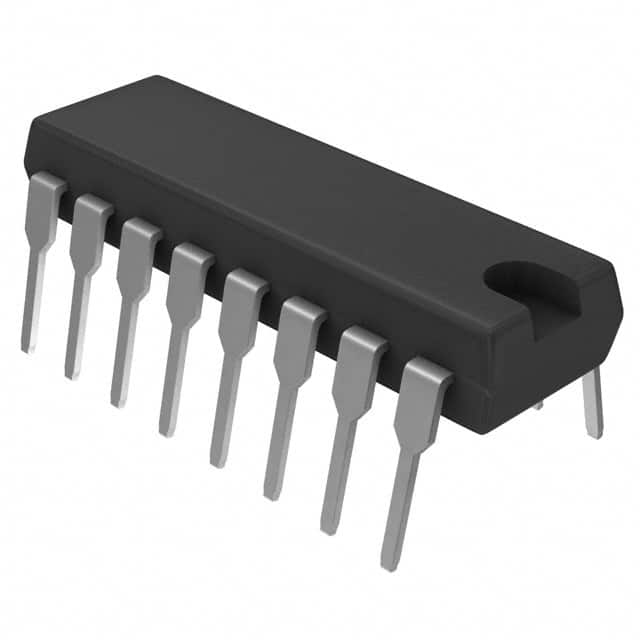
- Part No.:
- LM346N
- Manufacturer:
- Texas Instruments
- Category:
- Instrumentation, Op Amps, Buffer Amps
- Package:
- 16-DIP (0.300", 7.62mm)
- Datasheet:
-
 LM346N.pdf
- Description:
- IC OPAMP GP 4 CIRCUIT 16DIP
- Quantity:
- Payment:

- Shipping:

Inventory:4,610
Please send an inquiry. Send us your inquiry, and we will respond immediately.
Product details
Overview
LM346N from Texas Instruments is a programmable quad operational amplifier designed for low-power, precision analog signal conditioning in battery-powered and space-constrained systems. It delivers 0.5 MHz minimum gain bandwidth product, 350 μA per amplifier supply current, and 28 nV/√Hz input voltage noise at ISET = 10 μA, enabling configurable trade-offs between speed, power, and noise in active filter and instrumentation circuits.
For engineers reviewing the LM346N datasheet, LM346N pinout, LM346N application, or LM346N equivalent, key selection criteria include its programmable GBW/slew rate via external ISET pins, ±1.5V to ±18V dual-supply operation, 0°C to +70°C industrial temperature range, SOIC-16 package compatibility, and use in capacitorless biquad filters requiring precise channel isolation.
Technical Context
The LM346N implements four independent, internally compensated op amps with programmable biasing via two external ISET pins (pins 8 and 9), allowing real-time adjustment of gain bandwidth product (0.5–1.2 MHz), slew rate (0.4 V/μs), supply current (140–300 μA per amplifier), input bias current (7.5–100 nA), and input noise. Its Class AB output stage eliminates crossover distortion while supporting rail-to-rail input common-mode range up to ±14 V at ±15 V supplies.
Unlike fixed-gain op amps, the LM346N's performance parameters scale linearly with ISET current - e.g., doubling ISET doubles GBW and slew rate while halving input noise power - enabling dynamic optimization for varying load, supply, or thermal conditions without changing the IC or PCB layout.
Key Specifications
| Parameter | Value and Actual Design Meaning |
|---|---|
| Supply Voltage Range | ±1.5 V to ±18 V - supports single-cell Li-ion, dual AA/AAA, and industrial ±15 V rails without level-shifting. |
| Gain Bandwidth Product | 0.5 MHz min (ISET = 10 μA) - sets usable closed-loop bandwidth for unity-gain stable filters and buffers. |
| Supply Current per Amplifier | 140 μA typ (ISET = 10 μA) - enables 4-channel analog front-end operation below 600 μA total quiescent current. |
| Input Voltage Noise | 28 nV/√Hz at 1 kHz - determines minimum detectable signal in high-gain sensor interfaces with <10 kΩ source impedance. |
| Input Offset Voltage | 0.5 mV max (25°C) - limits DC error in precision integrators and low-frequency instrumentation amplifiers. |
| Common-Mode Rejection Ratio | 70 dB min - ensures stable operation when rejecting power supply ripple or shared ground noise in multi-stage designs. |
| Output Voltage Swing | ±12 V min (RL ≥ 10 kΩ, ±15 V supply) - provides >80% rail utilization for driving ADC reference buffers or analog switches. |
Pinout & Package
LM346N is housed in a 16-pin SOIC (Package Drawing D), with 1.27 mm pitch, 10.3 mm × 7.5 mm body, and gull-wing leads. Pin 1 is marked by a beveled corner; the device features two dedicated programming terminals (pins 8 and 9) for ISET current injection, distinguishing it from standard quad op amp pinouts.
| Pin/Terminal | Circuit Role | Design Meaning |
|---|---|---|
| 1, 5, 9, 13 | Inverting Input (A, B, C, D) | High-impedance differential inputs accepting ±13.5 V CM range; matched for <−105 dB inter-amplifier crosstalk. |
| 2, 6, 10, 14 | Non-Inverting Input (A, B, C, D) | Same CM range and bias current specs as inverting inputs; used for unity-gain followers and differential receivers. |
| 3, 7, 11, 15 | Output (A, B, C, D) | Class AB stage delivering ±12 V swing into 10 kΩ; capable of continuous short-circuit to ground. |
| 4 | V− (Negative Supply) | Reference for all internal current sources and output stage; must be connected before applying input signals. |
| 12 | V+ (Positive Supply) | Bias rail for all amplifiers and ISET circuitry; decoupling required within 1 cm for stability at >100 kHz. |
| 8, 9 | ISET Programming Inputs | Sink current (e.g., 10 μA) to set GBW, slew rate, and supply current; open-circuit disables amplifiers (high-Z output). |
Key Features
| Feature | Design Value |
|---|---|
| Programmable Gain Bandwidth | 0.5–1.2 MHz range via external ISET current - enables one hardware design to support multiple bandwidth requirements across product variants. |
| Ultra-Low Power Operation | 140 μA per amplifier at ISET = 10 μA - allows 4-channel signal conditioning in sub-1 mA systems such as portable medical sensors. |
| Capacitorless Active Filter Support | Optimized pinout and phase margin (>60°) for state-variable and biquad topologies - eliminates need for external compensation capacitors in LP/BP/Notch filters. |
| Temperature-Compensated Bias Current | Input bias current drift <±0.5 nA/°C - maintains consistent offset and CMRR over 0–70°C without trimming resistors. |
| High Channel Isolation | −105 dB typical crosstalk (DC) - prevents signal coupling between channels in multi-path data acquisition or audio mixing applications. |
Applications
| Portable Instrumentation Amplifier | Capacitorless Biquad Filter |
|---|---|
Use Scenario: Battery-powered ECG front-end acquiring microvolt-level biopotential signals with minimal power draw. IC Role / Device Role / Timing Role: Quad op amp configured as 3-opamp IA (A/B/C) plus guard driver (D), with ISET tuned for 100 kHz GBW and 200 nA input bias. Use Value: Enables 4-channel simultaneous acquisition at <600 μA total supply current while maintaining 100 dB CMRR and <1 μVpp input-referred noise. |
Use Scenario: Tunable bandpass filter in handheld spectrum analyzer requiring no external timing capacitors. IC Role / Device Role / Timing Role: Four amplifiers implementing state-variable topology (LP/HP/BP outputs), with RSET adjusting center frequency (fo) and Q-factor. Use Value: Achieves 20 kHz center frequency with Q = 1.3 using only resistors - eliminating capacitor tolerance drift and board area vs. switched-capacitor alternatives. |
| Voice-Activated Analog Switch | Micropower Sensor Signal Conditioning |
Use Scenario: Low-duty-cycle voice-triggered recorder that powers down analog path between activations. IC Role / Device Role / Timing Role: One amplifier used as comparator; others disabled by pulling ISET pins to V−, placing outputs in high-impedance state. Use Value: Reduces standby current to <1 μA per disabled amplifier - extending battery life beyond 6 months on two AA cells. |
Use Scenario: Industrial temperature sensor node interfacing thermistor bridge with 16-bit SAR ADC. IC Role / Device Role / Timing Role: Two amplifiers form precision difference amplifier; third buffers reference; fourth drives ADC input with programmable drive strength. Use Value: Delivers 0.1% linearity over −20°C to +60°C using same ISET setting for all channels - avoiding per-channel calibration. |
Equivalent & Alternatives
The following parts are listed as comparable options for similar programmable quad op amp applications.
| Alternative Part | Technical Difference | Application Difference | Selection Advice |
|---|---|---|---|
| LM146J | Military-grade version with −55°C to +125°C operation, 900 mW power dissipation, and CDIP package. | Required for aerospace or extended-temperature industrial control where LM346N's 0–70°C range is insufficient. | Select LM146J only if full military temp range and higher thermal robustness are mandatory; not drop-in due to different package and pin 1 marking. |
| LM324N | Fixed-gain-bandwidth (1.2 MHz), non-programmable, lower supply current (350 μA total for 4 amps), no ISET pins. | Suitable for cost-sensitive, static-performance applications like basic comparators or fixed-gain sensor buffers. | Choose LM324N when programmability is unnecessary and BOM simplification outweighs flexibility; requires different PCB layout due to missing ISET pins. |
Compared with LM146J, LM346N offers lower cost and SOIC packaging but sacrifices extended temperature and power handling; compared with LM324N, it trades fixed simplicity for runtime configurability of bandwidth, noise, and power - critical for adaptive sensor systems.
Availability
LM346N is available at Aetrix Electronics and suitable for portable instrumentation, active filter modules, voice-activated devices, and micropower sensor signal conditioning requiring stable component supply across production volumes.
Supply support for LM346N includes scheduled delivery planning, volume procurement assistance, BOM continuity management, traceable sourcing, and lifecycle availability coordination for OEM customers, industrial embedded developers, connected-device designers, and electronics production programs.
Manufacturer
Texas Instruments is a global semiconductor leader specializing in analog and embedded processing technologies, with decades of innovation in precision op amps and power-efficient signal chains.
The LM346N belongs to TI's programmable op amp family, engineered specifically for applications demanding runtime-adjustable performance - such as battery-operated test equipment and adaptive filtering - where fixed-spec devices force design compromises.
FAQ
What is the maximum supply voltage for LM346N?
The LM346N supports a maximum dual supply voltage of ±18 V, as specified in its Absolute Maximum Ratings table. Exceeding this limit risks permanent damage to internal junctions. For reliable operation, maintain supply rails within ±1.5 V to ±18 V, with proper decoupling capacitors placed near pins 4 (V−) and 12 (V+) to suppress transients. The LM346N datasheet confirms this rating applies across its full 0°C to +70°C operating temperature range.
How does ISET current affect LM346N's gain bandwidth product?
The LM346N's gain bandwidth product scales linearly with ISET current: GBW = 1 MHz × (ISET / 10 μA). At ISET = 10 μA, GBW is 1 MHz (typ); at ISET = 5 μA, it drops to 0.5 MHz (min). This direct proportionality allows designers to reduce bandwidth and power simultaneously - for example, lowering ISET to 2 μA cuts GBW to 200 kHz and supply current to ~280 μA total for all four amplifiers. The LM346N schematic diagram shows ISET injected into pins 8 and 9 to enable this scaling.
Can LM346N be used in single-supply configurations?
Yes, the LM346N operates in single-supply mode with V+ tied to positive rail and V− grounded, provided input common-mode voltage remains within specification (e.g., 0.7 V above ground at ±1.5 V supply). Figure 31 in the LM346N datasheet illustrates a single-positive-supply biasing network using resistive dividers to establish mid-rail virtual ground. Output swing is limited to ~0.6 V from each rail under these conditions, making it suitable for low-voltage sensor interfaces but not rail-to-rail output applications.
What is the thermal resistance (θjA) of LM346N in SOIC package?
The LM346N in SOIC-16 package (Package Drawing D) has a junction-to-ambient thermal resistance (θjA) of 115°C/W, as documented in the Absolute Maximum Ratings section of its datasheet. This value assumes standard JEDEC 2-layer board conditions. At maximum ambient temperature (70°C) and 500 mW power dissipation, junction temperature reaches ~127°C - safely below the 100°C max junction limit only if derated; actual safe power must be calculated as Pd = (TjMAX − TA)/θjA = (100 − 70)/115 ≈ 260 mW.
Does LM346N support shutdown functionality?
Yes, the LM346N supports amplifier shutdown by pulling both ISET pins (8 and 9) to V− (negative supply or ground in single-supply mode). This action disables internal bias currents, forcing all four outputs into high-impedance state with leakage <100 nA. Figure 40 in the LM346N datasheet demonstrates this behavior, confirming it enables ultra-low-power sleep modes - ideal for intermittent-sampling systems like voice-activated recorders where amplifiers remain inactive >99% of the time.
LM346N Specifications
- Product attributes
- Attribute value
- Manufacturer:
- Texas Instruments
- Series:
- -
- Package/Case:
- 16-DIP (0.300", 7.62mm)
- Packaging:
- Tube
- Product Status:
- Discontinued at Digi-Key
- Amplifier Type:
- General Purpose
- Number of Circuits:
- 4
- Output Type:
- -
- Slew Rate:
- 0.4V/µs
- Gain Bandwidth Product:
- 1.2 MHz
- -3db Bandwidth:
- -
- Current - Input Bias:
- 50 nA
- Voltage - Input Offset:
- 500 µV
- Current - Supply:
- 1.4mA (x4 Channels)
- Current - Output / Channel:
- 20 mA
- Voltage - Supply Span (Min):
- 3 V
- Voltage - Supply Span (Max):
- 44 V
- Operating Temperature:
- 0°C ~ 70°C
- Grade:
- -
- Qualification:
- -
- Mounting Type:
- Through Hole
- Supplier Device Package:
- 16-DIP
LM346N FAQ
1.How can I place an order for LM346N through Aetrix?
Please submit a Request for Quotation (RFQ) for LM346N on Aetrix. Our sales agent will provide a competitive quotation and guide you through the order confirmation once you accept the terms.
2.Are the price and stock information for LM346N reliable?
The price and inventory of LM346N are updated periodically and may fluctuate due to market conditions. Stock and pricing data are typically refreshed every 24 hours. Quotation validity for LM346N is usually 5 days.
3.What payment methods are accepted for LM346N?
We accept Wire Transfer, PayPal, Credit Card, Western Union, MoneyGram, and Escrow for LM346N transactions.
Note: Certain payment methods may incur a processing fee.
4.How is shipping managed for LM346N?
LM346N orders can be shipped via leading logistics carriers, including DHL, UPS, FedEx, TNT, or Registered Mail.
Once your LM346N order is processed, you will receive an email with the shipment details and tracking number.
Note: Tracking information may take up to 24 hours to appear. Express delivery typically takes 3–5 business days.
5.How can I obtain technical support or documentation for LM346N?
For technical support, including LM346N datasheets, pinout diagrams, or application guidance, please contact our engineering support team. They can provide detailed documentation and assistance for your LM346N requirements.
6.How does Aetrix verify that LM346N is sourced from the original manufacturer or authorized distributors?
All LM346N products on Aetrix are procured from qualified distributors and authorized channels. Our dedicated quality assurance team conducts strict verification, including traceability checks and, if necessary, third-party testing. This ensures that LM346N meets industry standards.
7.What is the process for return or replacement of LM346N?
All LM346N units undergo pre-shipment inspection (PSI). If there is an issue with LM346N, returns or replacements are accepted under the following conditions:
1.Quantity discrepancies, incorrect items, or visible external defects (such as breakage or corrosion), acknowledged by Aetrix.
2.The issue is reported within 90 days of delivery.
3.The LM346N part is unused and in its original packaging.
Return procedure for LM346N:
1.Submit a request within 90 days.
2.Obtain a Return Material Authorization (RMA) from Aetrix.
LM346N Tags
-
LM358DT
STMicroelectronics

-
LM358DR
Texas Instruments
-
LM2904DR
Texas Instruments
-
LM358ADR
Texas Instruments
-
LM2904DGKR
Texas Instruments
-
LM324DR
Texas Instruments
-
MCP6006T-E/OT
Microchip Technology
-
MCP6006UT-E/OT
Microchip Technology
-
LM324PWR
Texas Instruments
-
LM2902PWR
Texas Instruments
-
LM2902DR
Texas Instruments
-
LM358P
Texas Instruments
Tech Hub

A practical engineering guide to 3.3V and 5V logic compatibility, input thresholds, resistor dividers, translator ICs, MOSFET level shifting, I2C pull-ups, timing limits and power-sequencing risks.

The 74HC595 uses push-pull logic outputs, while the TPIC6B595 uses 50 V open-drain DMOS sinks for higher-power loads. This guide compares timing, current limits, 3.3 V interfacing, load wiring, thermal…

The 74HC595 converts serial data into eight stable parallel outputs. This guide covers pin functions, shift and storage timing, OE and MR behavior, drive-current limits, cascading, voltage compatibilit…

A technical comparison of level-sensitive latches and edge-triggered flip-flops, covering timing windows, setup and hold limits, master–slave operation, time borrowing, race-through, HDL inference and…

A D latch stores one bit while Enable controls when data can pass. This reference covers gate-level operation, truth tables, transparency, setup and hold timing, LE versus OE, common ICs and practical …

An SR latch stores one bit through cross-coupled feedback. This engineering reference covers NOR and NAND implementations, truth tables, forbidden-state recovery, gated operation, switch debouncing, fa…

Latch circuits retain one bit through feedback. This technical reference covers SR and D latches, truth tables, transparency, timing limits, latch-versus-flip-flop behavior, applications and common log…

An engineering guide to LED driver operation, constant-current and constant-voltage outputs, linear and switching topologies, dimming, IC selection, calculations, replacement compatibility, and fault c…

Operational amplifier guide covering op amp basics, feedback, ideal vs real op amps, common configurations, buffer circuits, offset, bias current, gain-bandwidth, slew rate, rail-to-rail limits and sel…

Jumper cables guide covering safe connection order, red and black clamp placement, final ground connection, cable gauge, length, clamp quality, copper vs CCA cables, jump starter comparison and battery…


