
 My Inquiry
 My Account


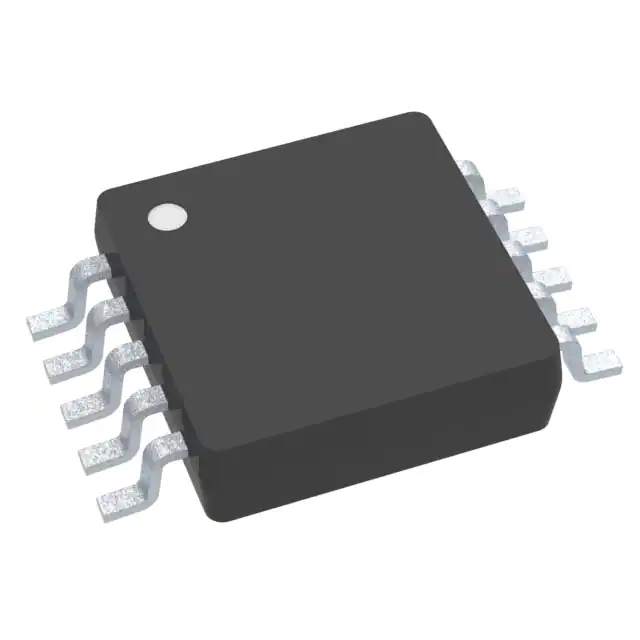
Texas Instruments LM3497MMX/NOPB
- Part No.:
- LM3497MMX/NOPB
- Manufacturer:
- Texas Instruments
- Category:
- LED Drivers
- Package:
- 10-TFSOP, 10-MSOP (0.118", 3.00mm Width)
- Datasheet:
-
 LM3497MMX/NOPB.pdf
- Description:
- IC LED DRIVER OFFL TRIAC 10VSSOP
- Quantity:
- Payment:

- Shipping:

Inventory:2,734
Please send an inquiry. Send us your inquiry, and we will respond immediately.
Product details
Overview
LM3497MMX/NOPB from Texas Instruments (formerly National Semiconductor) is a triac-dimmable offline AC/DC buck constant-current LED driver controller with integrated triac dim decoder, bleeder circuit, and adaptive constant off-time control. It operates from 80–277VAC input, delivers >1A LED current, supports 30kHz–1MHz switching, and eliminates 120Hz flicker in residential and commercial lighting retrofits.
For engineers reviewing the LM3497MMX/NOPB datasheet, LM3497MMX/NOPB pinout, LM3497MMX/NOPB application, or LM3497MMX/NOPB equivalent, key selection criteria include triac compatibility across 50/60Hz lines, programmable off-time for ripple control, thermal shutdown at 165°C, MSOP-10 package footprint, and dual-function DIM pin for master/slave synchronization.
Technical Context
The LM3497MMX/NOPB implements adaptive constant off-time control to maintain stable LED current despite VBUCK variation across AC half-cycles. Its internal 5.85kHz ramp generator compares against a filtered ASNS signal (0–4V DC) derived from triac conduction angle detection on the BLDR pin.
Angle detection uses a 7.21V threshold comparator on BLDR to drive both the ASNS PWM output and a 230Ω switched bleeder resistor-ensuring triac holding current during low-line periods. The FLTR2 pin provides a 750mV reference voltage with 420kΩ impedance for current-sense comparator biasing.
Key Specifications
| Parameter | Value and Actual Design Meaning |
|---|---|
| Input Voltage Range | 80–277VAC line-compatible; enables global mains operation without external transformer. |
| LED Output Current | >1A continuous; supports high-power single-string or multi-LED arrays in retrofit lamps. |
| Switching Frequency | 30kHz–1MHz programmable via COFF pin; balances EMI, efficiency, and passive size. |
| Dimming Interface | Triac phase-cut decoding with 45°–135° conduction angle range; no 120Hz flicker. |
| Thermal Protection | 165°C junction shutdown with 20°C hysteresis; prevents damage under sustained overload. |
| Package | MSOP-10 (MUB10A); 3mm × 3mm footprint with exposed thermal pad for compact LED driver PCBs. |
| VCC Operating Range | 8.0–12V; powers internal logic and gate driver; UVLO rising/falling thresholds at 7.7V/6.4V. |
Pinout & Package
LM3497MMX/NOPB is housed in a thermally enhanced 10-pin MSOP package (NS Package Number MUB10A), featuring an exposed thermal pad for improved power dissipation in high-current LED driver applications.
| Pin/Terminal | Circuit Role | Design Meaning |
|---|---|---|
| ASNS | Triac dim decoder PWM output | 0–4V duty-cycle-proportional signal reflecting triac on-time; feeds FLTR1 for dimming control. |
| FLTR1 | Dim decoder ramp comparator input | Accepts filtered ASNS; tied above 4.9V disables dim decoder for master/slave configuration. |
| DIM | Dual-function dim control | Accepts external PWM or outputs synchronized dim signal to other LM3497 devices. |
| COFF | Constant off-time setting | Sets tOFF via external R-C network; determines switching frequency and ripple stability. |
| FLTR2 | Current reference filter | 750mV open-circuit voltage reference with 420kΩ impedance; sets peak LED current threshold. |
| GND | Power and signal ground | Common return for ISNS, GATE, VCC, and internal comparators; requires low-impedance layout. |
| ISNS | Current sense input | Monitors MOSFET source voltage; triggers GATE turn-off when sensed voltage reaches 1.269V. |
| GATE | MOSFET driver output | Drives external N-channel switch; 0.5V saturation drop at 50mA sink/source; 0.77A peak sink. |
| VCC | Bias supply input | 8–12V internal supply; powers control logic and gate driver; includes 7.7V UVLO with hysteresis. |
| BLDR | Triac angle sensing input | Monitors rectified line via external regulator; 7.21V comparator threshold enables firing-angle detection. |
Key Features
| Feature | Design Value |
|---|---|
| Integrated triac dim decoder | Converts phase-cut waveform into stable 0–4V DC dim signal-enabling seamless compatibility with legacy wall dimmers. |
| Programmable constant off-time | Enables fixed ripple current across wide VBUCK range (e.g., 20–40V), simplifying inductor selection and improving regulation. |
| Active bleeder circuit | Switches 230Ω load only when BLDR <7.21V-ensures triac holding current without sacrificing efficiency at full brightness. |
| No 120Hz flicker architecture | Valley-fill PFC stage + high-frequency buck control eliminates perceptible flicker-meets IEEE 1789 Class A requirements. |
| Master/slave DIM synchronization | Single DIM pin drives multiple LM3497 units; FLTR1 tri-state enables centralized dimming control for multi-fixture systems. |
Applications
| Retrofit Triac Dimming | Solid State Lighting |
|---|---|
|
Use Scenario: Replacing incandescent bulbs in existing residential wall dimmer circuits with LED-based A19 or PAR30 lamps. IC Role / Device Role / Timing Role: Offline buck controller with triac angle decoding and bleeder current management-replaces legacy magnetic transformers. Use Value: Enables direct drop-in replacement without rewiring; maintains smooth 0–100% dimming while eliminating audible buzz and flicker. |
Use Scenario: High-efficiency LED luminaires for office ceiling troffers and downlights operating from 120/277VAC mains. IC Role / Device Role / Timing Role: Constant-current buck controller with passive PFC and adaptive off-time-regulates LED string current across line variations. Use Value: Achieves >85% efficiency and >0.9 PF without active PFC IC; supports >1A output with minimal heatsink requirement. |
| Industrial Lighting | Commercial Retrofit |
|
Use Scenario: High-bay LED fixtures in warehouses using 277VAC industrial distribution with standard triac dimming panels. IC Role / Device Role / Timing Role: Mains-connected LED driver with thermal shutdown and robust overvoltage protection-handles brownouts and surges. Use Value: Sustains operation at −40°C to +125°C junction temperature; 165°C thermal cutoff prevents field failures in enclosed fixtures. |
Use Scenario: Hotel corridor and lobby lighting upgrades requiring smooth dimming, low EMI, and UL Class P compliance. IC Role / Device Role / Timing Role: Triac-dimmable controller with valley-fill PFC and high-frequency switching-reduces EMI filter size and cost. Use Value: Meets FCC Class B conducted emissions with minimal external filtering; supports compact, low-profile lamp designs. |
Equivalent & Alternatives
The following parts are listed as comparable options for similar triac-dimmable LED driver controller applications.
| Alternative Part | Technical Difference | Application Difference | Selection Advice |
|---|---|---|---|
| ON Semiconductor NCL30000DR2G | Fixed 500kHz frequency; no programmable off-time; requires external bleeder resistor. | Limited dimming range (10–100%) vs LM3497MMX/NOPB's 0–100%; no master/slave DIM sync. | Preferred for cost-sensitive, fixed-frequency designs where full dim range is not required. |
| Diodes Incorporated AL1676S16-13 | Integrated 600V MOSFET; no external switch needed; lower max output current (700mA). | Eliminates external FET but limits power scalability; lacks ASNS/FLTR1 flexibility for custom dim decoding. | Best for ultra-compact, low-to-mid power (<20W) drivers where board space is critical. |
Compared with NCL30000DR2G and AL1676S16-13, LM3497MMX/NOPB offers wider dimming range, programmable off-time for ripple optimization, and native master/slave capability-making it optimal for high-power, multi-fixture, and design-flexible LED driver platforms.
Availability
LM3497MMX/NOPB is available at Aetrix Electronics and suitable for residential lighting retrofits, commercial solid-state luminaires, and industrial high-bay LED drivers requiring stable component supply and long-term manufacturability.
Supply support for LM3497MMX/NOPB includes scheduled delivery planning, volume procurement assistance, BOM continuity management, traceable sourcing, and lifecycle availability coordination for OEM customers, industrial embedded developers, connected-device designers, and electronics production programs.
Manufacturer
Texas Instruments acquired National Semiconductor in 2011 and maintains its analog power portfolio, including high-reliability LED driver ICs designed for energy-efficient lighting systems.
The LM3497 product line was developed specifically for triac-dimmable offline LED drivers-targeting retrofit compatibility, flicker-free operation, and simplified passive PFC integration in AC-powered lighting.
FAQ
What is the primary function of the LM3497MMX/NOPB in an LED lighting system?
The LM3497MMX/NOPB serves as a triac-dimmable offline AC/DC buck constant-current controller. It decodes phase-cut dimmer signals, regulates LED current via adaptive constant off-time control, and integrates a bleeder circuit to ensure reliable triac firing-enabling flicker-free dimming from 80–277VAC inputs without external microcontrollers.
How does the LM3497MMX/NOPB eliminate 120Hz flicker in LED lighting?
The LM3497MMX/NOPB eliminates 120Hz flicker by combining a valley-fill passive PFC circuit-which extends conduction time across the AC half-cycle-with high-frequency buck switching (30kHz–1MHz). This architecture avoids low-frequency current modulation, meeting IEEE 1789 Class A flicker requirements without additional post-regulation stages.
Can the LM3497MMX/NOPB support multiple LED strings controlled by one triac dimmer?
Yes, the LM3497MMX/NOPB supports master/slave configurations via its DIM pin. One LM3497MMX/NOPB configured as master (with FLTR1 tied to VCC) can drive multiple slave units by connecting their DIM pins together-enabling synchronized dimming across independent LED driver circuits without signal degradation or timing skew.
What is the role of the BLDR pin on the LM3497MMX/NOPB?
The BLDR pin on the LM3497MMX/NOPB senses the rectified AC line voltage through an external series pass regulator. It feeds the internal angle-detect comparator (7.21V threshold) to determine triac conduction state and activates the 230Ω switched bleeder resistor when voltage falls below threshold-ensuring sufficient holding current for proper triac operation across all dim levels.
Does the LM3497MMX/NOPB require an external MOSFET, and what are its gate drive specifications?
Yes, the LM3497MMX/NOPB requires an external N-channel MOSFET. Its GATE pin delivers up to 0.77A peak sink and 0.88A peak source current, with 0.5V saturation drop at 50mA sink. Rise/fall times are 15ns into 1nF load-supporting fast-switching FETs for high-efficiency, low-EMI buck operation up to 1MHz.
LM3497MMX/NOPB Specifications
- Product attributes
- Attribute value
- Manufacturer:
- Texas Instruments
- Series:
- -
- Package/Case:
- 10-TFSOP, 10-MSOP (0.118", 3.00mm Width)
- Packaging:
- Tape & Reel (TR)
- Product Status:
- Active
- Type:
- AC DC Offline Switcher
- Topology:
- Step-Down (Buck)
- Internal Switch(s):
- No
- Number of Outputs:
- 1
- Voltage - Supply (Min):
- 8V
- Voltage - Supply (Max):
- 12V
- Voltage - Output:
- -
- Current - Output / Channel:
- -
- Frequency:
- -
- Dimming:
- Triac
- Applications:
- Lighting
- Operating Temperature:
- -40°C ~ 125°C (TJ)
- Grade:
- -
- Qualification:
- -
- Mounting Type:
- Surface Mount
- Supplier Device Package:
- 10-VSSOP
LM3497MMX/NOPB FAQ
1.How can I place an order for LM3497MMX/NOPB through Aetrix?
Please submit a Request for Quotation (RFQ) for LM3497MMX/NOPB on Aetrix. Our sales agent will provide a competitive quotation and guide you through the order confirmation once you accept the terms.
2.Are the price and stock information for LM3497MMX/NOPB reliable?
The price and inventory of LM3497MMX/NOPB are updated periodically and may fluctuate due to market conditions. Stock and pricing data are typically refreshed every 24 hours. Quotation validity for LM3497MMX/NOPB is usually 5 days.
3.What payment methods are accepted for LM3497MMX/NOPB?
We accept Wire Transfer, PayPal, Credit Card, Western Union, MoneyGram, and Escrow for LM3497MMX/NOPB transactions.
Note: Certain payment methods may incur a processing fee.
4.How is shipping managed for LM3497MMX/NOPB?
LM3497MMX/NOPB orders can be shipped via leading logistics carriers, including DHL, UPS, FedEx, TNT, or Registered Mail.
Once your LM3497MMX/NOPB order is processed, you will receive an email with the shipment details and tracking number.
Note: Tracking information may take up to 24 hours to appear. Express delivery typically takes 3–5 business days.
5.How can I obtain technical support or documentation for LM3497MMX/NOPB?
For technical support, including LM3497MMX/NOPB datasheets, pinout diagrams, or application guidance, please contact our engineering support team. They can provide detailed documentation and assistance for your LM3497MMX/NOPB requirements.
6.How does Aetrix verify that LM3497MMX/NOPB is sourced from the original manufacturer or authorized distributors?
All LM3497MMX/NOPB products on Aetrix are procured from qualified distributors and authorized channels. Our dedicated quality assurance team conducts strict verification, including traceability checks and, if necessary, third-party testing. This ensures that LM3497MMX/NOPB meets industry standards.
7.What is the process for return or replacement of LM3497MMX/NOPB?
All LM3497MMX/NOPB units undergo pre-shipment inspection (PSI). If there is an issue with LM3497MMX/NOPB, returns or replacements are accepted under the following conditions:
1.Quantity discrepancies, incorrect items, or visible external defects (such as breakage or corrosion), acknowledged by Aetrix.
2.The issue is reported within 90 days of delivery.
3.The LM3497MMX/NOPB part is unused and in its original packaging.
Return procedure for LM3497MMX/NOPB:
1.Submit a request within 90 days.
2.Obtain a Return Material Authorization (RMA) from Aetrix.
LM3497MMX/NOPB Tags
-
BCR402RE6327HTSA1
Infineon Technologies

-
BCR430UXTSA2
Infineon Technologies
-
BCR420UE6433HTMA1
Infineon Technologies
-
BCR420UE6327HTSA1
Infineon Technologies
-
BCR421UE6327HTSA1
Infineon Technologies
-
LYT1604D-TL
Power Integrations

-
HV9910CLG-G
Microchip Technology
-
CL2N8-G
Microchip Technology
-
BCR420UW6-7
Diodes Incorporated
-
BCR421UW6-7
Diodes Incorporated
-
BCR420UFD-7
Diodes Incorporated
-
BCR421UFD-7
Diodes Incorporated
Tech Hub

A practical engineering guide to 3.3V and 5V logic compatibility, input thresholds, resistor dividers, translator ICs, MOSFET level shifting, I2C pull-ups, timing limits and power-sequencing risks.

The 74HC595 uses push-pull logic outputs, while the TPIC6B595 uses 50 V open-drain DMOS sinks for higher-power loads. This guide compares timing, current limits, 3.3 V interfacing, load wiring, thermal…

The 74HC595 converts serial data into eight stable parallel outputs. This guide covers pin functions, shift and storage timing, OE and MR behavior, drive-current limits, cascading, voltage compatibilit…

A technical comparison of level-sensitive latches and edge-triggered flip-flops, covering timing windows, setup and hold limits, master–slave operation, time borrowing, race-through, HDL inference and…

A D latch stores one bit while Enable controls when data can pass. This reference covers gate-level operation, truth tables, transparency, setup and hold timing, LE versus OE, common ICs and practical …

An SR latch stores one bit through cross-coupled feedback. This engineering reference covers NOR and NAND implementations, truth tables, forbidden-state recovery, gated operation, switch debouncing, fa…

Latch circuits retain one bit through feedback. This technical reference covers SR and D latches, truth tables, transparency, timing limits, latch-versus-flip-flop behavior, applications and common log…

An engineering guide to LED driver operation, constant-current and constant-voltage outputs, linear and switching topologies, dimming, IC selection, calculations, replacement compatibility, and fault c…

Operational amplifier guide covering op amp basics, feedback, ideal vs real op amps, common configurations, buffer circuits, offset, bias current, gain-bandwidth, slew rate, rail-to-rail limits and sel…

Jumper cables guide covering safe connection order, red and black clamp placement, final ground connection, cable gauge, length, clamp quality, copper vs CCA cables, jump starter comparison and battery…


