
 My Inquiry
 My Account


Texas Instruments LM358APG4
- Part No.:
- LM358APG4
- Manufacturer:
- Texas Instruments
- Category:
- Instrumentation, Op Amps, Buffer Amps
- Package:
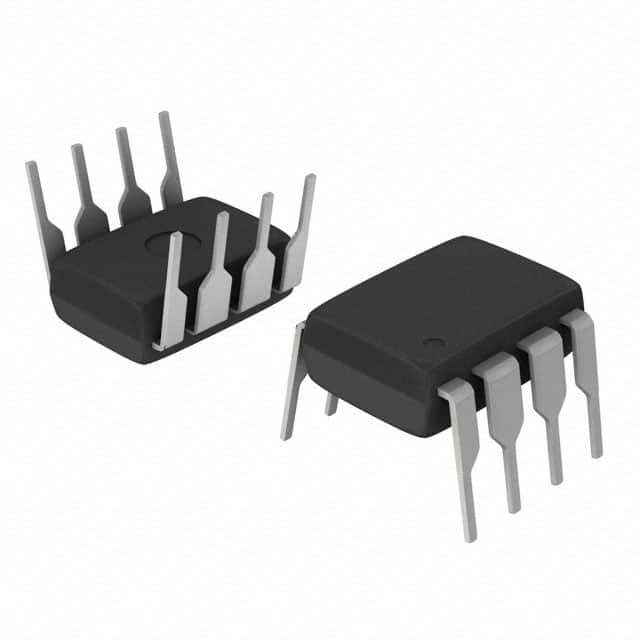
- 8-DIP (0.300", 7.62mm)
- Datasheet:
-
 LM358APG4.pdf
- Description:
- IC OPAMP GP 2 CIRCUIT 8DIP
- Quantity:
- Payment:

- Shipping:

Inventory:3,267
Please send an inquiry. Send us your inquiry, and we will respond immediately.
Product details
Overview
LM358APG4 from Texas Instruments is a dual general-purpose operational amplifier in 8-pin PDIP package, designed for cost-sensitive industrial and consumer applications. It delivers 0.7 MHz gain-bandwidth product, ±3 mV input offset voltage (max at 25°C), 350 µA typical quiescent current per channel, and rail-to-rail input common-mode range including ground - enabling single-supply sensor signal conditioning in power supplies, motor control feedback loops, and appliance control boards.
For engineers reviewing the LM358APG4 datasheet, LM358APG4 pinout, LM358APG4 application, or LM358APG4 equivalent, this page provides verified electrical specifications, validated SOIC-8-compatible pin functions, real-world use cases in AC inverters and multi-function printers, and two confirmed alternative parts with documented parameter and temperature-range differences.
Technical Context
The LM358APG4 belongs to the legacy LM358 family and shares its bipolar-input, internally compensated two-stage op-amp architecture. It operates from 3 V to 30 V supply (single or split), supports input voltages down to the negative rail, and features open-loop gain of 25–100 V/mV across 0°C to 70°C ambient.
Unlike the newer LM358B/BA variants, the LM358APG4 lacks integrated RF/EMI filtering and has higher input bias current (–20 to –250 nA) and lower ESD robustness (±500 V HBM). Its 0.3 V/mV CMRR and 0.7 MHz GBW reflect design priorities for stability and low-cost manufacturability over precision or high-speed performance.
Key Specifications
| Parameter | Value and Actual Design Meaning |
|---|---|
| Supply Voltage Range | 3 V to 30 V - supports single-supply operation in 5 V and 24 V industrial systems without level-shifting circuitry |
| Input Offset Voltage (max) | ±3 mV at 25°C - limits DC accuracy in low-gain sensor amplifiers; requires calibration for sub-mV precision |
| Gain-Bandwidth Product | 0.7 MHz - suitable for audio preamps, slow-control loops, and DC-coupled signal conditioning up to ~100 kHz |
| Quiescent Current (typ) | 350 µA per amplifier - enables battery-powered or energy-conscious designs where ultra-low IQ is not required |
| Common-Mode Input Range | Includes V− (ground) - allows direct interfacing with grounded sensors (e.g., thermistors, current shunts) in single-supply configurations |
| Output Swing (min) | Within 1.5 V of positive rail and 20 mV of negative rail (at 5 V, RL ≥ 10 kΩ) - constrains headroom in rail-to-rail output applications |
| Operating Temperature | 0°C to +70°C - rated for commercial-grade environments; not qualified for automotive or extended industrial use |
Pinout & Package
LM358APG4 is supplied in an 8-pin Plastic Dual In-line Package (PDIP), measuring 9.81 mm × 9.43 mm, with through-hole mounting and standard lead spacing compatible with legacy PCB layouts and manual soldering processes.
| Pin/Terminal | Circuit Role | Design Meaning |
|---|---|---|
| 1 | OUT1 | Output of first amplifier - drives loads up to ±30 mA; limited swing near rails affects dynamic range in 5 V systems |
| 2 | IN1− | Inverting input of first amplifier - accepts signals referenced to ground or mid-supply; high impedance (≥2 MΩ) minimizes loading |
| 3 | IN1+ | Non-inverting input of first amplifier - used for unity-gain buffers or high-impedance sensing nodes |
| 4 | V− | Negative supply or ground reference - must be stable; shared return path impacts noise coupling between amplifiers |
| 5 | IN2+ | Non-inverting input of second amplifier - electrically isolated from IN1+ but shares same substrate; crosstalk < −120 dB |
| 6 | IN2− | Inverting input of second amplifier - identical electrical behavior to IN1−; supports independent second channel |
| 7 | OUT2 | Output of second amplifier - fully independent output stage; no internal connection to OUT1 |
| 8 | V+ | Positive supply - accepts up to 30 V; decoupling capacitor (0.1 µF) recommended at pin for stability |
Key Features
| Feature | Design Value |
|---|---|
| Unity-gain stable | Guarantees stable operation without external compensation in buffer, follower, or gain ≥ 1 configurations |
| Ground-sensing inputs | Enables direct interface with 0 V-referenced transducers (e.g., NTC thermistors, shunt resistors) in single-supply systems |
| Low input bias current | Typical −20 nA allows high-impedance source interfacing (e.g., pH electrodes, photodiodes with T-networks) |
| High open-loop gain | Minimum 25 V/mV ensures accurate closed-loop gain setting even with resistor tolerances up to ±1% |
| Robust short-circuit protection | Limits output current to ±40 mA during fault conditions, preventing thermal runaway in unregulated loads |
Applications
| Power Supply Monitoring | Motor Control Feedback |
|---|---|
Use Scenario: Real-time monitoring of +12 V and +5 V rails in desktop PC motherboards and server PSUs using resistive dividers and comparator thresholds. IC Role / Device Role / Timing Role: LM358APG4 configured as dual voltage comparator with hysteresis, comparing scaled rail voltages against reference diodes. Use Value: Enables reliable brown-out detection and overvoltage shutdown with minimal BOM count and no external precision references needed. | Use Scenario: Closed-loop speed regulation of brushed DC motors in washing machines and HVAC blowers via back-EMF sensing and PWM drive adjustment. IC Role / Device Role / Timing Role: LM358APG4 serves as error amplifier in analog PI controller, comparing tachometer voltage to setpoint and driving MOSFET gate via optocoupler. Use Value: Delivers stable low-frequency loop response (<100 Hz) with sufficient phase margin, avoiding oscillation in mechanically damped systems. |
| Appliance Sensor Interface | AC Inverter Signal Conditioning |
Use Scenario: Amplifying millivolt-level outputs from NTC temperature sensors embedded in refrigerators and dryers for microcontroller ADC input. IC Role / Device Role / Timing Role: LM358APG4 used in non-inverting configuration with gain = 100, powered from 5 V rail, with V− tied to system ground. Use Value: Ground-referenced input eliminates need for level-shifting circuitry; 0.7 MHz bandwidth preserves step response of thermal transients. | Use Scenario: Isolating and scaling current-sense signals from shunt resistors in string inverters for grid-tie solar systems operating at 600 V DC bus. IC Role / Device Role / Timing Role: LM358APG4 implements isolated differential amplifier front-end, feeding isolated sigma-delta ADC with 0–3.3 V output. Use Value: Common-mode input range extending to V− allows direct connection to low-side shunt; 350 µA IQ supports always-on monitoring without excessive standby loss. |
Equivalent & Alternatives
The following parts are listed as comparable options for similar dual operational amplifier applications.
| Alternative Part | Technical Difference | Application Difference | Selection Advice |
|---|---|---|---|
| LM358DR | SOIC-8 package; identical electrical specs; same 0°C to +70°C temp grade; 350 µA IQ, 0.7 MHz GBW, ±3 mV VOS max | Suitable for surface-mount production; requires PCB redesign for footprint and reflow profile | Select LM358DR when automated assembly, smaller board area, or improved thermal resistance (RθJA = 124.7°C/W vs. 80.9°C/W for PDIP) are prioritized. |
| LM2904DR | Extended temp range (–40°C to +125°C); same 0.7 MHz GBW; ±3 mV VOS max; 350 µA IQ; higher input bias current (–20 to –150 nA) | Validated for automotive cabin modules and outdoor inverters requiring wider ambient tolerance | Choose LM2904DR when operation beyond 70°C ambient is required, especially in thermally constrained enclosures or under-hood locations. |
Compared with LM358APG4, LM358DR offers identical performance in a space-saving SOIC package ideal for modern SMT lines, while LM2904DR trades commercial temperature rating for industrial-grade reliability-making it preferable for harsh-environment deployments where thermal derating cannot be guaranteed.
Availability
LM358APG4 is available at Aetrix Electronics and suitable for power supply monitoring, motor control feedback, and appliance sensor interface applications requiring stable component supply, long-term obsolescence management, and traceable sourcing from authorized channels.
Supply support for LM358APG4 includes scheduled delivery planning, volume procurement assistance, BOM continuity management, traceable sourcing, and lifecycle availability coordination for OEM customers, industrial embedded developers, connected-device designers, and electronics production programs.
Manufacturer
Texas Instruments is a global semiconductor leader delivering analog and embedded processing solutions, with over 90 years of innovation in amplifiers, data converters, and power management ICs.
The LM358 family was engineered for broad adoption in cost-driven industrial and consumer electronics, emphasizing ease of use, wide supply range, and ground-sensing capability - making it foundational for entry-level analog signal conditioning.
FAQ
What is the maximum supply voltage for LM358APG4?
The LM358APG4 supports a maximum supply voltage of 30 V across V+ and V− terminals. This rating applies to both single-supply (e.g., 0 V and +30 V) and split-supply (e.g., ±15 V) configurations. Exceeding 30 V risks permanent damage, as specified in Absolute Maximum Ratings. Operation at 30 V is validated for output swing and quiescent current performance per TI's LM358A datasheet Section 5.7.
Does LM358APG4 support rail-to-rail input or output?
The LM358APG4 supports rail-to-rail input common-mode range - its inputs operate down to the V− rail (including ground) and up to V+ − 1.5 V. However, its output does not swing rail-to-rail: at 5 V supply and RL ≥ 10 kΩ, it reaches within 1.5 V of V+ and 20 mV of V−. Full rail-to-rail output requires newer alternatives like TLV2372 or LMV358.
What is the input offset voltage specification for LM358APG4?
The LM358APG4 has a maximum input offset voltage of ±3 mV at 25°C, with a worst-case value of ±9 mV across its full 0°C to +70°C operating temperature range. This parameter is measured under open-loop conditions with zero common-mode input voltage and is critical for DC-coupled applications such as precision sensor amplification or low-gain summing circuits.
Can LM358APG4 drive capacitive loads?
Yes, LM358APG4 can reliably drive capacitive loads up to 100 pF without instability, as confirmed in TI's LM358A datasheet Section 5.7. For larger loads (e.g., >200 pF), external isolation resistance (e.g., 100 Ω in series with the output) is recommended to maintain phase margin and prevent peaking or oscillation, particularly in unity-gain follower configurations.
Is LM358APG4 pin-compatible with other LM358 variants?
Yes, LM358APG4 is pin-compatible with all standard 8-pin LM358 family members in PDIP (P), SOIC (D), and TSSOP (PW) packages, including LM358, LM358A, LM358B, and LM2904. Pin functions - OUT1, IN1−, IN1+, V−, IN2+, IN2−, OUT2, V+ - match identically across these variants. Differences lie in electrical specs (e.g., offset, bandwidth, temp grade), not pinout or footprint.
LM358APG4 Specifications
- Product attributes
- Attribute value
- Manufacturer:
- Texas Instruments
- Series:
- -
- Package/Case:
- 8-DIP (0.300", 7.62mm)
- Packaging:
- Tube
- Product Status:
- Discontinued at Digi-Key
- Amplifier Type:
- General Purpose
- Number of Circuits:
- 2
- Output Type:
- -
- Slew Rate:
- 0.3V/µs
- Gain Bandwidth Product:
- 700 kHz
- -3db Bandwidth:
- -
- Current - Input Bias:
- 15 nA
- Voltage - Input Offset:
- 2 mV
- Current - Supply:
- 500µA (x2 Channels)
- Current - Output / Channel:
- 40 mA
- Voltage - Supply Span (Min):
- 3 V
- Voltage - Supply Span (Max):
- 30 V
- Operating Temperature:
- 0°C ~ 70°C (TA)
- Grade:
- -
- Qualification:
- -
- Mounting Type:
- Through Hole
- Supplier Device Package:
- 8-PDIP
LM358APG4 FAQ
1.How can I place an order for LM358APG4 through Aetrix?
Please submit a Request for Quotation (RFQ) for LM358APG4 on Aetrix. Our sales agent will provide a competitive quotation and guide you through the order confirmation once you accept the terms.
2.Are the price and stock information for LM358APG4 reliable?
The price and inventory of LM358APG4 are updated periodically and may fluctuate due to market conditions. Stock and pricing data are typically refreshed every 24 hours. Quotation validity for LM358APG4 is usually 5 days.
3.What payment methods are accepted for LM358APG4?
We accept Wire Transfer, PayPal, Credit Card, Western Union, MoneyGram, and Escrow for LM358APG4 transactions.
Note: Certain payment methods may incur a processing fee.
4.How is shipping managed for LM358APG4?
LM358APG4 orders can be shipped via leading logistics carriers, including DHL, UPS, FedEx, TNT, or Registered Mail.
Once your LM358APG4 order is processed, you will receive an email with the shipment details and tracking number.
Note: Tracking information may take up to 24 hours to appear. Express delivery typically takes 3–5 business days.
5.How can I obtain technical support or documentation for LM358APG4?
For technical support, including LM358APG4 datasheets, pinout diagrams, or application guidance, please contact our engineering support team. They can provide detailed documentation and assistance for your LM358APG4 requirements.
6.How does Aetrix verify that LM358APG4 is sourced from the original manufacturer or authorized distributors?
All LM358APG4 products on Aetrix are procured from qualified distributors and authorized channels. Our dedicated quality assurance team conducts strict verification, including traceability checks and, if necessary, third-party testing. This ensures that LM358APG4 meets industry standards.
7.What is the process for return or replacement of LM358APG4?
All LM358APG4 units undergo pre-shipment inspection (PSI). If there is an issue with LM358APG4, returns or replacements are accepted under the following conditions:
1.Quantity discrepancies, incorrect items, or visible external defects (such as breakage or corrosion), acknowledged by Aetrix.
2.The issue is reported within 90 days of delivery.
3.The LM358APG4 part is unused and in its original packaging.
Return procedure for LM358APG4:
1.Submit a request within 90 days.
2.Obtain a Return Material Authorization (RMA) from Aetrix.
LM358APG4 Tags
-
LM358DT
STMicroelectronics

-
LM358DR
Texas Instruments
-
LM2904DR
Texas Instruments
-
LM358ADR
Texas Instruments
-
LM2904DGKR
Texas Instruments
-
LM324DR
Texas Instruments
-
MCP6006T-E/OT
Microchip Technology
-
MCP6006UT-E/OT
Microchip Technology
-
LM324PWR
Texas Instruments
-
LM2902PWR
Texas Instruments
-
LM2902DR
Texas Instruments
-
LM358P
Texas Instruments
Tech Hub

A practical engineering guide to 3.3V and 5V logic compatibility, input thresholds, resistor dividers, translator ICs, MOSFET level shifting, I2C pull-ups, timing limits and power-sequencing risks.

The 74HC595 uses push-pull logic outputs, while the TPIC6B595 uses 50 V open-drain DMOS sinks for higher-power loads. This guide compares timing, current limits, 3.3 V interfacing, load wiring, thermal…

The 74HC595 converts serial data into eight stable parallel outputs. This guide covers pin functions, shift and storage timing, OE and MR behavior, drive-current limits, cascading, voltage compatibilit…

A technical comparison of level-sensitive latches and edge-triggered flip-flops, covering timing windows, setup and hold limits, master–slave operation, time borrowing, race-through, HDL inference and…

A D latch stores one bit while Enable controls when data can pass. This reference covers gate-level operation, truth tables, transparency, setup and hold timing, LE versus OE, common ICs and practical …

An SR latch stores one bit through cross-coupled feedback. This engineering reference covers NOR and NAND implementations, truth tables, forbidden-state recovery, gated operation, switch debouncing, fa…

Latch circuits retain one bit through feedback. This technical reference covers SR and D latches, truth tables, transparency, timing limits, latch-versus-flip-flop behavior, applications and common log…

An engineering guide to LED driver operation, constant-current and constant-voltage outputs, linear and switching topologies, dimming, IC selection, calculations, replacement compatibility, and fault c…

Operational amplifier guide covering op amp basics, feedback, ideal vs real op amps, common configurations, buffer circuits, offset, bias current, gain-bandwidth, slew rate, rail-to-rail limits and sel…

Jumper cables guide covering safe connection order, red and black clamp placement, final ground connection, cable gauge, length, clamp quality, copper vs CCA cables, jump starter comparison and battery…


