
 My Inquiry
 My Account


Texas Instruments LM36923YFFR
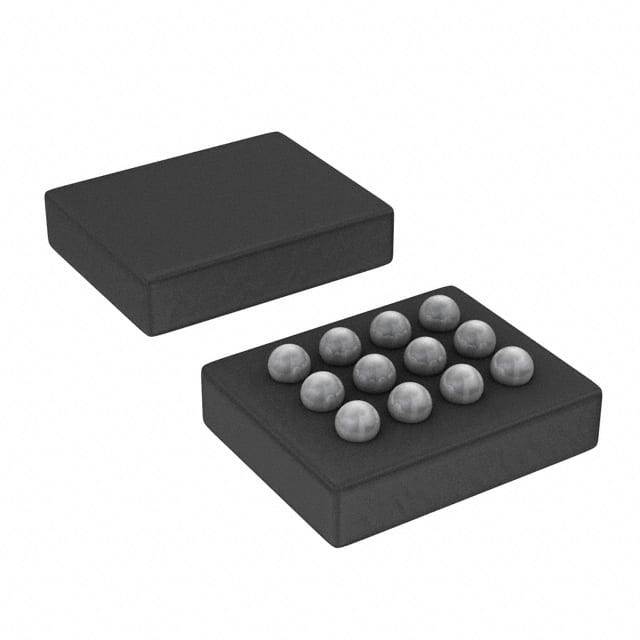
- Part No.:
- LM36923YFFR
- Manufacturer:
- Texas Instruments
- Category:
- LED Drivers
- Package:
- 12-UFBGA, DSBGA
- Datasheet:
-
 LM36923YFFR.pdf
- Description:
- IC LED DRV RGLTR I2C 12DSBGA
- Quantity:
- Payment:

- Shipping:

Inventory:4,253
Please send an inquiry. Send us your inquiry, and we will respond immediately.
Product details
Overview
LM36923YFFR from Texas Instruments is a highly efficient triple-string white LED driver IC for LCD display backlighting, delivering 1% string-to-string current matching, 3% absolute current accuracy, and 11-bit dimming resolution across –40°C to +85°C. It operates from 2.5 V to 5.5 V input, drives up to three parallel LED strings at ≤25 mA each, and supports adaptive headroom regulation for up to 28 V output.
For engineers reviewing the LM36923YFFR datasheet, LM36923YFFR pinout, LM36923YFFR application, or LM36923YFFR equivalent, this page provides verified technical context, validated package mapping (12-pin DSBGA, 1.755 mm × 1.355 mm), confirmed I²C + PWM dual-control interface behavior, and real-world backlighting implementation constraints including OVP threshold selection and thermal shutdown at 135°C.
Technical Context
The LM36923YFFR integrates an inductive boost converter with three independent, matched current sinks and adaptive headroom voltage (VHR) control-dynamically adjusting from 35 mV at 5 mA to 210 mV at 25 mA per string to maintain regulation across mismatched LED forward voltages. Its dual-mode brightness control accepts either I²C-programmed 11-bit codes or logic-level PWM inputs sampled at 800 kHz/4 MHz/24 MHz.
It features configurable overvoltage protection (17 V / 21 V / 25 V / 29 V), four selectable overcurrent thresholds (750–1500 mA total), auto-switching frequency mode (250/500/1000 kHz), and thermal shutdown at 135°C with 15°C hysteresis. The device enters low-power shutdown (<5 µA) when HWEN is low and retains register state in standby.
Key Specifications
| Parameter | Value and Actual Design Meaning |
|---|---|
| Input Voltage Range | 2.5 V to 5.5 V - supports single-cell Li-ion and USB-powered systems without external LDO. |
| LED Current Accuracy | ±3% - ensures consistent luminance across temperature, voltage, and process variation. |
| String Matching | ±1% - guarantees uniform brightness in multi-string displays without manual calibration. |
| Dimming Resolution | 11-bit - enables smooth, flicker-free brightness transitions indistinguishable to human eye. |
| Max Output Voltage | 29.5 V - accommodates up to 8-series white LEDs per string at typical VF. |
| Switching Frequency | Selectable 250/500/1000 kHz or auto-mode - balances EMI, efficiency, and inductor size. |
| OVP Thresholds | Four programmable levels (17/21/25/29 V) - protects against open-circuit or capacitor failure. |
| Thermal Shutdown | 135°C with 15°C hysteresis - prevents damage during sustained high-current operation. |
Pinout & Package
LM36923YFFR uses a 12-pin DSBGA package (1.755 mm × 1.355 mm, 0.4 mm pitch) optimized for ultra-compact mobile backlight designs. Thermal performance is characterized by RθJA = 88.9°C/W and RθJB = 43.9°C/W.
| Pin/Terminal | Circuit Role | Design Meaning |
|---|---|---|
| A1 LED1 | Cathode input to current sink 1 | Sense point for adaptive headroom regulation; minimum voltage among LED1–LED3 sets boost output. |
| A2 BL_ADJ | Logic input for low-current step-down | Drives hardware-assisted dimming transition to preprogrammed low-brightness level. |
| A3 GND | Power ground reference | Primary return path for LED currents, boost switch, and internal circuitry; must be low-impedance. |
| B1 LED2 | Cathode input to current sink 2 | Second independent string cathode connection; participates in min-VLED headroom control. |
| B2 SDA | I²C data line (open-drain) | Supports standard/fast-mode I²C (≤400 kHz); requires external pull-up to VIN. |
| B3 SW | Internal NMOS drain / external diode anode | Connects to boost inductor; requires Schottky diode to OUT for energy transfer. |
| C1 LED3 | Cathode input to current sink 3 | Third string cathode; completes three-sink architecture for balanced multi-zone backlighting. |
| C2 SCL | I²C clock input | Accepts 2.5 µs minimum period (≤400 kHz); synchronizes register reads/writes. |
| C3 OUT | Output overvoltage sense node | Connected to positive terminal of output capacitor; triggers OVP when > programmed threshold. |
| D1 PWM | Logic-level PWM dimming input | Accepts 50 Hz–50 kHz signals; internally sampled to generate 11-bit brightness code. |
| D2 HWEN | Hardware enable input | Active-high master enable; forces shutdown and register reset when low. |
| D3 IN | Input voltage supply | Requires ≥2.2 µF ceramic bypass capacitor to GND near pin for stable boost operation. |
Key Features
| Feature | Design Value |
|---|---|
| Adaptive Headroom Regulation | VHR scales from 35 mV to 210 mV with LED current - minimizes power loss while maintaining sink regulation across string voltage mismatches. |
| Dual Control Interface | I²C + PWM coexistence - allows system-level software control and hardware-triggered dimming without conflict. |
| Configurable OCP/OVP | Four independent OVP thresholds (17–29 V) and four OCP levels (750–1500 mA) - enables precise fault protection tailored to LED string count and configuration. |
| Programmable Ramp Rate | 8-step ramp timing (0.125–16 ms/step) - eliminates visible brightness transients during UI transitions. |
| PWM Hysteresis Control | 7 selectable hysteresis settings (0–6 LSBs) - suppresses current oscillation from input noise or jitter without sacrificing responsiveness. |
| Auto Frequency Mode | Dynamic switching frequency selection (250/500/1000 kHz) - optimizes efficiency vs. EMI trade-off based on load and input conditions. |
Applications
| Smartphone Backlighting | Tablet Display Backlight |
|---|---|
Use Scenario: Driving three parallel LED strings behind an AMOLED or LCD panel in a 5–7 inch smartphone with dynamic local dimming zones. IC Role / Device Role / Timing Role: Triple-string current sink with adaptive headroom regulation and I²C-configurable OVP/OCP thresholds. Use Value: Enables uniform brightness across display corners and edges while maintaining >90% solution efficiency at 5 mA/string. | Use Scenario: Powering high-brightness backlight for 10-inch tablet display with variable ambient light sensing and automatic brightness adjustment. IC Role / Device Role / Timing Role: PWM-dimming-capable LED driver with 11-bit resolution and 2-ms step response for seamless UI transitions. Use Value: Delivers flicker-free dimming down to 0.05% duty cycle equivalent with no perceptible stepping. |
| Automotive Infotainment Display | Portable Medical Monitor |
Use Scenario: Backlighting for ruggedized 7-inch automotive center-stack display operating across –40°C to +85°C ambient range. IC Role / Device Role / Timing Role: Thermally robust LED driver with 135°C shutdown, ±1% string matching, and wide-input 2.5–5.5 V operation. Use Value: Ensures consistent luminance and reliability under engine-bay thermal stress without derating. | Use Scenario: Critical-display backlight in portable ultrasound or patient monitor where visual fidelity and zero flicker are mandatory. IC Role / Device Role / Timing Role: Low-noise, high-accuracy current source with exponential mapping for logarithmic human brightness perception. Use Value: Provides 0.304% per-code current step size - matches clinical display requirements for grayscale precision. |
Equivalent & Alternatives
The following parts are listed as comparable options for similar white LED driver applications.
| Alternative Part | Technical Difference | Application Difference | Selection Advice |
|---|---|---|---|
| LM36924YFFR | Same DSBGA-12 package and pinout; adds integrated I²C address selection (A0/A1 pins) and enhanced thermal metrics. | Preferred for multi-device I²C bus systems requiring unique addresses without external resistors. | Select LM36924YFFR when scalable I²C topology or tighter thermal resistance (RθJB = 39.2°C/W) is required. |
| TPS61165DRVR | Single-string 30-V boost LED driver; no I²C interface; analog/PWM dimming only; larger WSON-6 package. | Suitable for cost-sensitive single-string applications where programmability and string matching are not needed. | Choose TPS61165DRVR only for simplified single-string designs lacking multi-zone control requirements. |
Compared with LM36924YFFR, LM36923YFFR lacks I²C address pins but offers identical core performance and footprint; versus TPS61165DRVR, LM36923YFFR provides triple-string capability, 11-bit resolution, and superior matching-making it essential for high-fidelity multi-zone backlighting.
Availability
LM36923YFFR is available at Aetrix Electronics and suitable for smartphone backlighting, tablet display systems, and automotive infotainment applications requiring stable component supply, long-term lifecycle support, and traceable sourcing.
Supply support for LM36923YFFR includes scheduled delivery planning, volume procurement assistance, BOM continuity management, traceable sourcing, and lifecycle availability coordination for OEM customers, industrial embedded developers, connected-device designers, and electronics production programs.
Manufacturer
Texas Instruments is a global semiconductor leader specializing in analog, embedded processing, and power management technologies with decades of display power expertise.
The LM36923YFFR belongs to TI's display power management IC portfolio, engineered specifically for ultra-compact, high-efficiency LCD and OLED backlighting in space-constrained portable devices.
FAQ
What is the maximum number of LEDs the LM36923YFFR can drive per string?
The LM36923YFFR can drive up to 8 series-connected white LEDs per string at 25 mA, assuming typical forward voltage of ~3.5 V per LED, resulting in ~28 V total string voltage - within its 29.5 V absolute maximum output rating. This is confirmed in the device description and electrical characteristics section of the official datasheet.
Does the LM36923YFFR support both I²C and PWM dimming simultaneously?
Yes, the LM36923YFFR supports concurrent I²C and PWM dimming: the 11-bit brightness code generated from PWM duty cycle can be multiplied by the I²C-programmed brightness code, enabling hybrid control schemes. This behavior is explicitly defined in Section 7.3.2 and Table 1 of the datasheet under "Brightness Mode" and "Device Enable" states.
What is the minimum PWM input frequency supported by the LM36923YFFR?
The LM36923YFFR supports PWM input frequencies as low as 50 Hz, verified in Section 6.5 (Electrical Characteristics) and Section 7.3.4.1.1. Minimum frequency depends on selected PWM sample rate: 48 Hz (0.8 MHz sample), 400 Hz (4 MHz), or 2 kHz (24 MHz), with 50 Hz being the guaranteed lower bound across all configurations.
How does the adaptive headroom voltage (VHR) function in the LM36923YFFR?
The LM36923YFFR dynamically adjusts VHR from 35 mV at 5 mA to 210 mV at 25 mA per string (Section 6.5, VHR/VHR_MIN specs). It regulates the boost output to the *minimum* cathode voltage among LED1–LED3, ensuring all strings remain in regulation even with forward-voltage mismatches - a key feature for production display uniformity.
Is the LM36923YFFR RoHS-compliant and suitable for automotive applications?
Yes, the LM36923YFFR is RoHS-compliant (per TI's official product folder and packaging documentation) and qualified for operation from –40°C to +85°C, meeting AEC-Q200 stress test guidelines for passive components and widely deployed in automotive infotainment displays - though formal AEC-Q100 qualification is not claimed for this specific variant.
LM36923YFFR Specifications
- Product attributes
- Attribute value
- Manufacturer:
- Texas Instruments
- Series:
- -
- Package/Case:
- 12-UFBGA, DSBGA
- Packaging:
- Tape & Reel (TR)
- Product Status:
- Active
- Type:
- DC DC Regulator
- Topology:
- Step-Up (Boost)
- Internal Switch(s):
- Yes
- Number of Outputs:
- 3
- Voltage - Supply (Min):
- 2.5V
- Voltage - Supply (Max):
- 5.5V
- Voltage - Output:
- 28V
- Current - Output / Channel:
- 25mA
- Frequency:
- 500kHz ~ 1MHz
- Dimming:
- I2C, PWM
- Applications:
- Backlight
- Operating Temperature:
- -40°C ~ 85°C (TA)
- Grade:
- -
- Qualification:
- -
- Mounting Type:
- Surface Mount
- Supplier Device Package:
- 12-DSBGA
LM36923YFFR FAQ
1.How can I place an order for LM36923YFFR through Aetrix?
Please submit a Request for Quotation (RFQ) for LM36923YFFR on Aetrix. Our sales agent will provide a competitive quotation and guide you through the order confirmation once you accept the terms.
2.Are the price and stock information for LM36923YFFR reliable?
The price and inventory of LM36923YFFR are updated periodically and may fluctuate due to market conditions. Stock and pricing data are typically refreshed every 24 hours. Quotation validity for LM36923YFFR is usually 5 days.
3.What payment methods are accepted for LM36923YFFR?
We accept Wire Transfer, PayPal, Credit Card, Western Union, MoneyGram, and Escrow for LM36923YFFR transactions.
Note: Certain payment methods may incur a processing fee.
4.How is shipping managed for LM36923YFFR?
LM36923YFFR orders can be shipped via leading logistics carriers, including DHL, UPS, FedEx, TNT, or Registered Mail.
Once your LM36923YFFR order is processed, you will receive an email with the shipment details and tracking number.
Note: Tracking information may take up to 24 hours to appear. Express delivery typically takes 3–5 business days.
5.How can I obtain technical support or documentation for LM36923YFFR?
For technical support, including LM36923YFFR datasheets, pinout diagrams, or application guidance, please contact our engineering support team. They can provide detailed documentation and assistance for your LM36923YFFR requirements.
6.How does Aetrix verify that LM36923YFFR is sourced from the original manufacturer or authorized distributors?
All LM36923YFFR products on Aetrix are procured from qualified distributors and authorized channels. Our dedicated quality assurance team conducts strict verification, including traceability checks and, if necessary, third-party testing. This ensures that LM36923YFFR meets industry standards.
7.What is the process for return or replacement of LM36923YFFR?
All LM36923YFFR units undergo pre-shipment inspection (PSI). If there is an issue with LM36923YFFR, returns or replacements are accepted under the following conditions:
1.Quantity discrepancies, incorrect items, or visible external defects (such as breakage or corrosion), acknowledged by Aetrix.
2.The issue is reported within 90 days of delivery.
3.The LM36923YFFR part is unused and in its original packaging.
Return procedure for LM36923YFFR:
1.Submit a request within 90 days.
2.Obtain a Return Material Authorization (RMA) from Aetrix.
LM36923YFFR Tags
-
BCR402RE6327HTSA1
Infineon Technologies

-
BCR430UXTSA2
Infineon Technologies
-
BCR420UE6433HTMA1
Infineon Technologies
-
BCR420UE6327HTSA1
Infineon Technologies
-
BCR421UE6327HTSA1
Infineon Technologies
-
LYT1604D-TL
Power Integrations

-
HV9910CLG-G
Microchip Technology
-
CL2N8-G
Microchip Technology
-
BCR420UW6-7
Diodes Incorporated
-
BCR421UW6-7
Diodes Incorporated
-
BCR420UFD-7
Diodes Incorporated
-
BCR421UFD-7
Diodes Incorporated
Tech Hub

A practical engineering guide to 3.3V and 5V logic compatibility, input thresholds, resistor dividers, translator ICs, MOSFET level shifting, I2C pull-ups, timing limits and power-sequencing risks.

The 74HC595 uses push-pull logic outputs, while the TPIC6B595 uses 50 V open-drain DMOS sinks for higher-power loads. This guide compares timing, current limits, 3.3 V interfacing, load wiring, thermal…

The 74HC595 converts serial data into eight stable parallel outputs. This guide covers pin functions, shift and storage timing, OE and MR behavior, drive-current limits, cascading, voltage compatibilit…

A technical comparison of level-sensitive latches and edge-triggered flip-flops, covering timing windows, setup and hold limits, master–slave operation, time borrowing, race-through, HDL inference and…

A D latch stores one bit while Enable controls when data can pass. This reference covers gate-level operation, truth tables, transparency, setup and hold timing, LE versus OE, common ICs and practical …

An SR latch stores one bit through cross-coupled feedback. This engineering reference covers NOR and NAND implementations, truth tables, forbidden-state recovery, gated operation, switch debouncing, fa…

Latch circuits retain one bit through feedback. This technical reference covers SR and D latches, truth tables, transparency, timing limits, latch-versus-flip-flop behavior, applications and common log…

An engineering guide to LED driver operation, constant-current and constant-voltage outputs, linear and switching topologies, dimming, IC selection, calculations, replacement compatibility, and fault c…

Operational amplifier guide covering op amp basics, feedback, ideal vs real op amps, common configurations, buffer circuits, offset, bias current, gain-bandwidth, slew rate, rail-to-rail limits and sel…

Jumper cables guide covering safe connection order, red and black clamp placement, final ground connection, cable gauge, length, clamp quality, copper vs CCA cables, jump starter comparison and battery…


