
 My Inquiry
 My Account


Texas Instruments LM3916N-1/NOPB
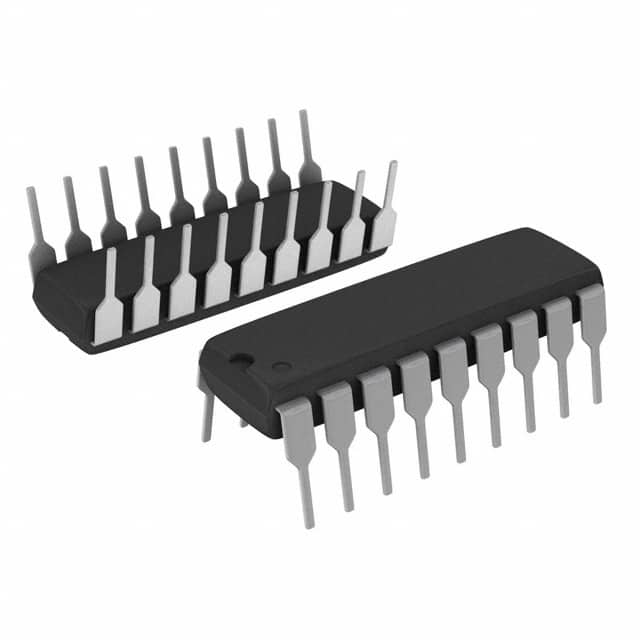
- Part No.:
- LM3916N-1/NOPB
- Manufacturer:
- Texas Instruments
- Category:
- Display Drivers
- Package:
- 18-DIP (0.300", 7.62mm)
- Datasheet:
-
 LM3916N-1/NOPB.pdf
- Description:
- IC DRVR DOT/BAR DISPLAY 18DIP
- Quantity:
- Payment:

- Shipping:

Inventory:3,983
Please send an inquiry. Send us your inquiry, and we will respond immediately.
Product details
Overview
LM3916N-1/NOPB from Texas Instruments is a monolithic logarithmic dot/bar display driver IC that senses analog input voltage and drives ten open-collector NPN outputs for LEDs, LCDs, or vacuum fluorescent displays. It operates from 3V to 25V single supply, features ±35V input tolerance, 0.2 dB typical accuracy, and user-selectable bar/dot mode via pin 9 - used in audio VU meters, power level indicators, and signal monitoring systems.
For engineers reviewing the LM3916N-1/NOPB datasheet, LM3916N-1/NOPB pinout, LM3916N-1/NOPB application, or LM3916N-1/NOPB equivalent, key selection considerations include its logarithmic 3 dB/step threshold spacing, programmable LED current (1–30 mA), internal 1.25 V reference, floating 10-step divider, and operation down to ground with no input protection required.
Technical Context
The LM3916N-1/NOPB integrates a high-impedance input buffer, precision 10-step logarithmic voltage divider (8–17 kΩ total), and ten matched comparators referenced to the divider. Its input accepts signals from ground to within 1.5 V of V+, with ±35 V fault tolerance on pin 5.
Each output is a current-regulated open-collector NPN transistor; LED current is set by reference load current (≈10× IREF) and remains stable across 2–17 V LED supply range. Mode selection (bar vs. dot) is controlled by pin 9 voltage relative to V+: ≥(V+ −20 mV) enables bar mode; ≤(V+ −200 mV) or open circuit enables dot mode.
Key Specifications
| Parameter | Value and Actual Design Meaning |
|---|---|
| Display Type | Logarithmic 10-segment dot/bar display with 3 dB per step resolution |
| Supply Voltage Range | 3 V to 25 V single supply - supports battery-powered and industrial rail systems |
| Input Voltage Range | 0 V to (V+ −1.5 V); withstands ±35 V transients without damage or false outputs |
| Reference Voltage | 1.25 V nominal between pins 7 and 8 - adjustable from 1.2 V to 12 V independent of supply |
| LED Current Range | Programmable 1 mA to 30 mA per output - eliminates external current-limiting resistors |
| Accuracy | ±0.25 dB typical absolute accuracy at mid-scale; ±1 dB max at −20 dB full-scale |
| Operating Temperature | 0°C to +70°C - qualified for commercial-grade embedded instrumentation |
Pinout & Package
LM3916N-1/NOPB is housed in an 18-lead plastic dual in-line package (PDIP-NFK), with 0.3-inch body width and standard through-hole mounting. Pin 1 is top-left corner when notch faces up.
| Pin/Terminal | Circuit Role | Design Meaning |
|---|---|---|
| Pin 1 | LED #10 Anode Reference / Carry Output | Provides auxiliary current path for cascaded dot-mode operation; sinks ~100 μA to disable LED #10 when higher device activates |
| Pin 2 | Ground (GND) | Signal and reference return node - must be star-connected to minimize noise-induced errors in bar mode |
| Pin 3 | Positive Supply (V+) | Primary power input (3–25 V); supplies internal circuitry and reference; separate from LED supply (VLED) |
| Pin 4 | Divider Low Reference (VRLO) | Bottom of internal 10-step resistor ladder - tied to GND or external negative reference |
| Pin 5 | Analog Input (VIN) | High-Z buffered input (25–100 nA bias); accepts signals down to GND; protected against ±35 V faults |
| Pin 6 | Divider High Reference (VRHI) | Top of internal resistor ladder - connected to reference voltage or external positive reference |
| Pin 7 | Reference Output (REF OUT) | Source of 1.25 V reference; current drawn here sets LED drive current (ILED ≈ 10 × IREF) |
| Pin 8 | Reference Adjust (REF ADJ) | Sinks adjust current (75–120 μA); forms voltage divider with R1/R2 to scale reference from 1.2 V to 12 V |
| Pin 9 | Mode Select (MODE) | Determines display mode: tied to V+ → bar graph; open or pulled low → moving dot; enables multi-device cascading |
| Pins 10–18 | LED Outputs (OUT1–OUT10) | Open-collector NPN drivers - sink current to illuminate external LEDs; each regulates current independently |
Key Features
| Feature | Design Value |
|---|---|
| Logarithmic scaling | Fixed 3 dB/step thresholds - matches human perception of audio level and enables 70 dB dynamic range with cascading |
| Bar/dot mode select | Single-pin (pin 9) configuration - no external logic needed; supports both visual display styles in same hardware |
| Current-regulated outputs | 10× reference load current replication - ensures uniform LED brightness across supply and temperature variations |
| Floating voltage divider | Internally generated 10-step ladder referenced between VRLO and VRHI - allows arbitrary reference point placement (e.g., −5 V to +5 V) |
| Input fault tolerance | ±35 V survivability on pin 5 - eliminates need for external clamping diodes or series resistors in most audio applications |
Applications
| Audio VU Meter | Power Level Indicator |
|---|---|
Use Scenario: Real-time monitoring of line-level or speaker-level audio signals in mixing consoles, amplifiers, and broadcast equipment. IC Role / Device Role / Timing Role: Logarithmic voltage-to-LED mapping engine converting instantaneous or rectified AC input into 10-segment visual indication aligned with ANSI C165 VU standards. Use Value: Provides fast-responding, flicker-resistant display with 0.2 dB accuracy - replaces electromechanical meters with higher reliability and visibility. | Use Scenario: Visual indication of DC power supply output level or battery charge state in test equipment and portable instruments. IC Role / Device Role / Timing Role: Analog voltage monitor driving LEDs directly from 3–25 V rails; uses internal reference and divider to scale 0–12 V input to full-scale display. Use Value: Eliminates external op-amps and DACs; enables compact, low-BOM designs with stable brightness over temperature and supply variation. |
| Signal Integrity Monitor | Peak Detection System |
Use Scenario: Monitoring RF detector output or sensor amplifier signals in communication receivers and industrial control panels. IC Role / Device Role / Timing Role: High-impedance input buffer and comparator array translating small-signal variations (down to 450 mV threshold) into discrete LED activation. Use Value: Tolerates ±35 V input faults and operates down to ground - robust for noisy industrial environments without signal conditioning. | Use Scenario: Peak program meter (PPM) implementation meeting DIN 45406 spec for transient detection in professional audio gear. IC Role / Device Role / Timing Role: Dot-mode driver receiving rectified/filtered input from precision half-wave peak detector; leverages logarithmic steps for accurate dB representation. Use Value: Enables 1.7 ms attack and 650 ms decay response via external RC network - meets broadcast-grade PPM timing without microcontroller intervention. |
Equivalent & Alternatives
The following parts are listed as comparable options for similar logarithmic display driver applications.
| Alternative Part | Technical Difference | Application Difference | Selection Advice |
|---|---|---|---|
| LM3915N-1/NOPB | Linear 3 dB/step scaling replaced with logarithmic 3 dB/step; identical pinout, supply, and output structure | Better suited for true logarithmic audio measurement (e.g., VU/PPM); LM3915 offers finer low-end resolution below −10 dB | Select LM3915N-1/NOPB when precise sub-1 V signal tracking or cascaded wide-dynamic-range meters are required. |
| LM3914N-1/NOPB | Linear 1 V/step threshold spacing; same 10-output open-collector architecture and reference programming method | Ideal for linear voltage monitoring (e.g., battery fuel gauges, power supply tracking) where equal dB spacing is not needed | Choose LM3914N-1/NOPB for DC-level visualization tasks requiring uniform step size and simpler calibration. |
Compared with LM3916N-1/NOPB, LM3915N-1/NOPB provides superior low-level accuracy for audio peak detection, while LM3914N-1/NOPB delivers predictable linear scaling for instrumentation - all share identical PDIP-18 packaging and reference programming, enabling drop-in layout reuse across measurement types.
Availability
LM3916N-1/NOPB is available at Aetrix Electronics and suitable for audio instrumentation, power monitoring systems, and industrial signal integrity panels requiring stable component supply and long-term production continuity.
Supply support for LM3916N-1/NOPB includes scheduled delivery planning, volume procurement assistance, BOM continuity management, traceable sourcing, and lifecycle availability coordination for OEM customers, industrial embedded developers, connected-device designers, and electronics production programs.
Manufacturer
Texas Instruments is a global semiconductor leader specializing in analog, embedded processing, and connectivity technologies with over 50 years of innovation in precision analog ICs.
The LM3916N-1/NOPB belongs to TI's legacy analog display driver family designed specifically for replacing mechanical meters with solid-state LED/LCD/VFD visual indicators in audio, test, and industrial equipment.
FAQ
What is the primary function of the LM3916N-1/NOPB in a circuit?
The LM3916N-1/NOPB functions as a dedicated logarithmic dot/bar display driver IC that converts an analog input voltage into a 10-segment visual output. It internally generates a precision 10-step logarithmic voltage divider, compares the input against each threshold, and drives corresponding open-collector outputs to illuminate LEDs or other displays. Its core purpose is to replace analog panel meters with faster, more rugged, and highly visible digital-style indicators - especially in audio level monitoring where human-perceived loudness follows a logarithmic scale. The LM3916N-1/NOPB achieves this without external op-amps or DACs, using only passive components for full-scale adjustment and brightness control.
How does the LM3916N-1/NOPB achieve logarithmic scaling, and what is its step resolution?
The LM3916N-1/NOPB achieves logarithmic scaling through a factory-trimmed internal 10-step resistor ladder configured to produce thresholds spaced at precisely 3 dB intervals - meaning each successive LED activates at approximately twice the input voltage (or power) of the prior one. This corresponds to a 3 dB/step resolution across its full dynamic range. Accuracy is typically better than 0.2 dB near mid-scale and holds within ±1 dB at −20 dB full-scale. The logarithmic behavior is fixed in silicon and does not require external configuration; it is intrinsic to the LM3916N-1/NOPB's comparator reference structure and is distinct from the linear LM3914 or the alternate logarithmic LM3915 (which shares the same 3 dB/step but differs in internal offset calibration).
Can the LM3916N-1/NOPB drive LEDs directly without current-limiting resistors?
Yes, the LM3916N-1/NOPB can drive LEDs directly without external current-limiting resistors because each of its ten output pins is a current-regulated open-collector NPN transistor. LED current is programmed by the load current drawn from the REF OUT (pin 7): ILED ≈ 10 × IREF. By selecting appropriate resistor values for the reference voltage divider (R1 and R2), users set IREF and thereby fix ILED across all active outputs - typically between 1 mA and 30 mA. This regulation remains stable over temperature and LED supply voltage (2–17 V), eliminating part-to-part LED brightness variation and simplifying BOM. However, VLED must remain below 7 V unless a series dropping resistor is added to limit IC power dissipation.
What is the role of pin 9 (MODE) on the LM3916N-1/NOPB, and how is it configured for bar vs. dot mode?
Pin 9 (MODE) on the LM3916N-1/NOPB selects between bar graph and moving dot display modes. In bar mode, pin 9 must be connected directly to V+ (pin 3); the internal comparator interprets this as ≥(V+ −20 mV) and activates all outputs up to and including the highest-threshold LED that exceeds the input. In dot mode, pin 9 is left open-circuit (or pulled ≥200 mV below V+), causing only one LED - the one whose threshold is closest to the input - to illuminate. This pin also enables cascading: in multi-device dot-mode configurations, pin 9 of a lower-range device connects to pin 1 of the next higher-range device to coordinate carry logic and prevent ambiguous overlapping illumination. No external logic or timing circuitry is required for either mode.
Is the LM3916N-1/NOPB compatible with modern PCB assembly processes, and what is its package type?
Yes, the LM3916N-1/NOPB is compatible with standard through-hole PCB assembly processes. It is supplied in an 18-lead plastic dual in-line package (PDIP-NFK) with 0.3-inch body width and 0.1-inch lead pitch - a legacy but widely supported through-hole format. While not surface-mount, its PDIP package allows reliable hand-soldering, wave soldering, and automated insertion in legacy and mixed-technology boards. The "NOPB" suffix indicates lead-free (Pb-free) finish per JEDEC J-STD-609, compliant with RoHS directives. Note that the LM3916N-1/NOPB is not offered in SOIC or TSSOP variants; for SMT alternatives, engineers should evaluate functional equivalents like the LM3916NS/NOPB (SOIC-16, not pin-compatible) or redesign around newer display drivers - but the LM3916N-1/NOPB remains actively stocked for repair, replacement, and legacy production.
LM3916N-1/NOPB Specifications
- Product attributes
- Attribute value
- Manufacturer:
- Texas Instruments
- Series:
- -
- Package/Case:
- 18-DIP (0.300", 7.62mm)
- Packaging:
- Tube
- Product Status:
- Obsolete
- Display Type:
- LED, LCD, Vacuum Fluorescent (VF)
- Configuration:
- Dot/Bar Display
- Interface:
- -
- Digits or Characters:
- 10 Steps
- Current - Supply:
- 6.1 mA
- Voltage - Supply:
- 3V ~ 25V
- Operating Temperature:
- 0°C ~ 70°C
- Grade:
- -
- Qualification:
- -
- Mounting Type:
- Through Hole
- Supplier Device Package:
- 18-DIP
LM3916N-1/NOPB FAQ
1.How can I place an order for LM3916N-1/NOPB through Aetrix?
Please submit a Request for Quotation (RFQ) for LM3916N-1/NOPB on Aetrix. Our sales agent will provide a competitive quotation and guide you through the order confirmation once you accept the terms.
2.Are the price and stock information for LM3916N-1/NOPB reliable?
The price and inventory of LM3916N-1/NOPB are updated periodically and may fluctuate due to market conditions. Stock and pricing data are typically refreshed every 24 hours. Quotation validity for LM3916N-1/NOPB is usually 5 days.
3.What payment methods are accepted for LM3916N-1/NOPB?
We accept Wire Transfer, PayPal, Credit Card, Western Union, MoneyGram, and Escrow for LM3916N-1/NOPB transactions.
Note: Certain payment methods may incur a processing fee.
4.How is shipping managed for LM3916N-1/NOPB?
LM3916N-1/NOPB orders can be shipped via leading logistics carriers, including DHL, UPS, FedEx, TNT, or Registered Mail.
Once your LM3916N-1/NOPB order is processed, you will receive an email with the shipment details and tracking number.
Note: Tracking information may take up to 24 hours to appear. Express delivery typically takes 3–5 business days.
5.How can I obtain technical support or documentation for LM3916N-1/NOPB?
For technical support, including LM3916N-1/NOPB datasheets, pinout diagrams, or application guidance, please contact our engineering support team. They can provide detailed documentation and assistance for your LM3916N-1/NOPB requirements.
6.How does Aetrix verify that LM3916N-1/NOPB is sourced from the original manufacturer or authorized distributors?
All LM3916N-1/NOPB products on Aetrix are procured from qualified distributors and authorized channels. Our dedicated quality assurance team conducts strict verification, including traceability checks and, if necessary, third-party testing. This ensures that LM3916N-1/NOPB meets industry standards.
7.What is the process for return or replacement of LM3916N-1/NOPB?
All LM3916N-1/NOPB units undergo pre-shipment inspection (PSI). If there is an issue with LM3916N-1/NOPB, returns or replacements are accepted under the following conditions:
1.Quantity discrepancies, incorrect items, or visible external defects (such as breakage or corrosion), acknowledged by Aetrix.
2.The issue is reported within 90 days of delivery.
3.The LM3916N-1/NOPB part is unused and in its original packaging.
Return procedure for LM3916N-1/NOPB:
1.Submit a request within 90 days.
2.Obtain a Return Material Authorization (RMA) from Aetrix.
LM3916N-1/NOPB Tags
-
PCA8561AHN/AY
NXP Semiconductors
-
SN74LS47N
Texas Instruments

-
PCF85176T/1Y
NXP Semiconductors
-
PCF85176H/1,518
NXP Semiconductors
-
BU9796AMUV-E2
Rohm Semiconductor
-
PCA85176H/Q900/1,5
NXP Semiconductors
-
PCF8537AH/1,518
NXP Semiconductors
-
LM3914VX/NOPB
Texas Instruments
-
PCF85134HL/1,118
NXP Semiconductors
-
AS1115-BSST
ams-OSRAM USA INC.
-
PCA8534AH/Q900/1,5
NXP Semiconductors
-
LM3914V/NOPB
Texas Instruments
Tech Hub

A practical engineering guide to 3.3V and 5V logic compatibility, input thresholds, resistor dividers, translator ICs, MOSFET level shifting, I2C pull-ups, timing limits and power-sequencing risks.

The 74HC595 uses push-pull logic outputs, while the TPIC6B595 uses 50 V open-drain DMOS sinks for higher-power loads. This guide compares timing, current limits, 3.3 V interfacing, load wiring, thermal…

The 74HC595 converts serial data into eight stable parallel outputs. This guide covers pin functions, shift and storage timing, OE and MR behavior, drive-current limits, cascading, voltage compatibilit…

A technical comparison of level-sensitive latches and edge-triggered flip-flops, covering timing windows, setup and hold limits, master–slave operation, time borrowing, race-through, HDL inference and…

A D latch stores one bit while Enable controls when data can pass. This reference covers gate-level operation, truth tables, transparency, setup and hold timing, LE versus OE, common ICs and practical …

An SR latch stores one bit through cross-coupled feedback. This engineering reference covers NOR and NAND implementations, truth tables, forbidden-state recovery, gated operation, switch debouncing, fa…

Latch circuits retain one bit through feedback. This technical reference covers SR and D latches, truth tables, transparency, timing limits, latch-versus-flip-flop behavior, applications and common log…

An engineering guide to LED driver operation, constant-current and constant-voltage outputs, linear and switching topologies, dimming, IC selection, calculations, replacement compatibility, and fault c…

Operational amplifier guide covering op amp basics, feedback, ideal vs real op amps, common configurations, buffer circuits, offset, bias current, gain-bandwidth, slew rate, rail-to-rail limits and sel…

Jumper cables guide covering safe connection order, red and black clamp placement, final ground connection, cable gauge, length, clamp quality, copper vs CCA cables, jump starter comparison and battery…


