
 My Inquiry
 My Account


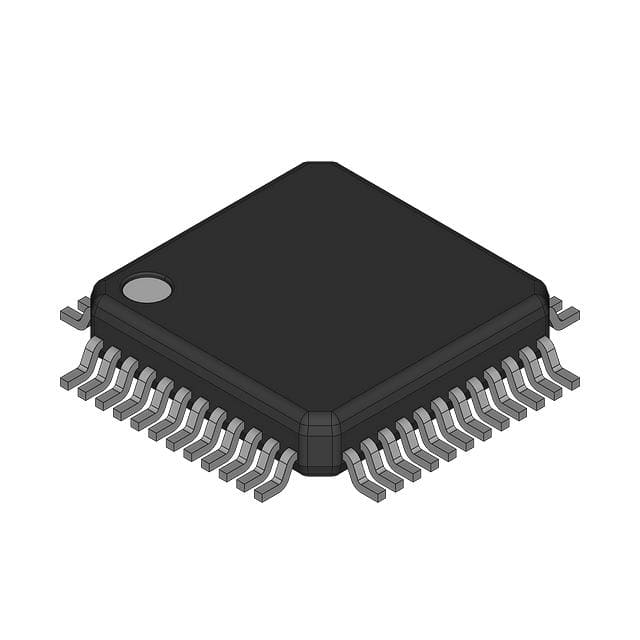
Texas Instruments LM4546BVHX
- Part No.:
- LM4546BVHX
- Manufacturer:
- Texas Instruments
- Category:
- CODECS
- Package:
- 48-LQFP
- Datasheet:
-
 LM4546BVHX.pdf
- Description:
- IC AUDIO CODEC 2MULTICH 48-LQFP
- Quantity:
- Payment:

- Shipping:

Inventory:2,807
Please send an inquiry. Send us your inquiry, and we will respond immediately.
Product details
Overview
LM4546BVHX from Texas Instruments is an AC '97 Rev 2.1–compliant multi-channel audio codec featuring dual 18-bit sigma-delta ADCs and DACs, integrated analog mixers with independent gain/attenuation/mute per input, and Texas Instruments' 3D Sound stereo enhancement circuitry. It supports sample rate conversion from 4 kHz to 48 kHz in 1 Hz increments and delivers 90 dB ADC dynamic range, 89 dB DAC dynamic range, and 97 dB analog mixer dynamic range for desktop PC audio systems with deterministic AC Link timing.
For engineers reviewing the LM4546BVHX datasheet, LM4546BVHX pinout, LM4546BVHX application, or LM4546BVHX equivalent, this device is selected for high-fidelity PC audio subsystems requiring AC Link interface compliance, simultaneous stereo/mono analog path control, low THD+N (0.01% DAC, 0.013% ADC), and extended temperature operation (−40°C to +85°C).
Technical Context
The LM4546BVHX implements a fully AC Link–compatible digital interface with BIT_CLK at 12.288 MHz, SYNC at 48 kHz, and deterministic frame-aligned data transfer across SDATA_IN (codec-to-controller) and SDATA_OUT (controller-to-codec). Its analog signal chain includes three stereo input paths (LINE_IN, CD, AUX) plus two mono mic inputs (MIC1/MIC2) with programmable 0 dB/20 dB boost amplifiers, all routed through dual independent mixers (MIX1 and MIX2) feeding stereo LINE_OUT and mono MONO_OUT outputs.
Sample rate conversion is implemented separately for ADC and DAC paths with 1 Hz resolution over 4–48 kHz, enabling asynchronous audio streaming without external PLLs. The device supports up to eight simultaneous channels on Input Frames and dual-stream Output Frames in extended AC Link configurations, and integrates TI's 3D Sound enhancement circuitry that operates on stereo mix signals prior to master volume attenuation.
Key Specifications
| Parameter | Value and Actual Design Meaning |
|---|---|
| ADC Resolution | 18-bit sigma-delta - enables 90 dB typical dynamic range and −95 dB crosstalk for high-SNR recording paths |
| DAC Resolution | 18-bit sigma-delta - delivers 89 dB typical dynamic range and 0.01% THD+N at 1 kHz for clean playback output |
| Sample Rate Range | 4 kHz to 48 kHz in 1 Hz steps - supports precise asynchronous SRC for mixed-rate audio sources without jitter accumulation |
| Analog Supply Range | 4.2 V to 5.5 V AVDD - compatible with standard 5 V PC power rails and tolerant of ±5% regulation variation |
| Digital Supply Options | 3.0 V to 5.5 V DVDD - supports both 3.3 V and 5 V logic interfaces, simplifying integration with legacy or modern controllers |
| Operating Temperature | −40°C ≤ TA ≤ +85°C - qualified for industrial-grade PC add-in cards and embedded motherboard audio subsystems |
| AC Link Timing | BIT_CLK = 12.288 MHz, SYNC = 48 kHz - ensures strict compliance with AC '97 Rev 2.1 frame structure and controller interoperability |
Pinout & Package
LQFP-48 package (PT0048A), 7 mm × 7 mm, 0.5 mm pitch, thermally enhanced with exposed thermal pad (pin 48 = AVDD, not ground). Pin mapping validated per TI SNOSAI4F Rev May 2013 datasheet Figure 6 and Table 1–3.
| Pin/Terminal | Circuit Role | Design Meaning |
|---|---|---|
| LINE_IN_L (23), LINE_IN_R (24) | Stereo line input | 1 Vrms nominal analog inputs selectable into left/right ADC paths or MIX1; gain adjustable from +12 dB to −34.5 dB in 1.5 dB steps |
| MIC1 (21), MIC2 (22) | Mono microphone inputs | Support 0 dB or 20 dB programmable boost; output routed to ADC or MIX1; default mute on reset |
| CD_L (18), CD_R (20), CD_GND (19) | Quasi-differential CD input | AC-coupled stereo pair with dedicated reference; rejects common-mode ground noise when properly terminated |
| LINE_OUT_L (35), LINE_OUT_R (36) | Stereo line output | 1 Vrms nominal outputs driven from MIX2; master volume control (0 dB to −46.5 dB, 1.5 dB steps) with mute |
| MONO_OUT (37) | Mono output | Summed mono output from MIC1/MIC2 (post-boost) or stereo mix; 3D Sound enhancement disableable via register bit D13 |
| SDATA_IN (8), SDATA_OUT (5) | AC Link serial I/O | SDATA_IN carries ADC data/status to controller; SDATA_OUT carries DAC data/control from controller; sampled on BIT_CLK edges |
| BIT_CLK (6), SYNC (10), RESET# (11) | AC Link timing & control | BIT_CLK = 12.288 MHz clock; SYNC marks 256-BIT_CLK frames; RESET# active-low cold reset initializes registers and clears test modes |
| XTAL_IN (2), XTAL_OUT (3) | 24.576 MHz crystal oscillator | Drives internal PLL; supports fundamental-mode crystals with 33 pF load caps; unused in secondary codec mode |
Key Features
| Feature | Design Value |
|---|---|
| AC '97 Rev 2.1 compliance | Fully implements AC Link protocol including frame synchronization, slot allocation, and register access - ensures plug-and-play compatibility with Intel ICH and compatible controllers |
| Independent ADC/DAC sample rate control | Separate 1 Hz–granularity programming for ADC and DAC clocks - eliminates need for external clock synthesizers in multi-rate audio systems |
| Dual analog mixer architecture (MIX1 + MIX2) | MIX1 processes individual inputs (CD, LINE_IN, MIC) before 3D enhancement; MIX2 combines final stereo signal for LINE_OUT with master volume control |
| Texas Instruments 3D Sound enhancement | Hardware-based stereo widening applied to MIX1 output - configurable via register bit D13; no CPU overhead or latency penalty |
| Advanced power management | Digital shutdown current <19 µA, analog shutdown <70 µA - enables low-power suspend states while retaining configuration in registers |
Applications
| Desktop PC Audio Subsystem | PCI Audio Add-in Card |
|---|---|
Use Scenario: Integrated audio solution on ATX motherboard with AC Link interface to southbridge. IC Role / Device Role / Timing Role: Primary AC '97 codec handling all analog I/O, sample rate conversion, and mixer functions; provides deterministic BIT_CLK and SYNC timing to controller. Use Value: Eliminates need for discrete op-amps, PLLs, and level-shifting circuitry; reduces BOM count by integrating 97 dB mixer DR and 18-bit converters in single LQFP-48 package. |
Use Scenario: High-fidelity audio expansion card supporting multi-channel input routing and 3D playback enhancement. IC Role / Device Role / Timing Role: Standalone codec operating in primary mode with dedicated 24.576 MHz crystal; manages eight-channel input frames and dual-stream output frames via extended AC Link. Use Value: Enables simultaneous recording from LINE_IN, MIC1, and CD inputs with independent gain control, while delivering enhanced stereo imaging to LINE_OUT without DSP intervention. |
| Automotive Telematics Head Unit | MDC-Based Portable PC Audio |
Use Scenario: In-vehicle infotainment system requiring robust audio I/O, wide temperature operation, and low THD+N for voice clarity. IC Role / Device Role / Timing Role: Audio front-end codec interfacing with baseband processor via AC Link; handles microphone pre-amplification, echo cancellation reference, and speaker output drive. Use Value: −40°C to +85°C rating and 86 dB mute attenuation ensure reliable operation in cabin environments; 20 dB mic boost supports low-output MEMS microphones. |
Use Scenario: Mobile docking station with integrated audio hub connecting laptop, headset, and external speakers. IC Role / Device Role / Timing Role: Secondary codec in multi-codec AC Link topology; receives dual-stream DAC data from controller and routes to MONO_OUT and LINE_OUT with independent volume control. Use Value: Supports concurrent headphone (stereo) and speaker (mono) output with separate attenuation; 3D Sound enhances spatial perception on portable form-factor speakers. |
Equivalent & Alternatives
The following parts are listed as comparable options for similar AC '97 audio codec applications.
| Alternative Part | Technical Difference | Application Difference | Selection Advice |
|---|---|---|---|
| AD1885ASTZ | 16-bit ADC/DAC, 92 dB mixer DR, no integrated 3D enhancement, requires external 12.288 MHz clock source | Lacks hardware 3D Sound; lower resolution limits dynamic range in high-fidelity recording paths | Select when cost sensitivity outweighs 3D enhancement need and external clock distribution is acceptable |
| ALC202A | 18-bit ADC/DAC, 90 dB mixer DR, AC '97 Rev 2.2 compliant, integrated jack sensing, no 3D Sound | Supports auto-detect headphone insertion but omits TI's 3D stereo widening; different register map and initialization sequence | Prefer for new designs requiring jack detection; avoid if existing firmware relies on LM4546B-specific 3D control bit D13 |
Compared with AD1885ASTZ and ALC202A, the LM4546BVHX uniquely integrates deterministic 1 Hz–granularity sample rate conversion, TI 3D Sound hardware acceleration, and dual-mixer signal routing - making it optimal for legacy PC audio platforms where AC Link timing predictability and stereo enhancement are design-critical.
Availability
LM4546BVHX is available at Aetrix Electronics and suitable for desktop PC audio subsystems, PCI add-in cards, automotive telematics head units, and MDC-based portable PC audio requiring stable component supply, long-lifecycle support, and guaranteed AC '97 Rev 2.1 compliance.
Supply support for LM4546BVHX includes scheduled delivery planning, volume procurement assistance, BOM continuity management, traceable sourcing, and lifecycle availability coordination for OEM customers, industrial embedded developers, connected-device designers, and electronics production programs.
Manufacturer
Texas Instruments is a global semiconductor company specializing in analog, embedded processing, and connectivity technologies, with leadership in audio signal chain ICs since the 1990s.
The LM4546BVHX belongs to TI's AC '97 audio codec product line, designed specifically to replace discrete analog audio components in PC platforms while meeting PC99 and Microsoft WHQL certification requirements for AC Link–based audio subsystems.
FAQ
What is the function of the CD_GND pin on the LM4546BVHX?
The CD_GND pin (pin 19) serves as the AC signal reference for the CD_L and CD_R stereo inputs. It is not a DC ground but must be AC-coupled to the source ground using a 1 µF capacitor to enable quasi-differential operation and improve common-mode noise rejection. Leaving CD_GND floating degrades SNR and violates the LM4546BVHX's specified input performance.
Does the LM4546BVHX support both primary and secondary codec modes?
Yes, the LM4546BVHX supports both primary and secondary codec modes via ID0# (pin 45) and ID1# (pin 46). In primary mode, it generates BIT_CLK internally from its 24.576 MHz crystal; in secondary mode, it accepts BIT_CLK from a primary codec. The identity pins configure four distinct addresses (00–11), enabling up to four codecs on a single AC Link bus.
How does the Texas Instruments 3D Sound feature operate in the LM4546BVHX?
The LM4546BVHX implements TI's 3D Sound enhancement in hardware at the MIX1 stage, applying stereo widening to signals before they enter MIX2. It is enabled/disabled via bit D13 in the General Purpose register (20h). When active, it modifies phase and amplitude relationships between left/right channels without introducing latency or requiring host CPU resources.
What are the power supply requirements for the LM4546BVHX?
The LM4546BVHX requires two analog supplies (AVDD = 4.2–5.5 V, AVSS = ground) and two digital supplies (DVDD1/DVDD2 = 3.0–5.5 V, DVSS1/DVSS2 = ground). AVDD powers the ADC/DAC cores and analog mixers; DVDD supplies digital I/O and AC Link interface. Separating analog and digital grounds minimizes coupling noise and maintains 90+ dB dynamic range.
Is the LM4546BVHX pin-compatible with other TI audio codecs like the LM4550?
No, the LM4546BVHX is not pin-compatible with the LM4550. While both are AC '97 codecs, the LM4546BVHX uses a 48-pin LQFP (PT0048A) with dedicated XTAL_IN/XTAL_OUT, dual DVDD/DVSS pairs, and distinct pin assignments for MIC1/MIC2, CD inputs, and 3D control signals. The LM4550 uses a 44-pin TQFP with different power and I/O layout.
LM4546BVHX Specifications
- Product attributes
- Attribute value
- Manufacturer:
- Texas Instruments
- Series:
- -
- Package/Case:
- 48-LQFP
- Packaging:
- Tape & Reel (TR)
- Product Status:
- Obsolete
- Type:
- Audio, AC '97
- Data Interface:
- Serial
- Resolution (Bits):
- 18 b
- Number of ADCs / DACs:
- 2 / 2
- Sigma Delta:
- Yes
- S/N Ratio, ADCs / DACs (db) Typ:
- -
- Dynamic Range, ADCs / DACs (db) Typ:
- 90 / 89
- Voltage - Supply, Analog:
- 4.2V ~ 5.5V
- Voltage - Supply, Digital:
- 3V ~ 5.5V
- Operating Temperature:
- -40°C ~ 85°C
- Grade:
- -
- Qualification:
- -
- Mounting Type:
- Surface Mount
- Supplier Device Package:
- 48-LQFP (7x7)
LM4546BVHX FAQ
1.How can I place an order for LM4546BVHX through Aetrix?
Please submit a Request for Quotation (RFQ) for LM4546BVHX on Aetrix. Our sales agent will provide a competitive quotation and guide you through the order confirmation once you accept the terms.
2.Are the price and stock information for LM4546BVHX reliable?
The price and inventory of LM4546BVHX are updated periodically and may fluctuate due to market conditions. Stock and pricing data are typically refreshed every 24 hours. Quotation validity for LM4546BVHX is usually 5 days.
3.What payment methods are accepted for LM4546BVHX?
We accept Wire Transfer, PayPal, Credit Card, Western Union, MoneyGram, and Escrow for LM4546BVHX transactions.
Note: Certain payment methods may incur a processing fee.
4.How is shipping managed for LM4546BVHX?
LM4546BVHX orders can be shipped via leading logistics carriers, including DHL, UPS, FedEx, TNT, or Registered Mail.
Once your LM4546BVHX order is processed, you will receive an email with the shipment details and tracking number.
Note: Tracking information may take up to 24 hours to appear. Express delivery typically takes 3–5 business days.
5.How can I obtain technical support or documentation for LM4546BVHX?
For technical support, including LM4546BVHX datasheets, pinout diagrams, or application guidance, please contact our engineering support team. They can provide detailed documentation and assistance for your LM4546BVHX requirements.
6.How does Aetrix verify that LM4546BVHX is sourced from the original manufacturer or authorized distributors?
All LM4546BVHX products on Aetrix are procured from qualified distributors and authorized channels. Our dedicated quality assurance team conducts strict verification, including traceability checks and, if necessary, third-party testing. This ensures that LM4546BVHX meets industry standards.
7.What is the process for return or replacement of LM4546BVHX?
All LM4546BVHX units undergo pre-shipment inspection (PSI). If there is an issue with LM4546BVHX, returns or replacements are accepted under the following conditions:
1.Quantity discrepancies, incorrect items, or visible external defects (such as breakage or corrosion), acknowledged by Aetrix.
2.The issue is reported within 90 days of delivery.
3.The LM4546BVHX part is unused and in its original packaging.
Return procedure for LM4546BVHX:
1.Submit a request within 90 days.
2.Obtain a Return Material Authorization (RMA) from Aetrix.
LM4546BVHX Tags
-
NAU88C22YG
Nuvoton Technology Corporation
-
TLV320AIC3100IRHBR
Texas Instruments
-
DA7212-01UM2
Renesas
-
NAU8810YG
Nuvoton Technology Corporation
-
DA7218-00U32
Renesas
-
CMX655DQ6-TR1K
CML Micro
-
SGTL5000XNLA3
NXP Semiconductors
-
TLV320AIC3104IRHBR
Texas Instruments
-
MAX9867EWV+T
Analog Devices Inc./Maxim Integrated
-
MAX9860ETG+T
Analog Devices Inc./Maxim Integrated
-
TLV320AIC3106IRGZR
Texas Instruments
-
SGTL5000XNLA3R2
NXP Semiconductors
Tech Hub

A practical engineering guide to 3.3V and 5V logic compatibility, input thresholds, resistor dividers, translator ICs, MOSFET level shifting, I2C pull-ups, timing limits and power-sequencing risks.

The 74HC595 uses push-pull logic outputs, while the TPIC6B595 uses 50 V open-drain DMOS sinks for higher-power loads. This guide compares timing, current limits, 3.3 V interfacing, load wiring, thermal…

The 74HC595 converts serial data into eight stable parallel outputs. This guide covers pin functions, shift and storage timing, OE and MR behavior, drive-current limits, cascading, voltage compatibilit…

A technical comparison of level-sensitive latches and edge-triggered flip-flops, covering timing windows, setup and hold limits, master–slave operation, time borrowing, race-through, HDL inference and…

A D latch stores one bit while Enable controls when data can pass. This reference covers gate-level operation, truth tables, transparency, setup and hold timing, LE versus OE, common ICs and practical …

An SR latch stores one bit through cross-coupled feedback. This engineering reference covers NOR and NAND implementations, truth tables, forbidden-state recovery, gated operation, switch debouncing, fa…

Latch circuits retain one bit through feedback. This technical reference covers SR and D latches, truth tables, transparency, timing limits, latch-versus-flip-flop behavior, applications and common log…

An engineering guide to LED driver operation, constant-current and constant-voltage outputs, linear and switching topologies, dimming, IC selection, calculations, replacement compatibility, and fault c…

Operational amplifier guide covering op amp basics, feedback, ideal vs real op amps, common configurations, buffer circuits, offset, bias current, gain-bandwidth, slew rate, rail-to-rail limits and sel…

Jumper cables guide covering safe connection order, red and black clamp placement, final ground connection, cable gauge, length, clamp quality, copper vs CCA cables, jump starter comparison and battery…


