
 My Inquiry
 My Account


Texas Instruments LM4970SD/NOPB
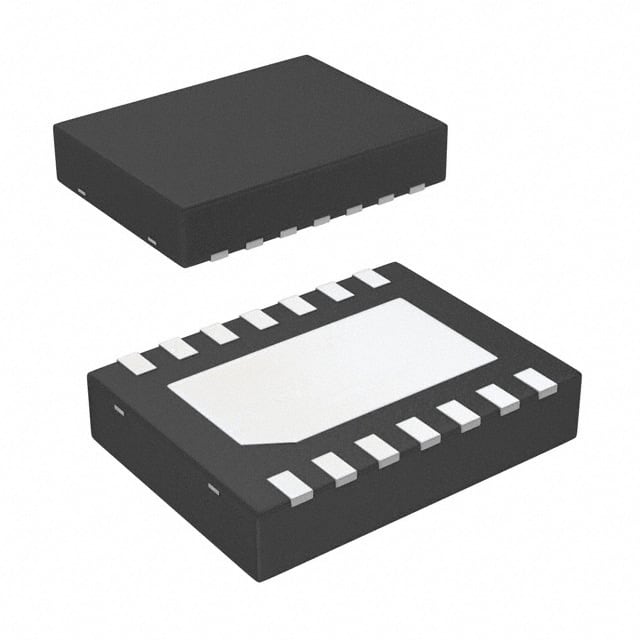
- Part No.:
- LM4970SD/NOPB
- Manufacturer:
- Texas Instruments
- Category:
- LED Drivers
- Package:
- 14-WFDFN Exposed Pad
- Datasheet:
-
 LM4970SD/NOPB.pdf
- Description:
- IC LED DRVR LIN PWM 42MA 14WSON
- Quantity:
- Payment:

- Shipping:

Inventory:1,455
Please send an inquiry. Send us your inquiry, and we will respond immediately.
Product details
Overview
LM4970SD/NOPB from Texas Instruments is an audio-synchronized RGB LED driver IC with three independent PWM outputs, 42mA per channel drive capability at 5V, I²C programmability, and integrated audio bandpass filtering for real-time LED lighting effects without host CPU intervention. It operates in portable audio devices to drive red/green/blue LEDs in response to low/mid/high audio frequency bands.
For engineers reviewing the LM4970SD/NOPB datasheet, LM4970SD/NOPB pinout, LM4970SD/NOPB application, or LM4970SD/NOPB equivalent, key selection considerations include audio sync mode behavior, I²C address configuration (ADR pin), programmable LED current per channel (0.66X–2X scaling), PWM frequency selection (4Hz–15kHz), and high-pass filter cutoff tuning (3.5/6.3/8.9kHz).
Technical Context
The LM4970SD/NOPB integrates a three-band audio filter (low/mid/high) that maps each band to a dedicated PWM LED output (LED1/LED2/LED3), enabling real-time color intensity modulation directly from analog audio inputs (MIN/LIN/RIN). Its internal summing amplifier supports configurable gain (–11dB to +12dB) and high-pass filter cutoff selection.
Operation includes dual modes: audio synchronization (I2C_SEL = 0) for automatic LED response to music, and I²C pattern mode (I2C_SEL = 1) for deterministic 0%/100% duty-cycle control of each LED. The randomizer function (RAND bit) rotates frequency band assignments every 3.2 seconds to ensure balanced LED activation during tonal audio.
Key Specifications
| Parameter | Value and Actual Design Meaning |
|---|---|
| LED Drive Current | Up to 42mA per channel at VDD = 5V (2X setting); enables direct drive of standard RGB LEDs without external current-limiting resistors. |
| PWM Frequency Range | 4Hz, 7Hz, 60Hz, or 15kHz; 60Hz provides optimal balance between LED brightness and audio fidelity in sync mode. |
| Audio Input Gain | Programmable from –11dB to +12dB via SGAIN<2:0>; compensates for weak audio sources to maintain visible LED response. |
| High-Pass Filter Cutoff | Selectable 3.5kHz, 6.3kHz, or 8.9kHz; defines lower boundary of midband for precise frequency-domain LED mapping. |
| Shutdown Current | 1.5μA typical at VDD = 5V; supports ultra-low-power standby in battery-operated portable devices. |
| I²C Interface | Standard-mode compatible (≤400kHz); uses SDA/SCL/ADR pins for register-based control of LED patterns, current, and filter settings. |
| Operating Voltage | VDD = 2.7–5.5V; supports single-cell Li-ion or 3.3V/5V system rails without level-shifting. |
Pinout & Package
LM4970SD/NOPB is housed in a 14-pin WSON package (NHK0014A), 3.5mm × 3.5mm, 0.5mm pitch, exposed thermal pad, RoHS-compliant matte tin (SN) finish, MSL Level-1.
| Pin/Terminal | Circuit Role | Design Meaning |
|---|---|---|
| FILT | Low-pass filter capacitor connection | External capacitor (e.g., 0.047–2.2μF) sets lowband cutoff frequency with internal 4kΩ resistor. |
| VDD | Main power supply input | Supplies core logic and LED drivers; can power LEDs directly or via external boost rail (VDDBOOST). |
| MIN | Mono audio input | Accepts mono voice signal; internally summed with LIN/RIN for audio sync processing. |
| GND | Analog ground reference | Primary ground return for analog circuitry; separate from LGND to reduce LED switching noise coupling. |
| LIN / RIN | Stereo audio inputs | Accept left/right channel signals for stereo content; mixed with MIN before band splitting. |
| I2CVDD | I²C interface supply | Independent 2.5–5.5V rail for digital interface; decoupled from VDD to prevent logic noise affecting analog performance. |
| SDA / SCL | I²C bidirectional data/clock | Open-drain SDA requires external pull-up; supports standard-mode timing (t1 ≥2.5μs, VIH ≥0.7×I2CVDD). |
| ADR | I²C address select | Logic low = 0x7A, logic high = 0x7B; enables two devices on same bus without address conflict. |
| LED1 / LED2 / LED3 | PWM LED outputs | Three independent constant-current sinks; each drives one color of RGB LED with programmable current and duty cycle. |
| LGND | LED ground return | Dedicated ground path for LED currents; minimizes voltage bounce on analog ground during PWM switching. |
Key Features
| Feature | Design Value |
|---|---|
| Audio sync without MCU processing | On-chip 3-band filter and PWM generators eliminate need for real-time software FFT or LED control algorithms. |
| User-defined LED patterns via I²C | Full 0%/100% duty-cycle control per LED channel enables static color selection (e.g., red+green=yellow) or custom strobing. |
| No external current-limiting resistors | Integrated 42mA-per-channel current regulation reduces BOM count and PCB area versus discrete LED driver solutions. |
| Configurable audio sensitivity | Adjustable input gain (–11dB to +12dB) and midband gain (5 settings) allow optimization for varying source levels and LED efficiency. |
| Frequency band randomization | RAND bit enables 3.2-second rotation of low/mid/high band assignments to LEDs, preventing color bias during narrowband audio. |
Applications
| Mobile Audio Visual Feedback | Portable Media Player Lighting |
|---|---|
Use Scenario: Smartphone or Bluetooth speaker displays dynamic LED colors synchronized to music playback using built-in microphone or line-in signal. IC Role / Device Role / Timing Role: LM4970SD/NOPB acts as autonomous audio-to-LED translator, converting analog audio into three PWM waveforms mapped to RGB channels without CPU involvement. Use Value: Enables rich visual feedback with zero host processor overhead, extending battery life while delivering responsive light effects tied to bass/mid/treble content. | Use Scenario: MP3 player or wireless earbud case uses RGB LEDs to indicate playback status, battery level, and audio genre via color intensity gradients. IC Role / Device Role / Timing Role: LM4970SD/NOPB serves as compact, low-power LED controller that interprets stereo audio stream to modulate LED brightness per frequency band in real time. Use Value: Provides intuitive user interface cues using only analog audio inputs-no firmware updates or sensor calibration required. |
| PDA Status Indication System | Compact Audio-Responsive Wearable |
Use Scenario: Handheld PDA employs tri-color LED for notification alerts (email, calendar, SMS), where color hue changes based on message priority and audio tone. IC Role / Device Role / Timing Role: LM4970SD/NOPB functions as intelligent LED driver interpreting simple audio beeps into multi-color visual responses via programmable gain and band filtering. Use Value: Delivers differentiated alert semantics (e.g., red pulse for urgent, blue glow for low-priority) using minimal board space and power budget. | Use Scenario: Fitness tracker or smart jewelry uses embedded RGB LED to pulse in rhythm with heart-rate audio feedback or ambient music. IC Role / Device Role / Timing Role: LM4970SD/NOPB operates as self-contained audio-reactive lighting engine, accepting mono audio input and driving wearable LEDs with sub-10μA shutdown current. Use Value: Achieves continuous visual engagement during activity tracking with <2.5mA active supply current and no host MCU dependency. |
Equivalent & Alternatives
The following parts are listed as comparable options for similar audio-synchronized LED driver applications.
| Alternative Part | Technical Difference | Application Difference | Selection Advice |
|---|---|---|---|
| MAX7313 | 16-bit I²C GPIO expander with programmable PWM; no integrated audio filtering or band-splitting. | Requires external ADC, DSP, or MCU to generate audio-derived PWM signals; suitable for custom algorithm implementations. | Choose MAX7313 when full software control over LED timing is needed and audio analysis is handled externally. |
| TLC59284 | 16-channel constant-current LED driver with fixed 1.28MHz PWM; lacks audio input, filtering, or synchronization logic. | Designed for static or pre-programmed LED patterns only; no real-time audio responsiveness capability. | Choose TLC59284 for high-channel-count LED arrays where audio sync is unnecessary and precision current matching is critical. |
Compared with MAX7313 and TLC59284, the LM4970SD/NOPB uniquely integrates analog audio front-end, 3-band filter, and per-channel PWM generation in a single 14-pin WSON package-enabling true plug-and-play audio-reactive lighting without external signal processing.
Availability
LM4970SD/NOPB is available at Aetrix Electronics and suitable for portable media players, smartphones, PDAs, and wearable audio-visual devices requiring stable component supply and long-term production continuity.
Supply support for LM4970SD/NOPB includes scheduled delivery planning, volume procurement assistance, BOM continuity management, traceable sourcing, and lifecycle availability coordination for OEM customers, industrial embedded developers, connected-device designers, and electronics production programs.
Manufacturer
Texas Instruments is a global semiconductor company specializing in analog, embedded processing, and connectivity technologies, with leadership in power management and signal chain solutions.
The LM4970SD/NOPB belongs to TI's audio interface and LED driver product line, designed specifically for low-power, space-constrained portable electronics needing real-time audio-responsive visual feedback without host processor load.
FAQ
What audio input configurations does the LM4970SD/NOPB support?
The LM4970SD/NOPB supports mono (via MIN pin), stereo (via LIN and RIN pins), or mixed audio inputs. All three signals are internally summed by an adjustable-gain amplifier before being split into low/mid/high frequency bands. The gain is programmable from –11dB to +12dB using the SGAIN<2:0> bits in the Gain Select Register, allowing adaptation to diverse source levels without external amplification.
How does the LM4970SD/NOPB assign audio frequency bands to its LED outputs?
The LM4970SD/NOPB assigns lowband to LED1, midband to LED2, and highband to LED3 in default audio sync mode. Band boundaries are set by the high-pass filter cutoff (HPF_F<1:0>) and external FILT capacitor value. The midband is derived from the overlap between lowband and highband poles. This fixed mapping ensures consistent color-to-frequency correlation unless the RAND bit is enabled to rotate assignments every 3.2 seconds.
Can the LM4970SD/NOPB drive standard RGB LED modules directly?
Yes, the LM4970SD/NOPB can directly drive common cathode RGB LED modules using its three constant-current sink outputs (LED1/LED2/LED3) and dedicated LGND pin. Each channel delivers up to 42mA at 5V with programmable current scaling (0.66X–2X), eliminating the need for external current-limiting resistors. For common anode modules, external high-side switches would be required.
What is the role of the ADR pin on the LM4970SD/NOPB?
The ADR pin on the LM4970SD/NOPB selects the device's I²C slave address: logic low sets address 0x7A, logic high sets 0x7B. This allows two LM4970SD/NOPB devices to coexist on the same I²C bus without address collision, enabling dual-zone or stereo-paired LED lighting systems. The pin must be hard-wired to VDD or GND; floating is not permitted.
Does the LM4970SD/NOPB require external passive components for basic operation?
Yes, the LM4970SD/NOPB requires at minimum: (1) a bypass capacitor (CS) on VDD, (2) coupling capacitors (Ci1/Ci2/Ci3) on MIN/LIN/RIN inputs, and (3) a filter capacitor (Cfilt) on FILT to set lowband cutoff. These components are specified in the External Components Description section of the datasheet and are essential for proper audio filtering, power stability, and input AC coupling.
LM4970SD/NOPB Specifications
- Product attributes
- Attribute value
- Manufacturer:
- Texas Instruments
- Series:
- Boomer®
- Package/Case:
- 14-WFDFN Exposed Pad
- Packaging:
- Tape & Reel (TR)
- Product Status:
- Active
- Type:
- Linear
- Topology:
- -
- Internal Switch(s):
- Yes
- Number of Outputs:
- 3
- Voltage - Supply (Min):
- 2.7V
- Voltage - Supply (Max):
- 5.5V
- Voltage - Output:
- -
- Current - Output / Channel:
- 42mA
- Frequency:
- -
- Dimming:
- PWM
- Applications:
- Backlight
- Operating Temperature:
- -40°C ~ 85°C (TA)
- Grade:
- -
- Qualification:
- -
- Mounting Type:
- Surface Mount
- Supplier Device Package:
- 14-WSON (4x3)
LM4970SD/NOPB FAQ
1.How can I place an order for LM4970SD/NOPB through Aetrix?
Please submit a Request for Quotation (RFQ) for LM4970SD/NOPB on Aetrix. Our sales agent will provide a competitive quotation and guide you through the order confirmation once you accept the terms.
2.Are the price and stock information for LM4970SD/NOPB reliable?
The price and inventory of LM4970SD/NOPB are updated periodically and may fluctuate due to market conditions. Stock and pricing data are typically refreshed every 24 hours. Quotation validity for LM4970SD/NOPB is usually 5 days.
3.What payment methods are accepted for LM4970SD/NOPB?
We accept Wire Transfer, PayPal, Credit Card, Western Union, MoneyGram, and Escrow for LM4970SD/NOPB transactions.
Note: Certain payment methods may incur a processing fee.
4.How is shipping managed for LM4970SD/NOPB?
LM4970SD/NOPB orders can be shipped via leading logistics carriers, including DHL, UPS, FedEx, TNT, or Registered Mail.
Once your LM4970SD/NOPB order is processed, you will receive an email with the shipment details and tracking number.
Note: Tracking information may take up to 24 hours to appear. Express delivery typically takes 3–5 business days.
5.How can I obtain technical support or documentation for LM4970SD/NOPB?
For technical support, including LM4970SD/NOPB datasheets, pinout diagrams, or application guidance, please contact our engineering support team. They can provide detailed documentation and assistance for your LM4970SD/NOPB requirements.
6.How does Aetrix verify that LM4970SD/NOPB is sourced from the original manufacturer or authorized distributors?
All LM4970SD/NOPB products on Aetrix are procured from qualified distributors and authorized channels. Our dedicated quality assurance team conducts strict verification, including traceability checks and, if necessary, third-party testing. This ensures that LM4970SD/NOPB meets industry standards.
7.What is the process for return or replacement of LM4970SD/NOPB?
All LM4970SD/NOPB units undergo pre-shipment inspection (PSI). If there is an issue with LM4970SD/NOPB, returns or replacements are accepted under the following conditions:
1.Quantity discrepancies, incorrect items, or visible external defects (such as breakage or corrosion), acknowledged by Aetrix.
2.The issue is reported within 90 days of delivery.
3.The LM4970SD/NOPB part is unused and in its original packaging.
Return procedure for LM4970SD/NOPB:
1.Submit a request within 90 days.
2.Obtain a Return Material Authorization (RMA) from Aetrix.
LM4970SD/NOPB Tags
-
BCR402RE6327HTSA1
Infineon Technologies

-
BCR430UXTSA2
Infineon Technologies
-
BCR420UE6433HTMA1
Infineon Technologies
-
BCR420UE6327HTSA1
Infineon Technologies
-
BCR421UE6327HTSA1
Infineon Technologies
-
LYT1604D-TL
Power Integrations

-
HV9910CLG-G
Microchip Technology
-
CL2N8-G
Microchip Technology
-
BCR420UW6-7
Diodes Incorporated
-
BCR421UW6-7
Diodes Incorporated
-
BCR420UFD-7
Diodes Incorporated
-
BCR421UFD-7
Diodes Incorporated
Tech Hub

A practical engineering guide to 3.3V and 5V logic compatibility, input thresholds, resistor dividers, translator ICs, MOSFET level shifting, I2C pull-ups, timing limits and power-sequencing risks.

The 74HC595 uses push-pull logic outputs, while the TPIC6B595 uses 50 V open-drain DMOS sinks for higher-power loads. This guide compares timing, current limits, 3.3 V interfacing, load wiring, thermal…

The 74HC595 converts serial data into eight stable parallel outputs. This guide covers pin functions, shift and storage timing, OE and MR behavior, drive-current limits, cascading, voltage compatibilit…

A technical comparison of level-sensitive latches and edge-triggered flip-flops, covering timing windows, setup and hold limits, master–slave operation, time borrowing, race-through, HDL inference and…

A D latch stores one bit while Enable controls when data can pass. This reference covers gate-level operation, truth tables, transparency, setup and hold timing, LE versus OE, common ICs and practical …

An SR latch stores one bit through cross-coupled feedback. This engineering reference covers NOR and NAND implementations, truth tables, forbidden-state recovery, gated operation, switch debouncing, fa…

Latch circuits retain one bit through feedback. This technical reference covers SR and D latches, truth tables, transparency, timing limits, latch-versus-flip-flop behavior, applications and common log…

An engineering guide to LED driver operation, constant-current and constant-voltage outputs, linear and switching topologies, dimming, IC selection, calculations, replacement compatibility, and fault c…

Operational amplifier guide covering op amp basics, feedback, ideal vs real op amps, common configurations, buffer circuits, offset, bias current, gain-bandwidth, slew rate, rail-to-rail limits and sel…

Jumper cables guide covering safe connection order, red and black clamp placement, final ground connection, cable gauge, length, clamp quality, copper vs CCA cables, jump starter comparison and battery…


