
 My Inquiry
 My Account


Texas Instruments LM4970SDX/NOPB
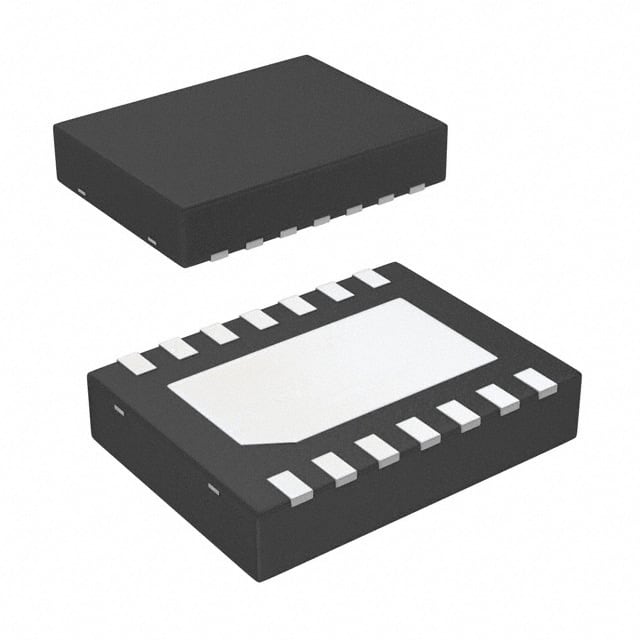
- Part No.:
- LM4970SDX/NOPB
- Manufacturer:
- Texas Instruments
- Category:
- LED Drivers
- Package:
- 14-WFDFN Exposed Pad
- Datasheet:
-
 LM4970SDX/NOPB.pdf
- Description:
- IC LED DRVR LIN PWM 42MA 14WSON
- Quantity:
- Payment:

- Shipping:

Inventory:2,635
Please send an inquiry. Send us your inquiry, and we will respond immediately.
Product details
Overview
LM4970SDX/NOPB from Texas Instruments is an audio-synchronized RGB LED driver IC with three independent PWM outputs, 42mA per channel drive capability at 5V, I²C programmability, and integrated audio bandpass filtering for real-time LED lighting effects. It operates in portable audio devices to drive red/green/blue LEDs responsive to bass/mid/treble frequency bands.
For engineers reviewing the LM4970SDX/NOPB datasheet, LM4970SDX/NOPB pinout, LM4970SDX/NOPB application, or LM4970SDX/NOPB equivalent, key selection criteria include audio sync mode operation, per-channel current programmability (0.66X–2X), shutdown current ≤3.5μA, PWM frequency selection (4Hz–15kHz), and WSON-14 package compatibility with space-constrained handheld designs.
Technical Context
The LM4970SDX/NOPB integrates a 3-band audio filter (low/mid/high) that maps amplitude envelopes from mono/stereo inputs (MIN/LIN/RIN) to individual PWM outputs (LED1/LED2/LED3), enabling real-time color modulation without host CPU intervention. Its internal summing amplifier supports programmable input gain (–11dB to +12dB) and midband gain control.
Two operational modes are supported: audio synchronization (I2C_SEL = 0), where LED duty cycles track filtered audio amplitude; and I²C pattern mode (I2C_SEL = 1), where each LED output is set to 0% or 100% duty cycle via register bits. The randomizer function (RAND bit) rotates frequency band assignments every 3.2 seconds to ensure balanced LED activation under narrowband audio.
Key Specifications
| Parameter | Value and Actual Design Meaning |
|---|---|
| LED Drive Current | 42mA max per channel at VDD = 5V - enables direct drive of standard RGB LEDs without external current-limiting resistors |
| Shutdown Current | 1.5μA typical at VDD = 5V - supports ultra-low-power standby in battery-operated devices |
| PWM Frequency Range | 4Hz to 15kHz selectable - balances visual persistence (low Hz) and audio fidelity (high kHz) in lighting effects |
| I²C Interface | Standard-mode compatible (≤400kHz) - allows integration with common microcontrollers using two-wire bus |
| Audio Input Gain | –11dB to +12dB programmable - compensates for weak line-level signals to maintain consistent LED brightness |
| Operating Voltage | VDD: 2.7–5.5V; I2CVDD: 2.5–5.5V - supports dual-supply flexibility and direct connection to Li-ion or USB power rails |
| High Pass Filter Select | 3.5kHz / 6.3kHz / 8.9kHz - defines lower cutoff for midband detection, critical for isolating vocal or instrument frequencies |
Pinout & Package
LM4970SDX/NOPB uses a 14-pin WSON (NHK0014A) package with 0.5mm pitch, exposed thermal pad, and 2.5mm × 2.5mm footprint - optimized for compact portable PCB layouts.
| Pin/Terminal | Circuit Role | Design Meaning |
|---|---|---|
| FILT | Low-pass filter capacitor connection | Sets high-frequency cutoff for LED1 (lowband) via external CFILT; determines bass response roll-off |
| VDD | Main power supply | Supplies analog core and LED drivers; may also power LEDs directly or via boost rail (VDDBOOST) |
| MIN | Mono audio input | Accepts single-ended voice or mono source; mixed internally with stereo inputs for full-band analysis |
| GND | Analog ground reference | Common return for audio circuitry and internal bias networks; separate from LED ground (LGND) |
| LIN / RIN | Stereo audio inputs | Accept left/right channel signals; enable frequency-domain separation for multi-color LED mapping |
| I2CVDD | I²C interface supply | Independent 2.5–5.5V rail for digital logic - decouples I²C noise from analog VDD |
| SDA / SCL | I²C data/clock | Open-drain, 3.3V-tolerant pins requiring external pull-ups; support standard-mode timing (tLOW ≥2.5μs) |
| ADR | I²C address select | Logic level sets LSB of 7-bit slave address (0xEC or 0xEE); enables multiple LM4970SDX/NOPB on same bus |
| LED1–LED3 | PWM LED outputs | Three independent constant-current sinks - each drives one LED cathode; polarity fixed (active-low) |
| LGND | LED ground | Dedicated return path for LED currents - minimizes crosstalk between analog and switching paths |
Key Features
| Feature | Design Value |
|---|---|
| Audio synchronization mode | Eliminates need for real-time DSP processing by performing analog audio band decomposition and PWM mapping on-chip |
| User-defined LED patterns | Full 0%/100% per-channel control via I²C registers - enables static color selection (e.g., red+green = yellow) or strobing effects |
| No external current-limiting resistors | Integrated 42mA current sources per channel reduce BOM count and PCB area versus discrete LED driver solutions |
| Programmable high-pass filter | Three selectable cutoff frequencies (3.5/6.3/8.9kHz) allow tuning midband sensitivity to match speaker response or content type |
| Ultra-low shutdown current | 1.5μA typical draw extends battery life in always-on audio accessories like Bluetooth speakers or wearables |
Applications
| Smartphone Status Lighting | Portable Media Player Visualizer |
|---|---|
Use Scenario: RGB LEDs illuminate around phone bezel during call, notification, or music playback. IC Role / Device Role / Timing Role: LM4970SDX/NOPB acts as audio-reactive LED controller, mapping bass (LED1), mids (LED2), and treble (LED3) to distinct colors in real time. Use Value: Delivers dynamic visual feedback synchronized to audio content without consuming host processor cycles or memory. | Use Scenario: MP3 player displays pulsing color patterns that respond to song frequency content during playback. IC Role / Device Role / Timing Role: LM4970SDX/NOPB serves as autonomous LED driver, accepting LIN/RIN inputs and generating PWM waveforms aligned to audio envelope peaks. Use Value: Enables rich visual experience using only analog audio signals - no firmware updates or codec integration required. |
| Bluetooth Speaker Mood Lighting | PDA Notification Indicator |
Use Scenario: Speaker housing features ambient RGB lighting that shifts hue and intensity based on music genre or volume. IC Role / Device Role / Timing Role: LM4970SDX/NOPB functions as audio-triggered color sequencer, using randomizer mode to rotate band-to-LED assignment every 3.2 seconds. Use Value: Prevents static color dominance under monotonous audio (e.g., spoken word), ensuring all LEDs activate over time. | Use Scenario: PDA displays color-coded alerts (e.g., blue for email, green for calendar) and pulses during incoming calls. IC Role / Device Role / Timing Role: LM4970SDX/NOPB operates in I²C pattern mode to set precise on/off states for each LED channel via register writes. Use Value: Provides deterministic, software-controlled visual signaling with minimal GPIO usage on resource-limited embedded processors. |
Equivalent & Alternatives
The following parts are listed as comparable options for similar LED driver applications.
| Alternative Part | Technical Difference | Application Difference | Selection Advice |
|---|---|---|---|
| TPS61165DRVR | Single-channel white LED driver with boost converter; no audio sync or multi-channel PWM | Designed for backlighting, not audio-reactive RGB control | Choose when driving high-Vf LEDs from low-voltage sources, but requires external MCU for audio processing |
| IS31FL3731-QFLS4 | 16×18 matrix LED driver with built-in audio FFT engine and I²C interface | Supports complex pixel-mapped animations; higher pin count and BOM cost | Prefer for advanced visualizers requiring >3 LEDs or spatial effects; over-spec for simple tri-color applications |
Compared with TPS61165DRVR and IS31FL3731-QFLS4, the LM4970SDX/NOPB uniquely delivers dedicated 3-channel audio-synchronized PWM control in a minimal 14-pin WSON package - balancing feature depth, size, and system-level simplicity for portable consumer audio devices.
Availability
LM4970SDX/NOPB is available at Aetrix Electronics and suitable for smartphone status lighting, portable media player visualizers, and Bluetooth speaker mood lighting requiring stable component supply and long-term production continuity.
Supply support for LM4970SDX/NOPB includes scheduled delivery planning, volume procurement assistance, BOM continuity management, traceable sourcing, and lifecycle availability coordination for OEM customers, industrial embedded developers, connected-device designers, and electronics production programs.
Manufacturer
Texas Instruments is a global semiconductor company specializing in analog and embedded processing technologies, with leadership in power management, signal chain, and interface solutions.
The LM4970SDX/NOPB belongs to TI's audio-peripheral product line, designed specifically to offload LED lighting control from application processors in portable audio systems while maintaining low power and small form factor.
FAQ
What is the primary function of the LM4970SDX/NOPB in an audio system?
The LM4970SDX/NOPB functions as an autonomous audio-synchronized RGB LED driver that converts analog audio inputs (MIN/LIN/RIN) into three independent PWM signals - each mapped to a specific frequency band (low/mid/high) and assigned to LED1/LED2/LED3. It eliminates the need for host-based audio analysis by performing real-time bandpass filtering and amplitude-to-duty-cycle conversion on-chip, enabling dynamic lighting effects directly from line-level or headphone signals without CPU involvement.
How does the LM4970SDX/NOPB handle different audio input configurations?
The LM4970SDX/NOPB accepts mono (via MIN), stereo left (LIN), and stereo right (RIN) inputs simultaneously. These signals are internally summed by a programmable-gain amplifier before being routed to its three-band audio filter. The filter separates the composite signal into lowband (driving LED1), midband (LED2), and highband (LED3) components. Gain settings (–11dB to +12dB) and high-pass cutoff selection (3.5/6.3/8.9kHz) allow optimization for varying source levels and content types - such as boosting vocal presence in midband for clearer notification effects.
Can the LM4970SDX/NOPB operate without an I²C controller?
Yes, the LM4970SDX/NOPB can operate autonomously in audio synchronization mode without I²C communication - default behavior upon power-up. In this mode, it continuously processes audio inputs and drives LEDs based on internal filter settings and current drive configuration. I²C is only required to change operating parameters (e.g., PWM frequency, gain, band assignment) or switch to I²C pattern mode for static color control. The device retains its last programmed state through power cycles if external non-volatile storage is used to reload registers.
What is the role of the FILT pin on the LM4970SDX/NOPB?
The FILT pin on the LM4970SDX/NOPB connects to an external capacitor (CFILT) that forms a low-pass filter with an internal 4kΩ resistor, setting the high-frequency cutoff for the lowband channel (LED1). This defines the upper limit of the bass frequency range detected - for example, a 0.047μF capacitor yields ~850Hz cutoff, while 1μF lowers it to ~40Hz. Proper CFILT selection is critical to minimize inter-band leakage and ensure clean separation between low/mid/high LED responses in audio synchronization mode.
Does the LM4970SDX/NOPB require external current-limiting resistors for LED connections?
No, the LM4970SDX/NOPB does not require external current-limiting resistors. Each of its three LED outputs (LED1–LED3) incorporates a fully integrated, digitally programmable current sink capable of delivering up to 42mA per channel at VDD = 5V. Current levels are selected via the Current Select Register (0.66X, 1X, 1.33X, or 2X scaling of base drive), eliminating discrete components and simplifying layout - especially important in space-constrained portable designs where the LM4970SDX/NOPB is commonly deployed.
LM4970SDX/NOPB Specifications
- Product attributes
- Attribute value
- Manufacturer:
- Texas Instruments
- Series:
- Boomer®
- Package/Case:
- 14-WFDFN Exposed Pad
- Packaging:
- Tape & Reel (TR)
- Product Status:
- Obsolete
- Type:
- Linear
- Topology:
- -
- Internal Switch(s):
- Yes
- Number of Outputs:
- 3
- Voltage - Supply (Min):
- 2.7V
- Voltage - Supply (Max):
- 5.5V
- Voltage - Output:
- -
- Current - Output / Channel:
- 42mA
- Frequency:
- -
- Dimming:
- PWM
- Applications:
- Backlight
- Operating Temperature:
- -40°C ~ 85°C (TA)
- Grade:
- -
- Qualification:
- -
- Mounting Type:
- Surface Mount
- Supplier Device Package:
- 14-WSON (4x3)
LM4970SDX/NOPB FAQ
1.How can I place an order for LM4970SDX/NOPB through Aetrix?
Please submit a Request for Quotation (RFQ) for LM4970SDX/NOPB on Aetrix. Our sales agent will provide a competitive quotation and guide you through the order confirmation once you accept the terms.
2.Are the price and stock information for LM4970SDX/NOPB reliable?
The price and inventory of LM4970SDX/NOPB are updated periodically and may fluctuate due to market conditions. Stock and pricing data are typically refreshed every 24 hours. Quotation validity for LM4970SDX/NOPB is usually 5 days.
3.What payment methods are accepted for LM4970SDX/NOPB?
We accept Wire Transfer, PayPal, Credit Card, Western Union, MoneyGram, and Escrow for LM4970SDX/NOPB transactions.
Note: Certain payment methods may incur a processing fee.
4.How is shipping managed for LM4970SDX/NOPB?
LM4970SDX/NOPB orders can be shipped via leading logistics carriers, including DHL, UPS, FedEx, TNT, or Registered Mail.
Once your LM4970SDX/NOPB order is processed, you will receive an email with the shipment details and tracking number.
Note: Tracking information may take up to 24 hours to appear. Express delivery typically takes 3–5 business days.
5.How can I obtain technical support or documentation for LM4970SDX/NOPB?
For technical support, including LM4970SDX/NOPB datasheets, pinout diagrams, or application guidance, please contact our engineering support team. They can provide detailed documentation and assistance for your LM4970SDX/NOPB requirements.
6.How does Aetrix verify that LM4970SDX/NOPB is sourced from the original manufacturer or authorized distributors?
All LM4970SDX/NOPB products on Aetrix are procured from qualified distributors and authorized channels. Our dedicated quality assurance team conducts strict verification, including traceability checks and, if necessary, third-party testing. This ensures that LM4970SDX/NOPB meets industry standards.
7.What is the process for return or replacement of LM4970SDX/NOPB?
All LM4970SDX/NOPB units undergo pre-shipment inspection (PSI). If there is an issue with LM4970SDX/NOPB, returns or replacements are accepted under the following conditions:
1.Quantity discrepancies, incorrect items, or visible external defects (such as breakage or corrosion), acknowledged by Aetrix.
2.The issue is reported within 90 days of delivery.
3.The LM4970SDX/NOPB part is unused and in its original packaging.
Return procedure for LM4970SDX/NOPB:
1.Submit a request within 90 days.
2.Obtain a Return Material Authorization (RMA) from Aetrix.
LM4970SDX/NOPB Tags
-
BCR402RE6327HTSA1
Infineon Technologies

-
BCR430UXTSA2
Infineon Technologies
-
BCR420UE6433HTMA1
Infineon Technologies
-
BCR420UE6327HTSA1
Infineon Technologies
-
BCR421UE6327HTSA1
Infineon Technologies
-
LYT1604D-TL
Power Integrations

-
HV9910CLG-G
Microchip Technology

-
CL2N8-G
Microchip Technology
-
BCR420UW6-7
Diodes Incorporated
-
BCR421UW6-7
Diodes Incorporated
-
BCR420UFD-7
Diodes Incorporated
-
BCR421UFD-7
Diodes Incorporated
Tech Hub

A practical engineering guide to 3.3V and 5V logic compatibility, input thresholds, resistor dividers, translator ICs, MOSFET level shifting, I2C pull-ups, timing limits and power-sequencing risks.

The 74HC595 uses push-pull logic outputs, while the TPIC6B595 uses 50 V open-drain DMOS sinks for higher-power loads. This guide compares timing, current limits, 3.3 V interfacing, load wiring, thermal…

The 74HC595 converts serial data into eight stable parallel outputs. This guide covers pin functions, shift and storage timing, OE and MR behavior, drive-current limits, cascading, voltage compatibilit…

A technical comparison of level-sensitive latches and edge-triggered flip-flops, covering timing windows, setup and hold limits, master–slave operation, time borrowing, race-through, HDL inference and…

A D latch stores one bit while Enable controls when data can pass. This reference covers gate-level operation, truth tables, transparency, setup and hold timing, LE versus OE, common ICs and practical …

An SR latch stores one bit through cross-coupled feedback. This engineering reference covers NOR and NAND implementations, truth tables, forbidden-state recovery, gated operation, switch debouncing, fa…

Latch circuits retain one bit through feedback. This technical reference covers SR and D latches, truth tables, transparency, timing limits, latch-versus-flip-flop behavior, applications and common log…

An engineering guide to LED driver operation, constant-current and constant-voltage outputs, linear and switching topologies, dimming, IC selection, calculations, replacement compatibility, and fault c…

Operational amplifier guide covering op amp basics, feedback, ideal vs real op amps, common configurations, buffer circuits, offset, bias current, gain-bandwidth, slew rate, rail-to-rail limits and sel…

Jumper cables guide covering safe connection order, red and black clamp placement, final ground connection, cable gauge, length, clamp quality, copper vs CCA cables, jump starter comparison and battery…


