
 My Inquiry
 My Account


Texas Instruments LM57CISD-10/NOPB
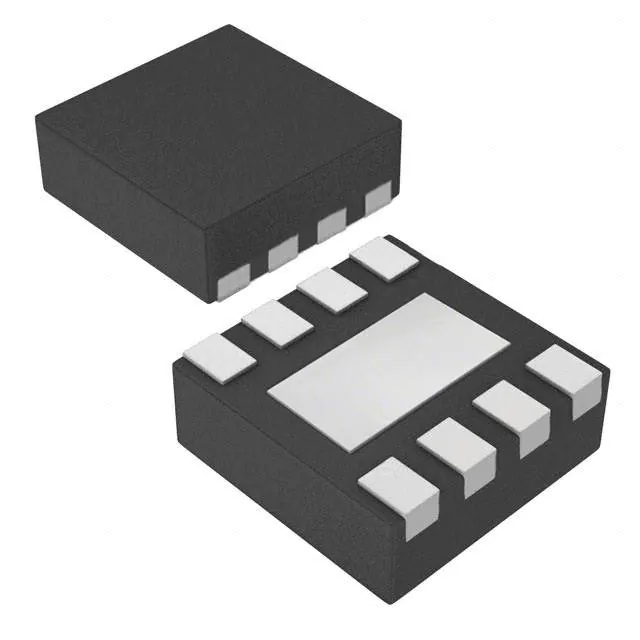
- Part No.:
- LM57CISD-10/NOPB
- Manufacturer:
- Texas Instruments
- Category:
- Thermostats - Solid State
- Package:
- 8-WFDFN Exposed Pad
- Datasheet:
-
 LM57CISD-10/NOPB.pdf
- Description:
- THERMOSTAT PROG ACT HI/LOW 8WSON
- Quantity:
- Payment:

- Shipping:

Inventory:1,689
Please send an inquiry. Send us your inquiry, and we will respond immediately.
Product details
Overview
LM57CISD-10/NOPB from Texas Instruments is a resistor-programmable precision temperature switch with dual digital outputs (active-high push-pull TOVER and active-low open-drain TOVER) and an analog VTEMP voltage output proportional to die temperature. It operates from −50°C to +150°C, features ±2.3°C trip-point accuracy and ±1.3°C VTEMP sensor accuracy, and uses two external 1% resistors to set trip temperature across 256 values in the −40°C to +150°C range - deployed in industrial overtemperature protection circuits.
For engineers reviewing the LM57CISD-10/NOPB datasheet, LM57CISD-10/NOPB pinout, LM57CISD-10/NOPB application, or LM57CISD-10/NOPB equivalent, key selection criteria include its 10°C factory-set hysteresis, programmable NTC-slope VTEMP gain (J2–J5), TRIP-TEST in-system verification capability, and WSON-8 package compatibility with high-density thermal monitoring layouts.
Technical Context
The LM57CISD-10/NOPB integrates an internal DAC-driven comparator architecture where SENSE1/SENSE2 resistor ratios select one of 16 logic levels, mapping to 256 discrete trip points and simultaneously configuring VTEMP's negative temperature coefficient slope (−5.166 mV/°C to −12.924 mV/°C). Its dual-output topology enables both latched fault signaling (via TOVER tied to TRIP-TEST) and real-time analog temperature feedback without external ADC.
Thermal hysteresis is fixed at 10°C (THYST = 9.6–10.6°C), preventing output oscillation during slow thermal transitions. The VTEMP output remains valid across the full −50°C to +150°C range regardless of selected J-gain segment, and TRIP-TEST assertion forces both digital outputs active while presenting VTRIP at VTEMP for system-level calibration validation.
Key Specifications
| Parameter | Value and Actual Design Meaning |
|---|---|
| Operating Temperature Range | −50°C to +150°C - supports down-hole, avionics, and extended industrial environments without derating. |
| Supply Voltage Range | +2.4 V to +5.5 V - compatible with 3.3 V and 5 V logic rails; quiescent current only 24–28 µA. |
| Tripping Accuracy | ±2.3°C (−40°C to +150°C) - includes contribution from 1% external resistors; no added error from resistor tolerance. |
| VTEMP Sensor Accuracy | ±1.3°C (−50°C to +150°C) - specified against LM57 conversion table; independent of load regulation assumptions. |
| Hysteresis | 10°C (9.6–10.6°C) - factory preset; eliminates chatter during thermal ramp-down in motor or power supply protection. |
| VTEMP Gain Options | J2 (−5.166 mV/°C), J3 (−7.752 mV/°C), J4 (−10.339 mV/°C), J5 (−12.924 mV/°C) - selected by SENSE resistor pair; defines trip-point range and sensitivity. |
| Digital Output Types | TOVER: active-high push-pull; TOVER: active-low open-drain - enables direct MCU interrupt or pull-up-based fault logging. |
Pinout & Package
LM57CISD-10/NOPB is housed in an 8-pin WSON (2.50 mm × 2.50 mm) package with exposed thermal pad connected to GND. This leadless, space-efficient封装 supports automated reflow and provides low thermal resistance (RθJA = 71.3°C/W).
| Pin/Terminal | Circuit Role | Design Meaning |
|---|---|---|
| GND (Pin 1) | Power ground reference | Primary return path for all analog and digital circuitry; must be low-impedance connection to PCB ground plane. |
| SENSE1 (Pin 2) | Resistor network input | One terminal of external resistor divider that sets trip point and VTEMP gain; bias current <1 µA. |
| SENSE2 (Pin 3) | Resistor network input | Second terminal of external resistor divider; combined with SENSE1 determines DAC code and J-slope. |
| VDD (Pin 4) | Positive supply input | Accepts 2.4–5.5 V; powers internal bandgap, DAC, comparator, and output drivers; bypass capacitor required. |
| TRIP TEST (Pin 5) | Digital control input | Active-high test enable: asserts outputs and routes VTRIP to VTEMP; tie to GND if unused. |
| TOVER (Pin 6) | Active-low digital output | Open-drain output requiring external pull-up; used for fault flagging or daisy-chained alarm systems. |
| TOVER (Pin 7) | Active-high digital output | Push-pull output drives high/low directly; suitable for MCU GPIO interrupts without external components. |
| VTEMP (Pin 8) | Analog temperature output | Voltage proportional to die temperature (e.g., ~1101 mV at 0°C for J2); valid across full operating range. |
Key Features
| Feature | Design Value |
|---|---|
| Resistor-programmable trip point | 256 discrete settings from −40°C to +150°C using only two 1% resistors - eliminates need for OTP or digital configuration. |
| Dual independent outputs | Simultaneous active-high push-pull and active-low open-drain switching - supports redundant fault signaling and flexible interface design. |
| In-system TRIP-TEST verification | Driving Pin 5 high asserts both outputs and places VTRIP on VTEMP - enables production-line functional test without thermal chamber. |
| Programmable VTEMP slope | Four selectable NTC gains (J2–J5) matched to trip-point range - optimizes ADC resolution and noise margin for target threshold. |
| Low self-heating | Quiescent current ≤28 µA limits self-heating to <0.02°C - preserves measurement integrity in thermally isolated PCB locations. |
Applications
| Motor Drive Thermal Protection | Industrial PLC Cabinet Monitoring |
|---|---|
Use Scenario: Real-time monitoring of IGBT heatsink temperature in servo drive inverters to prevent thermal runaway. IC Role / Device Role / Timing Role: Precision overtemperature switch asserting TOVER to disable gate driver PWM when die exceeds 125°C. Use Value: 10°C hysteresis prevents cycling during transient thermal spikes; VTEMP provides continuous analog feedback for predictive maintenance algorithms. |
Use Scenario: Ambient temperature supervision inside sealed control cabinets housing multiple PLC modules and power supplies. IC Role / Device Role / Timing Role: Dual-output alarm generator triggering fan control (TOVER) and SCADA alert (TOVER) at 75°C cabinet threshold. Use Value: Resistor programming allows field-adjustable trip points without firmware update; WSON-8 footprint minimizes board area in space-constrained enclosures. |
| Down-Hole Oilfield Instrumentation | Avionics Power Converter Monitoring |
Use Scenario: Embedded temperature guard in MWD (Measurement While Drilling) tools exposed to >150°C borehole environments. IC Role / Device Role / Timing Role: High-accuracy trip detector (±2.3°C) asserting fault signal before silicon degradation occurs at extreme temperatures. Use Value: Extended −50°C to +150°C operation eliminates need for external temperature compensation; TRIP-TEST enables pre-deployment functional validation. |
Use Scenario: Overtemperature safeguard for DC-DC converters in flight control electronics, where thermal faults must trigger immediate shutdown. IC Role / Device Role / Timing Role: Fast-response (tEN = 1.5–2.9 ms) switch asserting TOVER to cut converter enable line within milliseconds of threshold breach. Use Value: Push-pull TOVER drives logic-level shutoff directly; open-drain TOVER interfaces with legacy aircraft bus monitoring systems. |
Equivalent & Alternatives
The following parts are listed as comparable options for similar temperature switch applications.
| Alternative Part | Technical Difference | Application Difference | Selection Advice |
|---|---|---|---|
| LM57BISD-10/NOPB | ±1.5°C trip accuracy (vs. ±2.3°C), same 10°C hysteresis and WSON-8 package | Better accuracy required in lab-grade instrumentation or closed-loop thermal control | Select when tighter trip-point tolerance justifies higher cost; identical pinout and resistor programming. |
| LM57FPW/NOPB | TSSOP-8 package (3.0 × 6.4 mm), same ±2.3°C accuracy and 10°C hysteresis | Preferred where hand-soldering, optical inspection, or legacy TSSOP footprints are mandated | Choose for ease of prototyping or compatibility with existing TSSOP-based designs; same electrical behavior. |
Compared with LM57CISD-10/NOPB, LM57BISD-10/NOPB delivers higher trip accuracy without changing layout, while LM57FPW/NOPB offers identical functionality in a larger, more manufacturable package - enabling trade-offs between precision, density, and assembly method.
Availability
LM57CISD-10/NOPB is available at Aetrix Electronics and suitable for industrial automation, down-hole instrumentation, and avionics thermal management requiring stable component supply, long-term lifecycle support, and traceable sourcing.
Supply support for LM57CISD-10/NOPB includes scheduled delivery planning, volume procurement assistance, BOM continuity management, traceable sourcing, and lifecycle availability coordination for OEM customers, industrial embedded developers, connected-device designers, and electronics production programs.
Manufacturer
Texas Instruments is a global semiconductor leader specializing in analog, embedded processing, and connectivity technologies with decades of precision sensor and thermal management IC expertise.
The LM57 product line delivers resistor-programmable overtemperature protection with integrated analog sensing - designed specifically for industrial, automotive, and harsh-environment systems demanding configurability without digital overhead.
FAQ
What is the hysteresis value for LM57CISD-10/NOPB, and how is it implemented?
The LM57CISD-10/NOPB has a factory-set hysteresis of 10°C (specified as 9.6–10.6°C). It is implemented internally via analog circuitry that shifts the comparator's reference threshold downward by THYST after trip activation, ensuring TOVER and TOVER remain asserted until temperature falls below (TTRIP − 10°C). No external components are needed - this hysteresis is fixed and cannot be adjusted.
How do I calculate the trip temperature for LM57CISD-10/NOPB using external resistors?
The trip temperature for LM57CISD-10/NOPB is determined by the ratio of RSENSE1 and RSENSE2, which selects one of 16 logic levels decoded into a DAC code. Use TI's LM57 Resistor Calculator tool or Table 1 in SNIS152E to map resistor pairs to exact TTRIP values (−40°C to +150°C in 256 steps). The LM57CISD-10/NOPB datasheet provides lookup tables correlating resistance ratios to trip points and corresponding VTEMP gain (J2–J5).
Can LM57CISD-10/NOPB operate at −50°C, and what is its accuracy at that temperature?
Yes, LM57CISD-10/NOPB is fully specified from −50°C to +150°C. At −50°C, its VTEMP analog sensor accuracy is ±1.3°C (per J2–J5 specifications in Section 7.6), and trip-point accuracy remains ±2.3°C across the full range including extremes. The device uses a bandgap-referenced architecture validated for operation at −50°C ambient and die temperature.
What is the purpose of the TRIP-TEST pin on LM57CISD-10/NOPB, and how should it be used?
The TRIP-TEST pin (Pin 5) is an active-high digital input that forces both TOVER and TOVER outputs active and presents the trip-reference voltage VTRIP at the VTEMP pin. It enables in-system functional verification - for example, a microcontroller can drive TRIP-TEST high, read VTEMP to confirm VTRIP level, and monitor TOVER/TOVER state change - all without thermal stimulus. Leave TRIP-TEST unconnected or tie to GND if unused.
Does LM57CISD-10/NOPB require external pull-up resistors on its digital outputs?
Only TOVER (Pin 6, active-low open-drain) requires an external pull-up resistor (typically 4.7 kΩ to VDD) to establish a valid logic-high state when inactive. TOVER (Pin 7, active-high push-pull) drives both high and low actively and needs no external components. Both outputs are short-circuit protected per datasheet Section 7.7.
LM57CISD-10/NOPB Specifications
- Product attributes
- Attribute value
- Manufacturer:
- Texas Instruments
- Series:
- -
- Package/Case:
- 8-WFDFN Exposed Pad
- Packaging:
- Tape & Reel (TR)
- Product Status:
- Obsolete
- Trip Temperature Threshold:
- Hot
- Switching Temperature:
- Programmable
- Accuracy:
- ±2.3°C
- Current - Output (Max):
- -
- Output Type:
- Open Drain, Push-Pull
- Output:
- Active High, Active Low
- Output Function:
- OverTemp, /OverTemp
- Selectable Hysteresis:
- Yes
- Features:
- Selectable Trip Point, Trip Test
- Voltage - Supply:
- 2.4 V ~ 5.5 V
- Current - Supply:
- 24µA
- Operating Temperature:
- -50°C ~ 150°C
- Mounting Type:
- Surface Mount
- Grade:
- -
- Qualification:
- -
- Supplier Device Package:
- 8-WSON (2.5x2.5)
LM57CISD-10/NOPB FAQ
1.How can I place an order for LM57CISD-10/NOPB through Aetrix?
Please submit a Request for Quotation (RFQ) for LM57CISD-10/NOPB on Aetrix. Our sales agent will provide a competitive quotation and guide you through the order confirmation once you accept the terms.
2.Are the price and stock information for LM57CISD-10/NOPB reliable?
The price and inventory of LM57CISD-10/NOPB are updated periodically and may fluctuate due to market conditions. Stock and pricing data are typically refreshed every 24 hours. Quotation validity for LM57CISD-10/NOPB is usually 5 days.
3.What payment methods are accepted for LM57CISD-10/NOPB?
We accept Wire Transfer, PayPal, Credit Card, Western Union, MoneyGram, and Escrow for LM57CISD-10/NOPB transactions.
Note: Certain payment methods may incur a processing fee.
4.How is shipping managed for LM57CISD-10/NOPB?
LM57CISD-10/NOPB orders can be shipped via leading logistics carriers, including DHL, UPS, FedEx, TNT, or Registered Mail.
Once your LM57CISD-10/NOPB order is processed, you will receive an email with the shipment details and tracking number.
Note: Tracking information may take up to 24 hours to appear. Express delivery typically takes 3–5 business days.
5.How can I obtain technical support or documentation for LM57CISD-10/NOPB?
For technical support, including LM57CISD-10/NOPB datasheets, pinout diagrams, or application guidance, please contact our engineering support team. They can provide detailed documentation and assistance for your LM57CISD-10/NOPB requirements.
6.How does Aetrix verify that LM57CISD-10/NOPB is sourced from the original manufacturer or authorized distributors?
All LM57CISD-10/NOPB products on Aetrix are procured from qualified distributors and authorized channels. Our dedicated quality assurance team conducts strict verification, including traceability checks and, if necessary, third-party testing. This ensures that LM57CISD-10/NOPB meets industry standards.
7.What is the process for return or replacement of LM57CISD-10/NOPB?
All LM57CISD-10/NOPB units undergo pre-shipment inspection (PSI). If there is an issue with LM57CISD-10/NOPB, returns or replacements are accepted under the following conditions:
1.Quantity discrepancies, incorrect items, or visible external defects (such as breakage or corrosion), acknowledged by Aetrix.
2.The issue is reported within 90 days of delivery.
3.The LM57CISD-10/NOPB part is unused and in its original packaging.
Return procedure for LM57CISD-10/NOPB:
1.Submit a request within 90 days.
2.Obtain a Return Material Authorization (RMA) from Aetrix.
LM57CISD-10/NOPB Tags

-
N34TS04MT3ETG
onsemi
-
MCP9501PT-095E/OT
Microchip Technology
-
TMP390AQDRLRQ1
Texas Instruments
-
TC6501P125VCTTR
Microchip Technology
-
LM26CIM5-RPA/NOPB
Texas Instruments
-
MCP9509HT-E/OT
Microchip Technology
-
MCP9509CT-E/OT
Microchip Technology
-
MCP9510HT-E/CH
Microchip Technology
-
TC622VOA
Microchip Technology
-
TC620CEOA
Microchip Technology
-
TC622VAT
Microchip Technology
-
MAX6509HAUK+T
Analog Devices Inc./Maxim Integrated
Tech Hub

A practical engineering guide to 3.3V and 5V logic compatibility, input thresholds, resistor dividers, translator ICs, MOSFET level shifting, I2C pull-ups, timing limits and power-sequencing risks.

The 74HC595 uses push-pull logic outputs, while the TPIC6B595 uses 50 V open-drain DMOS sinks for higher-power loads. This guide compares timing, current limits, 3.3 V interfacing, load wiring, thermal…

The 74HC595 converts serial data into eight stable parallel outputs. This guide covers pin functions, shift and storage timing, OE and MR behavior, drive-current limits, cascading, voltage compatibilit…

A technical comparison of level-sensitive latches and edge-triggered flip-flops, covering timing windows, setup and hold limits, master–slave operation, time borrowing, race-through, HDL inference and…

A D latch stores one bit while Enable controls when data can pass. This reference covers gate-level operation, truth tables, transparency, setup and hold timing, LE versus OE, common ICs and practical …

An SR latch stores one bit through cross-coupled feedback. This engineering reference covers NOR and NAND implementations, truth tables, forbidden-state recovery, gated operation, switch debouncing, fa…

Latch circuits retain one bit through feedback. This technical reference covers SR and D latches, truth tables, transparency, timing limits, latch-versus-flip-flop behavior, applications and common log…

An engineering guide to LED driver operation, constant-current and constant-voltage outputs, linear and switching topologies, dimming, IC selection, calculations, replacement compatibility, and fault c…

Operational amplifier guide covering op amp basics, feedback, ideal vs real op amps, common configurations, buffer circuits, offset, bias current, gain-bandwidth, slew rate, rail-to-rail limits and sel…

Jumper cables guide covering safe connection order, red and black clamp placement, final ground connection, cable gauge, length, clamp quality, copper vs CCA cables, jump starter comparison and battery…


