
 My Inquiry
 My Account


Texas Instruments LM60BIZ/LFT3
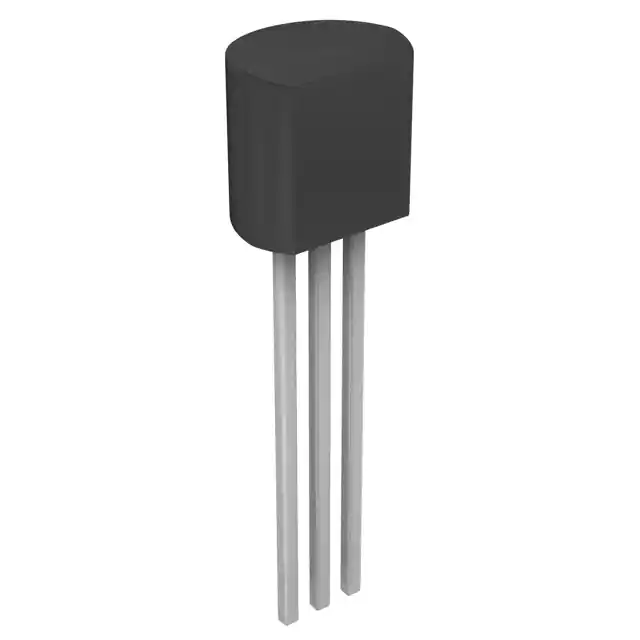
- Part No.:
- LM60BIZ/LFT3
- Manufacturer:
- Texas Instruments
- Category:
- Analog and Digital Output
- Package:
- TO-226-3, TO-92-3 (TO-226AA)
- Datasheet:
-
 LM60BIZ/LFT3.pdf
- Description:
- SENSOR ANALOG -25C-125C TO92-3
- Quantity:
- Payment:

- Shipping:

Inventory:4,197
Please send an inquiry. Send us your inquiry, and we will respond immediately.
Product details
Overview
LM60BIZ/LFT3 from Texas Instruments is a precision analog bipolar temperature sensor in TO-92 (LP) 3-pin formed-leads package, delivering linear output voltage proportional to Celsius temperature (6.25 mV/°C) with 424 mV offset at 0°C, ±3°C accuracy over −40°C to +125°C (new chip), and quiescent current as low as 70 μA - used for battery-powered thermal monitoring in compact consumer and industrial systems.
For engineers reviewing the LM60BIZ/LFT3 datasheet, LM60BIZ/LFT3 pinout, LM60BIZ/LFT3 application, or LM60BIZ/LFT3 equivalent, this page delivers verified electrical characteristics, thermal behavior under real mounting conditions, output impedance impact on ADC interface design, and validated alternatives for cost, accuracy, or package-driven redesigns.
Technical Context
The LM60BIZ/LFT3 implements a Class-A emitter-follower output stage, enabling sourcing of significant load current while sinking less than 1 µA - critical for high-impedance ADC input buffering. Its transfer function VO = (6.25 mV/°C × T °C) + 424 mV is factory-calibrated and stable across 2.7 V to 10 V supply range.
Thermal response is governed by junction-to-ambient resistance (RθJA = 135.9 °C/W for new-chip TO-92), limiting self-heating to ≤0.05°C in still air with small PCB heatsinking. Output impedance (800 Ω max) and nonlinearity (±0.8°C) directly define achievable system-level temperature resolution without external compensation.
Key Specifications
| Parameter | Value and Actual Design Meaning |
|---|---|
| Output Sensitivity | 6.25 mV/°C - enables direct ratiometric scaling to 1°C resolution using 12-bit ADC with 3.3 V reference |
| Offset Voltage | 424 mV at 0°C - allows full-range measurement from −40°C (174 mV) to +125°C (1205 mV) with single 2.7 V supply |
| Accuracy | ±3°C over −40°C to +125°C (new chip) - specifies worst-case error budget for closed-loop thermal control in battery management |
| Quiescent Current | 70 μA max (new chip) - limits self-heating to ≤0.05°C in TO-92 package on 1-in² PCB, preserving measurement fidelity |
| Output Impedance | 800 Ω max - requires ≥10 kΩ ADC input impedance or buffer op-amp to avoid >0.1°C gain error |
| Nonlinearity | ±0.8°C max - defines residual error after linear calibration; sufficient for fan speed control or battery thermal cutoff |
| Supply Range | 2.7 V to 10 V - supports direct connection to Li-ion cell (3.0–4.2 V), 3.3 V rail, or 5 V USB power without regulation |
Pinout & Package
LM60BIZ/LFT3 uses TO-92 (LP) 3-pin package with formed leads (4.83 mm × 7.37 mm nominal footprint). Thermal path optimized via GND pin attachment to die backside.
| Pin/Terminal | Circuit Role | Design Meaning |
|---|---|---|
| +VS | Power | Positive supply input (2.7–10 V); powers internal bandgap reference and output stage |
| VOUT | Output | Analog voltage output (174–1205 mV); must drive ≥10 kΩ load to maintain linearity and accuracy |
| GND | Ground | Reference node and thermal conduction path; die backside bonded to this pin for minimal thermal lag |
Key Features
| Feature | Design Value |
|---|---|
| Single-supply operation | Enables −40°C sensing with no negative rail - eliminates need for charge pump or dual supplies in portable designs |
| Low self-heating | 0.05°C max temperature rise in still air with PCB heatsink - preserves accuracy in thermally isolated enclosures |
| Factory-calibrated transfer function | Eliminates system-level calibration; 6.25 mV/°C gain and 424 mV offset are traceable to NIST standards |
| High ESD tolerance | ±2500 V HBM - withstands handling in standard assembly environments without special precautions |
| Capacitive load drive | Stable with up to 1 μF output capacitance - permits RC filtering for noise reduction without oscillation or settling delay |
Applications
| Mobile Device Battery Monitoring | PC Power Supply Thermal Protection |
|---|---|
Use Scenario: Real-time temperature tracking of Li-ion battery cells during charge/discharge cycles in smartphones and tablets. IC Role / Device Role / Timing Role: Analog temperature sensor providing continuous voltage output scaled to Celsius for microcontroller ADC sampling. Use Value: Enables safe charging above 45°C cutoff and cold-temperature disable below 0°C - prevents dendrite growth and electrolyte freeze damage. | Use Scenario: Overtemperature detection in DC-DC converter modules inside desktop PCs and servers. IC Role / Device Role / Timing Role: Primary thermal sensor feeding comparator or MCU to trigger fan ramp-up or shutdown before MOSFET thermal runaway. Use Value: ±3°C accuracy ensures reliable trip point at 105°C with margin, while 70 μA quiescent current minimizes standby power loss. |
| HVAC System Ambient Sensing | Solid-State Drive (SSD) Thermal Throttling |
Use Scenario: Room temperature measurement in residential HVAC thermostats using low-cost TO-92 mounting on PCB or plastic housing. IC Role / Device Role / Timing Role: Centigrade sensor interfaced to 8-bit microcontroller via RC-filtered analog input for display and control logic. Use Value: 424 mV offset allows −10°C to +50°C range coverage with 3.3 V supply and 10-bit ADC - no software offset correction needed. | Use Scenario: Die temperature monitoring of NAND flash controller ICs in M.2 NVMe SSDs to prevent data corruption during sustained write loads. IC Role / Device Role / Timing Role: Localized thermal sensor mounted adjacent to controller die on same PCB layer for fast thermal response. Use Value: TO-92 formed leads enable vertical mounting near hot component; 135.9 °C/W RθJA ensures <1°C lag vs. die temperature during 10-second thermal transients. |
Equivalent & Alternatives
The following parts are listed as comparable options for similar analog-output temperature sensor applications.
| Alternative Part | Technical Difference | Application Difference | Selection Advice |
|---|---|---|---|
| LM60CIZ/NOPB | ±4°C accuracy over −40°C to +125°C; same TO-92 package and pinout | Lower accuracy grade suitable for non-critical ambient sensing where ±3°C is not required | Select when cost sensitivity outweighs tight thermal control requirements |
| TLV3701IPK | Comparator-based solution requiring external reference and resistor network; no integrated sensor | Used in discrete thermostat designs with adjustable trip points, not direct temperature readout | Choose only when fixed threshold detection suffices and analog voltage output is unnecessary |
Compared with LM60BIZ/LFT3, LM60CIZ/NOPB trades 1°C accuracy for lower unit cost in identical TO-92 packaging, while TLV3701IPK shifts architecture to discrete threshold detection - eliminating analog linearity but adding design flexibility for binary thermal alarms.
Availability
LM60BIZ/LFT3 is available at Aetrix Electronics and suitable for mobile device battery management, PC power supply thermal protection, and HVAC ambient sensing requiring stable component supply across multi-year production cycles.
Supply support for LM60BIZ/LFT3 includes scheduled delivery planning, volume procurement assistance, BOM continuity management, traceable sourcing, and lifecycle availability coordination for OEM customers, industrial embedded developers, connected-device designers, and electronics production programs.
Manufacturer
Texas Instruments is a global semiconductor leader specializing in analog and embedded processing technologies, with decades of expertise in precision sensing and power management ICs.
The LM60 product line delivers low-power, factory-calibrated analog temperature sensors optimized for cost-sensitive, space-constrained applications where single-supply operation and −40°C capability are essential - including portable electronics and industrial controls.
FAQ
What is the operating temperature range of the LM60BIZ/LFT3?
The LM60BIZ/LFT3 operates from −40°C to +125°C. For the new-chip version (date code indicating RFB die), accuracy of ±3°C is fully specified across this entire range. Legacy-chip versions (GF6/SHE die) maintain ±3°C accuracy from −25°C to +125°C, though they survive down to −40°C without damage. The LM60BIZ/LFT3 datasheet explicitly confirms both ranges apply to this exact orderable part number.
Does the LM60BIZ/LFT3 require external calibration?
No, the LM60BIZ/LFT3 does not require external calibration. It is factory-calibrated for 6.25 mV/°C sensitivity and 424 mV offset at 0°C, with total error bounded by ±3°C over −40°C to +125°C (new chip). This calibration is traceable and guaranteed per TI's production test flow - confirmed in Section 6.5 Electrical Characteristics of the LM60BIZ/LFT3 datasheet.
Can the LM60BIZ/LFT3 be powered directly from a microcontroller GPIO?
Yes, the LM60BIZ/LFT3 can be powered directly from a microcontroller GPIO pin. With a maximum quiescent current of 70 μA (new chip), it draws well within typical GPIO sourcing limits (e.g., 20 mA for most ARM Cortex-M MCUs). This enables true shutdown control - turning off the LM60BIZ/LFT3 between readings to eliminate self-heating and extend battery life, as documented in Section 8.3 of the LM60BIZ/LFT3 datasheet.
What is the maximum capacitive load the LM60BIZ/LFT3 can drive stably?
The LM60BIZ/LFT3 can drive up to 1 μF capacitive load stably without oscillation or excessive settling time. TI's application note (Section 8.1.1) confirms this capability, noting that a 1 μF capacitor forms a 199 Hz low-pass filter with its 800 Ω max output impedance - which does not degrade thermal response since the device's thermal time constant is orders of magnitude slower. This is validated for the LM60BIZ/LFT3 in Figure 8-1 of its official datasheet.
How does the TO-92 formed-leads package of LM60BIZ/LFT3 affect thermal performance?
The TO-92 formed-leads package (LP) of the LM60BIZ/LFT3 achieves RθJA = 135.9 °C/W for the new chip - significantly better than SOT-23 (240.6 °C/W) due to larger leadframe mass and improved PCB heat spreading. When leads are soldered to a 1-in² 2-oz copper pad, self-heating remains ≤0.05°C at 70 μA, making LM60BIZ/LFT3 ideal for applications demanding minimal thermal lag, such as SSD controller monitoring. This is measured and tabulated in Table 8-2 of the LM60BIZ/LFT3 datasheet.
LM60BIZ/LFT3 Specifications
- Product attributes
- Attribute value
- Manufacturer:
- Texas Instruments
- Series:
- -
- Package/Case:
- TO-226-3, TO-92-3 (TO-226AA)
- Packaging:
- Cut Tape (CT)
- Product Status:
- Active
- Sensor Type:
- Analog, Local
- Sensing Temperature - Local:
- -25°C ~ 125°C
- Sensing Temperature - Remote:
- -
- Output Type:
- Analog Voltage
- Voltage - Supply:
- 2.7V ~ 10V
- Resolution:
- 6.25mV/°C
- Features:
- -
- Accuracy - Highest (Lowest):
- ±2°C (±3°C)
- Test Condition:
- 25°C (-25°C ~ 125°C)
- Operating Temperature:
- -25°C ~ 125°C
- Mounting Type:
- Through Hole
- Grade:
- -
- Qualification:
- -
- Supplier Device Package:
- TO-92-3
LM60BIZ/LFT3 FAQ
1.How can I place an order for LM60BIZ/LFT3 through Aetrix?
Please submit a Request for Quotation (RFQ) for LM60BIZ/LFT3 on Aetrix. Our sales agent will provide a competitive quotation and guide you through the order confirmation once you accept the terms.
2.Are the price and stock information for LM60BIZ/LFT3 reliable?
The price and inventory of LM60BIZ/LFT3 are updated periodically and may fluctuate due to market conditions. Stock and pricing data are typically refreshed every 24 hours. Quotation validity for LM60BIZ/LFT3 is usually 5 days.
3.What payment methods are accepted for LM60BIZ/LFT3?
We accept Wire Transfer, PayPal, Credit Card, Western Union, MoneyGram, and Escrow for LM60BIZ/LFT3 transactions.
Note: Certain payment methods may incur a processing fee.
4.How is shipping managed for LM60BIZ/LFT3?
LM60BIZ/LFT3 orders can be shipped via leading logistics carriers, including DHL, UPS, FedEx, TNT, or Registered Mail.
Once your LM60BIZ/LFT3 order is processed, you will receive an email with the shipment details and tracking number.
Note: Tracking information may take up to 24 hours to appear. Express delivery typically takes 3–5 business days.
5.How can I obtain technical support or documentation for LM60BIZ/LFT3?
For technical support, including LM60BIZ/LFT3 datasheets, pinout diagrams, or application guidance, please contact our engineering support team. They can provide detailed documentation and assistance for your LM60BIZ/LFT3 requirements.
6.How does Aetrix verify that LM60BIZ/LFT3 is sourced from the original manufacturer or authorized distributors?
All LM60BIZ/LFT3 products on Aetrix are procured from qualified distributors and authorized channels. Our dedicated quality assurance team conducts strict verification, including traceability checks and, if necessary, third-party testing. This ensures that LM60BIZ/LFT3 meets industry standards.
7.What is the process for return or replacement of LM60BIZ/LFT3?
All LM60BIZ/LFT3 units undergo pre-shipment inspection (PSI). If there is an issue with LM60BIZ/LFT3, returns or replacements are accepted under the following conditions:
1.Quantity discrepancies, incorrect items, or visible external defects (such as breakage or corrosion), acknowledged by Aetrix.
2.The issue is reported within 90 days of delivery.
3.The LM60BIZ/LFT3 part is unused and in its original packaging.
Return procedure for LM60BIZ/LFT3:
1.Submit a request within 90 days.
2.Obtain a Return Material Authorization (RMA) from Aetrix.
LM60BIZ/LFT3 Tags
-
MCP9700T-E/TT
Microchip Technology
-
MCP9700T-E/LT
Microchip Technology
-
MCP9701T-E/TT
Microchip Technology
-
MCP9701T-E/LT
Microchip Technology
-
TMP235A4DBZR
Texas Instruments
-
MCP9700AT-E/TT
Microchip Technology
-
MCP9700AT-E/LT
Microchip Technology
-
MCP9701AT-E/LT
Microchip Technology
-
MCP9701AT-E/TT
Microchip Technology
,TO-226_straightlead.jpg)
-
LM335Z
STMicroelectronics
-
TMP1075NDRLR
Texas Instruments
-
TMP1075DGKR
Texas Instruments
Tech Hub

A practical engineering guide to 3.3V and 5V logic compatibility, input thresholds, resistor dividers, translator ICs, MOSFET level shifting, I2C pull-ups, timing limits and power-sequencing risks.

The 74HC595 uses push-pull logic outputs, while the TPIC6B595 uses 50 V open-drain DMOS sinks for higher-power loads. This guide compares timing, current limits, 3.3 V interfacing, load wiring, thermal…

The 74HC595 converts serial data into eight stable parallel outputs. This guide covers pin functions, shift and storage timing, OE and MR behavior, drive-current limits, cascading, voltage compatibilit…

A technical comparison of level-sensitive latches and edge-triggered flip-flops, covering timing windows, setup and hold limits, master–slave operation, time borrowing, race-through, HDL inference and…

A D latch stores one bit while Enable controls when data can pass. This reference covers gate-level operation, truth tables, transparency, setup and hold timing, LE versus OE, common ICs and practical …

An SR latch stores one bit through cross-coupled feedback. This engineering reference covers NOR and NAND implementations, truth tables, forbidden-state recovery, gated operation, switch debouncing, fa…

Latch circuits retain one bit through feedback. This technical reference covers SR and D latches, truth tables, transparency, timing limits, latch-versus-flip-flop behavior, applications and common log…

An engineering guide to LED driver operation, constant-current and constant-voltage outputs, linear and switching topologies, dimming, IC selection, calculations, replacement compatibility, and fault c…

Operational amplifier guide covering op amp basics, feedback, ideal vs real op amps, common configurations, buffer circuits, offset, bias current, gain-bandwidth, slew rate, rail-to-rail limits and sel…

Jumper cables guide covering safe connection order, red and black clamp placement, final ground connection, cable gauge, length, clamp quality, copper vs CCA cables, jump starter comparison and battery…


