
 My Inquiry
 My Account


Texas Instruments LM628N-6/NOPB
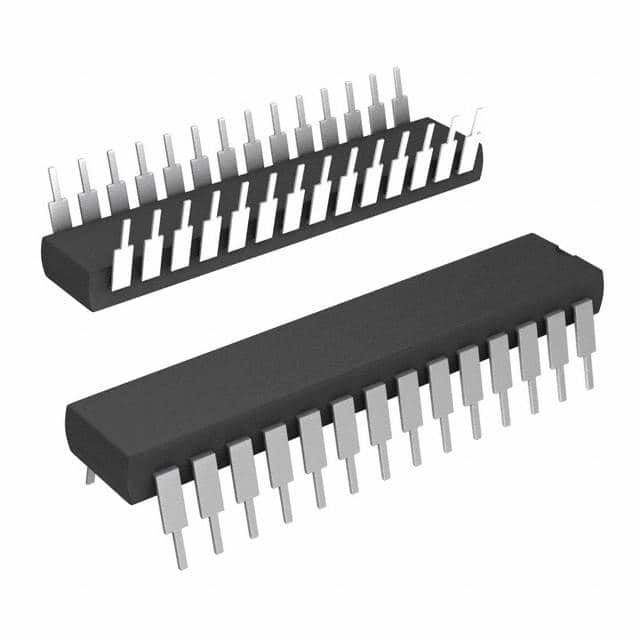
- Part No.:
- LM628N-6/NOPB
- Manufacturer:
- Texas Instruments
- Category:
- Motor Drivers, Controllers
- Package:
- 28-DIP (0.600", 15.24mm)
- Datasheet:
-
 LM628N-6/NOPB.pdf
- Description:
- IC MOTOR DRIVER 4.5V-5.5V 28DIP
- Quantity:
- Payment:

- Shipping:

Inventory:3,403
Please send an inquiry. Send us your inquiry, and we will respond immediately.
Product details
Overview
LM628N-6/NOPB from Texas Instruments is a dedicated 32-bit precision motion controller IC for closed-loop DC and brushless DC servo systems, featuring programmable digital PID filtering, trapezoidal velocity profile generation, and quadrature encoder interface with index pulse support. It delivers 8-bit parallel DAC output, operates at up to 6 MHz clock frequency, and targets industrial positioning stages, CNC axes, and automated test equipment requiring deterministic real-time trajectory control.
For engineers reviewing the LM628N-6/NOPB datasheet, LM628N-6/NOPB pinout, LM628N-6/NOPB application, or LM628N-6/NOPB equivalent, key selection criteria include its 32-bit position/velocity/acceleration registers, 8-bit DAC output mode, 28-pin PDIP package, −40°C to +85°C operating range, and compatibility with incremental encoders delivering quadrature A/B and index signals.
Technical Context
The LM628N-6/NOPB implements an NMOS-based SDA core processor executing real-time motion control algorithms including trapezoidal trajectory generation and discrete-time PID compensation with programmable derivative sampling interval (2048/fCLK to 65,536 μs). Its quadrature decoder provides 4× resolution enhancement over encoder line count and requires ≥8 clock periods per encoder state for valid capture.
It supports two DAC output configurations: latched 8-bit parallel (Pins 18–25) or multiplexed 12-bit (Pins 18–24 + strobe on Pin 25), with offset-binary coding (0x80 = zero torque). Host communication uses an 8-bit parallel asynchronous interface with chip-select (CS), port-select (PS), read (RD), and write (WR) controls, plus active-high host interrupt (HI) signaling.
Key Specifications
| Parameter | Value and Actual Design Meaning |
|---|---|
| Clock Frequency | 1.0–6.0 MHz - defines sampling rate for PID execution and encoder capture; 6 MHz enables 750 kHz max encoder-state rate. |
| Position Resolution | 32-bit signed (−1.07B to +1.07B counts) - supports sub-micron positioning over multi-meter travel with high-resolution encoders. |
| DAC Output Mode | 8-bit parallel (default) - directly interfaces non-latching 8-bit DACs; zero torque at 0x80, negative torque below, positive above. |
| Operating Temperature | −40°C to +85°C - validated for industrial embedded motion control environments without derating. |
| Supply Voltage | 4.5 V to 5.5 V - compatible with standard 5 V logic rails and regulated industrial power supplies. |
| Quadrature Interface | 2-channel A/B + index input - decodes incremental encoder signals with 4× interpolation; index latch enables absolute homing. |
| Host Interface | 8-bit parallel asynchronous - uses CS, PS, RD, WR, and HI signals for command/data transfer and interrupt-driven synchronization. |
Pinout & Package
LM628N-6/NOPB is housed in a 28-pin plastic dual in-line package (PDIP) with 0.6-inch body width and through-hole mounting. Thermal performance relies on copper trace heat sinking via the lead frame; maximum power dissipation is 605 mW at TA ≤ 85°C.
| Pin | Circuit Role | Design Meaning |
|---|---|---|
| 1 | Index (IN) Input | Optional encoder index pulse input; must be tied high if unused; used to record absolute home position when A/B/IN all low. |
| 2, 3 | Encoder A/B Inputs | Quadrature phase inputs; A leads B by 90° in forward rotation; minimum 8-clock dwell per state required for valid decoding. |
| 4–11 | Host Data Bus (D0–D7) | Bi-directional 8-bit parallel port for command/data transfer; shared between command and data ports via PS control. |
| 12 | Chip Select (CS) | Active-low enable for host read/write operations; must be asserted before RD or WR strobes. |
| 13 | Read (RD) | Active-low strobe to read status byte (PS = low) or data words (PS = high); data valid during low pulse. |
| 14 | GND | Power-supply return reference; serves as signal ground for encoder, DAC, and host interface circuits. |
| 15 | Write (WR) | Active-low strobe to write commands (PS = low) or data words (PS = high); latches data on rising edge. |
| 16 | Port Select (PS) | Selects command port (low) for status reads and command writes, or data port (high) for register reads/writes. |
| 17 | Host Interrupt (HI) | Active-high open-drain output signaling interrupt conditions (e.g., index capture, error threshold exceeded). |
| 18–25 | DAC Output (DAC0–DAC7) | Latched 8-bit parallel output; MSB = Pin 18, LSB = Pin 25; outputs 0x80 at reset to center 8-bit DAC. |
| 26 | Clock (CLK) | TTL-compatible input for system clock; supports 1–6 MHz; determines all timing intervals and sampling rates. |
| 27 | Reset (RST) | Active-low, edge-triggered reset; requires ≥8 clock periods low; initializes registers, zeros filters, sets DAC to zero. |
| 28 | VDD | +5 V supply input; must be bypassed locally with 0.1 μF ceramic capacitor to GND for noise immunity. |
Key Features
| Feature | Design Value |
|---|---|
| 32-bit position/velocity/acceleration registers | Enables nanometer-scale positioning resolution and smooth high-speed motion profiles over long travel ranges. |
| Programmable digital PID filter with 16-bit coefficients | Allows precise tuning of proportional, integral, and derivative gains to match mechanical load dynamics and stability margins. |
| Real-time trajectory update during motion | Permits dynamic adjustment of target position, velocity, or acceleration without stopping-critical for synchronized multi-axis moves. |
| Quadrature encoder interface with index support | Provides absolute homing capability and 4× interpolated position feedback, reducing required encoder line count by factor of four. |
| 8-bit parallel DAC output with offset-binary coding | Simplifies analog interface design by eliminating external level-shifting; zero torque at mid-scale (0x80) ensures symmetric drive capability. |
Applications
| Industrial CNC Positioning | Automated Test Equipment (ATE) |
|---|---|
|
Use Scenario: Precise linear axis control in benchtop CNC mills and engraving machines using stepper or DC servo motors with optical encoders. IC Role / Device Role / Timing Role: Motion controller executing trapezoidal velocity profiles and closed-loop PID correction based on quadrature feedback. Use Value: Eliminates need for host CPU real-time computation; achieves sub-micron repeatability and smooth acceleration/deceleration without jitter. |
Use Scenario: Actuator positioning in semiconductor wafer probers and PCB test fixtures requiring repeatable, programmable motion sequences. IC Role / Device Role / Timing Role: Standalone trajectory generator and position loop compensator interfacing to host via parallel bus. Use Value: Reduces firmware development burden; supports "on-the-fly" parameter updates enabling adaptive test sequencing and error recovery. |
| Medical Lab Automation | Optical Instrument Positioning |
|
Use Scenario: Sample stage translation in automated blood analyzers and DNA sequencers where motion must be silent, repeatable, and contamination-free. IC Role / Device Role / Timing Role: Precision motion engine managing position error, velocity feedforward, and derivative damping in real time. Use Value: Delivers consistent 100 nm step accuracy across temperature variations; index pulse support enables automatic calibration at power-up. |
Use Scenario: Fine focus and filter wheel actuation in confocal microscopes and spectrophotometers requiring vibration-free, low-noise motion. IC Role / Device Role / Timing Role: Dedicated motion coprocessor handling trajectory generation and PID filtering independent of main system controller. Use Value: Enables <10 ms settling time after 100 μm moves; programmable derivative sampling interval suppresses mechanical resonance in lightweight optical mounts. |
Equivalent & Alternatives
The following parts are listed as comparable options for similar motion controller applications.
| Alternative Part | Technical Difference | Application Difference | Selection Advice |
|---|---|---|---|
| LM628N-8/NOPB | Higher 8 MHz clock rating enables 1.0 MHz max encoder-state capture vs. 750 kHz for LM628N-6/NOPB; identical pinout and register set. | Required for systems using >750 kHz encoder signals or demanding tighter motion loop timing budgets. | Select LM628N-8/NOPB only if clock frequency >6 MHz is needed; otherwise LM628N-6/NOPB offers same functionality at lower EMI and power. |
| LM629N-6/NOPB | Replaces 8-bit DAC output with 8-bit sign-magnitude PWM output (Pins 18–19 only); no DAC0–DAC7 pins; different output driver architecture. | Suitable for direct H-bridge switching amplifier drive; incompatible with DAC-based analog amplifiers used with LM628N-6/NOPB. | Choose LM629N-6/NOPB only when PWM motor drive is preferred; LM628N-6/NOPB remains optimal for precision analog current/voltage control loops. |
Compared with LM628N-8/NOPB, LM628N-6/NOPB trades maximum clock speed for reduced EMI and lower power consumption while retaining full 32-bit motion control capability; compared with LM629N-6/NOPB, it provides analog-compatible DAC output essential for low-noise, high-resolution torque control in sensitive positioning systems.
Availability
LM628N-6/NOPB is available at Aetrix Electronics and suitable for industrial CNC positioning, automated test equipment, medical lab automation, and optical instrument positioning requiring stable component supply and long-term production continuity.
Supply support for LM628N-6/NOPB includes scheduled delivery planning, volume procurement assistance, BOM continuity management, traceable sourcing, and lifecycle availability coordination for OEM customers, industrial embedded developers, connected-device designers, and electronics production programs.
Manufacturer
Texas Instruments is a global semiconductor leader specializing in analog, embedded processing, and high-reliability components for industrial, automotive, and communications markets.
The LM628N-6/NOPB belongs to TI's precision motion controller product line, designed specifically for deterministic real-time servo control in resource-constrained embedded systems using DC and brushless DC motors.
FAQ
What is the primary function of the LM628N-6/NOPB in a motion control system?
The LM628N-6/NOPB serves as a dedicated 32-bit motion controller IC that executes real-time trapezoidal trajectory generation and digital PID compensation for closed-loop DC and brushless DC servo systems. It accepts quadrature encoder feedback, computes position error, applies programmable filter coefficients, and outputs 8-bit DAC data to drive external amplifiers-offloading intensive motion math from the host processor and ensuring deterministic timing in the LM628N-6/NOPB.
Does the LM628N-6/NOPB support both 8-bit and 12-bit DAC output modes?
Yes, the LM628N-6/NOPB supports both output configurations via software command: PORT8 selects latched 8-bit parallel output on Pins 18–25, while PORT12 configures multiplexed 12-bit output using Pins 18–24 plus strobe on Pin 25. The 8-bit mode is default at reset (0x80 = zero torque); 12-bit mode requires external demultiplexing logic and is not enabled out-of-box in the LM628N-6/NOPB.
What is the maximum encoder signal frequency the LM628N-6/NOPB can reliably process?
At its rated 6 MHz clock frequency, the LM628N-6/NOPB requires a minimum of 8 clock periods per encoder state, resulting in a maximum reliable quadrature capture rate of 750 kHz. This corresponds to 3 million encoder state transitions per second (A/B edges combined), supporting high-resolution encoders on fast-moving axes without missing counts in the LM628N-6/NOPB.
How does the LM628N-6/NOPB handle homing and absolute position referencing?
The LM628N-6/NOPB uses its Index (IN) input (Pin 1) to capture absolute position upon detection of a logic-low index pulse from the encoder-provided simultaneously with low A and B signals. Alternatively, a mechanical switch can pull Pin 1 low to define a hardware home position, triggering an interrupt (SIP command) and storing the current position in the index register. This establishes repeatable absolute coordinates without battery-backed memory in the LM628N-6/NOPB.
Can the LM628N-6/NOPB update motion parameters while the motor is moving?
Yes, the LM628N-6/NOPB supports real-time parameter updates during motion for target position, velocity, and acceleration via LTRJ and STT commands. Trajectory changes take effect immediately within the next control cycle, enabling synchronized multi-axis moves, dynamic path correction, and responsive error recovery-all without halting motion or resetting the LM628N-6/NOPB.
LM628N-6/NOPB Specifications
- Product attributes
- Attribute value
- Manufacturer:
- Texas Instruments
- Series:
- -
- Package/Case:
- 28-DIP (0.600", 15.24mm)
- Packaging:
- Tube
- Product Status:
- Obsolete
- Motor Type - Stepper:
- -
- Motor Type - AC, DC:
- Brushless DC (BLDC) Servo, Brushed DC Servo
- Function:
- Controller - Commutation, Direction Management
- Output Configuration:
- Pre-Driver - Half Bridge (4)
- Interface:
- Parallel
- Technology:
- -
- Step Resolution:
- -
- Applications:
- General Purpose
- Current - Output:
- -
- Voltage - Supply:
- 4.5V ~ 5.5V
- Voltage - Load:
- -
- Operating Temperature:
- -40°C ~ 85°C (TA)
- Grade:
- -
- Qualification:
- -
- Mounting Type:
- Through Hole
- Supplier Device Package:
- 28-DIP
LM628N-6/NOPB FAQ
1.How can I place an order for LM628N-6/NOPB through Aetrix?
Please submit a Request for Quotation (RFQ) for LM628N-6/NOPB on Aetrix. Our sales agent will provide a competitive quotation and guide you through the order confirmation once you accept the terms.
2.Are the price and stock information for LM628N-6/NOPB reliable?
The price and inventory of LM628N-6/NOPB are updated periodically and may fluctuate due to market conditions. Stock and pricing data are typically refreshed every 24 hours. Quotation validity for LM628N-6/NOPB is usually 5 days.
3.What payment methods are accepted for LM628N-6/NOPB?
We accept Wire Transfer, PayPal, Credit Card, Western Union, MoneyGram, and Escrow for LM628N-6/NOPB transactions.
Note: Certain payment methods may incur a processing fee.
4.How is shipping managed for LM628N-6/NOPB?
LM628N-6/NOPB orders can be shipped via leading logistics carriers, including DHL, UPS, FedEx, TNT, or Registered Mail.
Once your LM628N-6/NOPB order is processed, you will receive an email with the shipment details and tracking number.
Note: Tracking information may take up to 24 hours to appear. Express delivery typically takes 3–5 business days.
5.How can I obtain technical support or documentation for LM628N-6/NOPB?
For technical support, including LM628N-6/NOPB datasheets, pinout diagrams, or application guidance, please contact our engineering support team. They can provide detailed documentation and assistance for your LM628N-6/NOPB requirements.
6.How does Aetrix verify that LM628N-6/NOPB is sourced from the original manufacturer or authorized distributors?
All LM628N-6/NOPB products on Aetrix are procured from qualified distributors and authorized channels. Our dedicated quality assurance team conducts strict verification, including traceability checks and, if necessary, third-party testing. This ensures that LM628N-6/NOPB meets industry standards.
7.What is the process for return or replacement of LM628N-6/NOPB?
All LM628N-6/NOPB units undergo pre-shipment inspection (PSI). If there is an issue with LM628N-6/NOPB, returns or replacements are accepted under the following conditions:
1.Quantity discrepancies, incorrect items, or visible external defects (such as breakage or corrosion), acknowledged by Aetrix.
2.The issue is reported within 90 days of delivery.
3.The LM628N-6/NOPB part is unused and in its original packaging.
Return procedure for LM628N-6/NOPB:
1.Submit a request within 90 days.
2.Obtain a Return Material Authorization (RMA) from Aetrix.
LM628N-6/NOPB Tags
-
DRV2603RUNR
Texas Instruments
-
DRV8837CDSGR
Texas Instruments
-
DRV8837DSGR
Texas Instruments
-
DRV8838DSGR
Texas Instruments
-
DRV8839DSSR
Texas Instruments
-
EMC2301-1-ACZL-TR
Microchip Technology
-
DRV8231ADSGR
Texas Instruments
-
EMC2302-2-AIZL-TR
Microchip Technology
-
DRV8800PWPR
Texas Instruments
-
DRV8835DSSR
Texas Instruments
-
EMC2303-1-KP-TR
Microchip Technology
-
DRV8876PWPR
Texas Instruments
Tech Hub

A practical engineering guide to 3.3V and 5V logic compatibility, input thresholds, resistor dividers, translator ICs, MOSFET level shifting, I2C pull-ups, timing limits and power-sequencing risks.

The 74HC595 uses push-pull logic outputs, while the TPIC6B595 uses 50 V open-drain DMOS sinks for higher-power loads. This guide compares timing, current limits, 3.3 V interfacing, load wiring, thermal…

The 74HC595 converts serial data into eight stable parallel outputs. This guide covers pin functions, shift and storage timing, OE and MR behavior, drive-current limits, cascading, voltage compatibilit…

A technical comparison of level-sensitive latches and edge-triggered flip-flops, covering timing windows, setup and hold limits, master–slave operation, time borrowing, race-through, HDL inference and…

A D latch stores one bit while Enable controls when data can pass. This reference covers gate-level operation, truth tables, transparency, setup and hold timing, LE versus OE, common ICs and practical …

An SR latch stores one bit through cross-coupled feedback. This engineering reference covers NOR and NAND implementations, truth tables, forbidden-state recovery, gated operation, switch debouncing, fa…

Latch circuits retain one bit through feedback. This technical reference covers SR and D latches, truth tables, transparency, timing limits, latch-versus-flip-flop behavior, applications and common log…

An engineering guide to LED driver operation, constant-current and constant-voltage outputs, linear and switching topologies, dimming, IC selection, calculations, replacement compatibility, and fault c…

Operational amplifier guide covering op amp basics, feedback, ideal vs real op amps, common configurations, buffer circuits, offset, bias current, gain-bandwidth, slew rate, rail-to-rail limits and sel…

Jumper cables guide covering safe connection order, red and black clamp placement, final ground connection, cable gauge, length, clamp quality, copper vs CCA cables, jump starter comparison and battery…


