
 My Inquiry
 My Account


Texas Instruments LM71CIMF-TI
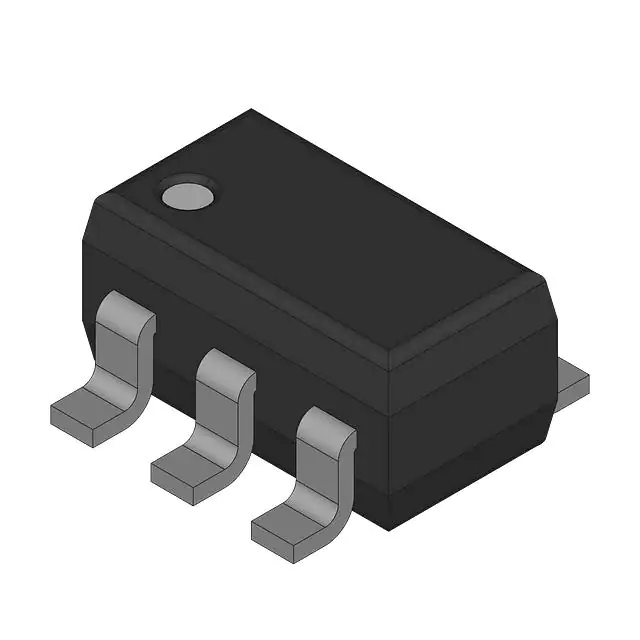
- Part No.:
- LM71CIMF-TI
- Manufacturer:
- Texas Instruments
- Category:
- Analog and Digital Output
- Package:
- -
- Datasheet:
-
 LM71CIMF-TI.pdf
- Description:
- SERIAL SWITCH/DIGITAL SENSOR, 14
- Quantity:
- Payment:

- Shipping:

Inventory:10,743
Please send an inquiry. Send us your inquiry, and we will respond immediately.
Product details
Overview
LM71CIMF-TI from Texas Instruments is a 14-bit delta-sigma digital temperature sensor with SPI/MICROWIRE-compatible three-wire serial interface, operating from −40°C to +150°C with ±1.5°C accuracy (−10°C to +65°C) and 31.25 m°C resolution. It delivers 300 µA typical supply current at 2.65V–5.5V supply and is housed in a 5-pin SOT-23 (DBV) package for PCB thermal monitoring in automotive and industrial control systems.
For engineers reviewing the LM71CIMF-TI datasheet, LM71CIMF-TI pinout, LM71CIMF-TI application, or LM71CIMF-TI equivalent, key selection considerations include its 14-bit two's complement output format, shutdown/continuous conversion mode control via 8-bit register write, guaranteed operation across extended automotive temperature range, and compatibility with microcontroller GPIO-based SPI peripherals without level-shifting.
Technical Context
The LM71CIMF-TI integrates a precision bandgap temperature sensor core with a 14-bit delta-sigma ADC and on-chip serial interface logic supporting both SPI and MICROWIRE protocols. Its three-wire bus (CS, SC, SI/O) uses Schmitt-trigger inputs and tri-state outputs, with data clocked out on SC falling edge and in on rising edge - requiring 32 clocks per full read/write transaction.
Internal register architecture includes a read-only 16-bit temperature register (D15–D0), a write-only configuration register controlling shutdown vs. continuous mode, and a read-only manufacturer ID register accessed only during shutdown. The device powers up in continuous conversion mode and requires ≥270 ms between reads for valid results.
Key Specifications
| Parameter | Value and Actual Design Meaning |
|---|---|
| Temperature Range | −40°C to +150°C: supports under-hood automotive and industrial motor drive thermal sensing. |
| Accuracy | ±1.5°C max (−10°C to +65°C): enables reliable fan speed control and overtemperature shutdown in PCs and disk drives. |
| Resolution | 0.03125°C per LSB (14-bit two's complement): allows fine-grained thermal trending in battery management and power supply monitoring. |
| Supply Voltage | 2.65V to 5.5V: interoperable with 3.3V and 5V microcontrollers without external regulators. |
| Quiescent Current | 300 µA typ (550 µA max): extends battery life in portable test equipment and handheld devices. |
| Interface | SPI/MICROWIRE 3-wire (CS/SC/SI/O): simplifies host-side firmware using standard GPIO bit-banging or hardware SPI peripherals. |
| Conversion Time | 270 ms max: defines minimum polling interval for real-time thermal response in closed-loop thermal management. |
Pinout & Package
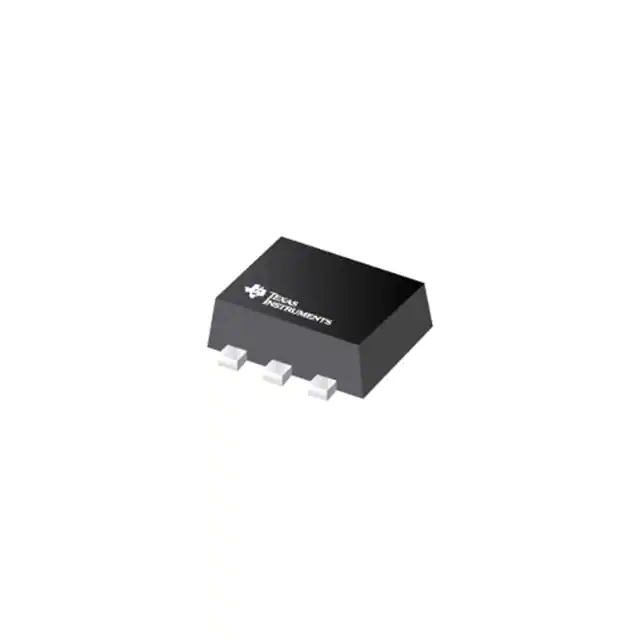
LM71CIMF-TI is packaged in a 5-pin SOT-23 (DBV) with 1.45 mm maximum height, optimized for low-profile PCB mounting and direct board-temperature measurement via thermal conduction through pins.
| Pin/Terminal | Circuit Role | Design Meaning |
|---|---|---|
| 1 - CS | Chip Select input | Active-low enable for serial communication; must be stable before SC rising edge to avoid bus contention. |
| 2 - GND | Power supply ground | Primary reference for analog sensor core and digital I/O; must connect directly to low-impedance PCB ground plane. |
| 3 - SI/O | Serial bidirectional data line | Tri-state open-drain output during read; Schmitt-trigger input during write; shares single trace with host MCU. |
| 4 - SC | Serial clock input | Schmitt-triggered clock input; data sampled on rising edge (input), output on falling edge (output). |
| 5 - V+ | Positive supply voltage | 2.65V–5.5V input; requires local 0.1 µF ceramic bypass capacitor placed within 2 mm of pin. |
Key Features
| Feature | Design Value |
|---|---|
| 14-bit delta-sigma ADC | Delivers 0.03125°C resolution with inherent noise rejection for stable readings in electrically noisy environments. |
| Three-wire SPI/MICROWIRE interface | Reduces MCU pin count and eliminates need for dedicated SPI hardware - compatible with bit-banged GPIO implementations. |
| Shutdown mode control | Reduces current to <1 µA standby via 8-bit FFh write; retains register state and enables rapid wake-up for periodic sampling. |
| Manufacturer ID register | Verifies TI origin and device authenticity during system boot; accessible only in shutdown mode for secure identification. |
| Extended temperature grade | Qualified for −40°C to +150°C operation - suitable for engine control units, power inverters, and industrial PLCs. |
Applications
| Automotive Engine Control Unit (ECU) | Disk Drive Thermal Protection |
|---|---|
Use Scenario: Monitoring coolant or intake air temperature inside engine bay enclosures subject to vibration, oil exposure, and wide ambient swings. IC Role / Device Role / Timing Role: Primary die-temperature sensor feeding real-time data to ECU microcontroller for fuel injection and ignition timing compensation. Use Value: ±1.5°C accuracy over −10°C to +65°C ensures precise thermal correction without calibration drift across 10-year vehicle lifetime. | Use Scenario: Detecting overheating in high-RPM spindle motors and actuator coils during sustained read/write operations. IC Role / Device Role / Timing Role: Standalone thermal watchdog interfaced to disk controller ASIC via GPIO bit-banged SPI to trigger emergency spin-down. Use Value: 270 ms max conversion time enables responsive thermal throttling before motor winding insulation degrades. |
| Industrial Motor Drive Inverter | Portable Electronic Test Equipment |
Use Scenario: Measuring IGBT module case temperature near DC bus terminals in variable-frequency drives operating at 60°C+ ambient. IC Role / Device Role / Timing Role: Localized thermal sensor mounted on heatsink near power stage, reporting to DSP for derating and fault logging. Use Value: SOT-23 package's low thermal resistance (250°C/W) ensures fast thermal response matching IGBT junction dynamics. | Use Scenario: Embedded temperature reference in handheld multimeters and oscilloscope probes requiring self-calibration against internal thermal drift. IC Role / Device Role / Timing Role: High-resolution reference sensor co-located with analog front-end ICs to compensate gain/offset errors versus temperature. Use Value: 14-bit resolution enables sub-0.1°C thermal coefficient tracking for <0.01% measurement accuracy stability. |
Equivalent & Alternatives
The following parts are listed as comparable options for similar digital temperature sensor applications.
| Alternative Part | Technical Difference | Application Difference | Selection Advice |
|---|---|---|---|
| MAX31820MUA+ | 1-Wire interface (single-pin bus), 12-bit resolution, ±0.5°C accuracy (−10°C to +65°C), 3.0V–5.5V supply | Requires no chip select or clock lines; better suited for daisy-chained multi-sensor nodes with minimal wiring | Select when reducing interconnect count outweighs need for higher resolution and SPI timing control. |
| ADT7320TRZ | 4-wire SPI interface, 16-bit resolution, ±0.25°C accuracy (−20°C to +85°C), 2.7V–5.5V supply, integrated fault detection | Higher accuracy and resolution but narrower temp range; includes CRC and alert output for safety-critical monitoring | Select when functional safety compliance (IEC 61508 SIL-2) and tighter accuracy dominate over cost and footprint. |
Compared with MAX31820MUA+ and ADT7320TRZ, the LM71CIMF-TI offers optimal balance of resolution, extended temperature capability, and minimal pin count for cost-sensitive embedded systems where SPI infrastructure already exists and 0.03125°C granularity suffices for thermal management decisions.
Availability
LM71CIMF-TI is available at Aetrix Electronics and suitable for automotive engine control, industrial motor drives, disk drive thermal protection, and portable test equipment requiring stable component supply across long production lifecycles.
Supply support for LM71CIMF-TI includes scheduled delivery planning, volume procurement assistance, BOM continuity management, traceable sourcing, and lifecycle availability coordination for OEM customers, industrial embedded developers, connected-device designers, and electronics production programs.
Manufacturer
Texas Instruments is a global semiconductor company headquartered in Dallas, Texas, delivering analog and embedded processing solutions for industrial, automotive, and personal electronics markets.
The LM71 product line was designed specifically for high-accuracy, low-power digital temperature sensing in space-constrained embedded systems requiring simple serial interfacing and extended temperature operation - targeting automotive, computing, and industrial thermal management.
FAQ
What is the absolute maximum supply voltage for LM71CIMF-TI?
The absolute maximum supply voltage for LM71CIMF-TI is 6.0V. Operation above this level risks permanent damage to the internal ESD protection structures and analog sensor core. The recommended operating range remains 2.65V to 5.5V, and exceeding 6.0V voids TI's warranty. Always use a 0.1 µF ceramic bypass capacitor at the V+ pin to suppress transients that could momentarily exceed this limit during hot-plug or load-dump events.
Does LM71CIMF-TI support true SPI mode with separate MISO and MOSI lines?
No, LM71CIMF-TI does not support true 4-wire SPI. It uses a 3-wire interface where SI/O serves as a bidirectional data line - transmitting temperature data or manufacturer ID on read cycles and accepting shutdown/conversion commands on write cycles. This design reduces pin count and PCB routing complexity but requires careful timing control: CS must remain low for full 32-clock transactions, and data direction is managed implicitly by the protocol state machine, not by separate MISO/MOSI traces.
How does LM71CIMF-TI achieve ±1.5°C accuracy over −10°C to +65°C?
LM71CIMF-TI achieves ±1.5°C accuracy over −10°C to +65°C through factory calibration of its bandgap temperature sensor element and 14-bit delta-sigma ADC transfer function across that subrange. Calibration coefficients are stored in nonvolatile memory and applied internally during conversion. This specification excludes self-heating error - which can add up to +0.64°C at full sink current - so proper PCB layout (minimal copper pour under package, short GND traces) is essential to maintain stated accuracy in final application.
Can LM71CIMF-TI be used in automotive applications requiring AEC-Q200 qualification?
No, LM71CIMF-TI is not AEC-Q200 qualified. It belongs to the catalog-grade LM71 family. For automotive applications, TI offers the LM71-Q1 variant (e.g., LM71QCIMF), which is AEC-Q100 Grade 0 qualified (−40°C to +150°C) and manufactured on an automotive-grade process flow. LM71CIMF-TI lacks the required stress testing, lot traceability, and failure rate validation mandated for automotive deployment, and its NRND status further limits long-term supply assurance for vehicle programs.
What happens if CS is asserted mid-conversion on LM71CIMF-TI?
If CS is taken low mid-conversion on LM71CIMF-TI, the device completes the ongoing temperature conversion and updates its internal output shift register only after CS is returned high. During the low-CS period, SI/O enters tri-state and no data is transmitted. The next read transaction will return the most recently completed conversion result - not an intermediate or invalid value. This behavior ensures deterministic data integrity even with asynchronous host polling, provided the 270 ms minimum inter-read interval is observed for subsequent conversions.
LM71CIMF-TI Specifications
- Product attributes
- Attribute value
- Manufacturer:
- Texas Instruments
- Series:
- *
- Package/Case:
- -
- Packaging:
- Bulk
- Product Status:
- Active
- Sensor Type:
- -
- Sensing Temperature - Local:
- -
- Sensing Temperature - Remote:
- -
- Output Type:
- -
- Voltage - Supply:
- -
- Resolution:
- -
- Features:
- -
- Accuracy - Highest (Lowest):
- -
- Test Condition:
- -
- Operating Temperature:
- -
- Mounting Type:
- -
- Grade:
- -
- Qualification:
- -
- Supplier Device Package:
- -
LM71CIMF-TI FAQ
1.How can I place an order for LM71CIMF-TI through Aetrix?
Please submit a Request for Quotation (RFQ) for LM71CIMF-TI on Aetrix. Our sales agent will provide a competitive quotation and guide you through the order confirmation once you accept the terms.
2.Are the price and stock information for LM71CIMF-TI reliable?
The price and inventory of LM71CIMF-TI are updated periodically and may fluctuate due to market conditions. Stock and pricing data are typically refreshed every 24 hours. Quotation validity for LM71CIMF-TI is usually 5 days.
3.What payment methods are accepted for LM71CIMF-TI?
We accept Wire Transfer, PayPal, Credit Card, Western Union, MoneyGram, and Escrow for LM71CIMF-TI transactions.
Note: Certain payment methods may incur a processing fee.
4.How is shipping managed for LM71CIMF-TI?
LM71CIMF-TI orders can be shipped via leading logistics carriers, including DHL, UPS, FedEx, TNT, or Registered Mail.
Once your LM71CIMF-TI order is processed, you will receive an email with the shipment details and tracking number.
Note: Tracking information may take up to 24 hours to appear. Express delivery typically takes 3–5 business days.
5.How can I obtain technical support or documentation for LM71CIMF-TI?
For technical support, including LM71CIMF-TI datasheets, pinout diagrams, or application guidance, please contact our engineering support team. They can provide detailed documentation and assistance for your LM71CIMF-TI requirements.
6.How does Aetrix verify that LM71CIMF-TI is sourced from the original manufacturer or authorized distributors?
All LM71CIMF-TI products on Aetrix are procured from qualified distributors and authorized channels. Our dedicated quality assurance team conducts strict verification, including traceability checks and, if necessary, third-party testing. This ensures that LM71CIMF-TI meets industry standards.
7.What is the process for return or replacement of LM71CIMF-TI?
All LM71CIMF-TI units undergo pre-shipment inspection (PSI). If there is an issue with LM71CIMF-TI, returns or replacements are accepted under the following conditions:
1.Quantity discrepancies, incorrect items, or visible external defects (such as breakage or corrosion), acknowledged by Aetrix.
2.The issue is reported within 90 days of delivery.
3.The LM71CIMF-TI part is unused and in its original packaging.
Return procedure for LM71CIMF-TI:
1.Submit a request within 90 days.
2.Obtain a Return Material Authorization (RMA) from Aetrix.
LM71CIMF-TI Tags
-
MCP9700T-E/TT
Microchip Technology
-
MCP9700T-E/LT
Microchip Technology
-
MCP9701T-E/TT
Microchip Technology
-
MCP9701T-E/LT
Microchip Technology
-
TMP235A4DBZR
Texas Instruments
-
MCP9700AT-E/TT
Microchip Technology
-
MCP9700AT-E/LT
Microchip Technology
-
MCP9701AT-E/LT
Microchip Technology
-
MCP9701AT-E/TT
Microchip Technology
,TO-226_straightlead.jpg)
-
LM335Z
STMicroelectronics
-
TMP1075NDRLR
Texas Instruments
-
TMP1075DGKR
Texas Instruments
Tech Hub

A practical engineering guide to 3.3V and 5V logic compatibility, input thresholds, resistor dividers, translator ICs, MOSFET level shifting, I2C pull-ups, timing limits and power-sequencing risks.

The 74HC595 uses push-pull logic outputs, while the TPIC6B595 uses 50 V open-drain DMOS sinks for higher-power loads. This guide compares timing, current limits, 3.3 V interfacing, load wiring, thermal…

The 74HC595 converts serial data into eight stable parallel outputs. This guide covers pin functions, shift and storage timing, OE and MR behavior, drive-current limits, cascading, voltage compatibilit…

A technical comparison of level-sensitive latches and edge-triggered flip-flops, covering timing windows, setup and hold limits, master–slave operation, time borrowing, race-through, HDL inference and…

A D latch stores one bit while Enable controls when data can pass. This reference covers gate-level operation, truth tables, transparency, setup and hold timing, LE versus OE, common ICs and practical …

An SR latch stores one bit through cross-coupled feedback. This engineering reference covers NOR and NAND implementations, truth tables, forbidden-state recovery, gated operation, switch debouncing, fa…

Latch circuits retain one bit through feedback. This technical reference covers SR and D latches, truth tables, transparency, timing limits, latch-versus-flip-flop behavior, applications and common log…

An engineering guide to LED driver operation, constant-current and constant-voltage outputs, linear and switching topologies, dimming, IC selection, calculations, replacement compatibility, and fault c…

Operational amplifier guide covering op amp basics, feedback, ideal vs real op amps, common configurations, buffer circuits, offset, bias current, gain-bandwidth, slew rate, rail-to-rail limits and sel…

Jumper cables guide covering safe connection order, red and black clamp placement, final ground connection, cable gauge, length, clamp quality, copper vs CCA cables, jump starter comparison and battery…


