
 My Inquiry
 My Account


Texas Instruments LM74CIM-5-TI
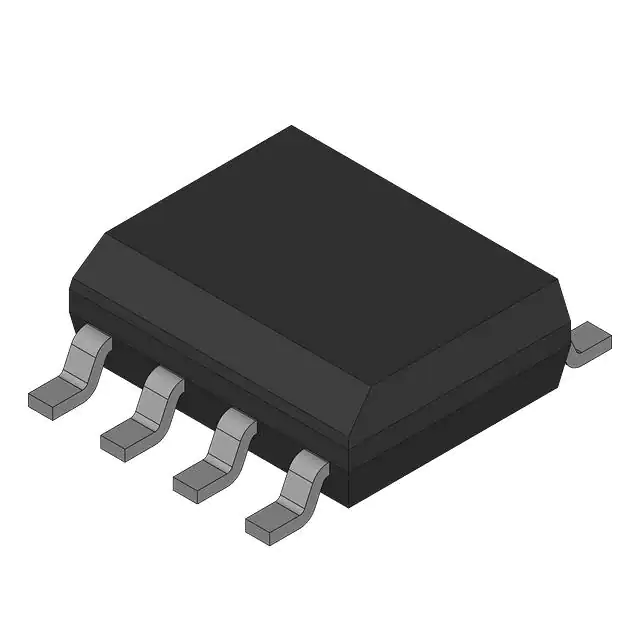
- Part No.:
- LM74CIM-5-TI
- Manufacturer:
- Texas Instruments
- Category:
- Analog and Digital Output
- Package:
- 8-SOIC (0.154", 3.90mm Width)
- Datasheet:
-
 LM74CIM-5-TI.pdf
- Description:
- SERIAL SWITCH/DIGITAL SENSOR, 12
- Quantity:
- Payment:

- Shipping:

Inventory:8,485
Please send an inquiry. Send us your inquiry, and we will respond immediately.
Product details
Overview
LM74CIM-5-TI from Texas Instruments is a 12-bit plus sign delta-sigma temperature sensor IC with SPI/MICROWIRE interface, operating from −55°C to +150°C with 0.0625°C resolution, 3.0V–5.5V supply, and SOIC-8 package - used for real-time thermal monitoring in high-reliability industrial and computing systems.
For engineers reviewing the LM74CIM-5-TI datasheet, LM74CIM-5-TI pinout, LM74CIM-5-TI application, or LM74CIM-5-TI equivalent, key selection considerations include its extended temperature range (−55°C to +150°C), shutdown current ≤8 μA at 5 V, ±1.25°C accuracy over −10°C to +65°C, SOIC-8 footprint compatibility, and SPI/MICROWIRE bus timing compliance per SNIS107K Rev K.
Technical Context
The LM74CIM-5-TI integrates a band-gap temperature sensor and 12-bit plus sign ΔΣ ADC, delivering digitized temperature data in two's complement format with LSB = 0.0625°C. Its serial interface operates as a slave device, clocking data out on SC falling edge and sampling input on rising edge, supporting full-duplex 32-clock transactions (16-bit transmit + 16-bit receive).
It features three internal registers: read-only temperature register (D15–D3 = temperature data, D2 = conversion-complete flag), write-only configuration register (XX FFh enables shutdown), and read-only manufacturer/device ID register (0x8000). Power-on reset initializes the temperature register to 0xFF00xx before first conversion completes.
Key Specifications
| Parameter | Value and Actual Design Meaning |
|---|---|
| Temperature Range | −55°C to +150°C - supports operation in harsh industrial and automotive under-hood environments. |
| Resolution | 0.0625°C per LSB (13-bit two's complement) - enables precise thermal trending and alarm thresholding. |
| Accuracy | ±1.25°C max (−10°C to +65°C); ±2.1°C max (−25°C to +110°C); ±3.0°C max (−55°C to +125°C) - calibrated across full operating range. |
| Supply Voltage | 3.0V to 5.5V - compatible with standard 3.3V and 5V logic rails without level-shifting. |
| Quiescent Current | 520 μA max (active, SOIC); 8 μA max (shutdown at 5 V) - enables low-duty-cycle thermal polling in power-sensitive systems. |
| Interface | SPI/MICROWIRE 3-wire (CS, SC, SI/O) - interoperable with common microcontrollers including COP8SA, Intel 196, and ARM-based hosts. |
| Conversion Time | 280 ms max (SOIC) - deterministic update interval for closed-loop thermal control loops. |
Pinout & Package
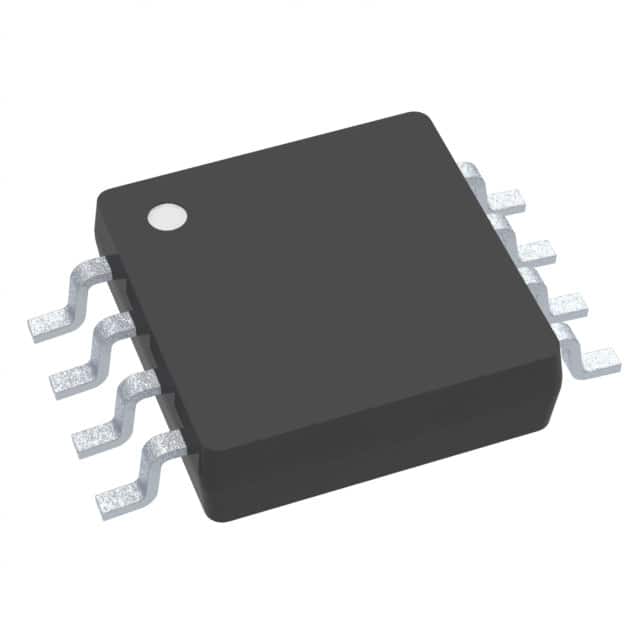
LM74CIM-5-TI uses an 8-pin SOIC package (Package Drawing D), with exposed pad not present. Thermal resistance θJA = 160°C/W when mounted on 2 oz copper PCB.
| Pin | Circuit Role | Design Meaning |
|---|---|---|
| 1 (SI/O) | Serial I/O bidirectional data line | Tri-state capable; transmits temperature/ID data on falling SC edge, receives config commands on rising SC edge. |
| 2 (SC) | Serial clock input (Schmitt-triggered) | Accepts up to 10 MHz clock; defines timing for all serial transfers per SNIS107K timing specs t1–t7. |
| 3 (NC) | No connection | Internally unconnected; must be left floating or tied to GND per layout best practice. |
| 4 (GND) | Power supply ground | Reference for analog and digital sections; requires low-inductance connection to system ground plane. |
| 5 (NC) | No connection | Internally unconnected; no external connection required. |
| 6 (NC) | No connection | Internally unconnected; no external connection required. |
| 7 (CS) | Chip select input | Active-low enable; initiates communication sequence and controls SI/O tri-state behavior. |
| 8 (V+) | Positive supply voltage input | 3.0V–5.5V range; requires 0.1 μF ceramic bypass capacitor placed adjacent to pin. |
Key Features
| Feature | Design Value |
|---|---|
| Delta-sigma ADC architecture | Provides inherent noise rejection and stable 13-bit output without external filtering components. |
| Shutdown mode | Reduces current to ≤8 μA at 5 V, enabling battery-backed thermal watchdog functionality with minimal quiescent drain. |
| Manufacturer ID register | Returns fixed 0x8000 value during shutdown - allows firmware to verify device identity and detect counterfeit parts. |
| Power-on reset behavior | Guarantees known initial state (0xFF00xx) and sets D2 flag only after first valid conversion - eliminates race conditions in boot-time thermal checks. |
| SOIC-8 footprint | Enables drop-in replacement for legacy thermal sensors; compatible with standard reflow profiles (Level-1-260°C-UNLIM). |
Applications
| Server CPU Thermal Monitoring | Disk Drive Spindle Control |
|---|---|
Use Scenario: Real-time die temperature tracking of multi-core x86 processors in 1U rack servers, triggering dynamic frequency scaling or fan ramp-up before thermal throttling occurs. IC Role / Device Role / Timing Role: Primary temperature sensor feeding thermal management firmware via SPI; updates every 280 ms with 0.0625°C granularity. Use Value: Enables predictive thermal mitigation within 1.25°C accuracy across −10°C to +65°C ambient, preventing unexpected shutdowns during sustained compute loads. | Use Scenario: Closed-loop temperature compensation for spindle motor driver ICs in enterprise SAS/SATA HDDs, maintaining rotational stability across enclosure temperature swings. IC Role / Device Role / Timing Role: Localized thermal feedback element mounted near motor driver IC; sampled asynchronously between I/O operations to avoid bus contention. Use Value: Maintains spindle speed accuracy within ±0.5% over −25°C to +110°C junction range using ±2.1°C max error spec and 3.0V–5.5V supply tolerance. |
| Industrial PLC Cabinet Protection | Medical Imaging Power Supply Monitoring |
Use Scenario: Ambient cabinet temperature supervision in DIN-rail mounted programmable logic controllers, activating forced-air cooling or alarm relays when exceeding 70°C threshold. IC Role / Device Role / Timing Role: Standalone thermal sentinel interfaced to PLC's microcontroller GPIO; polled every 2 seconds in low-power sleep mode. Use Value: Delivers ±3.0°C accuracy from −55°C to +125°C, ensuring reliable trip-point detection even during cold-start winter deployments. | Use Scenario: Hot-spot monitoring of DC-DC converter MOSFETs and rectifiers in MRI gradient amplifier power supplies, where >100°C operation demands robust sensing. IC Role / Device Role / Timing Role: High-temp-rated sensor soldered directly to power stage PCB; reads temperature during idle periods to minimize self-heating impact. Use Value: Operates continuously at +150°C with validated ±5.0°C error bound, enabling safe derating of power semiconductors without over-engineering heatsinks. |
Equivalent & Alternatives
The following parts are listed as comparable options for similar temperature sensor applications.
| Alternative Part | Technical Difference | Application Difference | Selection Advice |
|---|---|---|---|
| MAX31855KASA+ | K-type thermocouple interface with cold-junction compensation; no onboard sensor; 0.25°C resolution; 3.3V only. | Requires external thermocouple; suited for high-temp (>300°C) but not direct die sensing. | Select when measuring remote metal surfaces, not IC junction temperature. |
| ADT7410TRZ-REEL7 | I²C interface; 16-bit resolution; ±0.5°C accuracy (−20°C to +85°C); 2.7V–5.5V supply; MSOP-8 package. | Higher accuracy in commercial range but limited to +150°C max; no extended −55°C rating. | Prefer for precision lab equipment where wide industrial temp range is unnecessary. |
Compared with MAX31855KASA+ and ADT7410TRZ-REEL7, LM74CIM-5-TI uniquely combines SOIC-8 SPI compatibility, −55°C to +150°C operation, and integrated delta-sigma sensing - making it optimal for embedded thermal guardbanding where board space, interface simplicity, and extreme temperature coverage are jointly critical.
Availability
LM74CIM-5-TI is available at Aetrix Electronics and suitable for server thermal management, industrial PLC cabinet protection, medical imaging power supply monitoring, and disk drive spindle control requiring stable component supply across extended temperature grades.
Supply support for LM74CIM-5-TI includes scheduled delivery planning, volume procurement assistance, BOM continuity management, traceable sourcing, and lifecycle availability coordination for OEM customers, industrial embedded developers, connected-device designers, and electronics production programs.
Manufacturer
Texas Instruments is a global semiconductor company headquartered in Dallas, Texas, designing and manufacturing analog, embedded processing, and silicon technologies for industrial, automotive, and communications markets.
The LM74CIM-5-TI belongs to TI's precision analog temperature sensor product line, engineered specifically for high-reliability thermal monitoring in systems where extended temperature range, SPI simplicity, and proven long-term stability are mandatory design requirements.
FAQ
What is the absolute maximum supply voltage for LM74CIM-5-TI?
The absolute maximum supply voltage for LM74CIM-5-TI is 6.0 V, as specified in the Absolute Maximum Ratings table of SNIS107K Rev K. Operation above this voltage risks permanent damage. The recommended operating range remains 3.0V to 5.5V, and LM74CIM-5-TI is tested and characterized within that window. Exceeding 6.0 V voids warranty and may degrade the internal band-gap reference or ESD protection structures.
Does LM74CIM-5-TI support true SPI mode 0 (CPOL=0, CPHA=0)?
Yes, LM74CIM-5-TI supports SPI mode 0: SC idles low (CPOL = 0), and data is sampled on the rising edge while shifted out on the falling edge (CPHA = 0). This matches MICROWIRE timing and is explicitly confirmed in the Functional Description section of SNIS107K Rev K. The LM74CIM-5-TI does not support modes 1–3; attempting CPHA=1 will result in invalid data reads due to misaligned sampling windows.
How is temperature data formatted in the LM74CIM-5-TI output register?
LM74CIM-5-TI outputs temperature as a 13-bit two's complement word (D15–D3), where D15 is the sign bit and LSB = 0.0625°C. Bits D2–D0 are reserved (D2 = conversion-complete flag; D1–D0 undefined). For example, +25°C = 0x0C87 (0000 1100 1000 0111), and −25°C = 0xF387 (1111 0011 1000 0111). The LM74CIM-5-TI always transmits MSB-first in 16-bit frames, padding unused bits with zeros or ones per two's complement extension.
Can LM74CIM-5-TI be used in systems with 2.5V logic interfaces?
No, LM74CIM-5-TI requires a minimum supply voltage of 3.0V and is not rated for 2.5V operation. Its digital input thresholds scale with V+ (VIH ≥ 0.7×V+, VIL ≤ 0.3×V+), so at 2.5V, inputs would fall outside guaranteed logic levels. TI specifies LM74CIBP/LM74CITP variants for 2.65V–3.6V operation, but LM74CIM-5-TI is strictly 3.0V–5.5V. Using it below 3.0V may cause intermittent communication or inaccurate conversions.
What is the thermal resistance (θJA) of LM74CIM-5-TI in SOIC-8 package?
The thermal resistance θJA of LM74CIM-5-TI in SOIC-8 package is 160°C/W when mounted on a printed circuit board with 2 oz copper foil, as documented in the Operating Ratings section of SNIS107K Rev K. This value assumes standard JEDEC test board conditions and is used to estimate junction temperature rise above ambient (TJ = TA + PDISS × θJA). Layout variations (copper area, airflow, nearby heat sources) will alter actual θJA.
LM74CIM-5-TI Specifications
- Product attributes
- Attribute value
- Manufacturer:
- Texas Instruments
- Series:
- -
- Package/Case:
- 8-SOIC (0.154", 3.90mm Width)
- Packaging:
- Bulk
- Product Status:
- Active
- Sensor Type:
- Digital, Local
- Sensing Temperature - Local:
- -55°C ~ 150°C
- Sensing Temperature - Remote:
- -
- Output Type:
- SPI
- Voltage - Supply:
- 3V ~ 5.5V
- Resolution:
- 12 b
- Features:
- Shutdown Mode
- Accuracy - Highest (Lowest):
- 1.25°C (±5°C)
- Test Condition:
- -10°C ~ 65°C (-55°C ~ 150°C)
- Operating Temperature:
- -55°C ~ 150°C
- Mounting Type:
- Surface Mount
- Grade:
- -
- Qualification:
- -
- Supplier Device Package:
- 8-SOIC
LM74CIM-5-TI FAQ
1.How can I place an order for LM74CIM-5-TI through Aetrix?
Please submit a Request for Quotation (RFQ) for LM74CIM-5-TI on Aetrix. Our sales agent will provide a competitive quotation and guide you through the order confirmation once you accept the terms.
2.Are the price and stock information for LM74CIM-5-TI reliable?
The price and inventory of LM74CIM-5-TI are updated periodically and may fluctuate due to market conditions. Stock and pricing data are typically refreshed every 24 hours. Quotation validity for LM74CIM-5-TI is usually 5 days.
3.What payment methods are accepted for LM74CIM-5-TI?
We accept Wire Transfer, PayPal, Credit Card, Western Union, MoneyGram, and Escrow for LM74CIM-5-TI transactions.
Note: Certain payment methods may incur a processing fee.
4.How is shipping managed for LM74CIM-5-TI?
LM74CIM-5-TI orders can be shipped via leading logistics carriers, including DHL, UPS, FedEx, TNT, or Registered Mail.
Once your LM74CIM-5-TI order is processed, you will receive an email with the shipment details and tracking number.
Note: Tracking information may take up to 24 hours to appear. Express delivery typically takes 3–5 business days.
5.How can I obtain technical support or documentation for LM74CIM-5-TI?
For technical support, including LM74CIM-5-TI datasheets, pinout diagrams, or application guidance, please contact our engineering support team. They can provide detailed documentation and assistance for your LM74CIM-5-TI requirements.
6.How does Aetrix verify that LM74CIM-5-TI is sourced from the original manufacturer or authorized distributors?
All LM74CIM-5-TI products on Aetrix are procured from qualified distributors and authorized channels. Our dedicated quality assurance team conducts strict verification, including traceability checks and, if necessary, third-party testing. This ensures that LM74CIM-5-TI meets industry standards.
7.What is the process for return or replacement of LM74CIM-5-TI?
All LM74CIM-5-TI units undergo pre-shipment inspection (PSI). If there is an issue with LM74CIM-5-TI, returns or replacements are accepted under the following conditions:
1.Quantity discrepancies, incorrect items, or visible external defects (such as breakage or corrosion), acknowledged by Aetrix.
2.The issue is reported within 90 days of delivery.
3.The LM74CIM-5-TI part is unused and in its original packaging.
Return procedure for LM74CIM-5-TI:
1.Submit a request within 90 days.
2.Obtain a Return Material Authorization (RMA) from Aetrix.
LM74CIM-5-TI Tags
-
MCP9700T-E/TT
Microchip Technology
-
MCP9700T-E/LT
Microchip Technology
-
MCP9701T-E/TT
Microchip Technology
-
MCP9701T-E/LT
Microchip Technology
-
TMP235A4DBZR
Texas Instruments
-
MCP9700AT-E/TT
Microchip Technology
-
MCP9700AT-E/LT
Microchip Technology
-
MCP9701AT-E/LT
Microchip Technology
-
MCP9701AT-E/TT
Microchip Technology
,TO-226_straightlead.jpg)
-
LM335Z
STMicroelectronics
-
TMP1075NDRLR
Texas Instruments
-
TMP1075DGKR
Texas Instruments
Tech Hub

A practical engineering guide to 3.3V and 5V logic compatibility, input thresholds, resistor dividers, translator ICs, MOSFET level shifting, I2C pull-ups, timing limits and power-sequencing risks.

The 74HC595 uses push-pull logic outputs, while the TPIC6B595 uses 50 V open-drain DMOS sinks for higher-power loads. This guide compares timing, current limits, 3.3 V interfacing, load wiring, thermal…

The 74HC595 converts serial data into eight stable parallel outputs. This guide covers pin functions, shift and storage timing, OE and MR behavior, drive-current limits, cascading, voltage compatibilit…

A technical comparison of level-sensitive latches and edge-triggered flip-flops, covering timing windows, setup and hold limits, master–slave operation, time borrowing, race-through, HDL inference and…

A D latch stores one bit while Enable controls when data can pass. This reference covers gate-level operation, truth tables, transparency, setup and hold timing, LE versus OE, common ICs and practical …

An SR latch stores one bit through cross-coupled feedback. This engineering reference covers NOR and NAND implementations, truth tables, forbidden-state recovery, gated operation, switch debouncing, fa…

Latch circuits retain one bit through feedback. This technical reference covers SR and D latches, truth tables, transparency, timing limits, latch-versus-flip-flop behavior, applications and common log…

An engineering guide to LED driver operation, constant-current and constant-voltage outputs, linear and switching topologies, dimming, IC selection, calculations, replacement compatibility, and fault c…

Operational amplifier guide covering op amp basics, feedback, ideal vs real op amps, common configurations, buffer circuits, offset, bias current, gain-bandwidth, slew rate, rail-to-rail limits and sel…

Jumper cables guide covering safe connection order, red and black clamp placement, final ground connection, cable gauge, length, clamp quality, copper vs CCA cables, jump starter comparison and battery…


