
 My Inquiry
 My Account


NXP Semiconductors LM75BD,118
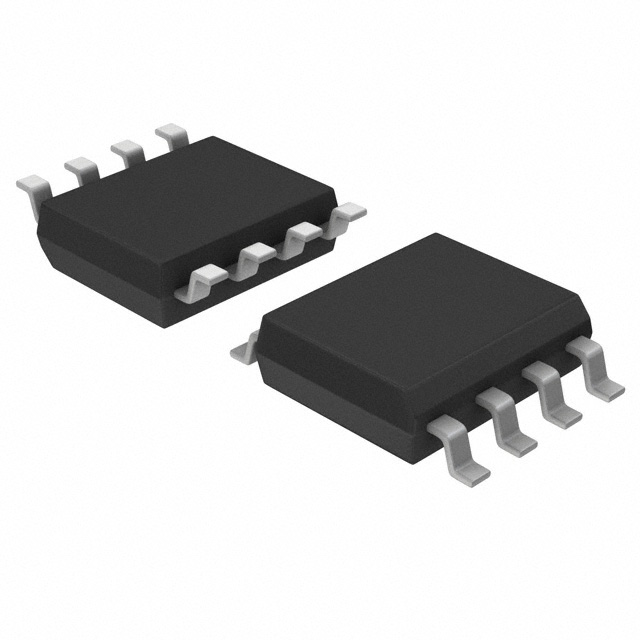
- Part No.:
- LM75BD,118
- Manufacturer:
- NXP Semiconductors
- Category:
- Analog and Digital Output
- Package:
- 8-SOIC (0.154", 3.90mm Width)
- Datasheet:
-
 LM75BD,118.pdf
- Description:
- SENSOR DIGITAL -55C-125C 8SO
- Quantity:
- Payment:

- Shipping:

Inventory:30,894
Please send an inquiry. Send us your inquiry, and we will respond immediately.
Product details
Overview
LM75BD,118 from NXP Semiconductors is a digital temperature sensor and thermal watchdog IC featuring an on-chip bandgap sensor, 11-bit sigma-delta ADC, I²C interface, open-drain OS output, and programmable overtemperature shutdown with hysteresis - used for ambient temperature monitoring and system-level thermal protection in embedded controllers and PC motherboards.
For engineers reviewing the LM75BD,118 datasheet, LM75BD,118 pinout, LM75BD,118 application, or LM75BD,118 equivalent, key selection considerations include its 0.125 °C resolution, −55 °C to +125 °C operating range, SO8 package, 2.8–5.5 V supply, and configurable OS comparator/interrupt mode with fault queue.
Technical Context
The LM75BD,118 implements a dedicated sigma-delta A/D converter with 11-bit two's complement output (0.125 °C resolution), independent of I²C bus activity - enabling non-disruptive register reads during conversion. Its thermal watchdog logic compares temperature data against user-programmable Tos (overtemperature threshold) and Thyst (hysteresis) registers using only the 9 MSB bits of the Temp register.
OS output behavior is fully configurable: polarity (active-HIGH/LOW), mode (comparator or interrupt), and fault queue depth (1/2/4/6 consecutive faults). At power-up, it defaults to normal mode, OS comparator mode, 80 °C shutdown threshold, 75 °C hysteresis, and LOW-active OS - enabling immediate stand-alone thermostat operation without configuration.
Key Specifications
| Parameter | Value and Actual Design Meaning |
|---|---|
| Temperature Range | −55 °C to +125 °C - supports industrial and automotive-adjacent thermal monitoring environments. |
| Resolution | 0.125 °C - enables precise detection of thermal drift or small ambient shifts in closed-loop systems. |
| Accuracy | ±2 °C (−25 °C to +100 °C); ±3 °C (−55 °C to +125 °C) - meets requirements for system-level thermal management where absolute calibration is secondary to relative trend detection. |
| Supply Voltage | 2.8 V to 5.5 V - compatible with 3.3 V and 5 V logic domains without level-shifting. |
| Shutdown Current | 1.0 μA - allows ultra-low-power thermal monitoring during system sleep states. |
| I²C Bus Speed | 20 Hz to 400 kHz - supports standard and fast-mode I²C, with built-in 50 ms bus fault timeout to prevent lockup. |
| Address Pins | A0/A1/A2 - enable up to eight LM75BD,118 devices on a single I²C bus without address conflict. |
Pinout & Package
LM75BD,118 is housed in an 8-pin SO8 (SOT96-1) plastic small outline package, 3.9 mm body width, surface-mount, leaded package with standard JEDEC footprint.
| Pin/Terminal | Circuit Role | Design Meaning |
|---|---|---|
| 1: SDA | I²C bidirectional data line | Open-drain; requires external pull-up; supports multi-master arbitration and clock stretching. |
| 2: SCL | I²C serial clock input | Input-only; synchronizes all data transfers; tolerant of 400 kHz fast-mode timing. |
| 3: OS | Overtemperature shutdown output | Open-drain; active upon threshold breach; polarity and mode (comparator/interrupt) software-configurable. |
| 4: GND | Ground reference | System ground return path; must be low-impedance to minimize measurement error. |
| 5: A2 | I²C slave address bit 2 | Logic input; sets LSB of 7-bit address (1001xxx); tied HIGH/LOW to avoid floating. |
| 6: A1 | I²C slave address bit 1 | Logic input; completes 3-bit address encoding; must be externally biased. |
| 7: A0 | I²C slave address bit 0 | Logic input; final address bit; enables up to eight devices per bus. |
| 8: VCC | Power supply | 2.8–5.5 V input; decoupling capacitor recommended near pin for noise immunity. |
Key Features
| Feature | Design Value |
|---|---|
| Stand-alone thermostat at power-up | Defaults to 80 °C shutdown / 75 °C hysteresis - provides immediate thermal protection without host initialization. |
| Configurable OS fault queue | Programmable 1/2/4/6 consecutive faults required before OS activation - suppresses false triggers from transient noise. |
| Non-intrusive I²C access | Temp register reads do not halt ongoing sigma-delta conversion - ensures continuous thermal sampling during host communication. |
| Multi-device I²C scalability | Three hardware address pins (A0–A2) support up to eight LM75BD,118 sensors on one bus - ideal for multi-zone thermal monitoring. |
| ESD and latch-up robustness | 4500 V HBM / 1000 V CDM ESD rating and >100 mA latch-up immunity - suitable for manufacturing and field-replaceable modules. |
Applications
| Server Thermal Monitoring | Industrial PLC Temperature Sensing |
|---|---|
Use Scenario: Real-time CPU/die temperature tracking and fan speed control in 1U rack servers. IC Role / Device Role / Timing Role: Digital temperature sensor providing 0.125 °C resolution readings via I²C to BMC controller every 100 ms. Use Value: Enables dynamic thermal throttling and predictive fan control without requiring external ADC or signal conditioning. | Use Scenario: Ambient cabinet temperature supervision in DIN-rail mounted programmable logic controllers. IC Role / Device Role / Timing Role: Stand-alone thermal watchdog triggering relay cutoff when enclosure exceeds 70 °C, using preconfigured OS comparator mode. Use Value: Eliminates need for microcontroller firmware intervention - failsafe shutdown occurs even if main CPU is unresponsive. |
| PC Motherboard Health Monitoring | Embedded Edge Gateway Thermal Management |
Use Scenario: Chipset and VRM hotspot detection on consumer and workstation motherboards. IC Role / Device Role / Timing Role: I²C-connected sensor feeding temperature data to EC (Embedded Controller) for BIOS-level thermal policy enforcement. Use Value: Supports accurate +/−2 °C accuracy across −25 °C to +100 °C range - sufficient for motherboard thermal margining and alerting. | Use Scenario: Thermal derating of cellular modem and Wi-Fi SoC in outdoor-rated edge gateways. IC Role / Device Role / Timing Role: Low-power (1.0 μA shutdown current) sensor polling temperature during idle periods and waking host on threshold breach. Use Value: Extends battery life in intermittently powered deployments while maintaining reliable overtemperature response. |
Equivalent & Alternatives
The following parts are listed as comparable options for similar digital temperature sensor applications.
| Alternative Part | Technical Difference | Application Difference | Selection Advice |
|---|---|---|---|
| STLM75CDT | Same 0.125 °C resolution, −55 °C to +125 °C range, SO8 package, but uses different I²C address map (1001101b default) and lacks bus fault timeout. | Requires address reconfiguration in multi-sensor designs; no built-in bus hang protection - may require external I²C watchdog logic. | Select STLM75CDT only if legacy STMicro design reuse is prioritized over bus robustness. |
| MAX31820MUA+ | 1-Wire interface (not I²C), 0.125 °C resolution, −55 °C to +125 °C, μMAX-8 package - higher quiescent current (5 μA shutdown) and single-wire topology. | Reduces wiring count in distributed sensing but eliminates multi-drop I²C scalability; incompatible with existing I²C infrastructure. | Choose MAX31820MUA+ only for new 1-Wire-based architectures where wire count reduction outweighs protocol migration cost. |
Compared with STLM75CDT and MAX31820MUA+, the LM75BD,118 offers native I²C compatibility with bus fault recovery, standardized address scheme (1001xxx), and lowest shutdown current - making it optimal for high-reliability, multi-sensor, I²C-based thermal monitoring in industrial and computing platforms.
Availability
LM75BD,118 is available at Aetrix Electronics and suitable for server thermal monitoring, industrial PLC temperature sensing, and PC motherboard health monitoring requiring stable component supply across extended temperature ranges and long production lifecycles.
Supply support for LM75BD,118 includes scheduled delivery planning, volume procurement assistance, BOM continuity management, traceable sourcing, and lifecycle availability coordination for OEM customers, industrial embedded developers, connected-device designers, and electronics production programs.
Manufacturer
NXP Semiconductors is a global semiconductor company headquartered in Eindhoven, Netherlands, specializing in secure connectivity solutions for automotive, industrial, and IoT applications.
The LM75B product line was designed as a drop-in upgrade to the industry-standard LM75, delivering enhanced resolution (0.125 °C), wider supply range (2.8–5.5 V), and improved thermal watchdog flexibility - targeting embedded thermal management in space-constrained, cost-sensitive systems.
FAQ
What is the default power-up configuration of the LM75BD,118?
At power-up, the LM75BD,118 initializes in normal operation mode, OS comparator mode, with Tos = 80 °C, Thyst = 75 °C, OS active LOW, and fault queue = 1. This allows immediate stand-alone thermostat functionality without host initialization. The first temperature reading after power-up is invalid and must be discarded; subsequent reads reflect valid conversions completed every ~100 ms.
Does the LM75BD,118 support multiple devices on the same I²C bus?
Yes, the LM75BD,118 supports up to eight devices on a single I²C bus using its three hardware address pins (A0, A1, A2). Each pin can be tied HIGH or LOW to configure the three LSBs of the 7-bit slave address (MSBs fixed as 1001), yielding addresses from 1001000b to 1001111b. All LM75BD,118 units share identical functionality regardless of address configuration.
How does the OS output behave in comparator versus interrupt mode on the LM75BD,118?
In comparator mode, the OS output activates when temperature exceeds Tos and deactivates when it falls below Thyst - behaving like a hardware thermostat. In interrupt mode, OS activates on Tos breach and remains active until any register is read, then reactivates only after Thyst is crossed again. Mode selection is controlled by bit B1 in the Configuration register, and both modes respect the programmed fault queue depth.
What is the temperature resolution and accuracy specification of the LM75BD,118?
The LM75BD,118 provides 0.125 °C resolution via its 11-bit two's complement temperature register. Accuracy is ±2 °C over −25 °C to +100 °C and ±3 °C over the full −55 °C to +125 °C range. These values are measured under specified test conditions and represent typical performance - not guaranteed min/max limits across process and voltage variation.
Can the LM75BD,118 operate from a 3.3 V supply?
Yes, the LM75BD,118 operates across a 2.8 V to 5.5 V supply range, making it fully compatible with 3.3 V systems. Its I²C interface functions correctly at 3.3 V logic levels, and all specifications - including temperature accuracy, resolution, and shutdown current (1.0 μA) - are validated across this entire voltage range per the official NXP datasheet Rev. 6.1.
LM75BD,118 Specifications
- Product attributes
- Attribute value
- Manufacturer:
- NXP Semiconductors
- Series:
- -
- Package/Case:
- 8-SOIC (0.154", 3.90mm Width)
- Packaging:
- Tape & Reel (TR)
- Product Status:
- Active
- Sensor Type:
- Digital, Local
- Sensing Temperature - Local:
- -55°C ~ 125°C
- Sensing Temperature - Remote:
- -
- Output Type:
- I2C
- Voltage - Supply:
- 2.8V ~ 5.5V
- Resolution:
- 11 b
- Features:
- Output Switch, Programmable Limit
- Accuracy - Highest (Lowest):
- ±2°C (±3°C)
- Test Condition:
- -25°C ~ 100°C (-55°C ~ 125°C)
- Operating Temperature:
- -55°C ~ 125°C
- Mounting Type:
- Surface Mount
- Grade:
- -
- Qualification:
- -
- Supplier Device Package:
- 8-SO
LM75BD,118 FAQ
1.How can I place an order for LM75BD,118 through Aetrix?
Please submit a Request for Quotation (RFQ) for LM75BD,118 on Aetrix. Our sales agent will provide a competitive quotation and guide you through the order confirmation once you accept the terms.
2.Are the price and stock information for LM75BD,118 reliable?
The price and inventory of LM75BD,118 are updated periodically and may fluctuate due to market conditions. Stock and pricing data are typically refreshed every 24 hours. Quotation validity for LM75BD,118 is usually 5 days.
3.What payment methods are accepted for LM75BD,118?
We accept Wire Transfer, PayPal, Credit Card, Western Union, MoneyGram, and Escrow for LM75BD,118 transactions.
Note: Certain payment methods may incur a processing fee.
4.How is shipping managed for LM75BD,118?
LM75BD,118 orders can be shipped via leading logistics carriers, including DHL, UPS, FedEx, TNT, or Registered Mail.
Once your LM75BD,118 order is processed, you will receive an email with the shipment details and tracking number.
Note: Tracking information may take up to 24 hours to appear. Express delivery typically takes 3–5 business days.
5.How can I obtain technical support or documentation for LM75BD,118?
For technical support, including LM75BD,118 datasheets, pinout diagrams, or application guidance, please contact our engineering support team. They can provide detailed documentation and assistance for your LM75BD,118 requirements.
6.How does Aetrix verify that LM75BD,118 is sourced from the original manufacturer or authorized distributors?
All LM75BD,118 products on Aetrix are procured from qualified distributors and authorized channels. Our dedicated quality assurance team conducts strict verification, including traceability checks and, if necessary, third-party testing. This ensures that LM75BD,118 meets industry standards.
7.What is the process for return or replacement of LM75BD,118?
All LM75BD,118 units undergo pre-shipment inspection (PSI). If there is an issue with LM75BD,118, returns or replacements are accepted under the following conditions:
1.Quantity discrepancies, incorrect items, or visible external defects (such as breakage or corrosion), acknowledged by Aetrix.
2.The issue is reported within 90 days of delivery.
3.The LM75BD,118 part is unused and in its original packaging.
Return procedure for LM75BD,118:
1.Submit a request within 90 days.
2.Obtain a Return Material Authorization (RMA) from Aetrix.
LM75BD,118 Tags
-
MCP9700T-E/TT
Microchip Technology
-
MCP9700T-E/LT
Microchip Technology
-
MCP9701T-E/TT
Microchip Technology
-
MCP9701T-E/LT
Microchip Technology
-
TMP235A4DBZR
Texas Instruments
-
MCP9700AT-E/TT
Microchip Technology
-
MCP9700AT-E/LT
Microchip Technology
-
MCP9701AT-E/LT
Microchip Technology
-
MCP9701AT-E/TT
Microchip Technology
,TO-226_straightlead.jpg)
-
LM335Z
STMicroelectronics
-
TMP1075NDRLR
Texas Instruments
-
TMP1075DGKR
Texas Instruments
Tech Hub

A practical engineering guide to 3.3V and 5V logic compatibility, input thresholds, resistor dividers, translator ICs, MOSFET level shifting, I2C pull-ups, timing limits and power-sequencing risks.

The 74HC595 uses push-pull logic outputs, while the TPIC6B595 uses 50 V open-drain DMOS sinks for higher-power loads. This guide compares timing, current limits, 3.3 V interfacing, load wiring, thermal…

The 74HC595 converts serial data into eight stable parallel outputs. This guide covers pin functions, shift and storage timing, OE and MR behavior, drive-current limits, cascading, voltage compatibilit…

A technical comparison of level-sensitive latches and edge-triggered flip-flops, covering timing windows, setup and hold limits, master–slave operation, time borrowing, race-through, HDL inference and…

A D latch stores one bit while Enable controls when data can pass. This reference covers gate-level operation, truth tables, transparency, setup and hold timing, LE versus OE, common ICs and practical …

An SR latch stores one bit through cross-coupled feedback. This engineering reference covers NOR and NAND implementations, truth tables, forbidden-state recovery, gated operation, switch debouncing, fa…

Latch circuits retain one bit through feedback. This technical reference covers SR and D latches, truth tables, transparency, timing limits, latch-versus-flip-flop behavior, applications and common log…

An engineering guide to LED driver operation, constant-current and constant-voltage outputs, linear and switching topologies, dimming, IC selection, calculations, replacement compatibility, and fault c…

Operational amplifier guide covering op amp basics, feedback, ideal vs real op amps, common configurations, buffer circuits, offset, bias current, gain-bandwidth, slew rate, rail-to-rail limits and sel…

Jumper cables guide covering safe connection order, red and black clamp placement, final ground connection, cable gauge, length, clamp quality, copper vs CCA cables, jump starter comparison and battery…


