
 My Inquiry
 My Account


Texas Instruments LM82CIMQA/NOPB
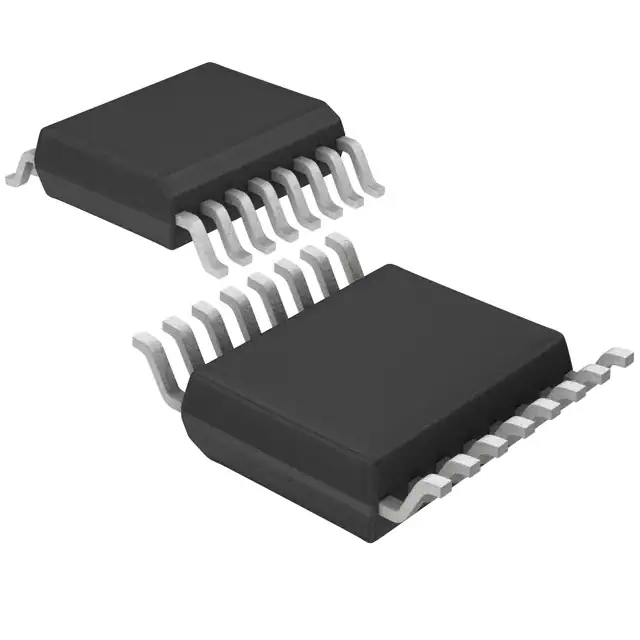
- Part No.:
- LM82CIMQA/NOPB
- Manufacturer:
- Texas Instruments
- Category:
- Analog and Digital Output
- Package:
- 16-SSOP (0.154", 3.90mm Width)
- Datasheet:
-
 LM82CIMQA/NOPB.pdf
- Description:
- SENSOR DIGITAL -40C-125C 16SSOP
- Quantity:
- Payment:

- Shipping:

Inventory:175
Please send an inquiry. Send us your inquiry, and we will respond immediately.
Product details
Overview
LM82CIMQA/NOPB from Texas Instruments is a dual-sensing digital temperature monitor IC with local die and remote diode junction measurement capability, 7-bit + sign temperature data format (1°C resolution), SMBus/I²C-compatible two-wire interface, and dual open-drain interrupt outputs (INT and T_CRIT_A) for thermal event detection in embedded systems.
For engineers reviewing the LM82CIMQA/NOPB datasheet, LM82CIMQA/NOPB pinout, LM82CIMQA/NOPB application, or LM82CIMQA/NOPB equivalent, this page delivers verified specifications, validated pin functions, confirmed thermal accuracy across operating range, real-world interrupt behavior, and direct alternative options for system-level thermal management design.
Technical Context
The LM82CIMQA/NOPB integrates a Delta-Sigma ADC to digitize both on-chip bandgap voltage (local temperature) and forward voltage drop across an external p-n junction (remote diode), supporting simultaneous monitoring of CPU die and board-level hotspots. Its SMBus 1.1 TIMEOUT-compliant interface enables robust communication under bus contention or master reset conditions.
Two independent programmable thresholds - per-temperature T_HIGH registers (LHS/RHS) and global T_CRIT register - drive dedicated open-drain outputs with configurable polarity and masking. Status register bits reflect alarm source (LCRIT, RCRIT, LHIGH, RHIGH, OPEN), enabling precise root-cause identification without polling all registers.
Key Specifications
| Parameter | Value and Actual Design Meaning |
|---|---|
| Supply Voltage | 3.0 V to 3.6 V - ensures compatibility with 3.3 V logic domains and avoids level-shifting in host microcontroller interfaces. |
| Local Temp Accuracy | ±3.0°C max (0°C to +85°C) - sufficient for board-level ambient and IC junction monitoring without calibration. |
| Remote Diode Accuracy | ±3°C max (+25°C to +100°C); ±4°C max (0°C to +125°C) - supports reliable CPU/GPU thermal tracking using integrated diodes. |
| Conversion Time | 600 ms max for full local + remote sequence - defines minimum thermal response latency for closed-loop fan control. |
| SMBus Clock Frequency | 10 kHz to 100 kHz - compatible with standard SMBus controllers and tolerant of low-speed industrial buses. |
| Interrupt Outputs | INT (per-temperature HIGH alert) and T_CRIT_A (global critical threshold) - enable hardware-triggered system shutdown or throttling without software polling. |
| Address Select Pins | ADD0/ADD1 support 9 unique SMBus addresses (0x18–0x1E, 0x29–0x2B, 0x4C–0x4E) - allows multi-sensor deployment on single bus without address conflict. |
Pinout & Package
LM82CIMQA/NOPB is housed in a 16-pin SSOP (DBQ) package with 0.65 mm pitch, optimized for compact PCB layouts and thermal coupling to adjacent components.
| Pin/Terminal | Circuit Role | Design Meaning |
|---|---|---|
| VCC (Pin 2) | Positive supply input | Must be decoupled locally with ≥0.1 µF ceramic capacitor; powers internal ADC, logic, and diode bias circuitry. |
| GND (Pins 7, 8) | Power ground reference | Dual ground pins reduce ground bounce during conversion and improve noise immunity for analog sensing path. |
| D+ (Pin 3) | Diode current source | Drives constant current into remote diode anode; open when unused - prevents false +127°C readings. |
| D− (Pin 4) | Diode return sink | Completes remote diode bias loop; must float if D+ is unused - avoids leakage-induced measurement error. |
| ADD0/ADD1 (Pins 6, 10) | SMBus address select inputs | Tri-level capable (GND/VCC/floating); latched at first SMBus transaction - enables static address configuration without EEPROM. |
| SMBData (Pin 12) | Bi-directional serial data line | Open-drain output requires external pull-up; supports shared bus arbitration and collision detection per SMBus spec. |
| SMBCLK (Pin 14) | Serial clock input | Master-generated clock; timeout reset triggered if held low >25 ms - recovers from bus lockup without device reset. |
| INT (Pin 11) | Programmable interrupt output | Asserts when any temperature exceeds its T_HIGH limit; polarity configurable via Configuration Register bit D1. |
| T_CRIT_A (Pin 16) | Critical temperature alarm | Asserts when local or remote reading exceeds T_CRIT register value; masked per sensor via Configuration Register bits D2/D4. |
Key Features
| Feature | Design Value |
|---|---|
| Local + remote dual sensing | Enables concurrent monitoring of system ambient (via LM82 die) and processor junction (via CPU diode), eliminating need for separate sensors. |
| Two independent interrupt outputs | INT signals per-sensor over-temperature events; T_CRIT_A provides fail-safe shutdown trigger - simplifies interrupt handling in resource-constrained hosts. |
| 9-address SMBus configurability | ADD0/ADD1 tri-level inputs allow up to nine LM82CIMQA/NOPB devices on one bus without address jumpers or firmware reconfiguration. |
| Diode fault detection | Automatically flags open-circuit (D+ floating → +127°C + OPEN bit) or shorted diode (D+ to GND → 0°C), preventing false thermal alarms. |
| Power-on defaults | Preconfigured T_CRIT = 127°C and T_HIGH = 127°C ensure safe startup before host firmware initializes registers - no risk of immediate alarm assertion. |
Applications
| Server CPU Thermal Monitoring | Laptop GPU Junction Sensing |
|---|---|
Use Scenario: Real-time tracking of Intel Xeon or AMD EPYC processor die temperature using integrated on-die diode. IC Role / Device Role / Timing Role: LM82CIMQA/NOPB acts as remote diode interface and local ambient sensor, reporting temperature every 600 ms via SMBus to BMC or host controller. Use Value: Enables dynamic fan speed control and thermal throttling based on actual silicon junction temperature, not package case readings - improves reliability and performance headroom. | Use Scenario: Detecting overheating in discrete NVIDIA or AMD graphics processors mounted on laptop motherboards. IC Role / Device Role / Timing Role: LM82CIMQA/NOPB measures GPU diode voltage while simultaneously sensing local board temperature near VRM section. Use Value: Dual-point sensing distinguishes between GPU self-heating and ambient board rise, allowing differentiated cooling responses and avoiding unnecessary throttling. |
| Industrial PLC Cabinet Management | Network Switch ASIC Thermal Guard |
Use Scenario: Monitoring temperature gradients inside sealed industrial control cabinets housing multiple I/O modules and power supplies. IC Role / Device Role / Timing Role: LM82CIMQA/NOPB deployed at cabinet top (remote diode on heat-generating module) and base (local sensing) to detect convection-driven hot spots. Use Value: Identifies airflow blockages or failing fans by comparing local vs. remote delta-T trends - enables predictive maintenance before thermal shutdown occurs. | Use Scenario: Protecting Broadcom or Marvell switch ASICs in enterprise Ethernet switches from thermal runaway during sustained packet forwarding. IC Role / Device Role / Timing Role: LM82CIMQA/NOPB connected to ASIC's thermal diode and configured with T_CRIT = 110°C to assert T_CRIT_A for hardware-initiated link down. Use Value: Bypasses software stack latency by triggering immediate traffic rerouting or port disable via T_CRIT_A signal - prevents ASIC damage during burst load conditions. |
Equivalent & Alternatives
The following parts are listed as comparable options for similar dual-sensing temperature monitoring applications.
| Alternative Part | Technical Difference | Application Difference | Selection Advice |
|---|---|---|---|
| LM84CIMQA/NOPB | Pin-for-pin and register-compatible; adds extended remote accuracy (±2°C from +25°C to +100°C) and improved SMBus timing margins. | Preferred where tighter remote diode tolerance is required for high-end server thermal control loops. | Select LM84CIMQA/NOPB only if enhanced remote accuracy justifies cost premium; LM82CIMQA/NOPB remains optimal for general-purpose thermal supervision. |
| MAX6657ESA+ | Single-supply 3.0 V to 5.5 V operation; remote diode accuracy ±3°C (0°C to +85°C); no T_CRIT_A output - uses single INT with status register decoding. | Suitable for legacy 5 V systems or designs where critical alarm must be software-managed rather than hardware-triggered. | Choose MAX6657ESA+ when interfacing with 5 V SMBus masters or when board space constraints favor SOIC-8 over SSOP-16. |
Compared with LM82CIMQA/NOPB, LM84CIMQA/NOPB offers higher remote accuracy but identical footprint and register map, while MAX6657ESA+ trades T_CRIT_A hardware alarm for wider supply range and smaller package - selection depends on accuracy priority, voltage domain, and alarm architecture requirements.
Availability
LM82CIMQA/NOPB is available at Aetrix Electronics and suitable for server thermal management, industrial PLC cabinet monitoring, network switch ASIC protection, and laptop GPU junction sensing requiring stable component supply across long production lifecycles.
Supply support for LM82CIMQA/NOPB includes scheduled delivery planning, volume procurement assistance, BOM continuity management, traceable sourcing, and lifecycle availability coordination for OEM customers, industrial embedded developers, connected-device designers, and electronics production programs.
Manufacturer
Texas Instruments is a global semiconductor leader specializing in analog and embedded processing technologies, with decades of expertise in precision sensing and industrial-grade interface solutions.
The LM82CIMQA/NOPB belongs to TI's precision temperature sensor product line, designed specifically for real-time thermal supervision of microprocessors, GPUs, FPGAs, and power semiconductors in computing, communications, and industrial automation systems.
FAQ
What is the operating temperature range of the LM82CIMQA/NOPB?
The LM82CIMQA/NOPB operates across −40°C to +125°C ambient temperature. Its local temperature sensing accuracy is ±3.0°C maximum from 0°C to +85°C, and ±4°C maximum across the full range. Remote diode accuracy is ±3°C from +25°C to +100°C, and ±4°C from 0°C to +125°C - verified per SNIS113D datasheet revision March 2013.
Does the LM82CIMQA/NOPB require external components for basic operation?
Yes - LM82CIMQA/NOPB requires a 0.1 µF ceramic decoupling capacitor on VCC, external pull-up resistors on SMBData, SMBCLK, INT, and T_CRIT_A (typically 4.7 kΩ), and proper routing of D+ and D− to a remote diode or left floating if unused. No external oscillator or calibration components are needed - all timing and conversion are fully integrated.
How does the LM82CIMQA/NOPB handle remote diode faults?
The LM82CIMQA/NOPB performs automatic diode fault detection before each remote conversion. An open diode (D+ floating) returns +127°C and sets the OPEN bit in the Status Register (02h). A shorted D+ (to GND or D−) returns 0°C without setting OPEN. These conditions are reported in real time, enabling firmware to distinguish sensor failure from genuine overtemperature events.
Can multiple LM82CIMQA/NOPB devices share the same SMBus?
Yes - LM82CIMQA/NOPB supports up to nine devices on one SMBus via ADD0 and ADD1 tri-level address select pins. Each combination (GND/VCC/floating) yields a unique 7-bit slave address (e.g., 0x18–0x1E, 0x29–0x2B, 0x4C–0x4E). Address is latched at first SMBus access and remains fixed until power cycle - no runtime reconfiguration needed.
What happens to the LM82CIMQA/NOPB outputs during power-up?
At power-up, LM82CIMQA/NOPB initializes with default thresholds: T_CRIT = 127°C, LHS = RHIGH = 127°C, Configuration Register = 0x00 (INT enabled, T_CRIT_A enabled), and Status Register = 0x00. INT and T_CRIT_A remain deasserted until a temperature exceeds its programmed limit - ensuring safe startup without spurious interrupts.
LM82CIMQA/NOPB Specifications
- Product attributes
- Attribute value
- Manufacturer:
- Texas Instruments
- Series:
- -
- Package/Case:
- 16-SSOP (0.154", 3.90mm Width)
- Packaging:
- Bulk
- Product Status:
- Obsolete
- Sensor Type:
- Digital, Local/Remote
- Sensing Temperature - Local:
- -40°C ~ 125°C
- Sensing Temperature - Remote:
- -40°C ~ 125°C
- Output Type:
- I2C/SMBus
- Voltage - Supply:
- 3V ~ 3.6V
- Resolution:
- 7 b
- Features:
- Output Switch, Programmable Limit
- Accuracy - Highest (Lowest):
- ±3°C (±4°C)
- Test Condition:
- 0°C ~ 85°C (-40°C ~ 125°C)
- Operating Temperature:
- -40°C ~ 125°C
- Mounting Type:
- Surface Mount
- Grade:
- -
- Qualification:
- -
- Supplier Device Package:
- 16-SSOP
LM82CIMQA/NOPB FAQ
1.How can I place an order for LM82CIMQA/NOPB through Aetrix?
Please submit a Request for Quotation (RFQ) for LM82CIMQA/NOPB on Aetrix. Our sales agent will provide a competitive quotation and guide you through the order confirmation once you accept the terms.
2.Are the price and stock information for LM82CIMQA/NOPB reliable?
The price and inventory of LM82CIMQA/NOPB are updated periodically and may fluctuate due to market conditions. Stock and pricing data are typically refreshed every 24 hours. Quotation validity for LM82CIMQA/NOPB is usually 5 days.
3.What payment methods are accepted for LM82CIMQA/NOPB?
We accept Wire Transfer, PayPal, Credit Card, Western Union, MoneyGram, and Escrow for LM82CIMQA/NOPB transactions.
Note: Certain payment methods may incur a processing fee.
4.How is shipping managed for LM82CIMQA/NOPB?
LM82CIMQA/NOPB orders can be shipped via leading logistics carriers, including DHL, UPS, FedEx, TNT, or Registered Mail.
Once your LM82CIMQA/NOPB order is processed, you will receive an email with the shipment details and tracking number.
Note: Tracking information may take up to 24 hours to appear. Express delivery typically takes 3–5 business days.
5.How can I obtain technical support or documentation for LM82CIMQA/NOPB?
For technical support, including LM82CIMQA/NOPB datasheets, pinout diagrams, or application guidance, please contact our engineering support team. They can provide detailed documentation and assistance for your LM82CIMQA/NOPB requirements.
6.How does Aetrix verify that LM82CIMQA/NOPB is sourced from the original manufacturer or authorized distributors?
All LM82CIMQA/NOPB products on Aetrix are procured from qualified distributors and authorized channels. Our dedicated quality assurance team conducts strict verification, including traceability checks and, if necessary, third-party testing. This ensures that LM82CIMQA/NOPB meets industry standards.
7.What is the process for return or replacement of LM82CIMQA/NOPB?
All LM82CIMQA/NOPB units undergo pre-shipment inspection (PSI). If there is an issue with LM82CIMQA/NOPB, returns or replacements are accepted under the following conditions:
1.Quantity discrepancies, incorrect items, or visible external defects (such as breakage or corrosion), acknowledged by Aetrix.
2.The issue is reported within 90 days of delivery.
3.The LM82CIMQA/NOPB part is unused and in its original packaging.
Return procedure for LM82CIMQA/NOPB:
1.Submit a request within 90 days.
2.Obtain a Return Material Authorization (RMA) from Aetrix.
LM82CIMQA/NOPB Tags
-
MCP9700T-E/TT
Microchip Technology
-
MCP9700T-E/LT
Microchip Technology
-
MCP9701T-E/TT
Microchip Technology
-
MCP9701T-E/LT
Microchip Technology
-
TMP235A4DBZR
Texas Instruments
-
MCP9700AT-E/TT
Microchip Technology
-
MCP9700AT-E/LT
Microchip Technology
-
MCP9701AT-E/LT
Microchip Technology
-
MCP9701AT-E/TT
Microchip Technology
,TO-226_straightlead.jpg)
-
LM335Z
STMicroelectronics
-
TMP1075NDRLR
Texas Instruments
-
TMP1075DGKR
Texas Instruments
Tech Hub

A practical engineering guide to 3.3V and 5V logic compatibility, input thresholds, resistor dividers, translator ICs, MOSFET level shifting, I2C pull-ups, timing limits and power-sequencing risks.

The 74HC595 uses push-pull logic outputs, while the TPIC6B595 uses 50 V open-drain DMOS sinks for higher-power loads. This guide compares timing, current limits, 3.3 V interfacing, load wiring, thermal…

The 74HC595 converts serial data into eight stable parallel outputs. This guide covers pin functions, shift and storage timing, OE and MR behavior, drive-current limits, cascading, voltage compatibilit…

A technical comparison of level-sensitive latches and edge-triggered flip-flops, covering timing windows, setup and hold limits, master–slave operation, time borrowing, race-through, HDL inference and…

A D latch stores one bit while Enable controls when data can pass. This reference covers gate-level operation, truth tables, transparency, setup and hold timing, LE versus OE, common ICs and practical …

An SR latch stores one bit through cross-coupled feedback. This engineering reference covers NOR and NAND implementations, truth tables, forbidden-state recovery, gated operation, switch debouncing, fa…

Latch circuits retain one bit through feedback. This technical reference covers SR and D latches, truth tables, transparency, timing limits, latch-versus-flip-flop behavior, applications and common log…

An engineering guide to LED driver operation, constant-current and constant-voltage outputs, linear and switching topologies, dimming, IC selection, calculations, replacement compatibility, and fault c…

Operational amplifier guide covering op amp basics, feedback, ideal vs real op amps, common configurations, buffer circuits, offset, bias current, gain-bandwidth, slew rate, rail-to-rail limits and sel…

Jumper cables guide covering safe connection order, red and black clamp placement, final ground connection, cable gauge, length, clamp quality, copper vs CCA cables, jump starter comparison and battery…


