
 My Inquiry
 My Account


Texas Instruments LM8323JGR8AXM/NOPB
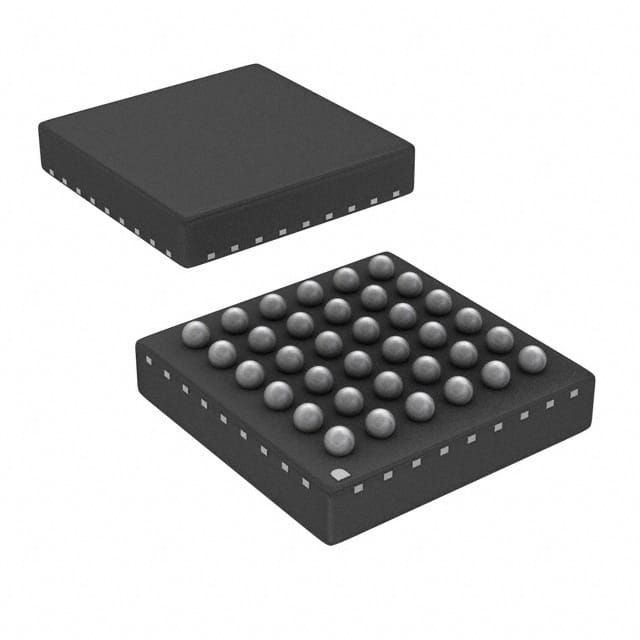
- Part No.:
- LM8323JGR8AXM/NOPB
- Manufacturer:
- Texas Instruments
- Category:
- Controllers
- Package:
- 36-TFBGA
- Datasheet:
-
 LM8323JGR8AXM/NOPB.pdf
- Description:
- IC CONTROLLER I2C 36CSBGA
- Quantity:
- Payment:

- Shipping:

Inventory:4,231
Please send an inquiry. Send us your inquiry, and we will respond immediately.
Product details
Overview
LM8323JGR8AXM/NOPB from Texas Instruments is a dedicated mobile I/O companion IC that offloads keypad scanning, GPIO expansion, and LED brightness control from host processors. It supports up to 8×12 keypad matrices plus 8 special-function keys, operates from 1.8 V ±180 mV, integrates three programmable PWM outputs, and communicates via I²C-compatible ACCESS.bus at up to 400 kHz - enabling low-power human-interface subsystems in compact handheld devices.
For engineers reviewing the LM8323JGR8AXM/NOPB datasheet, LM8323JGR8AXM/NOPB pinout, LM8323JGR8AXM/NOPB application, or LM8323JGR8AXM/NOPB equivalent, key selection considerations include its 36-pin csBGA package, hardware IRQ signaling for key/encoder/PWM events, FIFO-based key-event buffering (15-entry), wake-up capability from Halt mode (<9 µA), and configurable clock sources for PWM (internal ÷64, external 32.768 kHz, or crystal).
Technical Context
The LM8323JGR8AXM/NOPB implements a fixed-function hardware keypad scanner with dedicated scan logic, rotary encoder interface (shared with KP-Y9–Y11), and autonomous FIFO event storage - eliminating host polling overhead. Its internal 2 MHz execution clock drives command parsing, debounce timing, and interrupt generation, while PWM timing derives from either prescaled internal clock or externally supplied 32.768 kHz signal.
Communication uses standard I²C protocol in slave mode with 7-bit ACCESS.bus address selectable via CONFIG_1/CONFIG_2 pins. The device supports 15-event FIFO buffering, hardware-generated IRQ on key press/release/error/encoder change, and configurable active/debounce timing - all programmable via host commands without firmware execution on the LM8323JGR8AXM/NOPB itself.
Key Specifications
| Parameter | Value and Actual Design Meaning |
|---|---|
| Supply Voltage | 1.8 V ±180 mV - Enables direct integration with 1.8 V core logic rails in portable systems without level-shifting. |
| Operating Temperature | –40°C to +85°C - Qualified for industrial and consumer handheld environments including cordless phones and smart remotes. |
| I²C Bus Speed | Up to 400 kHz Fast-mode - Supports responsive host communication without requiring high-speed MCU peripherals. |
| Keypad Support | 8×12 matrix + 8 SF keys - Provides scalable input capacity for QWERTY, numeric, or hybrid keypads with dedicated ground-sink SF key inputs. |
| PWM Outputs | Three independent outputs - Enable smooth LED dimming with programmable ramp-up/down; shared with GPIO_15/CONFIG_2 on PWM_2. |
| FIFO Depth | 15-event buffer - Stores sequential key-press/release codes without host intervention, reducing interrupt frequency and latency. |
| Halt Mode Current | <9 µA at 1.98 V - Achieves ultra-low standby power by halting internal RC clock after configurable inactivity period (default 500 ms). |
Pinout & Package
LM8323JGR8AXM/NOPB uses a 36-pin chip-scale BGA (csBGA) package (TI package code NYB0036A), measuring 3.5 mm × 3.5 mm with 0.5 mm pitch. All pins are electrically validated per TI SNLS273A datasheet Rev. March 2013.
| Pin/Terminal | Circuit Role | Design Meaning |
|---|---|---|
| A6, A5, F1, etc. (KP-X0–X7) | Keypad row inputs / Wake-up inputs | High-impedance inputs with programmable weak pullups; SF keys connect these directly to ground for wake-on-press. |
| C6, C5, B6, etc. (KP-Y0–Y11) | Keypad column outputs | Active-low scan drivers; default drive low after reset; KP-Y9–Y11 shared with rotary encoder when enabled. |
| E2, E1 (ACB_SDA, ACB_SCL) | ACCESS.bus interface | Open-drain I²C-compatible signals; require external pullups; support 400 kHz Fast-mode operation. |
| F3 (IRQ) | Interrupt request output | Active-low, open-drain signal asserting on key events, errors, PWM completion, or encoder changes; programmable push-pull mode. |
| E3 (SLOWCLKOUT) | 32.768 kHz clock output | Buffered output of internal/external 32.768 kHz source; shares pin with KP-Y8 and GPIO_03 - mutually exclusive function. |
| E4, F5, F6, D5, E6 (MUX_IN1/2, MUX_OUT, MUX2_IN1/2) | Digital multiplexer I/O | Configurable analog/digital signal routing paths; disabled by default; require WRITE_CFG to enable. |
| PWM_0–PWM_2 | Pulse-width modulated outputs | Three independent PWM channels; PWM_2 shares pin with GPIO_15 and CONFIG_2; all support LED dimming with ramp control. |
Key Features
| Feature | Design Value |
|---|---|
| Hardware Key-Scan Engine | Autonomous 8×12 matrix scanning with 3–1020 ms programmable debounce; no host CPU cycles required during active scan. |
| 15-Entry Event FIFO | Stores key-press/release codes, error flags, and encoder steps in chronological order - enables burst-read host polling instead of continuous ISR servicing. |
| Wake-Up from Halt Mode | Triggers exit on any key event, SF key press, ACCESS.bus activity, or rotary encoder change - maintains responsiveness while minimizing quiescent current. |
| Triple Programmable PWM | Three independent channels with adjustable frequency and duty cycle; clocked by internal ÷64 (≈32 kHz) or external 32.768 kHz source for precise LED dimming. |
| Rotary Encoder Interface | Hardware-decoded quadrature input using KP-Y9/Y10/Y11; supports incremental position tracking without host software interpretation. |
| Configurable Slave Address | Four I²C addresses selectable via CONFIG_1/CONFIG_2 pins (1000010x to 1000101x); allows multiple LM8323JGR8AXM/NOPB devices on same bus. |
Applications
| Cordless Phone Keypad Subsystem | Smart Remote Control Interface |
|---|---|
|
Use Scenario: Managing 24-key alphanumeric keypad with backlight dimming and wake-on-keypress in battery-powered DECT handsets. IC Role / Device Role / Timing Role: Offloads real-time key scanning, debouncing, and FIFO buffering from baseband MCU; provides synchronized PWM dimming for RGB LED indicators. Use Value: Reduces host MCU wake-ups by >90% versus polling; extends battery life via <9 µA Halt mode; eliminates firmware complexity for matrix decoding and edge detection. |
Use Scenario: Supporting 12-key navigation pad + 4 SF buttons + rotary encoder dial in IR/Bluetooth universal remotes. IC Role / Device Role / Timing Role: Handles simultaneous key+encoder input with hardware event prioritization; delivers timestamped events via IRQ to application processor. Use Value: Enables zero-latency UI response; avoids missed encoder steps during keypress; supports dual-input gestures (e.g., rotate while holding menu key). |
| Industrial Handheld Terminal | Medical Device Keypad Module |
|
Use Scenario: Driving ruggedized 8×8 keypad with status LEDs and tamper-detection SF keys in warehouse scanners. IC Role / Device Role / Timing Role: Provides ESD-hardened I/O expansion (GPIO_00–GPIO_15), dedicated SF key wake-up, and PWM-controlled status illumination. Use Value: Simplifies PCB layout with integrated scan logic; meets IEC 61000-4-2 Level 4 (±15 kV air) via on-chip protection; reduces BOM count by eliminating discrete debounce RC networks. |
Use Scenario: Enabling FDA-compliant tactile interface for infusion pump controls with fail-safe key validation and low-power standby. IC Role / Device Role / Timing Role: Performs hardware-level key validation (multi-key ambiguity detection), stores events in FIFO for deterministic host readout, and asserts IRQ only on confirmed transitions. Use Value: Guarantees no missed critical inputs during battery-saving Halt mode; provides auditable event log via FIFO dump; supports ASIL-B functional safety via error reporting (FIFOOVR/KEYOVR). |
Equivalent & Alternatives
The following parts are listed as comparable options for similar keypad controller and I/O expansion applications.
| Alternative Part | Technical Difference | Application Difference | Selection Advice |
|---|---|---|---|
| TCA6408A | 8-bit I²C GPIO expander only - no keypad scan engine, no PWM, no FIFO, no IRQ prioritization logic. | Limited to simple button monitoring; requires host to implement full matrix scanning and debouncing in firmware. | Select when only basic GPIO extension is needed and host MCU has spare processing bandwidth for key handling. |
| MAX7359 | 8×12 keypad controller with 16-bit GPIO, but no rotary encoder interface, no SLOWCLKOUT, and only two PWM outputs. | Supports larger GPIO count but lacks dedicated SF key inputs and 32.768 kHz clock distribution for synchronized timing. | Prefer when system requires more general-purpose I/O and does not need encoder interface or buffered 32.768 kHz output. |
Compared with TCA6408A and MAX7359, LM8323JGR8AXM/NOPB uniquely integrates hardware-accelerated keypad scanning, rotary encoder decoding, triple PWM, and 32.768 kHz clock buffering - delivering lower total system power, reduced host firmware burden, and deterministic real-time response in space-constrained portable designs.
Availability
LM8323JGR8AXM/NOPB is available at Aetrix Electronics and suitable for cordless phone interfaces, smart remote controls, industrial handheld terminals, and medical device keypads requiring stable component supply, long-term lifecycle support, and guaranteed traceable sourcing.
Supply support for LM8323JGR8AXM/NOPB includes scheduled delivery planning, volume procurement assistance, BOM continuity management, traceable sourcing, and lifecycle availability coordination for OEM customers, industrial embedded developers, connected-device designers, and electronics production programs.
Manufacturer
Texas Instruments is a global semiconductor leader specializing in analog, embedded processing, and connectivity technologies, with over 90 years of innovation in power management, signal chain, and microcontrollers.
The LM8323JGR8AXM/NOPB belongs to TI's Mobile I/O Companion product line, designed specifically to reduce host processor load in battery-powered human-interface applications through integrated keypad scanning, GPIO expansion, and LED control functions.
FAQ
What is the primary function of the LM8323JGR8AXM/NOPB in a system architecture?
The LM8323JGR8AXM/NOPB serves as a dedicated hardware offload engine for keypad scanning, GPIO expansion, and LED brightness control. It autonomously manages up to 8×12 key matrices plus 8 special-function keys, buffers events in a 15-entry FIFO, and generates hardware interrupts - freeing the host MCU from real-time input polling and timing-critical firmware tasks. This role is confirmed in TI's SNLS273A datasheet Section 1 and Figure 2.
Does the LM8323JGR8AXM/NOPB support rotary encoder interfacing, and how is it implemented?
Yes, the LM8323JGR8AXM/NOPB supports rotary encoder interface using KP-Y9, KP-Y10, and KP-Y11 pins - which are repurposed from keypad column outputs when enabled. The device performs hardware quadrature decoding and reports step counts via the READ_ROTATOR command. This functionality is documented in TI SNLS273A Sections "Rotary Encoder Interface" and "APPLICATION EXAMPLE", and requires disabling those pins for keypad use.
How does the LM8323JGR8AXM/NOPB achieve ultra-low power consumption in standby mode?
The LM8323JGR8AXM/NOPB enters Halt mode automatically after a programmable period of inactivity (default 500 ms), stopping its internal RC clock and reducing supply current to <9 µA at 1.98 V. Wake-up occurs on key press, SF key activation, ACCESS.bus activity, or rotary encoder change - ensuring responsiveness without continuous power draw. This behavior is specified in TI SNLS273A Section "HALT MODE" and Figure 7.
Can the LM8323JGR8AXM/NOPB operate without an external crystal, and what clock sources are available for PWM?
Yes, the LM8323JGR8AXM/NOPB operates without an external crystal. Its PWM block supports three clock sources: (1) internal execution clock divided by 64 (≈32 kHz), (2) external 32.768 kHz signal on SLOWCLK pin, or (3) crystal oscillator across XTAL_IN/XTAL_OUT. The WRITE_CLOCK command selects the source, and SLOWCLKOUT can buffer any selected source. Details are in TI SNLS273A Section "CLOCKS" and Table 1.
What is the maximum number of keys supported by the LM8323JGR8AXM/NOPB, and how are special-function keys different from standard keys?
The LM8323JGR8AXM/NOPB supports up to 96 standard keys (8×12 matrix) plus 8 special-function (SF) keys - totaling 104 keys. SF keys connect KP-X[0–7] inputs directly to ground, overriding standard matrix scanning in their row and providing immediate wake-up capability. Unlike standard keys, SF keys do not require column scanning and are immune to ghosting. This distinction is defined in TI SNLS273A Section "Key Features" and "SF Keys".
LM8323JGR8AXM/NOPB Specifications
- Product attributes
- Attribute value
- Manufacturer:
- Texas Instruments
- Package/Case:
- 36-TFBGA
- Programmable:
- Not Verified
- Protocol:
- -
- Function:
- Controller
- Interface:
- I2C
- Standards:
- -
- Voltage - Supply:
- 1.62V ~ 1.98V
- Current - Supply:
- 1.9mA
- Operating Temperature:
- -40°C ~ 85°C
- Supplier Device Package:
- 36-CSBGA (3.5x3.5)
- Grade:
- -
- Qualification:
- -
LM8323JGR8AXM/NOPB FAQ
1.How can I place an order for LM8323JGR8AXM/NOPB through Aetrix?
Please submit a Request for Quotation (RFQ) for LM8323JGR8AXM/NOPB on Aetrix. Our sales agent will provide a competitive quotation and guide you through the order confirmation once you accept the terms.
2.Are the price and stock information for LM8323JGR8AXM/NOPB reliable?
The price and inventory of LM8323JGR8AXM/NOPB are updated periodically and may fluctuate due to market conditions. Stock and pricing data are typically refreshed every 24 hours. Quotation validity for LM8323JGR8AXM/NOPB is usually 5 days.
3.What payment methods are accepted for LM8323JGR8AXM/NOPB?
We accept Wire Transfer, PayPal, Credit Card, Western Union, MoneyGram, and Escrow for LM8323JGR8AXM/NOPB transactions.
Note: Certain payment methods may incur a processing fee.
4.How is shipping managed for LM8323JGR8AXM/NOPB?
LM8323JGR8AXM/NOPB orders can be shipped via leading logistics carriers, including DHL, UPS, FedEx, TNT, or Registered Mail.
Once your LM8323JGR8AXM/NOPB order is processed, you will receive an email with the shipment details and tracking number.
Note: Tracking information may take up to 24 hours to appear. Express delivery typically takes 3–5 business days.
5.How can I obtain technical support or documentation for LM8323JGR8AXM/NOPB?
For technical support, including LM8323JGR8AXM/NOPB datasheets, pinout diagrams, or application guidance, please contact our engineering support team. They can provide detailed documentation and assistance for your LM8323JGR8AXM/NOPB requirements.
6.How does Aetrix verify that LM8323JGR8AXM/NOPB is sourced from the original manufacturer or authorized distributors?
All LM8323JGR8AXM/NOPB products on Aetrix are procured from qualified distributors and authorized channels. Our dedicated quality assurance team conducts strict verification, including traceability checks and, if necessary, third-party testing. This ensures that LM8323JGR8AXM/NOPB meets industry standards.
7.What is the process for return or replacement of LM8323JGR8AXM/NOPB?
All LM8323JGR8AXM/NOPB units undergo pre-shipment inspection (PSI). If there is an issue with LM8323JGR8AXM/NOPB, returns or replacements are accepted under the following conditions:
1.Quantity discrepancies, incorrect items, or visible external defects (such as breakage or corrosion), acknowledged by Aetrix.
2.The issue is reported within 90 days of delivery.
3.The LM8323JGR8AXM/NOPB part is unused and in its original packaging.
Return procedure for LM8323JGR8AXM/NOPB:
1.Submit a request within 90 days.
2.Obtain a Return Material Authorization (RMA) from Aetrix.
LM8323JGR8AXM/NOPB Tags
-
PTN5150AHXMP
NXP Semiconductors
-
USB3740B-AI9-TR
Microchip Technology
-
USB3740B-AI2-TR
Microchip Technology
-
USB3300-EZK-TR
Microchip Technology
-
USB3300-EZK
Microchip Technology
-
FUSB340TMX
onsemi
-
FUSB302BMPX
onsemi
-
DP83826IRHBR
Texas Instruments
-
MCP2518FDT-E/QBB
Microchip Technology
-
FUSB302MPX
onsemi
-
MCP2518FDT-E/SL
Microchip Technology
-
FT260Q-R
FTDI, Future Technology Devices International Ltd
Tech Hub

A practical engineering guide to 3.3V and 5V logic compatibility, input thresholds, resistor dividers, translator ICs, MOSFET level shifting, I2C pull-ups, timing limits and power-sequencing risks.

The 74HC595 uses push-pull logic outputs, while the TPIC6B595 uses 50 V open-drain DMOS sinks for higher-power loads. This guide compares timing, current limits, 3.3 V interfacing, load wiring, thermal…

The 74HC595 converts serial data into eight stable parallel outputs. This guide covers pin functions, shift and storage timing, OE and MR behavior, drive-current limits, cascading, voltage compatibilit…

A technical comparison of level-sensitive latches and edge-triggered flip-flops, covering timing windows, setup and hold limits, master–slave operation, time borrowing, race-through, HDL inference and…

A D latch stores one bit while Enable controls when data can pass. This reference covers gate-level operation, truth tables, transparency, setup and hold timing, LE versus OE, common ICs and practical …

An SR latch stores one bit through cross-coupled feedback. This engineering reference covers NOR and NAND implementations, truth tables, forbidden-state recovery, gated operation, switch debouncing, fa…

Latch circuits retain one bit through feedback. This technical reference covers SR and D latches, truth tables, transparency, timing limits, latch-versus-flip-flop behavior, applications and common log…

An engineering guide to LED driver operation, constant-current and constant-voltage outputs, linear and switching topologies, dimming, IC selection, calculations, replacement compatibility, and fault c…

Operational amplifier guide covering op amp basics, feedback, ideal vs real op amps, common configurations, buffer circuits, offset, bias current, gain-bandwidth, slew rate, rail-to-rail limits and sel…

Jumper cables guide covering safe connection order, red and black clamp placement, final ground connection, cable gauge, length, clamp quality, copper vs CCA cables, jump starter comparison and battery…


