
 My Inquiry
 My Account


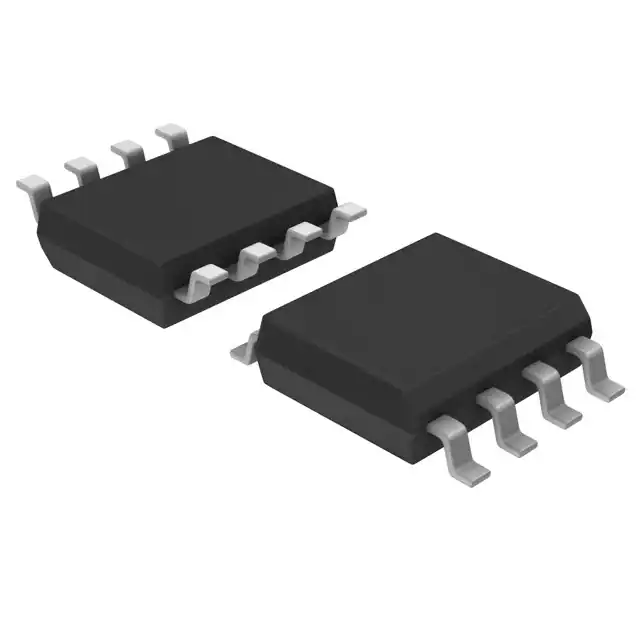
Texas Instruments LM86CIMX/NOPB
- Part No.:
- LM86CIMX/NOPB
- Manufacturer:
- Texas Instruments
- Category:
- Analog and Digital Output
- Package:
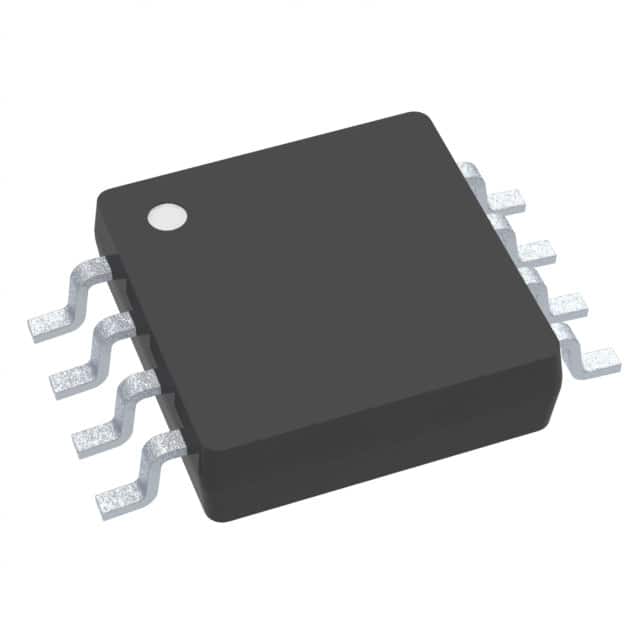
- 8-SOIC (0.154", 3.90mm Width)
- Datasheet:
-
 LM86CIMX/NOPB.pdf
- Description:
- SENSOR DIGITAL 0C-85C 8SOIC
- Quantity:
- Payment:

- Shipping:

Inventory:4,298
Please send an inquiry. Send us your inquiry, and we will respond immediately.
Product details
Overview
LM86CIMX/NOPB from Texas Instruments is an 11-bit remote diode and local digital temperature sensor with SMBus 2.0 interface, ±0.75°C remote accuracy at 30°C–50°C ambient and 60°C–100°C remote junction, 0.125°C remote resolution, and dual alert outputs (ALERT and T_CRIT_A) for thermal management in computing systems.
For engineers reviewing the LM86CIMX/NOPB datasheet, LM86CIMX/NOPB pinout, LM86CIMX/NOPB application, or LM86CIMX/NOPB equivalent, this page delivers verified technical context, real-world design meaning of specifications, validated pin functions, confirmed alternative parts, and supply-ready availability details - all grounded in TI's SNIS114E revision March 2013 documentation.
Technical Context
The LM86CIMX/NOPB implements a delta-VBE sensing architecture with separate 10-bit-plus-sign ADC paths for local die and remote diode junctions. It supports programmable offset compensation (RTOLB/RTOHB registers) to correct nonideality factors across diverse thermal diodes, including Intel Pentium III (factory-trimmed for 1.008), and provides independent HIGH/LOW/T_CRIT limit comparisons for both temperature channels.
Its SMBus 2.0 slave interface operates at up to 100 kHz with TIMEOUT reset capability (25–35 ms low hold), while ALERT and T_CRIT_A outputs are open-drain with hysteresis-controlled critical alarm behavior. The device updates all registers every 31.25 ms in round-robin conversion sequence and retains full SMBus functionality in shutdown mode (315 µA).
Key Specifications
| Parameter | Value and Actual Design Meaning |
|---|---|
| Remote Temp Accuracy | ±0.75°C max at TA=30°C, TD=80°C - enables precise CPU die monitoring without calibration overhead |
| Local Temp Accuracy | ±3.0°C max over 25°C–125°C - sufficient for board-level ambient or IC package thermal tracking |
| Remote Resolution | 0.125°C (11-bit) - supports fine-grained fan speed control and thermal throttling decisions |
| Supply Voltage | 3.0 V to 3.6 V - compatible with standard 3.3 V logic rails and avoids level-shifting complexity |
| Quiescent Current | 0.8 mA typical at 16 Hz conversion rate - enables low-power thermal monitoring in always-on subsystems |
| SMBus Compatibility | Fully compliant with SMBus 2.0 protocol including ARA (Alert Response Address) - ensures interoperability in multi-sensor server management buses |
| Conversion Time | 31.25 ms per full cycle (local + remote) - defines minimum response latency for thermal event detection |
Pinout & Package
LM86CIMX/NOPB is housed in an 8-pin VSSOP package (3.0 mm × 3.0 mm, 0.65 mm pitch), optimized for space-constrained laptop and server motherboard layouts.
| Pin/Terminal | Circuit Role | Design Meaning |
|---|---|---|
| VDD | Positive supply input | Must be decoupled locally; powers internal bandgap reference, ADC, and SMBus I/O - voltage range defines operating margin |
| D+ | Diode current source | Drives 160–315 µA into remote diode anode; sensitive to parasitic leakage - requires short trace routing |
| D− | Diode return sink | Completes remote diode bias path; voltage drop ≤0.7 V limits cathode-side PCB resistance impact |
| T_CRIT_A | Critical temperature alarm output | Open-drain active-low signal with built-in hysteresis - directly drives power-down logic or PMIC shutdown input |
| GND | Power ground reference | Shared return for analog and digital sections; must connect to low-impedance system ground plane |
| ALERT | Configurable alert output | Open-drain output supporting comparator, interrupt, or SMBus ARA modes - requires external pull-up resistor |
| SMBData | SMBus bidirectional data line | Open-drain I/O; interfaces with host controller using SMBus packet protocols - shares bus with other sensors |
| SMBCLK | SMBus clock input | Asynchronous master-driven clock; no clock stretching supported - timing must meet tLOW/tHIGH min/max specs |
Key Features
| Feature | Design Value |
|---|---|
| Offset register (RTOLB/RTOHB) | Enables accurate remote sensing of non-Pentium diodes (e.g., ASICs, discrete transistors) without firmware recalibration |
| T_CRIT_A with hysteresis | Prevents thermal oscillation during critical overtemperature events by holding alarm until temperature falls below (T_CRIT − TH) |
| Three ALERT operating modes | Supports standalone comparator use, interrupt-driven polling, or SMBus ARA protocol - eliminates need for custom driver logic |
| Diode fault detection | Automatically flags open-circuit (D+ floating/shorted to VDD) or short-circuit (D+ to GND/D−) conditions via OPEN bit and saturated register values |
| Shutdown mode (315 µA) | Reduces power in idle states while preserving SMBus addressability - enables background thermal polling without system wake |
Applications
| Laptop CPU Thermal Monitoring | Server Blade Temperature Management |
|---|---|
|
Use Scenario: Real-time die temperature tracking of mobile Intel processors using integrated thermal diode. IC Role / Device Role / Timing Role: Remote diode sensor with factory-trimmed 1.008 nonideality factor; reads temperature every 31.25 ms and asserts T_CRIT_A if >85°C. Use Value: Enables dynamic fan control and OS-level throttling before thermal throttling or shutdown occurs - meets Intel Mobile Platform Thermal Framework requirements. |
Use Scenario: Distributed thermal supervision across dual-socket Xeon-based server blades with multiple ASICs. IC Role / Device Role / Timing Role: Local + remote sensor on each blade; communicates via shared SMBus with BMC; uses ARA protocol to resolve concurrent alerts. Use Value: Eliminates polling overhead and guarantees deterministic alert prioritization in dense rack environments - reduces BMC firmware complexity. |
| Industrial PC Fan Control | Network Switch ASIC Thermal Protection |
|
Use Scenario: Closed-loop fan speed regulation based on CPU and ambient board temperature in fanless-to-fan-cooled transition zones. IC Role / Device Role / Timing Role: Dual-input sensor feeding PID controller; local reading monitors enclosure air, remote reading tracks processor junction. Use Value: Achieves acoustic optimization and extended component life by avoiding unnecessary high-RPM operation - leverages ±0.75°C remote accuracy for stable setpoint tracking. |
Use Scenario: Protecting high-power Ethernet switch ASICs (e.g., Broadcom Tomahawk) from thermal runaway during traffic bursts. IC Role / Device Role / Timing Role: Remote diode sensor bonded to ASIC package; triggers hardware-level power reduction via T_CRIT_A before software intervention. Use Value: Prevents permanent silicon damage by activating hard thermal shutdown within <100 ms of critical threshold breach - bypasses OS/software latency. |
Equivalent & Alternatives
The following parts are listed as comparable options for similar remote/local temperature sensing applications.
| Alternative Part | Technical Difference | Application Difference | Selection Advice |
|---|---|---|---|
| ADM1032ARQZ | Pin- and register-compatible; same 8-pin MSOP package; ±1.0°C remote accuracy (worse than LM86CIMX/NOPB's ±0.75°C at key operating points) | Lacks T_CRIT_A dedicated output - relies on ALERT pin for critical alarms, requiring additional logic for hysteresis | Select when legacy ADM1032 footprint reuse is required and tighter remote accuracy is not critical |
| MAX6657ESA+ | Same 8-pin SOIC package; ±2.0°C remote accuracy over wider ambient range; no factory trim for Pentium diodes | Requires external offset calibration for mobile CPU diodes; no ARA support - limits scalability in multi-sensor SMBus systems | Select for cost-sensitive industrial applications where absolute accuracy is secondary to basic thermal alerting |
Compared with ADM1032ARQZ and MAX6657ESA+, the LM86CIMX/NOPB delivers superior remote accuracy for modern CPUs, dedicated hysteresis-controlled T_CRIT_A output, and native SMBus 2.0 ARA compliance - making it optimal for high-reliability computing thermal architectures where precision and protocol robustness are mandatory.
Availability
LM86CIMX/NOPB is available at Aetrix Electronics and suitable for laptop thermal management, server blade monitoring, and industrial PC fan control requiring stable component supply, long-term lifecycle support, and guaranteed traceable sourcing.
Supply support for LM86CIMX/NOPB includes scheduled delivery planning, volume procurement assistance, BOM continuity management, traceable sourcing, and lifecycle availability coordination for OEM customers, industrial embedded developers, connected-device designers, and electronics production programs.
Manufacturer
Texas Instruments is a global semiconductor leader specializing in analog, embedded processing, and connectivity technologies, with decades of leadership in precision sensing and power management ICs.
The LM86CIMX/NOPB belongs to TI's System Monitor family, designed specifically for real-time thermal supervision in compute-intensive platforms where reliability, accuracy, and SMBus interoperability are critical.
FAQ
What is the remote temperature accuracy specification for LM86CIMX/NOPB under typical laptop operating conditions?
The LM86CIMX/NOPB achieves ±0.75°C maximum remote diode temperature accuracy when ambient temperature is 30°C and remote junction temperature is 80°C - matching the thermal profile of mobile Intel processors with 1.008 nonideality factor. This accuracy is factory-trimmed and does not require user calibration. At broader ranges (0°C–85°C ambient, 25°C–125°C remote), accuracy degrades to ±3.0°C max, as documented in TI's SNIS114E datasheet.
Does LM86CIMX/NOPB support SMBus Alert Response Address (ARA) protocol, and how is it enabled?
Yes, LM86CIMX/NOPB fully supports SMBus 2.0 ARA protocol. It responds to the general-call ARA address (0001100b) only when the ALERT configure bit (D0) in the FILTER and ALERT CONFIGURE REGISTER (xBF) is set low - which is the power-on default state. Upon successful ARA transmission, LM86CIMX/NOPB automatically sets the ALERT mask bit (D7 in Configuration register) and releases the ALERT line, enabling multi-device alert arbitration without bus lockup.
How does the T_CRIT_A output behave differently from the ALERT output on LM86CIMX/NOPB?
T_CRIT_A is a dedicated, hysteresis-controlled comparator output that activates immediately when any measured temperature exceeds its programmed T_CRIT limit and remains asserted until temperature falls below (T_CRIT − TH), where TH is the hysteresis value in the Hysteresis register. In contrast, ALERT is a configurable open-drain output that can operate as a comparator, interrupt flag, or SMBus ARA participant - but lacks built-in hysteresis and requires software configuration to select its behavior mode.
Can LM86CIMX/NOPB accurately measure temperature of non-Intel thermal diodes, and what is required?
Yes, LM86CIMX/NOPB supports non-Intel diodes via its programmable remote offset registers (RTOLB and RTOHB). These registers allow correction of nonideality factor deviations from the factory-trimmed 1.008 value - for example, compensating for discrete 2N3904 transistors or ASIC-integrated diodes. Users must determine the appropriate offset empirically or from manufacturer-provided diode characterization data, then write the 16-bit two's complement value to the offset registers.
What package options are available for LM86CIMX/NOPB, and is the VSSOP variant RoHS-compliant?
LM86CIMX/NOPB is offered exclusively in an 8-pin VSSOP package (DGS0008A) with 3.0 mm × 3.0 mm body and 0.65 mm lead pitch. The /NOPB suffix explicitly denotes lead-free (RoHS-compliant) construction, with matte tin lead finish and halogen-free molding compound - verified per TI's packaging documentation and IPC-J-STD-020 moisture sensitivity level 1 rating.
LM86CIMX/NOPB Specifications
- Product attributes
- Attribute value
- Manufacturer:
- Texas Instruments
- Series:
- -
- Package/Case:
- 8-SOIC (0.154", 3.90mm Width)
- Packaging:
- Tape & Reel (TR)
- Product Status:
- Active
- Sensor Type:
- Digital, Local/Remote
- Sensing Temperature - Local:
- 0°C ~ 85°C
- Sensing Temperature - Remote:
- 0°C ~ 85°C
- Output Type:
- SMBus
- Voltage - Supply:
- 3V ~ 3.6V
- Resolution:
- 7 b (Local), 10 b (Remote)
- Features:
- One-Shot, Output Switch, Programmable Limit, Shutdown Mode, Standby Mode
- Accuracy - Highest (Lowest):
- ±3°C
- Test Condition:
- 25°C ~ 125°C
- Operating Temperature:
- 0°C ~ 125°C
- Mounting Type:
- Surface Mount
- Grade:
- -
- Qualification:
- -
- Supplier Device Package:
- 8-SOIC
LM86CIMX/NOPB FAQ
1.How can I place an order for LM86CIMX/NOPB through Aetrix?
Please submit a Request for Quotation (RFQ) for LM86CIMX/NOPB on Aetrix. Our sales agent will provide a competitive quotation and guide you through the order confirmation once you accept the terms.
2.Are the price and stock information for LM86CIMX/NOPB reliable?
The price and inventory of LM86CIMX/NOPB are updated periodically and may fluctuate due to market conditions. Stock and pricing data are typically refreshed every 24 hours. Quotation validity for LM86CIMX/NOPB is usually 5 days.
3.What payment methods are accepted for LM86CIMX/NOPB?
We accept Wire Transfer, PayPal, Credit Card, Western Union, MoneyGram, and Escrow for LM86CIMX/NOPB transactions.
Note: Certain payment methods may incur a processing fee.
4.How is shipping managed for LM86CIMX/NOPB?
LM86CIMX/NOPB orders can be shipped via leading logistics carriers, including DHL, UPS, FedEx, TNT, or Registered Mail.
Once your LM86CIMX/NOPB order is processed, you will receive an email with the shipment details and tracking number.
Note: Tracking information may take up to 24 hours to appear. Express delivery typically takes 3–5 business days.
5.How can I obtain technical support or documentation for LM86CIMX/NOPB?
For technical support, including LM86CIMX/NOPB datasheets, pinout diagrams, or application guidance, please contact our engineering support team. They can provide detailed documentation and assistance for your LM86CIMX/NOPB requirements.
6.How does Aetrix verify that LM86CIMX/NOPB is sourced from the original manufacturer or authorized distributors?
All LM86CIMX/NOPB products on Aetrix are procured from qualified distributors and authorized channels. Our dedicated quality assurance team conducts strict verification, including traceability checks and, if necessary, third-party testing. This ensures that LM86CIMX/NOPB meets industry standards.
7.What is the process for return or replacement of LM86CIMX/NOPB?
All LM86CIMX/NOPB units undergo pre-shipment inspection (PSI). If there is an issue with LM86CIMX/NOPB, returns or replacements are accepted under the following conditions:
1.Quantity discrepancies, incorrect items, or visible external defects (such as breakage or corrosion), acknowledged by Aetrix.
2.The issue is reported within 90 days of delivery.
3.The LM86CIMX/NOPB part is unused and in its original packaging.
Return procedure for LM86CIMX/NOPB:
1.Submit a request within 90 days.
2.Obtain a Return Material Authorization (RMA) from Aetrix.
LM86CIMX/NOPB Tags
-
MCP9700T-E/TT
Microchip Technology
-
MCP9700T-E/LT
Microchip Technology
-
MCP9701T-E/TT
Microchip Technology
-
MCP9701T-E/LT
Microchip Technology
-
TMP235A4DBZR
Texas Instruments
-
MCP9700AT-E/TT
Microchip Technology
-
MCP9700AT-E/LT
Microchip Technology
-
MCP9701AT-E/LT
Microchip Technology
-
MCP9701AT-E/TT
Microchip Technology
,TO-226_straightlead.jpg)
-
LM335Z
STMicroelectronics
-
TMP1075NDRLR
Texas Instruments
-
TMP1075DGKR
Texas Instruments
Tech Hub

A practical engineering guide to 3.3V and 5V logic compatibility, input thresholds, resistor dividers, translator ICs, MOSFET level shifting, I2C pull-ups, timing limits and power-sequencing risks.

The 74HC595 uses push-pull logic outputs, while the TPIC6B595 uses 50 V open-drain DMOS sinks for higher-power loads. This guide compares timing, current limits, 3.3 V interfacing, load wiring, thermal…

The 74HC595 converts serial data into eight stable parallel outputs. This guide covers pin functions, shift and storage timing, OE and MR behavior, drive-current limits, cascading, voltage compatibilit…

A technical comparison of level-sensitive latches and edge-triggered flip-flops, covering timing windows, setup and hold limits, master–slave operation, time borrowing, race-through, HDL inference and…

A D latch stores one bit while Enable controls when data can pass. This reference covers gate-level operation, truth tables, transparency, setup and hold timing, LE versus OE, common ICs and practical …

An SR latch stores one bit through cross-coupled feedback. This engineering reference covers NOR and NAND implementations, truth tables, forbidden-state recovery, gated operation, switch debouncing, fa…

Latch circuits retain one bit through feedback. This technical reference covers SR and D latches, truth tables, transparency, timing limits, latch-versus-flip-flop behavior, applications and common log…

An engineering guide to LED driver operation, constant-current and constant-voltage outputs, linear and switching topologies, dimming, IC selection, calculations, replacement compatibility, and fault c…

Operational amplifier guide covering op amp basics, feedback, ideal vs real op amps, common configurations, buffer circuits, offset, bias current, gain-bandwidth, slew rate, rail-to-rail limits and sel…

Jumper cables guide covering safe connection order, red and black clamp placement, final ground connection, cable gauge, length, clamp quality, copper vs CCA cables, jump starter comparison and battery…


