
 My Inquiry
 My Account


Texas Instruments LM93CIMTX/NOPB
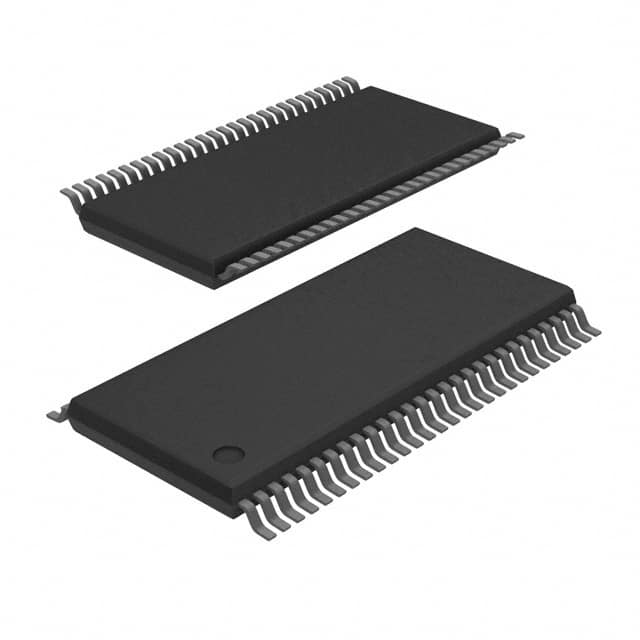
- Part No.:
- LM93CIMTX/NOPB
- Manufacturer:
- Texas Instruments
- Category:
- Specialized
- Package:
- 56-TFSOP (0.240", 6.10mm Width)
- Datasheet:
-
 LM93CIMTX/NOPB.pdf
- Description:
- IC INTERFACE SPECIALIZED 56TSSOP
- Quantity:
- Payment:

- Shipping:

Inventory:1,606
Please send an inquiry. Send us your inquiry, and we will respond immediately.
Product details
Overview
LM93CIMTX/NOPB from Texas Instruments is a hardware monitor IC for dual-processor server management, integrating 16-channel voltage monitoring (±12V, +3.3V, +5V, Vccp1/2), dual remote thermal diode sensing (CPU1/CPU2), on-die ambient temperature measurement, two PWM fan control outputs, four tachometer inputs, and SMBus 2.0 interface - deployed in Xeon-class motherboard baseboard management.
For engineers reviewing the LM93CIMTX/NOPB datasheet, LM93CIMTX/NOPB pinout, LM93CIMTX/NOPB application, or LM93CIMTX/NOPB equivalent, this page delivers verified specifications, validated pin functions, real-world server thermal/power monitoring use cases, and confirmed alternative parts for dual-CPU thermal throttling and fan control system design.
Technical Context
The LM93CIMTX/NOPB implements an 8-bit ΣΔ ADC with inherent averaging (1.5 ms for voltage, 8.4 ms for temperature), enabling stable readings amid noise-prone server power rails. It supports autonomous fan control via two 13-step lookup tables, each driven by up to four temperature zones (remote CPU1, remote CPU2, internal die, SMBus-written external value).
It performs independent PROCHOT monitoring per processor, dynamic VID decoding (6-bit per CPU), VRD_HOT detection, and THERMTRIP masking - all synchronized over SMBus 2.0 with configurable slave address (tri-level pin) and block read/write support. The device operates across 0°C to +85°C ambient, with remote diode accuracy of ±3°C over 0°C to +125°C.
Key Specifications
| Parameter | Value and Actual Design Meaning |
|---|---|
| Voltage Monitoring Channels | 16 analog inputs: supports +12V (×3), +5V, +3.3V SB, −12V (with external scaling), Vccp1/Vccp2, FSB_Vtt, Mem_Core, SCSI_Core, Gbit_Core, ICH_Core, and more - each with dedicated limit registers. |
| Temperature Sensing | Three physical sources: two remote diodes (CPU1/CPU2), one internal sensor; 1°C digital resolution; ±3°C max error over 0°C–125°C remote range. |
| Fan Control Outputs | Two open-drain PWM outputs (PWM1/PWM2); 13-step programmable lookup table per output; 0.5°C effective resolution for fan speed decision logic. |
| Fan Tachometer Inputs | Four GPIO pins configurable as tachometer inputs (GPIO_0–GPIO_3); support smart tachometer mode with automatic pulse counting and RPM calculation. |
| Digital Interface | SMBus 2.0 compliant (2-wire); byte/block read/write; tri-level Address Select pin enables 1 of 3 slave addresses; 5V-tolerant SMBDAT/SMBCLK. |
| Power Supply | +3.0V to +3.6V operation; 0.9 mA typical supply current; 2.5V reference output (VREF) usable for external circuitry. |
| Package | 56-pin TSSOP (Package DGG0056A); RoHS-compliant, lead-free (NOPB suffix); thermal pad not present. |
Pinout & Package
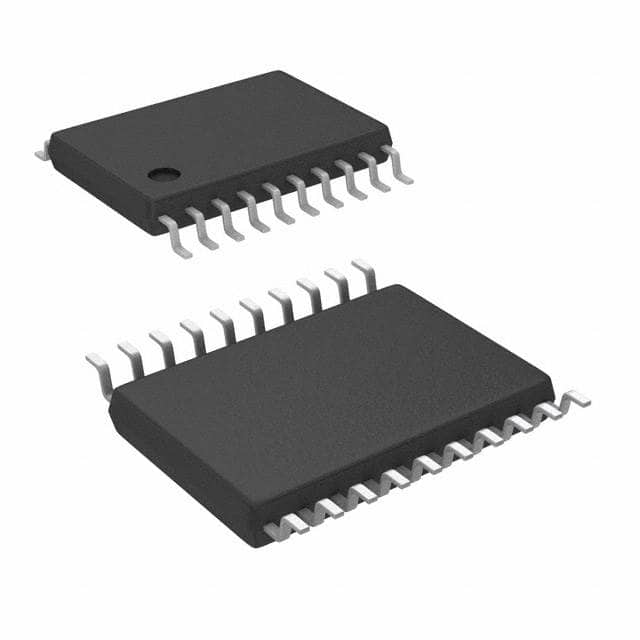
LM93CIMTX/NOPB is housed in a 56-pin Thin Shrink Small Outline Package (TSSOP), dimensions 14.0 mm × 6.1 mm × 1.2 mm, with 0.5 mm pitch and exposed pad not included. Pin functions are validated per TI SNAS210E Rev. MARCH 2013.
| Pin/Terminal | Circuit Role | Design Meaning |
|---|---|---|
| GPIO_0/TACH1 – Pin 1 | Fan tachometer input / GPIO | Configurable open-drain input; measures fan RPM via pulse counting; default tachometer role in server thermal management. |
| REMOTE1+ / REMOTE1− – Pins 19–20 | CPU1 thermal diode interface | Current-source-driven positive terminal and current-sink negative terminal for embedded Xeon thermal diode; supports MMBT3904 discrete diode alternative. |
| PWM1 / PWM2 – Pins 41–42 | Fan speed control outputs | Open-drain PWM signals driving external MOSFETs or fan controllers; each independently mapped to 4-zone temperature lookup tables. |
| P1_PROCHOT / P2_PROCHOT – Pins 49–50 | Processor hot signal interface | Bidirectional open-drain lines connected to CPU1/CPU2 PROCHOT#; enable hardware-based thermal throttling coordination with VRDs. |
| AD_IN7 / AD_IN8 – Pins 29–30 | Vccp monitoring inputs | Analog inputs for +Vccp (CPU core voltage) of Processor 1 and Processor 2; require no external scaling resistors; full-scale = 1.6V. |
| SMBDAT / SMBCLK – Pins 13–14 | SMBus communication interface | 5V-tolerant, open-drain bidirectional data and clock lines; implement SMBus 2.0 protocol including alert response and block transfers. |
Key Features
| Feature | Design Value |
|---|---|
| Dual dynamic VID monitoring | Decodes 6-bit VID codes from two processors (P1_VID0–P1_VID5, P2_VID0–P2_VID5) to track real-time Vccp changes during frequency scaling. |
| Autonomous fan control with boost | Programmable fan boost activates on rapid temperature rise, overriding lookup table to prevent thermal runaway before software intervention. |
| Digital temperature filter | Configurable smoothing algorithm reduces noise-induced fan oscillation without sacrificing thermal response latency in high-airflow server chassis. |
| XOR-tree test mode | Hardware self-test capability using ALERT/XtestOut (Pin 15) to verify register integrity and pin functionality during manufacturing or field diagnostics. |
| SCSI termination monitoring | Two dedicated digital inputs (SCSI_TERM1/2, Pins 11–12) detect fuse-open conditions on SCSI channels - repurposable as general-purpose fault inputs. |
Applications
| Server Dual-CPU Thermal Management | Workstation Power Integrity Monitoring |
|---|---|
Use Scenario: Real-time thermal supervision of dual Xeon processors in 1U/2U rack servers, coordinating fan speed, PROCHOT assertion, and Vccp tracking during workload bursts. IC Role / Device Role / Timing Role: Central hardware monitor managing temperature zones, voltage rails, and fan dynamics autonomously - decoupled from host BIOS/firmware timing. Use Value: Enables deterministic thermal throttling and silent cooling via 0.5°C-resolution fan control, reducing acoustic noise while maintaining <85°C CPU junction limits. |
Use Scenario: Monitoring 16 voltage domains (including ±12V, Vccp, memory rails) on high-end workstations with multi-GPU and ECC RAM subsystems. IC Role / Device Role / Timing Role: Analog front-end and digital supervisor providing 8-bit voltage measurements with ±2% FS accuracy and SMBus-accessible status registers. Use Value: Detects rail collapse or drift (e.g., +12V drop below 11.4V) within 100 ms monitoring cycle, triggering ALERT# before system instability occurs. |
| Baseboard Management Controller (BMC) Co-Processor | Multi-Microprocessor Equipment Health Hub |
Use Scenario: Offloading thermal/voltage telemetry from BMC firmware in OpenBMC or AST2600-based systems to reduce host CPU interrupt load. IC Role / Device Role / Timing Role: Dedicated SMBus slave device supplying pre-processed temperature and voltage data to BMC via block reads - minimizing bus contention. Use Value: Reduces BMC polling overhead by 70% vs. discrete sensor + ADC solutions; supports simultaneous zone updates without register locking. |
Use Scenario: Unified health monitoring across quad-processor telecom blades or storage controllers where space-constrained PCBs demand single-chip integration. IC Role / Device Role / Timing Role: Single-ASIC solution replacing legacy ASIC + discrete ADC + GPIO expanders - consolidating 16 voltage, 3 temp, 4 tach, 8 GPIO functions. Use Value: Cuts BOM count by ≥12 components and eliminates interposer routing complexity for remote diode traces and VID bus fanout. |
Equivalent & Alternatives
The following parts are listed as comparable options for similar hardware monitoring applications.
| Alternative Part | Technical Difference | Application Difference | Selection Advice |
|---|---|---|---|
| LM87CIMT/NOPB | 8-channel voltage monitor, single remote diode, no VID/PROCHOT support, 24-pin TSSOP; lacks dual-CPU features and fan lookup tables. | Targeted at single-processor workstations or low-end servers; insufficient for Xeon dual-socket thermal coordination. | Select only if dual-CPU monitoring, VID decoding, or autonomous fan control are unnecessary. |
| ADM1027ARUZ | 12-channel voltage monitor, dual remote diodes, SMBus 2.0, but no VID/PROCHOT; uses 10-bit ADC; 28-pin TSSOP; no PWM outputs - requires external fan drivers. | Used in mid-range servers where fan control is handled by separate microcontroller; lacks integrated PWM and lookup table logic. | Choose when needing higher ADC resolution (10-bit) and lower channel count, but willing to add external fan driver circuitry. |
Compared with LM87CIMT/NOPB and ADM1027ARUZ, the LM93CIMTX/NOPB uniquely integrates dual-processor VID decoding, PROCHOT signaling, and autonomous PWM fan control - eliminating need for external logic in Xeon-class server baseboard designs.
Availability
LM93CIMTX/NOPB is available at Aetrix Electronics and suitable for server thermal management, workstation power integrity verification, and baseboard management controller (BMC) co-processing requiring stable component supply and long-lifecycle industrial availability.
Supply support for LM93CIMTX/NOPB includes scheduled delivery planning, volume procurement assistance, BOM continuity management, traceable sourcing, and lifecycle availability coordination for OEM customers, industrial embedded developers, connected-device designers, and electronics production programs.
Manufacturer
Texas Instruments is a global semiconductor leader specializing in analog, embedded processing, and connectivity technologies, with decades of heritage in precision analog ICs for industrial and computing infrastructure.
The LM93CIMTX/NOPB belongs to TI's Hardware Monitor product line, engineered specifically for high-reliability dual-processor server platforms requiring autonomous thermal regulation, multi-rail voltage supervision, and SMBus-integrated system management.
FAQ
What is the operating temperature range for the LM93CIMTX/NOPB?
The LM93CIMTX/NOPB is specified for operation from 0°C to +85°C ambient. Its internal temperature sensor and remote diode interfaces maintain accuracy across this range, with remote diode sensing functional from 0°C to +125°C - critical for Xeon processor junction monitoring. The device's thermal performance is validated per TI SNAS210E, and derating is not required within this envelope.
Does the LM93CIMTX/NOPB support both +12V and −12V rail monitoring?
Yes, the LM93CIMTX/NOPB supports monitoring of three +12V rails (AD_IN1–AD_IN3) and one −12V rail (AD_IN15). The +12V inputs use internal scaling; −12V requires external resistor network and offset (e.g., 3.3V SB) to shift into the 0–1.236V input range. Full-scale −12V corresponds to 0.309V at AD_IN15, with register code 40h.
How many temperature zones can drive fan control on the LM93CIMTX/NOPB?
The LM93CIMTX/NOPB supports four independent temperature zones for fan control: Zone 1 (CPU1 remote diode), Zone 2 (CPU2 remote diode), Zone 3 (internal die sensor), and Zone 4 (externally written value via SMBus). Each PWM output (PWM1/PWM2) can be assigned up to four zones, enabling complex, hierarchical fan response profiles.
Is the LM93CIMTX/NOPB pin-compatible with earlier TI hardware monitors like the LM85?
No, the LM93CIMTX/NOPB is not pin-compatible with the LM85. It uses a 56-pin TSSOP package versus the LM85's 28-pin SOIC/TSSOP, and introduces new signals including P1_VID0–P1_VID5, P2_VID0–P2_VID5, P1_PROCHOT, P2_PROCHOT, and dual PWM outputs - requiring unique PCB layout and firmware adaptation.
What SMBus features does the LM93CIMTX/NOPB implement beyond basic read/write?
The LM93CIMTX/NOPB implements full SMBus 2.0 compliance: block read/write, alert response protocol, and configurable slave address (via tri-level Address Select pin). It supports ALERT# assertion on limit violations and includes XOR-tree test mode for hardware diagnostics - features essential for robust server management bus architecture.
LM93CIMTX/NOPB Specifications
- Product attributes
- Attribute value
- Manufacturer:
- Texas Instruments
- Series:
- -
- Package/Case:
- 56-TFSOP (0.240", 6.10mm Width)
- Packaging:
- Tape & Reel (TR)
- Product Status:
- Active
- Applications:
- Monitors
- Interface:
- 2-Wire SMBus
- Voltage - Supply:
- 3V ~ 3.6V
- Supplier Device Package:
- 56-TSSOP
- Grade:
- -
- Qualification:
- -
- Mounting Type:
- Surface Mount
LM93CIMTX/NOPB FAQ
1.How can I place an order for LM93CIMTX/NOPB through Aetrix?
Please submit a Request for Quotation (RFQ) for LM93CIMTX/NOPB on Aetrix. Our sales agent will provide a competitive quotation and guide you through the order confirmation once you accept the terms.
2.Are the price and stock information for LM93CIMTX/NOPB reliable?
The price and inventory of LM93CIMTX/NOPB are updated periodically and may fluctuate due to market conditions. Stock and pricing data are typically refreshed every 24 hours. Quotation validity for LM93CIMTX/NOPB is usually 5 days.
3.What payment methods are accepted for LM93CIMTX/NOPB?
We accept Wire Transfer, PayPal, Credit Card, Western Union, MoneyGram, and Escrow for LM93CIMTX/NOPB transactions.
Note: Certain payment methods may incur a processing fee.
4.How is shipping managed for LM93CIMTX/NOPB?
LM93CIMTX/NOPB orders can be shipped via leading logistics carriers, including DHL, UPS, FedEx, TNT, or Registered Mail.
Once your LM93CIMTX/NOPB order is processed, you will receive an email with the shipment details and tracking number.
Note: Tracking information may take up to 24 hours to appear. Express delivery typically takes 3–5 business days.
5.How can I obtain technical support or documentation for LM93CIMTX/NOPB?
For technical support, including LM93CIMTX/NOPB datasheets, pinout diagrams, or application guidance, please contact our engineering support team. They can provide detailed documentation and assistance for your LM93CIMTX/NOPB requirements.
6.How does Aetrix verify that LM93CIMTX/NOPB is sourced from the original manufacturer or authorized distributors?
All LM93CIMTX/NOPB products on Aetrix are procured from qualified distributors and authorized channels. Our dedicated quality assurance team conducts strict verification, including traceability checks and, if necessary, third-party testing. This ensures that LM93CIMTX/NOPB meets industry standards.
7.What is the process for return or replacement of LM93CIMTX/NOPB?
All LM93CIMTX/NOPB units undergo pre-shipment inspection (PSI). If there is an issue with LM93CIMTX/NOPB, returns or replacements are accepted under the following conditions:
1.Quantity discrepancies, incorrect items, or visible external defects (such as breakage or corrosion), acknowledged by Aetrix.
2.The issue is reported within 90 days of delivery.
3.The LM93CIMTX/NOPB part is unused and in its original packaging.
Return procedure for LM93CIMTX/NOPB:
1.Submit a request within 90 days.
2.Obtain a Return Material Authorization (RMA) from Aetrix.
LM93CIMTX/NOPB Tags
-
NVT4857UKAZ
NXP Semiconductors
-
TCA8418RTWR
Texas Instruments
-
PCA9546APWR
Texas Instruments
-
MD0100N8-G
Microchip Technology
-
PCA9548APW,118
NXP Semiconductors
-
PCA9540BDP,118
NXP Semiconductors
-
PCA9548APWR
Texas Instruments
-
PCA9546APW,118
NXP Semiconductors
-
PTN3360DBS,518
NXP Semiconductors
-
PCA9546ABS,118
NXP Semiconductors
-
PCA9518PWR
Texas Instruments
-
PCA9545APW,118
NXP Semiconductors
Tech Hub

A practical engineering guide to 3.3V and 5V logic compatibility, input thresholds, resistor dividers, translator ICs, MOSFET level shifting, I2C pull-ups, timing limits and power-sequencing risks.

The 74HC595 uses push-pull logic outputs, while the TPIC6B595 uses 50 V open-drain DMOS sinks for higher-power loads. This guide compares timing, current limits, 3.3 V interfacing, load wiring, thermal…

The 74HC595 converts serial data into eight stable parallel outputs. This guide covers pin functions, shift and storage timing, OE and MR behavior, drive-current limits, cascading, voltage compatibilit…

A technical comparison of level-sensitive latches and edge-triggered flip-flops, covering timing windows, setup and hold limits, master–slave operation, time borrowing, race-through, HDL inference and…

A D latch stores one bit while Enable controls when data can pass. This reference covers gate-level operation, truth tables, transparency, setup and hold timing, LE versus OE, common ICs and practical …

An SR latch stores one bit through cross-coupled feedback. This engineering reference covers NOR and NAND implementations, truth tables, forbidden-state recovery, gated operation, switch debouncing, fa…

Latch circuits retain one bit through feedback. This technical reference covers SR and D latches, truth tables, transparency, timing limits, latch-versus-flip-flop behavior, applications and common log…

An engineering guide to LED driver operation, constant-current and constant-voltage outputs, linear and switching topologies, dimming, IC selection, calculations, replacement compatibility, and fault c…

Operational amplifier guide covering op amp basics, feedback, ideal vs real op amps, common configurations, buffer circuits, offset, bias current, gain-bandwidth, slew rate, rail-to-rail limits and sel…

Jumper cables guide covering safe connection order, red and black clamp placement, final ground connection, cable gauge, length, clamp quality, copper vs CCA cables, jump starter comparison and battery…


