
 My Inquiry
 My Account


Texas Instruments LM96000CIMT/NOPB
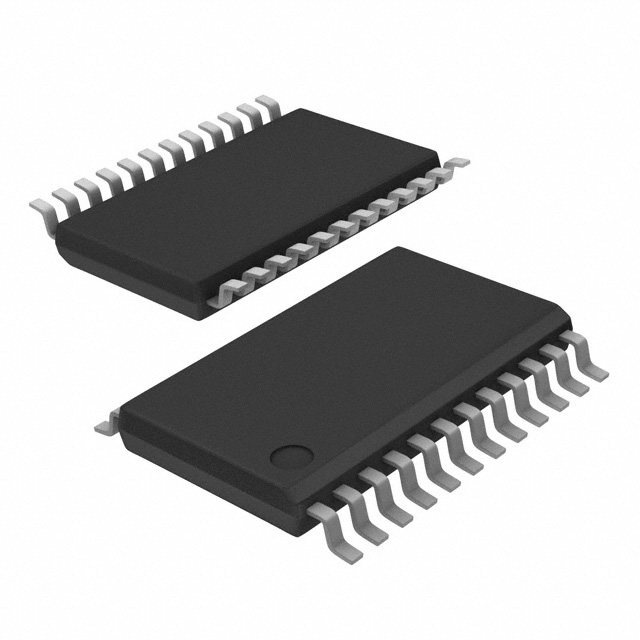
- Part No.:
- LM96000CIMT/NOPB
- Manufacturer:
- Texas Instruments
- Category:
- Thermal Management
- Package:
- 24-TSSOP (0.173", 4.40mm Width)
- Datasheet:
-
 LM96000CIMT/NOPB.pdf
- Description:
- IC HDWR MON W/FAN CTRL 24-TSSOP
- Quantity:
- Payment:

- Shipping:

Inventory:200
Please send an inquiry. Send us your inquiry, and we will respond immediately.
Product details
Overview
LM96000CIMT/NOPB from Texas Instruments is a hardware monitor IC with integrated autonomous fan control, featuring an 8-bit ΣΔ ADC, SMBus 2.0 interface, ±2% full-scale voltage measurement accuracy, ±3°C remote temperature accuracy (0°C to +125°C), and operation across 0°C to +85°C ambient. It monitors VCCP, 2.5V, 3.3VSBY, 5V, and 12V supplies while managing three PWM fan outputs and four tachometer inputs for desktop PC motherboard thermal management.
For engineers reviewing the LM96000CIMT/NOPB datasheet, LM96000CIMT/NOPB pinout, LM96000CIMT/NOPB application, or LM96000CIMT/NOPB equivalent, key selection considerations include its 24-pin TSSOP package, dual remote diode support, VID line monitoring (VID0–VID4), programmable fan spin-up timing (100–4000 ms), and noise-filtered temperature-based PWM control with high/low frequency ranges.
Technical Context
The LM96000CIMT/NOPB implements a dedicated analog front-end with internal scaling resistors for five voltage rails and current-source/sink circuitry for two remote thermal diodes. Its 8-bit ΣΔ ADC digitizes inputs at up to 4 Hz per channel, with total unadjusted error ≤±2% FS and 1°C resolution for local and remote temperature sensing.
Autonomous fan control operates via three independent PWM outputs, each assignable to one of three thermal zones using configuration registers (5Ch–6Eh). Fan behavior is governed by zone-specific temperature limits, hysteresis, spike smoothing intervals (0.35–0.8 sec), and PWM duty-cycle resolution of 0.390625% across 10 Hz–30 kHz frequency range.
Key Specifications
| Parameter | Value and Actual Design Meaning |
|---|---|
| Voltage Inputs | Monitors VCCP, 2.5V, 3.3VSBY, 5V, and 12V with internal scaling - eliminates need for external resistor dividers in standard ATX power rail monitoring. |
| Temperature Sensing | ±3°C max accuracy over 0°C to +125°C for remote diodes; ±3°C for on-die sensor - meets thermal margin requirements for Pentium 4 90nm and compatible processors. |
| PWM Fan Control | Three open-drain PWM outputs with programmable frequency (10 Hz–30 kHz) and duty cycle (0–100%) - enables precise acoustic and thermal trade-off tuning per chassis zone. |
| Tachometer Inputs | Four digital tachometer inputs supporting 65536-count full-scale measurement and ±10% fan count accuracy - accommodates standard 2- or 4-pulse-per-revolution fan sensors. |
| Supply & Power | +3.0V to +3.6V operation; 0.53 mA typical supply current - compatible with 3.3V standby domains and low-power system management states. |
| Interface | SMBus 2.0 compliant (10–100 kHz), 5V-tolerant SMBDAT/SMBCLK - interoperable with standard platform controller hubs without level-shifting. |
| Package | 24-pin TSSOP (6.5 mm × 4.4 mm, 0.65 mm pitch) - surface-mount compatible with high-density motherboard layouts and reflow assembly. |
Pinout & Package
LM96000CIMT/NOPB is housed in a 24-pin Thin Shrink Small Outline Package (TSSOP) with exposed pad not electrically connected. The package supports standard JEDEC reflow profiles and provides thermal resistance of 113 °C/W (junction-to-ambient, double-sided PCB, 1 oz copper).
| Pin/Terminal | Circuit Role | Design Meaning |
|---|---|---|
| SMBDAT (Pin 1) | Open-drain SMBus data I/O | 5V-tolerant bidirectional bus line; requires external pull-up; handles all register read/write and interrupt signaling per SMBus 2.0. |
| SMBCLK (Pin 2) | SMBus clock input | Asynchronous clock input driving internal state machine; defines transaction timing and register access synchronization. |
| GND (Pin 3) | Analog/digital ground reference | Common return path for all analog measurements, digital logic, and PWM outputs - must be low-impedance and star-connected. |
| 3.3V (Pin 4) | Power supply and analog input | Primary VDD source; also serves as monitored 3.3V rail input - bypassed with 0.1 µF || 100 pF capacitor near pin. |
| VID0–VID4 (Pins 5,6,7,8,19) | Digital voltage ID inputs | Reads processor VID bits to determine core voltage; stored in VID0–VID4 Status Register (43h) for dynamic VCCP correlation. |
| REMOTE1+/−, REMOTE2+/− (Pins 15–18) | Remote diode current source/sink | Drives external NPN transistors or Pentium thermal diodes; 16:1 current ratio ensures robust noise immunity in high-noise environments. |
| PWM1/xTESTOUT (Pin 24), PWM2 (Pin 10), PWM3/AddressEnable (Pin 13) | Fan speed control outputs | Open-drain outputs sinking up to 8 mA; PWM3 doubles as address latch enable during SMBus initialization sequence. |
| TACH1–TACH4/AddressSelect (Pins 9,11,12,14) | Fan tachometer inputs | Edge-triggered digital inputs counting fan pulses; TACH4 functions as SMBus address select when PWM3/AddressEnable is pulled low. |
Key Features
| Feature | Design Value |
|---|---|
| Autonomous fan control with zone-based PWM | Three independent thermal zones drive PWM outputs without host CPU intervention - reduces BIOS polling overhead and improves real-time thermal response. |
| Noise-filtered temperature readings | Spike smoothing filter with configurable 0.35–0.8 sec interval suppresses transient thermal noise - prevents erratic fan speed jumps during short-term load spikes. |
| Integrated VID monitoring | Five VID input pins directly interface with Intel-compatible processors - enables accurate VCCP tracking and dynamic voltage/frequency scaling correlation. |
| Multi-rail voltage supervision | Five dedicated analog inputs with internal scaling resistors - simplifies design by eliminating discrete resistor networks for ATX 2.x power rail monitoring. |
| XOR-tree test mode | On-chip diagnostic mode activated via xTESTOUT (Pin 24) - verifies internal logic paths and register integrity during manufacturing test or field validation. |
Applications
| Desktop PC Motherboard Monitoring | Microprocessor-Based Network Equipment |
|---|---|
|
Use Scenario: Real-time thermal and power supervision on ATX-compliant desktop motherboards with multi-core CPUs and discrete GPUs. IC Role / Device Role / Timing Role: Central hardware monitor coordinating voltage, temperature, and fan speed data for BIOS/UEFI firmware and OS-level thermal management daemons. Use Value: Enables silent cooling via adaptive PWM control while maintaining ±2% voltage accuracy and ±3°C remote diode accuracy - critical for stable overclocking and long-term reliability. |
Use Scenario: Thermal management in space-constrained network infrastructure such as enterprise routers, base stations, and ATMs. IC Role / Device Role / Timing Role: Standalone thermal supervisor interfacing with multiple remote diodes on SoC packages and power modules via SMBus. Use Value: Reduces BOM count by integrating five voltage monitors, dual remote diode interfaces, and three PWM controllers - lowers system cost and layout complexity. |
| Embedded Industrial Control Systems | Point-of-Sale (POS) Terminal Platforms |
|
Use Scenario: Fan-cooled industrial PCs operating in extended temperature environments (0°C to +85°C ambient). IC Role / Device Role / Timing Role: Autonomous thermal manager executing fan control based on local die temperature and two remote sensors on FPGA or power ICs. Use Value: Maintains fan operation during CPU sleep states using 3.3VSBY supply - ensures continuous thermal protection without host wake-up events. |
Use Scenario: Compact retail terminals requiring quiet operation and reliable thermal shutdown under sustained transaction loads. IC Role / Device Role / Timing Role: Hardware watchdog for thermal safety, triggering 100% PWM output if any zone exceeds absolute limit (6Ah–6Ch registers). Use Value: Prevents thermal runaway via hardware-enforced fan override - eliminates reliance on software-only thermal mitigation in mission-critical POS applications. |
Equivalent & Alternatives
The following parts are listed as comparable options for similar hardware monitoring applications.
| Alternative Part | Technical Difference | Application Difference | Selection Advice |
|---|---|---|---|
| LM96060CIMT/NOPB | Includes additional 3.3V auxiliary input, enhanced SMBus timeout handling, and improved remote diode accuracy (±1.5°C) - same 24-pin TSSOP footprint. | Supports higher-precision thermal monitoring in next-gen platforms with tighter thermal margins; retains full register compatibility. | Select LM96060CIMT/NOPB when upgrading for better remote diode accuracy or requiring auxiliary 3.3V rail monitoring without layout change. |
| ADM1027ARUZ | Offers six voltage inputs, four remote diodes, and integrated fan tachometer comparators - 28-pin TSSOP, non-pin-compatible. | Targets multi-processor servers and high-end workstations needing expanded monitoring channels and hardware fan fail detection. | Choose ADM1027ARUZ only when additional voltage/thermal channels are required and board redesign is acceptable. |
Compared with LM96000CIMT/NOPB, LM96060CIMT/NOPB delivers tighter remote temperature accuracy and auxiliary rail support in identical packaging, while ADM1027ARUZ expands channel count at the cost of pinout and layout incompatibility - making LM96000CIMT/NOPB optimal for cost-sensitive, single-CPU desktop and embedded designs.
Availability
LM96000CIMT/NOPB is available at Aetrix Electronics and suitable for desktop PC motherboards, microprocessor-based network equipment, and industrial embedded systems requiring stable component supply, long-lifecycle support, and validated thermal management performance.
Supply support for LM96000CIMT/NOPB includes scheduled delivery planning, volume procurement assistance, BOM continuity management, traceable sourcing, and lifecycle availability coordination for OEM customers, industrial embedded developers, connected-device designers, and electronics production programs.
Manufacturer
Texas Instruments is a global semiconductor leader specializing in analog, embedded processing, and connectivity technologies, with decades of expertise in precision analog sensing and system management ICs.
The LM96000CIMT/NOPB belongs to TI's hardware monitor product line, designed specifically for autonomous thermal and power supervision in x86-based computing platforms - emphasizing SMBus integration, multi-rail voltage accuracy, and reliable fan control without host intervention.
FAQ
What is the operating temperature range of the LM96000CIMT/NOPB?
The LM96000CIMT/NOPB operates from 0°C to +85°C ambient temperature. Its remote diode sensing capability extends to 0°C to +125°C, enabling accurate thermal monitoring of high-temperature components like CPUs and GPUs. The device's internal temperature sensor maintains ±3°C accuracy across this full operational range, as specified in the SNAS234C datasheet revision March 2013.
Does the LM96000CIMT/NOPB require external resistors for voltage monitoring?
No, the LM96000CIMT/NOPB integrates precision scaling resistors for all five monitored voltage rails (VCCP, 2.5V, 3.3VSBY, 5V, and 12V), eliminating the need for external resistor dividers. This internal scaling ensures ±2% full-scale accuracy and simplifies PCB layout - confirmed in the "Voltage Inputs" section of the functional description and DC electrical characteristics table.
How many fans can the LM96000CIMT/NOPB control and monitor simultaneously?
The LM96000CIMT/NOPB controls three fans via independent PWM outputs (PWM1, PWM2, PWM3) and monitors up to four fans using dedicated tachometer inputs (TACH1–TACH4). Each PWM output is programmable for frequency (10 Hz–30 kHz) and duty cycle (0–100%), and tachometer inputs support full-scale counts up to 65536 with ±10% accuracy - detailed in the AC Electrical Characteristics and Pin Descriptions sections.
Is the LM96000CIMT/NOPB SMBus 2.0 compliant?
Yes, the LM96000CIMT/NOPB is fully SMBus 2.0 compliant, supporting bus frequencies from 10 kHz to 100 kHz with 5V-tolerant SMBDAT and SMBCLK pins. It implements all required protocol features including timeouts, packet error checking, and alert response - verified in the SMBus Timing Characteristics table and Functional Description section of the SNAS234C datasheet.
Can the LM96000CIMT/NOPB monitor both local and remote temperatures?
Yes, the LM96000CIMT/NOPB monitors its own die temperature with ±3°C accuracy and two external thermal diodes (e.g., Pentium 4 90nm processor diodes or MMBT3904 transistors) with ±3°C accuracy over 0°C to +125°C. The device uses dedicated current-source/sink pairs (REMOTE1+/−, REMOTE2+/−) and internal ΣΔ conversion to achieve 1°C resolution - confirmed in the Temperature to Digital Converter Characteristics and Pin Descriptions.
LM96000CIMT/NOPB Specifications
- Product attributes
- Attribute value
- Manufacturer:
- Texas Instruments
- Series:
- -
- Package/Case:
- 24-TSSOP (0.173", 4.40mm Width)
- Packaging:
- Tube
- Product Status:
- Obsolete
- Function:
- Hardware Monitor
- Sensor Type:
- Internal and External
- Sensing Temperature:
- 0°C ~ 125°C
- Accuracy:
- ±3°C Local(Max), ±4°C Remote(Max)
- Topology:
- ADC (Sigma Delta), Comparator, Fan Control, Multiplexer, Register Bank
- Output Type:
- 2-Wire SMBus
- Output Alarm:
- No
- Output Fan:
- Yes
- Voltage - Supply:
- 3V ~ 3.6V
- Operating Temperature:
- 0°C ~ 85°C
- Grade:
- -
- Qualification:
- -
- Mounting Type:
- Surface Mount
- Supplier Device Package:
- 24-TSSOP
LM96000CIMT/NOPB FAQ
1.How can I place an order for LM96000CIMT/NOPB through Aetrix?
Please submit a Request for Quotation (RFQ) for LM96000CIMT/NOPB on Aetrix. Our sales agent will provide a competitive quotation and guide you through the order confirmation once you accept the terms.
2.Are the price and stock information for LM96000CIMT/NOPB reliable?
The price and inventory of LM96000CIMT/NOPB are updated periodically and may fluctuate due to market conditions. Stock and pricing data are typically refreshed every 24 hours. Quotation validity for LM96000CIMT/NOPB is usually 5 days.
3.What payment methods are accepted for LM96000CIMT/NOPB?
We accept Wire Transfer, PayPal, Credit Card, Western Union, MoneyGram, and Escrow for LM96000CIMT/NOPB transactions.
Note: Certain payment methods may incur a processing fee.
4.How is shipping managed for LM96000CIMT/NOPB?
LM96000CIMT/NOPB orders can be shipped via leading logistics carriers, including DHL, UPS, FedEx, TNT, or Registered Mail.
Once your LM96000CIMT/NOPB order is processed, you will receive an email with the shipment details and tracking number.
Note: Tracking information may take up to 24 hours to appear. Express delivery typically takes 3–5 business days.
5.How can I obtain technical support or documentation for LM96000CIMT/NOPB?
For technical support, including LM96000CIMT/NOPB datasheets, pinout diagrams, or application guidance, please contact our engineering support team. They can provide detailed documentation and assistance for your LM96000CIMT/NOPB requirements.
6.How does Aetrix verify that LM96000CIMT/NOPB is sourced from the original manufacturer or authorized distributors?
All LM96000CIMT/NOPB products on Aetrix are procured from qualified distributors and authorized channels. Our dedicated quality assurance team conducts strict verification, including traceability checks and, if necessary, third-party testing. This ensures that LM96000CIMT/NOPB meets industry standards.
7.What is the process for return or replacement of LM96000CIMT/NOPB?
All LM96000CIMT/NOPB units undergo pre-shipment inspection (PSI). If there is an issue with LM96000CIMT/NOPB, returns or replacements are accepted under the following conditions:
1.Quantity discrepancies, incorrect items, or visible external defects (such as breakage or corrosion), acknowledged by Aetrix.
2.The issue is reported within 90 days of delivery.
3.The LM96000CIMT/NOPB part is unused and in its original packaging.
Return procedure for LM96000CIMT/NOPB:
1.Submit a request within 90 days.
2.Obtain a Return Material Authorization (RMA) from Aetrix.
LM96000CIMT/NOPB Tags
-
EMC2101-ACZL-TR
Microchip Technology
-
MCP9844T-BE/MNY
Microchip Technology
-
EMC2101-R-ACZL-TR
Microchip Technology
-
MCP98244T-BE/MNY
Microchip Technology

-
TC670ECHTR
Microchip Technology
-
SE98ATP,547
NXP Semiconductors
-
AMC6821SDBQR
Texas Instruments

-
MAX6604AATA+T
Analog Devices Inc./Maxim Integrated
-
ADT7475ARQZ-REEL
onsemi
-
MAX6643LBBAEE+
Analog Devices Inc./Maxim Integrated
-
MAX6684ESA+T
Analog Devices Inc./Maxim Integrated
-
MAX6639AEE+
Analog Devices Inc./Maxim Integrated
Tech Hub

A practical engineering guide to 3.3V and 5V logic compatibility, input thresholds, resistor dividers, translator ICs, MOSFET level shifting, I2C pull-ups, timing limits and power-sequencing risks.

The 74HC595 uses push-pull logic outputs, while the TPIC6B595 uses 50 V open-drain DMOS sinks for higher-power loads. This guide compares timing, current limits, 3.3 V interfacing, load wiring, thermal…

The 74HC595 converts serial data into eight stable parallel outputs. This guide covers pin functions, shift and storage timing, OE and MR behavior, drive-current limits, cascading, voltage compatibilit…

A technical comparison of level-sensitive latches and edge-triggered flip-flops, covering timing windows, setup and hold limits, master–slave operation, time borrowing, race-through, HDL inference and…

A D latch stores one bit while Enable controls when data can pass. This reference covers gate-level operation, truth tables, transparency, setup and hold timing, LE versus OE, common ICs and practical …

An SR latch stores one bit through cross-coupled feedback. This engineering reference covers NOR and NAND implementations, truth tables, forbidden-state recovery, gated operation, switch debouncing, fa…

Latch circuits retain one bit through feedback. This technical reference covers SR and D latches, truth tables, transparency, timing limits, latch-versus-flip-flop behavior, applications and common log…

An engineering guide to LED driver operation, constant-current and constant-voltage outputs, linear and switching topologies, dimming, IC selection, calculations, replacement compatibility, and fault c…

Operational amplifier guide covering op amp basics, feedback, ideal vs real op amps, common configurations, buffer circuits, offset, bias current, gain-bandwidth, slew rate, rail-to-rail limits and sel…

Jumper cables guide covering safe connection order, red and black clamp placement, final ground connection, cable gauge, length, clamp quality, copper vs CCA cables, jump starter comparison and battery…


