
 My Inquiry
 My Account


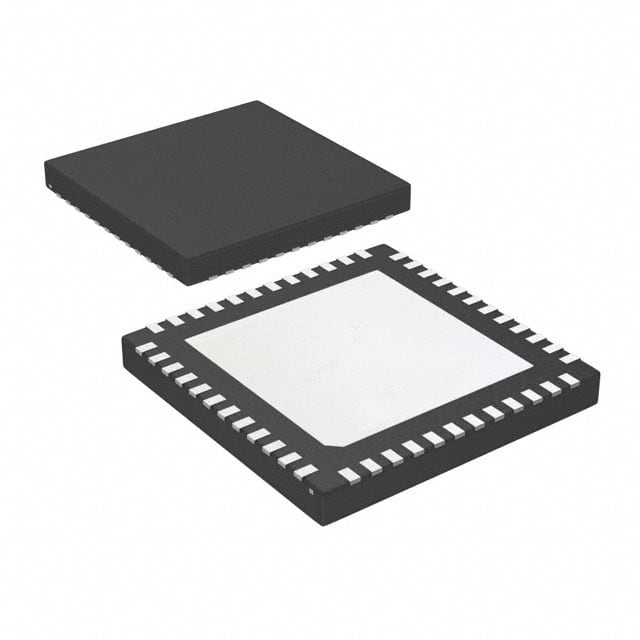
Texas Instruments LM96194CISQ
- Part No.:
- LM96194CISQ
- Manufacturer:
- Texas Instruments
- Category:
- Thermal Management
- Package:
- 48-WFQFN Exposed Pad
- Datasheet:
-
 LM96194CISQ.pdf
- Description:
- IC TRUTHERM HDWR MONITOR 48WQFN
- Quantity:
- Payment:

- Shipping:

Inventory:3,410
Please send an inquiry. Send us your inquiry, and we will respond immediately.
Product details
Overview
LM96194CISQ from Texas Instruments is a TruTherm™ hardware monitor IC for workstation/server thermal and power management, featuring 9-channel voltage monitoring (±2% FS accuracy), 4 remote thermal diode inputs with ±2.5°C accuracy over −40°C to +125°C, and dual PWM fan control supporting PI loop or 13-step lookup table - deployed in high-reliability single-processor computing platforms.
For engineers reviewing the LM96194CISQ datasheet, LM96194CISQ pinout, LM96194CISQ application, or LM96194CISQ equivalent, this page delivers verified technical context, validated pin functions, real-world thermal/power monitoring use cases, and confirmed alternative options for server/workstation BOM optimization.
Technical Context
The LM96194CISQ integrates a ΣΔ ADC architecture supporting byte/block SMBus 2.0 reads/writes, with dedicated analog front-end circuitry for precision thermal diode measurement using TI's TruTherm transistor-based sensing - optimized for Intel Xeon-class processors on 90nm/65nm processes and MMBT3904 discrete diodes.
It implements autonomous fan control via two independent PWM outputs (PWM1/PWM2), each configurable with digital temperature filtering (0.0625°C resolution), tachometer error boost logic, and dynamic VID/Vccp monitoring compliant with VRD10.2/VRD11 standards - all coordinated through mirrored BMC and host status registers for concurrent system management access.
Key Specifications
| Parameter | Value and Actual Design Meaning |
|---|---|
| Voltage Monitoring Channels | 9 independent analog inputs with internal scaling (except AD_IN1/2/3/8); supports ±12V with external dividers |
| Temperature Resolution | 9-bit unfiltered (0.5°C LSB) and 12-bit filtered (0.0625°C LSB) for fan control stability |
| Remote Diode Accuracy | ±2.5°C max over −40°C to +125°C operating range for CPU thermal diodes |
| Fan Control Outputs | 2 open-drain PWM outputs with programmable boost-on-error, tachometer limit detection, and PI/lookup table hybrid mode |
| Supply Voltage | +3.0V to +3.6V VDD; powered from 3.3V standby rail (3.3SBY) |
| Interface | SMBus 2.0–compliant 2-wire serial interface with selectable slave address (tri-level pin) |
| Package | WQFN-48 (RHS0048A), 7mm × 7mm, 0.5mm pitch, exposed thermal pad |
Pinout & Package
LM96194CISQ is housed in a 48-pin WQFN package (RHS0048A) with exposed thermal pad for enhanced thermal dissipation in dense server PCB layouts. Pin functions are validated per TI SNAS360B Rev. March 2013.
| Pin/Terminal | Circuit Role | Design Meaning |
|---|---|---|
| PROCHOT (Pin 1) | Digital I/O (open-drain) | Bidirectional processor hot signal interface with TTL/AGTL logic level support; triggers thermal throttling response |
| PWM1 / PWM2 (Pins 41/42) | Digital output (open-drain) | Independent fan speed control outputs; support 100% duty-cycle boost on tachometer or temperature fault |
| REMOTE1a+/REMOTE1− (Pins 24/23) | Analog input pair | Primary CPU thermal diode interface with TruTherm transistor-mode biasing and current-source drive |
| AD_IN4 (Pin 30) | Analog input | Dedicated +Vccp (processor core voltage) monitoring channel with real-time VRD10.2/11 window comparison |
| SMBDAT / SMBCLK (Pins 18/19) | SMBus interface | 5V-tolerant open-drain data/clock lines compliant with SMBus 2.0 timing and protocol requirements |
| GPIO_0/TACH1–GPIO_3/TACH4 (Pins 7–10) | Configurable I/O | Four fan tachometer inputs or general-purpose open-drain signals; support RPM measurement and error flagging |
Key Features
| Feature | Design Value |
|---|---|
| TruTherm™ Thermal Diode Sensing | Transistor-model measurement algorithm enabling ±2.5°C accuracy on sub-90nm Intel processors and MMBT3904 discrete diodes |
| Dual Autonomous Fan Control | Two independent PWM outputs with combined PI loop + 13-step lookup table logic - ensures minimal acoustic noise while meeting cooling targets |
| Dynamic VID/Vccp Monitoring | Real-time comparison of 6/7 VID bits against Vccp analog input for VRD10.2/VRD11 compliance and fault detection |
| Filtered Temperature Readings | 12-bit digitally filtered temperature values (0.0625°C LSB) used exclusively for fan control - suppresses transient noise without affecting alarm thresholds |
| Mirrored Status Registers | Dual BMC Error and Host Status register sets enable concurrent access by baseboard management controller and host processor without conflict |
Applications
| Server Power Supply Monitoring | Workstation CPU Thermal Management |
|---|---|
Use Scenario: Real-time supervision of +12V, +5V, +3.3V, Vtt, Vccp, and −12V rails in redundant ATX/SFX PSUs for enterprise servers. IC Role / Device Role / Timing Role: Hardware monitor IC performing 9-channel voltage digitization at ≤100 ms cycle time with ±2% FS accuracy and SMBus alert reporting. Use Value: Enables early detection of rail drift or failure before system instability occurs - critical for 24/7 uptime SLAs. |
Use Scenario: Precision thermal regulation of dual-core Xeon E3/E5 processors using embedded thermal diodes and discrete MMBT3904 sensors on high-density motherboards. IC Role / Device Role / Timing Role: TruTherm-enabled remote diode sensor with 0.5°C unfiltered and 0.0625°C filtered resolution driving dual PWM fan outputs. Use Value: Reduces acoustic noise by 4–6 dB(A) versus fixed-speed fans while maintaining CPU junction temperature within 5°C of throttle threshold. |
| Processor VRD Compliance Verification | Embedded System PROCHOT Coordination |
Use Scenario: Validation of VRD10.2/VRD11 voltage regulator behavior during boot, load transitions, and thermal events in workstation-class motherboards. IC Role / Device Role / Timing Role: Dynamic VID-to-Vccp correlator with window-comparison logic and VRD_HOT signal monitoring. Use Value: Detects VRD undershoot/overshoot events within 100 µs - prevents false PROCHOT assertion and unnecessary throttling. |
Use Scenario: Synchronized thermal response across CPU, chipset, and memory subsystems in compact embedded workstations with shared cooling zones. IC Role / Device Role / Timing Role: Centralized PROCHOT input handler and THERMTRIP mask controller interfacing with multiple processor domains. Use Value: Prevents cascading thermal shutdown by masking non-critical errors while preserving valid PROCHOT propagation to OS and firmware. |
Equivalent & Alternatives
The following parts are listed as comparable options for similar hardware monitoring applications.
| Alternative Part | Technical Difference | Application Difference | Selection Advice |
|---|---|---|---|
| LM96163CISQ | 8-channel voltage monitor, 2 remote diodes, single PWM output, no VRD11 support | Limited to entry-level workstations without dual-CPU or advanced VRD compliance needs | Select when cost sensitivity outweighs multi-zone fan control and VRD11 verification requirements |
| ADM1278ASTZ | Hot-swap controller with integrated 12-bit ADC, no thermal diode support, no SMBus fan control logic | Targeted at power rail protection and sequencing - not thermal management or fan coordination | Choose only if primary need is inrush limiting and overcurrent protection, not temperature-aware fan control |
Compared with LM96194CISQ, LM96163CISQ reduces thermal monitoring depth and eliminates VRD11 compatibility, while ADM1278ASTZ replaces thermal intelligence entirely with power-path protection - making LM96194CISQ uniquely suited for full-stack workstation thermal governance.
Availability
LM96194CISQ is available at Aetrix Electronics and suitable for server power integrity validation, workstation CPU thermal management, and VRD11-compliant motherboard development requiring stable component supply and long-term industrial lifecycle support.
Supply support for LM96194CISQ includes scheduled delivery planning, volume procurement assistance, BOM continuity management, traceable sourcing, and lifecycle availability coordination for OEM customers, industrial embedded developers, connected-device designers, and electronics production programs.
Manufacturer
Texas Instruments is a global semiconductor leader specializing in analog, embedded processing, and connectivity technologies - with over 50 years of innovation in precision sensing and system management ICs.
The LM96194CISQ belongs to TI's TruTherm™ hardware monitor product line, engineered specifically for thermal-aware power management in single-processor workstations and entry servers where CPU junction temperature, Vccp regulation, and acoustic fan control must be tightly coordinated.
FAQ
What is the operating temperature range of the LM96194CISQ?
The LM96194CISQ operates from −40°C to +85°C ambient. Its remote thermal diode measurement capability extends to −40°C to +125°C for CPU die temperature tracking. The internal ambient sensor provides local board temperature readings with ±2.5°C accuracy across the full operational range. This makes LM96194CISQ suitable for thermally demanding server chassis environments where airflow and heat density vary significantly.
Does the LM96194CISQ support VRD11-compliant dynamic VID monitoring?
Yes, the LM96194CISQ supports dynamic VID monitoring for both VRD10.2 and VRD11 specifications. It accepts up to 7 VID bits (VID0–VID6) and correlates them in real time with the AD_IN4 (Vccp) analog input to detect out-of-window conditions. This functionality is implemented in hardware and does not require host processor intervention - a key feature distinguishing LM96194CISQ from generic ADC-based monitors.
How many fan tachometer inputs does the LM96194CISQ provide?
The LM96194CISQ provides four dedicated fan tachometer inputs via GPIO_0/TACH1 through GPIO_3/TACH4 (Pins 7–10). Each can be independently configured as an open-drain tachometer counter or general-purpose I/O. Tachometer error detection triggers automatic PWM boost to 100% duty cycle - configurable per output - ensuring immediate thermal response when fan failure is detected.
What package type is used for the LM96194CISQ?
The LM96194CISQ uses a 48-pin WQFN package (TI package code RHS0048A), measuring 7mm × 7mm with 0.5mm pitch and an exposed thermal pad. This package enables high-density routing in space-constrained server motherboard layouts while providing low thermal resistance for reliable operation under sustained power dissipation.
Can the LM96194CISQ measure negative voltages like −12V?
Yes, the LM96194CISQ supports −12V monitoring via AD_IN8 (Pin 37), which accepts scaled positive inputs derived from external resistor networks. The device expects a full-scale input of 1.236V corresponding to −12V, with nominal ¾-scale reading at 0.927V. External resistive dividers must ensure Thevenin equivalent impedance remains between 1kΩ and 7kΩ - a requirement explicitly defined in the LM96194CISQ datasheet.
LM96194CISQ Specifications
- Product attributes
- Attribute value
- Manufacturer:
- Texas Instruments
- Series:
- TruTherm™
- Package/Case:
- 48-WFQFN Exposed Pad
- Packaging:
- Tape & Reel (TR)
- Product Status:
- Obsolete
- Function:
- Hardware Monitor
- Sensor Type:
- Internal and External
- Sensing Temperature:
- -40°C ~ 125°C
- Accuracy:
- ±2.5°C
- Topology:
- ADC (Sigma Delta), Comparator, Fan Control, Multiplexer, Register Bank
- Output Type:
- 2-Wire SMBus
- Output Alarm:
- Yes
- Output Fan:
- Yes
- Voltage - Supply:
- 3V ~ 3.6V
- Operating Temperature:
- -40°C ~ 85°C
- Grade:
- -
- Qualification:
- -
- Mounting Type:
- Surface Mount
- Supplier Device Package:
- 48-WQFN (7x7)
LM96194CISQ FAQ
1.How can I place an order for LM96194CISQ through Aetrix?
Please submit a Request for Quotation (RFQ) for LM96194CISQ on Aetrix. Our sales agent will provide a competitive quotation and guide you through the order confirmation once you accept the terms.
2.Are the price and stock information for LM96194CISQ reliable?
The price and inventory of LM96194CISQ are updated periodically and may fluctuate due to market conditions. Stock and pricing data are typically refreshed every 24 hours. Quotation validity for LM96194CISQ is usually 5 days.
3.What payment methods are accepted for LM96194CISQ?
We accept Wire Transfer, PayPal, Credit Card, Western Union, MoneyGram, and Escrow for LM96194CISQ transactions.
Note: Certain payment methods may incur a processing fee.
4.How is shipping managed for LM96194CISQ?
LM96194CISQ orders can be shipped via leading logistics carriers, including DHL, UPS, FedEx, TNT, or Registered Mail.
Once your LM96194CISQ order is processed, you will receive an email with the shipment details and tracking number.
Note: Tracking information may take up to 24 hours to appear. Express delivery typically takes 3–5 business days.
5.How can I obtain technical support or documentation for LM96194CISQ?
For technical support, including LM96194CISQ datasheets, pinout diagrams, or application guidance, please contact our engineering support team. They can provide detailed documentation and assistance for your LM96194CISQ requirements.
6.How does Aetrix verify that LM96194CISQ is sourced from the original manufacturer or authorized distributors?
All LM96194CISQ products on Aetrix are procured from qualified distributors and authorized channels. Our dedicated quality assurance team conducts strict verification, including traceability checks and, if necessary, third-party testing. This ensures that LM96194CISQ meets industry standards.
7.What is the process for return or replacement of LM96194CISQ?
All LM96194CISQ units undergo pre-shipment inspection (PSI). If there is an issue with LM96194CISQ, returns or replacements are accepted under the following conditions:
1.Quantity discrepancies, incorrect items, or visible external defects (such as breakage or corrosion), acknowledged by Aetrix.
2.The issue is reported within 90 days of delivery.
3.The LM96194CISQ part is unused and in its original packaging.
Return procedure for LM96194CISQ:
1.Submit a request within 90 days.
2.Obtain a Return Material Authorization (RMA) from Aetrix.
LM96194CISQ Tags
-
EMC2101-ACZL-TR
Microchip Technology
-
MCP9844T-BE/MNY
Microchip Technology
-
EMC2101-R-ACZL-TR
Microchip Technology
-
MCP98244T-BE/MNY
Microchip Technology

-
TC670ECHTR
Microchip Technology
-
SE98ATP,547
NXP Semiconductors
-
AMC6821SDBQR
Texas Instruments

-
MAX6604AATA+T
Analog Devices Inc./Maxim Integrated
-
ADT7475ARQZ-REEL
onsemi
-
MAX6643LBBAEE+
Analog Devices Inc./Maxim Integrated
-
MAX6684ESA+T
Analog Devices Inc./Maxim Integrated
-
MAX6639AEE+
Analog Devices Inc./Maxim Integrated
Tech Hub

A practical engineering guide to 3.3V and 5V logic compatibility, input thresholds, resistor dividers, translator ICs, MOSFET level shifting, I2C pull-ups, timing limits and power-sequencing risks.

The 74HC595 uses push-pull logic outputs, while the TPIC6B595 uses 50 V open-drain DMOS sinks for higher-power loads. This guide compares timing, current limits, 3.3 V interfacing, load wiring, thermal…

The 74HC595 converts serial data into eight stable parallel outputs. This guide covers pin functions, shift and storage timing, OE and MR behavior, drive-current limits, cascading, voltage compatibilit…

A technical comparison of level-sensitive latches and edge-triggered flip-flops, covering timing windows, setup and hold limits, master–slave operation, time borrowing, race-through, HDL inference and…

A D latch stores one bit while Enable controls when data can pass. This reference covers gate-level operation, truth tables, transparency, setup and hold timing, LE versus OE, common ICs and practical …

An SR latch stores one bit through cross-coupled feedback. This engineering reference covers NOR and NAND implementations, truth tables, forbidden-state recovery, gated operation, switch debouncing, fa…

Latch circuits retain one bit through feedback. This technical reference covers SR and D latches, truth tables, transparency, timing limits, latch-versus-flip-flop behavior, applications and common log…

An engineering guide to LED driver operation, constant-current and constant-voltage outputs, linear and switching topologies, dimming, IC selection, calculations, replacement compatibility, and fault c…

Operational amplifier guide covering op amp basics, feedback, ideal vs real op amps, common configurations, buffer circuits, offset, bias current, gain-bandwidth, slew rate, rail-to-rail limits and sel…

Jumper cables guide covering safe connection order, red and black clamp placement, final ground connection, cable gauge, length, clamp quality, copper vs CCA cables, jump starter comparison and battery…


