
 My Inquiry
 My Account


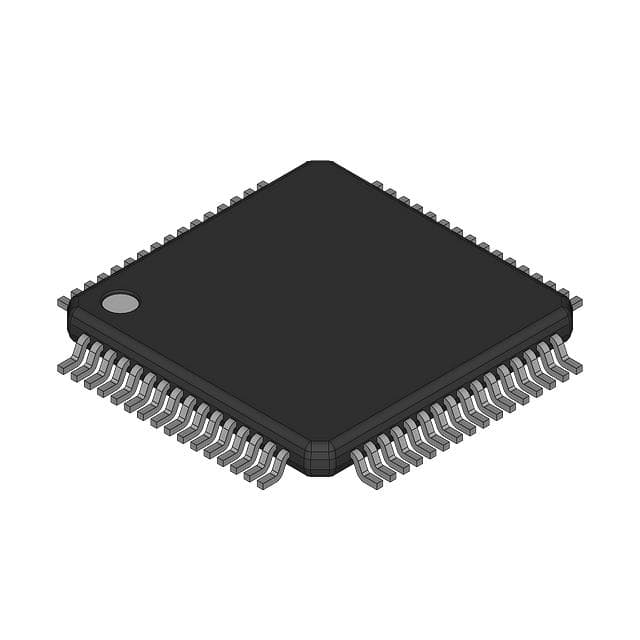
Texas Instruments LMH0031VS
- Part No.:
- LMH0031VS
- Manufacturer:
- Texas Instruments
- Category:
- Video Processing
- Package:
- 64-TQFP
- Datasheet:
-
 LMH0031VS.pdf
- Description:
- IC VIDEO DESER/DESCRMBLR 64TQFP
- Quantity:
- Payment:

- Shipping:

Inventory:4,661
Please send an inquiry. Send us your inquiry, and we will respond immediately.
Product details
Overview
LMH0031VS from Texas Instruments is an SMPTE 292M/259M digital video deserializer and descrambler IC that converts serial SDTV/HDTV video (270 Mbps–1.485 Gbps) into synchronized 10-bit or 20-bit parallel output, implements automatic video format detection, and integrates ancillary data FIFOs with masking and packet handling. It supports LSB de-dithering, built-in self-test (BIST), and video test pattern generation for broadcast equipment validation.
For engineers reviewing the LMH0031VS datasheet, LMH0031VS pinout, LMH0031VS application, or LMH0031VS equivalent, this device is selected for high-reliability SDI receiver design requiring auto-rate detection, EDH/CRC processing, low-jitter VCLK (±0.5 nsP-P at 74.25 MHz), and flexible ancillary data extraction in video editing systems, routers, and test equipment.
Technical Context
The LMH0031VS employs a CDR-based PLL architecture with sub-500 µs lock time at 1.485 Gbps, enabling rapid reacquisition after cable disconnects or signal interruptions. Its descrambler uses the X⁹+X⁴+1 reverse polynomial per SMPTE 259M/292M to convert NRZI to NRZ before parallel formatting.
Video path includes TRS character detection, LSB-clipping per ITU-R BT.601, and a configurable 4-deep FIFO for timing alignment; ancillary path supports SMPTE 291M-compliant Type 1/2 packets up to 259 words with maskable ID filtering and dual-channel (SD/HD) extraction logic.
Key Specifications
| Parameter | Value and Actual Design Meaning |
|---|---|
| Serial Data Rate | 270 Mbps, 360 Mbps, 540 Mbps, 1.483 Gbps, or 1.485 Gbps - auto-detected without external configuration |
| Parallel Output Format | 10-bit SDTV (DV[9:0]) or 20-bit HDTV (DV[19:10] = luma, DV[9:0] = chroma) - format auto-detected or manually set |
| VCLK Jitter | 0.5 nsP-P at 74.25 MHz - ensures clean sampling margin for downstream FPGA/ASIC capture |
| Power Supply | +2.5 V (logic/PLL) and +3.3 V (I/O) - separate rails minimize noise coupling between analog CDR and digital outputs |
| FIFO Depth | Adjustable 0–4 parallel clock cycles - enables precise video delay alignment for genlock or frame synchronization |
| Built-in Test | SD/HD colour bar patterns, PLL/EQ pathologicals, and 75% saturation test vectors - eliminates need for external pattern generators during production test |
| Operating Temperature | 0°C to +70°C - validated for commercial broadcast infrastructure environments including routers and switchers |
Pinout & Package
LMH0031VS is housed in a 64-pin TQFP (Package Number PAG0064A) with exposed thermal pad, optimized for thermal dissipation in high-speed video applications. Pin functions align with TI's SNLS218A datasheet revision April 2013.
| Pin/Terminal | Circuit Role | Design Meaning |
|---|---|---|
| SDI / DDD | Differential serial data input | Accepts LVDS/ECL-level SMPTE-compliant signals; supports AC/DC coupling with RBB bias reference |
| DV[19:0] | Parallel video data output | LVCMOS-compatible 20-bit bus; DV[19:10] = HD luma, DV[9:0] = HD chroma or full SDTV data |
| VCLK | Parallel word-rate clock output | 74.25 MHz (HD) or 27 MHz (SD); jitter ≤0.5 nsP-P ensures reliable setup/hold timing |
| AD[9:0] | Ancillary/control data I/O port | 10-bit bidirectional bus for ANC packet readout or register access via RD/WR and ANC/CTRL handshaking |
| IO[7:0] | Multi-function control I/O | Configurable as TPG enable, reset override, or status indicators - reduces external GPIO requirements |
| RREF / RBB | Reference/bias current source | 4.75 kΩ RREF sets 200 µA RBB current for AC-coupled SDI termination - eliminates external bias network |
Key Features
| Feature | Design Value |
|---|---|
| Auto-detect serial rate & video format | Identifies SMPTE 259M/292M/344M streams and configures parallel output, clock, and FIFO without host intervention |
| EDH/CRC automatic processing | Performs real-time error detection and flag handling per SMPTE 259M Annex A and 292M Annex B - offloads host processor |
| Adjustable video FIFO depth | 0–4-word delay programmable via ANC0 register - enables precise genlock alignment in multi-path routing systems |
| LSB de-dithering support | Reverses dithering applied during transmission; configurable per active video or vertical blanking interval - preserves dynamic range |
| Built-in self-test (BIST) | Generates standardized SD/HD test patterns (colour bars, black, pathologicals) directly on DV[19:0] - accelerates board-level validation |
| Flexible ancillary data filtering | Maskable ANC ID and packet-type selection via control registers - isolates specific audio or metadata streams in complex workflows |
Applications
| Video Editing Workstations | Digital Video Routers |
|---|---|
Use Scenario: Real-time ingest and processing of uncompressed SDI feeds from multiple cameras and playback sources. IC Role / Device Role / Timing Role: Deserializes incoming SMPTE 292M/259M streams, extracts embedded audio and timecode, and delivers aligned parallel video to FPGA-based processing pipelines. Use Value: Auto-format detection eliminates manual configuration per source; 4-deep FIFO enables frame-synchronous switching across diverse raster formats. |
Use Scenario: High-density routing of 12G-SDI signals in broadcast control rooms with minimal latency and zero frame loss. IC Role / Device Role / Timing Role: Receives serial video, performs CRC/EDH validation, and outputs parallel data with deterministic VCLK phase for synchronous crosspoint switching. Use Value: Sub-500 µs CDR lock time ensures rapid recovery after hot-plug events; BIST simplifies factory calibration of 100+ channel systems. |
| Standards Converters | Video Test Pattern Generators |
Use Scenario: Converting between SD-SDI (270 Mbps) and HD-SDI (1.485 Gbps) while preserving embedded audio and closed captioning. IC Role / Device Role / Timing Role: Deserializes input stream, detects format, descrambles, and re-serializes via companion LMH0030 - acts as core receive-side engine. Use Value: LSB de-dithering restores original luma/chroma fidelity; ancillary FIFO handles SMPTE 291M-compliant audio packets without overflow. |
Use Scenario: Generating calibrated SMPTE-compliant test signals for receiver compliance testing and cable equalization verification. IC Role / Device Role / Timing Role: Generates internal test patterns (75% saturation colour bars, pathologicals) and outputs them via DV[19:0] and VCLK for loopback validation. Use Value: Eliminates need for external pattern generator hardware; TPG output matches exact SMPTE timing tolerances (±0.5 nsP-P jitter). |
Equivalent & Alternatives
The following parts are listed as comparable options for similar digital video deserializer applications.
| Alternative Part | Technical Difference | Application Difference | Selection Advice |
|---|---|---|---|
| LMH0031MT/NOPB | Same die, 64-pin TSSOP package - 1.2 mm height vs. TQFP's 1.4 mm; identical electrical specs and pinout | Preferred for space-constrained PCB layouts where TQFP footprint is prohibitive | Select LMH0031MT/NOPB when board thickness or thermal pad access limits TQFP use; no firmware or layout changes required |
| GS2971-IBE3 | Supports SMPTE ST 2081 (12G-SDI) and ST 2082 (6G-SDI); higher power (1.2 W); requires external clock synthesis | Required for next-gen 4K/8K infrastructure; lacks integrated TPG and BIST | Choose GS2971-IBE3 only when migrating beyond 3G-SDI; LMH0031VS remains optimal for cost-sensitive 3G-SDI receivers with self-test needs |
Compared with LMH0031MT/NOPB, LMH0031VS offers identical functionality in a thermally enhanced TQFP package ideal for sustained 1.485 Gbps operation; versus GS2971-IBE3, it trades 12G-SDI readiness for lower system cost, integrated test capability, and simpler clocking - making it the preferred choice for established SDI infrastructure.
Availability
LMH0031VS is available at Aetrix Electronics and suitable for broadcast infrastructure, professional video routing, and digital video test equipment requiring stable component supply, long-term lifecycle assurance, and traceable sourcing.
Supply support for LMH0031VS includes scheduled delivery planning, volume procurement assistance, BOM continuity management, traceable sourcing, and lifecycle availability coordination for OEM customers, industrial embedded developers, connected-device designers, and electronics production programs.
Manufacturer
Texas Instruments is a global semiconductor leader specializing in analog, embedded processing, and high-performance signal chain solutions for industrial, automotive, and communications markets.
The LMH0031VS belongs to TI's broadcast video interface product line, engineered specifically for SMPTE-compliant SDI receiver applications in professional video equipment where reliability, auto-configuration, and embedded diagnostics are critical.
FAQ
What video standards does the LMH0031VS support?
The LMH0031VS supports SMPTE 259M (270 Mbps SD-SDI), SMPTE 344M (540 Mbps), and SMPTE 292M (1.483/1.485 Gbps HD-SDI). It auto-detects incoming data rate and raster format (e.g., SMPTE 274M, 296M) and configures parallel output, clock frequency (27–74.25 MHz), and FIFO depth accordingly - all without host software intervention.
Does the LMH0031VS require an external crystal oscillator?
Yes, the LMH0031VS requires a 27 MHz ±100 ppm crystal or clock source connected to XTALi/Ext Clk. This reference drives the PLL and CDR circuitry; the device does not include an internal oscillator. The 27 MHz input enables stable lock at all supported data rates, including 1.485 Gbps, with <500 µs acquisition time.
How is ancillary data handled by the LMH0031VS?
The LMH0031VS recovers SMPTE 291M-compliant ancillary data from horizontal and vertical blanking intervals, stores it in a 259-word FIFO, and outputs it via AD[9:0]. Filtering is controlled by maskable ANC ID bits and packet-type selection in configuration registers - allowing selective extraction of audio, timecode, or captioning data without host CPU overhead.
Can the LMH0031VS generate test patterns internally?
Yes, the LMH0031VS includes a built-in test pattern generator (TPG) that outputs standardized SD/HD colour bars, reference black, and pathological patterns directly on DV[19:0] and VCLK. These patterns comply with SMPTE timing tolerances and are used for BIST, eliminating external signal sources during production test or field diagnostics.
What is the purpose of the RREF and RBB pins on the LMH0031VS?
RREF (4.75 kΩ, 1%) sets the reference current for RBB, which provides a 200 µA bias current for AC-coupled SDI inputs. This eliminates the need for external bias resistors when terminating differential SDI lines - simplifying input circuit design and improving signal integrity in high-speed video interfaces.
LMH0031VS Specifications
- Product attributes
- Attribute value
- Manufacturer:
- Texas Instruments
- Series:
- -
- Package/Case:
- 64-TQFP
- Packaging:
- Tray
- Product Status:
- Obsolete
- Function:
- Deserializer/Descrambler
- Applications:
- Professional Video
- Standards:
- SMPTE
- Control Interface:
- Serial
- Voltage - Supply:
- 2.375V ~ 2.625V
- Mounting Type:
- Surface Mount
- Grade:
- -
- Qualification:
- -
- Supplier Device Package:
- 64-TQFP (10x10)
LMH0031VS FAQ
1.How can I place an order for LMH0031VS through Aetrix?
Please submit a Request for Quotation (RFQ) for LMH0031VS on Aetrix. Our sales agent will provide a competitive quotation and guide you through the order confirmation once you accept the terms.
2.Are the price and stock information for LMH0031VS reliable?
The price and inventory of LMH0031VS are updated periodically and may fluctuate due to market conditions. Stock and pricing data are typically refreshed every 24 hours. Quotation validity for LMH0031VS is usually 5 days.
3.What payment methods are accepted for LMH0031VS?
We accept Wire Transfer, PayPal, Credit Card, Western Union, MoneyGram, and Escrow for LMH0031VS transactions.
Note: Certain payment methods may incur a processing fee.
4.How is shipping managed for LMH0031VS?
LMH0031VS orders can be shipped via leading logistics carriers, including DHL, UPS, FedEx, TNT, or Registered Mail.
Once your LMH0031VS order is processed, you will receive an email with the shipment details and tracking number.
Note: Tracking information may take up to 24 hours to appear. Express delivery typically takes 3–5 business days.
5.How can I obtain technical support or documentation for LMH0031VS?
For technical support, including LMH0031VS datasheets, pinout diagrams, or application guidance, please contact our engineering support team. They can provide detailed documentation and assistance for your LMH0031VS requirements.
6.How does Aetrix verify that LMH0031VS is sourced from the original manufacturer or authorized distributors?
All LMH0031VS products on Aetrix are procured from qualified distributors and authorized channels. Our dedicated quality assurance team conducts strict verification, including traceability checks and, if necessary, third-party testing. This ensures that LMH0031VS meets industry standards.
7.What is the process for return or replacement of LMH0031VS?
All LMH0031VS units undergo pre-shipment inspection (PSI). If there is an issue with LMH0031VS, returns or replacements are accepted under the following conditions:
1.Quantity discrepancies, incorrect items, or visible external defects (such as breakage or corrosion), acknowledged by Aetrix.
2.The issue is reported within 90 days of delivery.
3.The LMH0031VS part is unused and in its original packaging.
Return procedure for LMH0031VS:
1.Submit a request within 90 days.
2.Obtain a Return Material Authorization (RMA) from Aetrix.
LMH0031VS Tags
-
HDMI2C1-6C1
STMicroelectronics
-
ADA4430-1YKSZ-R7
Analog Devices Inc.

-
LM1881MX/NOPB
Texas Instruments
-
SN75DP130SSRGZR
Texas Instruments
-
EQCO30T5.2
Microchip Technology
-
LMH1980MM/NOPB
Texas Instruments
-
EQCO30R5.D
Microchip Technology

-
SII9022ACNU
Lattice Semiconductor Corporation
-
SN65DP159RGZR
Texas Instruments
-
SN65DP159RSBR
Texas Instruments
-
SN65DP141RLJR
Texas Instruments
-
LMH0303SQ/NOPB
Texas Instruments
Tech Hub

A practical engineering guide to 3.3V and 5V logic compatibility, input thresholds, resistor dividers, translator ICs, MOSFET level shifting, I2C pull-ups, timing limits and power-sequencing risks.

The 74HC595 uses push-pull logic outputs, while the TPIC6B595 uses 50 V open-drain DMOS sinks for higher-power loads. This guide compares timing, current limits, 3.3 V interfacing, load wiring, thermal…

The 74HC595 converts serial data into eight stable parallel outputs. This guide covers pin functions, shift and storage timing, OE and MR behavior, drive-current limits, cascading, voltage compatibilit…

A technical comparison of level-sensitive latches and edge-triggered flip-flops, covering timing windows, setup and hold limits, master–slave operation, time borrowing, race-through, HDL inference and…

A D latch stores one bit while Enable controls when data can pass. This reference covers gate-level operation, truth tables, transparency, setup and hold timing, LE versus OE, common ICs and practical …

An SR latch stores one bit through cross-coupled feedback. This engineering reference covers NOR and NAND implementations, truth tables, forbidden-state recovery, gated operation, switch debouncing, fa…

Latch circuits retain one bit through feedback. This technical reference covers SR and D latches, truth tables, transparency, timing limits, latch-versus-flip-flop behavior, applications and common log…

An engineering guide to LED driver operation, constant-current and constant-voltage outputs, linear and switching topologies, dimming, IC selection, calculations, replacement compatibility, and fault c…

Operational amplifier guide covering op amp basics, feedback, ideal vs real op amps, common configurations, buffer circuits, offset, bias current, gain-bandwidth, slew rate, rail-to-rail limits and sel…

Jumper cables guide covering safe connection order, red and black clamp placement, final ground connection, cable gauge, length, clamp quality, copper vs CCA cables, jump starter comparison and battery…


