
 My Inquiry
 My Account


Texas Instruments LMH0387SL/NOPB
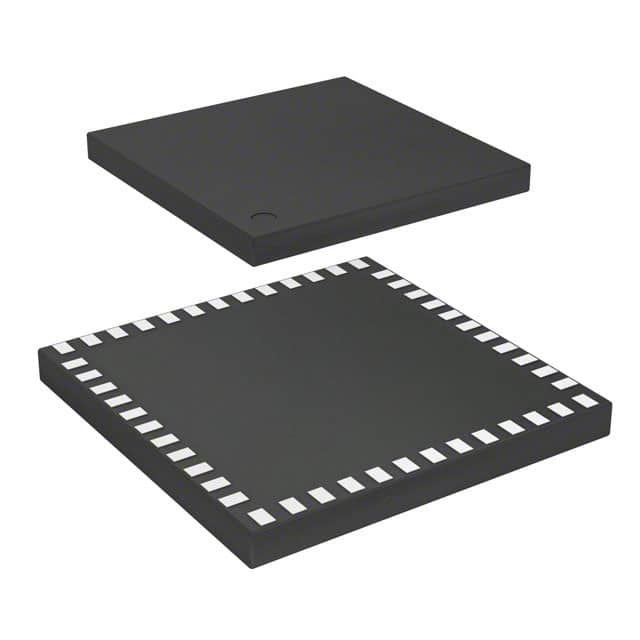
- Part No.:
- LMH0387SL/NOPB
- Manufacturer:
- Texas Instruments
- Category:
- Specialized
- Package:
- 48-VFQFN
- Datasheet:
-
 LMH0387SL/NOPB.pdf
- Description:
- IC INTERFACE SPECIALIZED 48TLGA
- Quantity:
- Payment:

- Shipping:

Inventory:2,061
Please send an inquiry. Send us your inquiry, and we will respond immediately.
Product details
Overview
LMH0387SL/NOPB from Texas Instruments is a configurable 3Gbps HD/SD SDI adaptive cable equalizer and cable driver supporting SMPTE ST 424, ST 292, ST 259, and DVB-ASI standards. It operates from 125Mbps to 2.97Gbps (receiver) or DC–2.97Gbps (transmitter), equalizes up to 120m of Belden 1694A at 2.97Gbps, features integrated return loss network, and uses a single 3.3V supply in a 7mm × 7mm 48-pin TLGA package for broadcast video infrastructure.
For engineers reviewing the LMH0387SL/NOPB datasheet, LMH0387SL/NOPB pinout, LMH0387SL/NOPB application, or LMH0387SL/NOPB equivalent, key selection considerations include its dual-mode configurable I/O (BNC_IO pin used for both input equalization and output driving), programmable LVDS output swing (400–800 mVP-P) and common mode (1.05–1.85 V), SPI-controlled launch amplitude optimization, cable length indication, and selectable slew rate for ST 259 vs. ST 424/292 compliance.
Technical Context
The LMH0387SL/NOPB implements an adaptive analog equalization architecture with automatic gain control and loop filter compensation via external AEC+ and AEC− pins, enabling real-time compensation of high-frequency loss in coaxial cables. Its dual-mode operation is controlled by TX_EN (driver enable) and SPI register configuration - forcing sleep mode disables the equalizer while enabling the driver for pure transmit function.
In receive mode, it delivers internally terminated 100Ω LVDS outputs (SDO/SDO) with programmable swing and common mode, carrier detect (CD) with adjustable threshold (CDTHRESH), and auto-sleep activation within <200 µs of signal loss. In transmit mode, it provides 75Ω current-mode output with RREF-controlled amplitude, SD/HD pin-selectable rise/fall times (65–800 ps), and TERMTX termination network for SMPTE-compliant return loss.
Key Specifications
| Parameter | Value and Actual Design Meaning |
|---|---|
| Data Rate Range | 125 Mbps to 2.97 Gbps (receiver); DC to 2.97 Gbps (cable driver) - supports SD, HD, and 3G-SDI video rates in one device. |
| Equalization Reach | Up to 120 m Belden 1694A @ 2.97 Gbps - enables long-haul HD-SDI links without external repeaters. |
| Output Swing | Programmable 400–800 mVP-P LVDS - matches input ranges of diverse FPGA or ASIC receivers including low-voltage crosspoints. |
| Common Mode Voltage | Adjustable 1.05–1.85 V in 200 mV steps - ensures DC-coupled compatibility with 1.8 V, 2.5 V, and 3.3 V logic families. |
| Jitter Performance | ≤0.35 UI equalizer jitter @ 2.97 Gbps / 120 m; ≤20 psP-P additive jitter in driver mode - meets SMPTE ST 424/292 eye mask requirements. |
| Return Loss | ≥15 dB (5–1.5 GHz), ≥10 dB (1.5–3 GHz) - satisfies SMPTE ST 424 return loss specification without external components. |
| Supply & Temp | Single 3.3 V ±3.3% supply; −40°C to +85°C industrial range - suitable for rack-mounted broadcast gear and field-deployable encoders. |
Pinout & Package
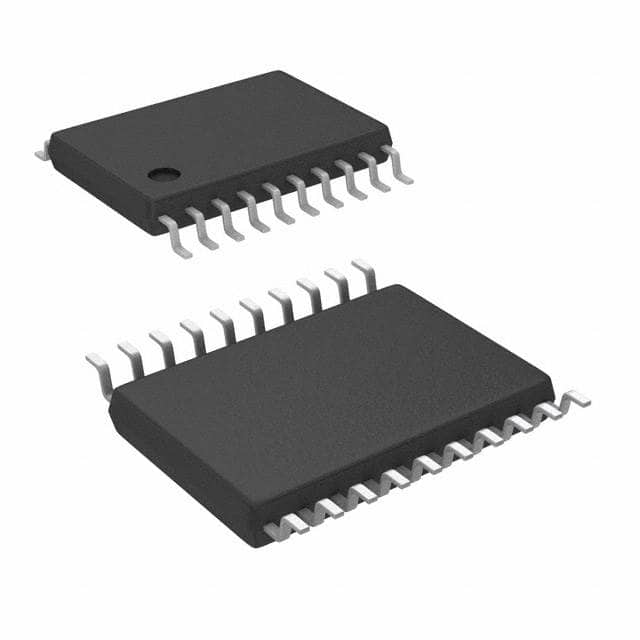
LMH0387SL/NOPB is housed in a 7 mm × 7 mm, 48-pin thin laminate grid array (TLGA) package with exposed thermal pad. The package supports high-speed signal integrity and efficient heat dissipation in dense video PCB layouts.
| Pin/Terminal | Circuit Role | Design Meaning |
|---|---|---|
| BNC_IO | Configurable I/O | Single pin used for either AC-coupled SDI input (equalizer mode) or output (cable driver mode); connects directly to BNC connector. |
| TX_EN | Digital Control Input | Enables/disables cable driver; internal pullup defaults to enabled; must be pulled low to disable driver in equalizer-only configurations. |
| SD/HD | Slew Rate Select | H = SD-compliant slow slew (ST 259); L = HD/3G-compliant fast slew (ST 424/292); internal pulldown sets default to HD mode. |
| CD | LVCMOS Output | Carrier detect flag: L = valid SDI signal present on BNC_IO; H = no signal detected - used for automatic link monitoring and failover. |
| RREF | Analog Reference | Resistor (715 Ω to VCC) sets BNC_IO output voltage swing; enables precise amplitude tuning per cable length and standard. |
| AEC+, AEC− | Analog Filter Terminals | Connect 1 µF capacitor between pins to configure equalizer loop filter - determines adaptation speed and stability over varying cable loss. |
| SDO / SDO | Differential LVDS Output | Internally terminated 100 Ω LVDS outputs from equalizer; programmable swing and common mode simplify interface to FPGAs and serializers. |
| TERMRX / TERMTX | Analog Termination | TERMRX: 1 µF + 220 Ω to ground for unused receiver input; TERMTX: 4.7 µF + 75 Ω to ground for unused driver output - ensures SMPTE return loss compliance. |
Key Features
| Feature | Design Value |
|---|---|
| Configurable I/O Architecture | Single BNC_IO pin serves as both equalized input and driven output - reduces connector count and PCB space in modular video equipment. |
| Integrated Return Loss Network | No external resistors/capacitors needed to meet SMPTE ST 424 return loss spec - eliminates layout sensitivity and component cost. |
| Programmable Launch Amplitude | SPI-adjustable equalizer output level optimizes eye opening at receiver input - improves margin for marginal or aging coaxial runs. |
| Cable Length Indication | Real-time estimation of effective coax length based on equalizer adaptation state - enables diagnostics and predictive maintenance in broadcast systems. |
| Auto Sleep Power Management | Equalizer powers down automatically when no signal is detected (<200 µs response); resumes instantly on re-detection - cuts idle power by >80%. |
| Slew Rate Selection | Hardware-selectable rise/fall times ensure compliance with ST 259 (SD), ST 292 (HD), or ST 424 (3G) eye diagrams - avoids overspecification and EMI issues. |
Applications
| Broadcast Video Encoders | Distribution Amplifiers |
|---|---|
Use Scenario: Encoding live 1080p60 video streams from camera feeds into compressed IP or baseband SDI formats. IC Role / Device Role / Timing Role: LMH0387SL/NOPB acts as adaptive equalizer on incoming SDI feed to restore signal integrity before digitization and encoding. Use Value: Compensates for up to 120 m of Belden 1694A loss at 2.97 Gbps, ensuring clean eye diagrams for reliable clock recovery and bit error rate <1e−12. |
Use Scenario: Re-broadcasting a single SDI source to multiple downstream monitors, recorders, or processing units in OB vans or control rooms. IC Role / Device Role / Timing Role: LMH0387SL/NOPB operates as cable driver to regenerate and drive SDI signals across multiple 75 Ω coaxial outputs. Use Value: Programmable output swing and slew rate maintain SMPTE-compliant eye masks across all outputs, eliminating timing skew and jitter accumulation. |
| Modular Video Servers | Digital Video Routers |
Use Scenario: Hot-swappable I/O modules in 19-inch rack servers handling ingest, playout, and format conversion of SD/HD/3G-SDI signals. IC Role / Device Role / Timing Role: LMH0387SL/NOPB provides bidirectional SDI interface per module - equalizing inputs and driving outputs via shared BNC connectors. Use Value: Configurable I/O reduces BOM count and simplifies firmware control; SPI registers allow dynamic reconfiguration without hardware change. |
Use Scenario: High-density SDI routing matrices switching between dozens of sources and destinations with minimal latency and jitter. IC Role / Device Role / Timing Role: LMH0387SL/NOPB functions as input equalizer on each ingress port and output driver on each egress port. Use Value: Integrated return loss network and programmable common mode eliminate need for external termination networks - saves board area and improves channel-to-channel isolation. |
Equivalent & Alternatives
The following parts are listed as comparable options for similar SDI equalizer/driver applications.
| Alternative Part | Technical Difference | Application Difference | Selection Advice |
|---|---|---|---|
| LMH0303SQ/NOPB | Fixed-function 3G-SDI equalizer only (no cable driver mode); smaller 32-pin QFN; lower max data rate (2.97 Gbps only in receive) | Lacks configurable I/O and transmit capability - suitable only for unidirectional receive paths where driver functionality is handled elsewhere. | Select when system architecture separates equalization and driving functions, and board space is constrained. |
| GS2971AIBTE3 | Pin-compatible 3G-SDI reclocker with integrated CDR; requires external reference clock; higher power (145 mA typical) | Provides jitter cleaning and retiming - adds deterministic latency but improves long-chain signal integrity beyond equalization alone. | Select when end-to-end jitter budget is tight or cascaded SDI links exceed 3 hops without regeneration. |
Compared with LMH0387SL/NOPB, LMH0303SQ/NOPB offers simpler integration for receive-only nodes but lacks flexibility, while GS2971AIBTE3 adds retiming capability at the cost of increased complexity and power - LMH0387SL/NOPB uniquely balances configurability, integration, and SMPTE compliance in a single chip.
Availability
LMH0387SL/NOPB is available at Aetrix Electronics and suitable for broadcast video encoders, distribution amplifiers, modular video servers, and digital video routers requiring stable component supply across extended product lifecycles and global production ramps.
Supply support for LMH0387SL/NOPB includes scheduled delivery planning, volume procurement assistance, BOM continuity management, traceable sourcing, and lifecycle availability coordination for OEM customers, industrial embedded developers, connected-device designers, and electronics production programs.
Manufacturer
Texas Instruments is a global semiconductor leader specializing in analog, embedded processing, and high-performance signal chain solutions for industrial, automotive, and communications markets.
The LMH0387SL/NOPB belongs to TI's high-speed video interface product line, designed specifically for SMPTE-compliant SDI infrastructure - emphasizing adaptive equalization, low-jitter transmission, and seamless integration into broadcast-grade equipment.
FAQ
What is the primary function of the LMH0387SL/NOPB in a video system?
The LMH0387SL/NOPB serves as a configurable 3Gbps HD/SD SDI adaptive cable equalizer and cable driver. It restores degraded SDI signals over coaxial cable in receive mode and regenerates compliant SDI outputs in transmit mode - all using a single BNC_IO pin. This dual functionality makes LMH0387SL/NOPB ideal for modular broadcast gear where space and connector count are constrained.
How does the LMH0387SL/NOPB achieve SMPTE-compliant return loss without external components?
The LMH0387SL/NOPB integrates a complete return loss network internally, meeting SMPTE ST 424 specifications across 5 MHz–3 GHz without requiring external resistors or capacitors. This is implemented through on-die termination structures and optimized I/O buffer design - verified on the SD387EVK evaluation board where LMH0387SL/NOPB exceeds 15 dB return loss below 1.5 GHz and 10 dB above.
Can the LMH0387SL/NOPB operate in both equalizer and cable driver modes simultaneously?
Yes - the LMH0387SL/NOPB supports loopback mode where both equalizer and cable driver are active: the equalizer receives and conditions an incoming SDI signal, then the cable driver retransmits it. This configuration requires TX_EN = high and equalizer not forced to sleep (SPI register 00h bits [4:3] ≠ "10"). Loopback mode draws ~117 mA and is used for diagnostics, signal monitoring, or transparent pass-through with conditioning.
What is the role of the CD and CDTHRESH pins on the LMH0387SL/NOPB?
The CD pin outputs an LVCMOS-level flag indicating presence (L) or absence (H) of a valid SDI signal on BNC_IO. CDTHRESH sets the detection threshold: leaving it unconnected or grounded enables default operation; applying a voltage >1.3 V adjusts sensitivity to match expected cable loss - higher voltages reduce detectable cable length before CD deasserts. This allows LMH0387SL/NOPB to provide intelligent link status in automated broadcast systems.
How is the output amplitude of the LMH0387SL/NOPB cable driver controlled?
The LMH0387SL/NOPB cable driver output amplitude is set by an external resistor (RREF) connected between the RREF pin and VCC. A nominal 715 Ω resistor yields 800 mVP-P; values from 511 Ω to 1.0 kΩ adjust swing linearly. This direct analog control - combined with SD/HD pin slew selection and TERMTX termination - ensures precise compliance with SMPTE ST 259, ST 292, or ST 424 output masks without SPI programming.
LMH0387SL/NOPB Specifications
- Product attributes
- Attribute value
- Manufacturer:
- Texas Instruments
- Series:
- -
- Package/Case:
- 48-VFQFN
- Packaging:
- Tape & Reel (TR)
- Product Status:
- Active
- Applications:
- Amplifier
- Interface:
- SPI Serial
- Voltage - Supply:
- 3.135V ~ 3.465V
- Supplier Device Package:
- 48-TLGA (7x7)
- Grade:
- -
- Qualification:
- -
- Mounting Type:
- Surface Mount
LMH0387SL/NOPB FAQ
1.How can I place an order for LMH0387SL/NOPB through Aetrix?
Please submit a Request for Quotation (RFQ) for LMH0387SL/NOPB on Aetrix. Our sales agent will provide a competitive quotation and guide you through the order confirmation once you accept the terms.
2.Are the price and stock information for LMH0387SL/NOPB reliable?
The price and inventory of LMH0387SL/NOPB are updated periodically and may fluctuate due to market conditions. Stock and pricing data are typically refreshed every 24 hours. Quotation validity for LMH0387SL/NOPB is usually 5 days.
3.What payment methods are accepted for LMH0387SL/NOPB?
We accept Wire Transfer, PayPal, Credit Card, Western Union, MoneyGram, and Escrow for LMH0387SL/NOPB transactions.
Note: Certain payment methods may incur a processing fee.
4.How is shipping managed for LMH0387SL/NOPB?
LMH0387SL/NOPB orders can be shipped via leading logistics carriers, including DHL, UPS, FedEx, TNT, or Registered Mail.
Once your LMH0387SL/NOPB order is processed, you will receive an email with the shipment details and tracking number.
Note: Tracking information may take up to 24 hours to appear. Express delivery typically takes 3–5 business days.
5.How can I obtain technical support or documentation for LMH0387SL/NOPB?
For technical support, including LMH0387SL/NOPB datasheets, pinout diagrams, or application guidance, please contact our engineering support team. They can provide detailed documentation and assistance for your LMH0387SL/NOPB requirements.
6.How does Aetrix verify that LMH0387SL/NOPB is sourced from the original manufacturer or authorized distributors?
All LMH0387SL/NOPB products on Aetrix are procured from qualified distributors and authorized channels. Our dedicated quality assurance team conducts strict verification, including traceability checks and, if necessary, third-party testing. This ensures that LMH0387SL/NOPB meets industry standards.
7.What is the process for return or replacement of LMH0387SL/NOPB?
All LMH0387SL/NOPB units undergo pre-shipment inspection (PSI). If there is an issue with LMH0387SL/NOPB, returns or replacements are accepted under the following conditions:
1.Quantity discrepancies, incorrect items, or visible external defects (such as breakage or corrosion), acknowledged by Aetrix.
2.The issue is reported within 90 days of delivery.
3.The LMH0387SL/NOPB part is unused and in its original packaging.
Return procedure for LMH0387SL/NOPB:
1.Submit a request within 90 days.
2.Obtain a Return Material Authorization (RMA) from Aetrix.
LMH0387SL/NOPB Tags
-
NVT4857UKAZ
NXP Semiconductors
-
TCA8418RTWR
Texas Instruments
-
PCA9546APWR
Texas Instruments
-
MD0100N8-G
Microchip Technology
-
PCA9548APW,118
NXP Semiconductors
-
PCA9540BDP,118
NXP Semiconductors
-
PCA9548APWR
Texas Instruments
-
PCA9546APW,118
NXP Semiconductors
-
PTN3360DBS,518
NXP Semiconductors
-
PCA9546ABS,118
NXP Semiconductors
-
PCA9518PWR
Texas Instruments
-
PCA9545APW,118
NXP Semiconductors
Tech Hub

A practical engineering guide to 3.3V and 5V logic compatibility, input thresholds, resistor dividers, translator ICs, MOSFET level shifting, I2C pull-ups, timing limits and power-sequencing risks.

The 74HC595 uses push-pull logic outputs, while the TPIC6B595 uses 50 V open-drain DMOS sinks for higher-power loads. This guide compares timing, current limits, 3.3 V interfacing, load wiring, thermal…

The 74HC595 converts serial data into eight stable parallel outputs. This guide covers pin functions, shift and storage timing, OE and MR behavior, drive-current limits, cascading, voltage compatibilit…

A technical comparison of level-sensitive latches and edge-triggered flip-flops, covering timing windows, setup and hold limits, master–slave operation, time borrowing, race-through, HDL inference and…

A D latch stores one bit while Enable controls when data can pass. This reference covers gate-level operation, truth tables, transparency, setup and hold timing, LE versus OE, common ICs and practical …

An SR latch stores one bit through cross-coupled feedback. This engineering reference covers NOR and NAND implementations, truth tables, forbidden-state recovery, gated operation, switch debouncing, fa…

Latch circuits retain one bit through feedback. This technical reference covers SR and D latches, truth tables, transparency, timing limits, latch-versus-flip-flop behavior, applications and common log…

An engineering guide to LED driver operation, constant-current and constant-voltage outputs, linear and switching topologies, dimming, IC selection, calculations, replacement compatibility, and fault c…

Operational amplifier guide covering op amp basics, feedback, ideal vs real op amps, common configurations, buffer circuits, offset, bias current, gain-bandwidth, slew rate, rail-to-rail limits and sel…

Jumper cables guide covering safe connection order, red and black clamp placement, final ground connection, cable gauge, length, clamp quality, copper vs CCA cables, jump starter comparison and battery…


