
 My Inquiry
 My Account


Texas Instruments LMH1981MTX/NOPB
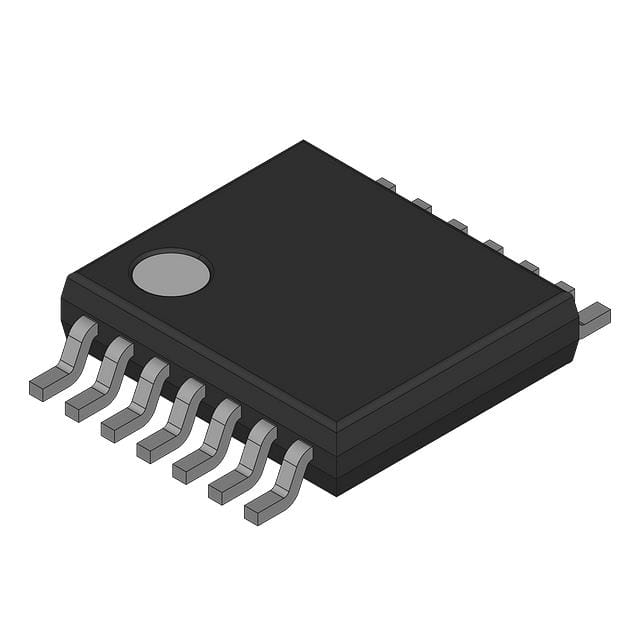
- Part No.:
- LMH1981MTX/NOPB
- Manufacturer:
- Texas Instruments
- Category:
- Video Processing
- Package:
- 14-TSSOP (0.173", 4.40mm Width)
- Datasheet:
-
 LMH1981MTX/NOPB.pdf
- Description:
- IC VIDEO SYNC 14TSSOP
- Quantity:
- Payment:

- Shipping:

Inventory:10,773
Please send an inquiry. Send us your inquiry, and we will respond immediately.
Product details
Overview
LMH1981MTX/NOPB from Texas Instruments is a multi-format video sync separator IC designed to extract composite, horizontal, vertical, burst/back porch, odd/even field, and 11-bit video format timing signals from analog SD/ED/HD video inputs (CVBS, Y/C, YPBPR, GBR) with bi-level or tri-level sync. It operates from 3.3V–5V, delivers rail-to-rail CMOS outputs, and achieves ≤±3 ns HSync propagation delay variation over 0°C–70°C in broadcast and professional video systems.
For engineers reviewing the LMH1981MTX/NOPB datasheet, LMH1981MTX/NOPB pinout, LMH1981MTX/NOPB application, or LMH1981MTX/NOPB equivalent, key selection criteria include its automatic video format detection, 50% sync slicing for 0.5–2 VPP input amplitude, sub-3 ns HSync edge jitter stability, and 14-pin TSSOP package compatibility with legacy video timing architectures.
Technical Context
The LMH1981MTX/NOPB implements a fully analog front-end with precision internal clamp and 50% sync slicing referenced to OH (sync tip), enabling robust sync extraction across NTSC, PAL, 480I/P, 576I/P, 720P, 1080I/P, and 1080PsF formats without microcontroller programming. Its architecture includes independent bias current control via REXT (10 kΩ 1%) and dynamic blanking/sync tip level tracking.
All logic outputs are negative-polarity CMOS (except OEOUT and VFOUT), with HSOUT optimized for low-jitter falling-edge triggering, VSOUT delivering 3H-width pulses aligned to vertical serration, and VFOUT serially outputting 11-bit line-count data clocked by HSOUT edges starting at the third HSOUT after each VSOUT leading edge.
Key Specifications
| Parameter | Value and Actual Design Meaning |
|---|---|
| Supply Voltage | 3.3V to 5V - supports dual-rail system integration and backward compatibility with legacy 5V video timing rails |
| Input Sync Amplitude | 0.14–0.60 VPP (bi-level), 0.30–1.20 VPP (tri-level) - accommodates improperly terminated or attenuated CVBS/Y/C/YPBPR sources |
| HSync Propagation Delay | 30–475 ns depending on format - enables precise timing alignment in FPGA-based video pipelines with known, bounded latency |
| HSync Edge Jitter | <±3 ns (typ) over 0°C–70°C - eliminates need for external reclocking in genlock-critical broadcast equipment |
| Video Format Output | 11-bit serial binary stream on VFOUT - provides real-time, auto-detected line count (e.g., 560 for 1080I Field 1) for dynamic scaler/color space configuration |
| Operating Temperature | −40°C to +85°C - qualified for industrial and broadcast rack-mounted enclosures with passive thermal management |
| Package | 14-pin TSSOP (PW) - surface-mount compatible with standard reflow profiles and high-density video PCB layouts |
Pinout & Package
The LMH1981MTX/NOPB is housed in a 14-pin Thin Shrink Small Outline Package (TSSOP, PW), 5.0 mm × 4.4 mm × 1.2 mm, with 0.65 mm pitch and exposed thermal pad (not electrically connected). Pin 1 is marked by a dot or beveled corner.
| Pin/Terminal | Circuit Role | Design Meaning |
|---|---|---|
| 1 (REXT) | Bias current reference terminal | Connects to 10 kΩ 1% resistor to set internal bias current and reference voltage - deviation causes jitter increase and amplitude range reduction |
| 2,5,10 (GND) | Ground return | Three dedicated ground pins minimize ground bounce across analog input, digital outputs, and supply domains |
| 3,6,11 (VCC) | Power supply | Three separate VCC pins (VCC1/VCC2/VCC3) decouple supply paths for analog front-end, output drivers, and logic core |
| 4 (VIN) | Analog video input | Accepts AC-coupled CVBS, Y, YPBPR, or GBR with bi-level/tri-level sync - requires 75 Ω termination and 0.01–1 µF coupling capacitor |
| 7 (HSOUT) | Negative-polarity horizontal sync output | Falling-edge triggered signal with ≤±3 ns jitter variation - must be inverted for positive-edge FPGA PLL use; trailing edge not timing-valid |
| 8 (VSOUT) | Negative-polarity vertical sync output | 3H-width pulse aligned to first vertical serration - used as frame enable and VFOUT data window trigger |
| 9 (VFOUT) | 11-bit video format data output | Serial binary line count (e.g., 01000110000b = 560) clocked by HSOUT edges starting at 3rd HSOUT after VSOUT leading edge |
| 12 (CSOUT) | Composite sync output | Clamped reproduction of input sync pulses - preserves original sync polarity and timing for legacy sync distribution |
| 13 (BPOUT) | Burst/back porch timing output | Negative pulse during back porch - used as color burst gate (NTSC/PAL) or DC restoration clamp signal |
| 14 (OEOUT) | Odd/even field indicator | Logic high = odd field (Field 1); logic low = even field (Field 2); held high for progressive formats (480P/720P/1080P) |
Key Features
| Feature | Design Value |
|---|---|
| Automatic video format detection | Eliminates microcontroller interface and firmware updates - detects NTSC, PAL, 480I/P, 576I/P, 720P, 1080I/P, 1080PsF in real time without reset or reconfiguration |
| 50% sync slicing across amplitude range | Enables stable HSync edge timing from 0.5 VPP to 2 VPP inputs - critical for field-deployed equipment with variable cable loss or impedance mismatch |
| Rail-to-rail CMOS output swing | VOH ≥ 3.0 V @ 3.3V, VOL ≤ 0.3 V @ 3.3V - ensures noise margin and direct interfacing with 3.3V/5V FPGAs, ASICs, and logic families |
| 11-bit serial video format output | Delivers exact horizontal line count per field (e.g., 560 for 1080I Field 1) - allows video processors to auto-select scaling ratios, color matrices, and deinterlacing modes |
| Bi-level and tri-level sync compatibility | Single device replaces multiple legacy separators - supports SMPTE 170M (NTSC), ITU-R BT.470 (PAL), SMPTE 296M (720P), SMPTE 274M (1080I) |
Applications
| Broadcast Genlock Systems | Professional Video Capture |
|---|---|
Use Scenario: Synchronizing multiple cameras, switchers, and recorders to a common black burst reference in live production trucks. IC Role / Device Role / Timing Role: LMH1981MTX/NOPB extracts clean, low-jitter HSync/VSOUT from incoming black burst and generates format-locked VFOUT for metadata tagging. Use Value: Sub-3 ns HSync jitter stability eliminates frame slips and enables deterministic lip-sync across distributed video nodes. | Use Scenario: Capturing analog component video (YPBPR) from legacy broadcast sources into PCIe-based acquisition cards. IC Role / Device Role / Timing Role: LMH1981MTX/NOPB separates timing signals and outputs 11-bit VFOUT to configure FPGA-based line buffers and chroma resamplers. Use Value: Automatic format detection reduces driver complexity and enables hot-swap support for mixed-format ingest (e.g., 1080I → 720P transcoding). |
| HDTV Set-Top Box Tuner Boards | Video Display Timing Controllers |
Use Scenario: Extracting sync and format data from analog tuner outputs (CVBS/Y/C) for upscaling and HDMI conversion in consumer STBs. IC Role / Device Role / Timing Role: LMH1981MTX/NOPB provides CSOUT, HSOUT, VSOUT, and VFOUT to MCU for resolution negotiation and HDCP key loading. Use Value: 0.5–2 VPP input tolerance accommodates low-cost tuner modules with inconsistent output amplitude, reducing BOM cost. | Use Scenario: Driving LCD/OLED panel timing controllers from analog video sources in medical imaging or industrial HMIs. IC Role / Device Role / Timing Role: LMH1981MTX/NOPB delivers precise VSOUT and HSOUT to panel TCON, while OEOUT enables field-sequential backlight dimming. Use Value: 3H VSOUT pulse width and aligned OEOUT transitions ensure accurate interlaced-to-progressive conversion without visible tearing. |
Equivalent & Alternatives
The following parts are listed as comparable options for similar video sync separation applications.
| Alternative Part | Technical Difference | Application Difference | Selection Advice |
|---|---|---|---|
| LM1881N/NOPB | Lacks automatic format detection; requires RSET resistor adjustment per line rate; no VFOUT or BPOUT; higher HSync jitter (±15 ns) | Only supports SDTV (NTSC/PAL); no HD/EDTV capability; no serial format data output | Select only for cost-sensitive SD-only designs where format switching is static and jitter budget >10 ns |
| MAX9526ETL+ | Integrated ADC + sync separator; 10-bit digitization; I²C-configurable; no REXT dependency; VFOUT replaced by register-read format ID | Requires I²C host; consumes more power (28 mA vs. 11.5 mA); supports RGB but not GBR sync-on-green | Choose when digitization and programmability outweigh analog simplicity and ultra-low jitter requirements |
Compared with LM1881N/NOPB and MAX9526ETL+, the LMH1981MTX/NOPB uniquely combines automatic multi-format operation, sub-3 ns HSync jitter, and 11-bit serial VFOUT in a pin-compatible 14-pin TSSOP - making it the only option for broadcast-grade genlock and real-time format-aware video processing without external microcontroller coordination.
Availability
LMH1981MTX/NOPB is available at Aetrix Electronics and suitable for broadcast infrastructure, professional video capture, and HDTV set-top box applications requiring stable component supply, long-lifecycle availability, and guaranteed traceable sourcing.
Supply support for LMH1981MTX/NOPB includes scheduled delivery planning, volume procurement assistance, BOM continuity management, traceable sourcing, and lifecycle availability coordination for OEM customers, industrial embedded developers, connected-device designers, and electronics production programs.
Manufacturer
Texas Instruments is a global semiconductor leader specializing in analog, embedded processing, and connectivity technologies for industrial, automotive, and communications markets.
The LMH1981MTX/NOPB belongs to TI's high-performance video timing product line, engineered specifically for broadcast and professional video equipment where deterministic sync extraction, multi-standard compatibility, and jitter-critical timing integrity are mandatory.
FAQ
What video standards does the LMH1981MTX/NOPB support?
The LMH1981MTX/NOPB supports NTSC, PAL, 480I/P, 576I/P, 720P, 1080I/P, and 1080PsF via CVBS, Y/C, YPBPR, and GBR interfaces. It handles both bi-level sync (SMPTE 170M, ITU-R BT.470) and tri-level sync (SMPTE 296M, SMPTE 274M) but excludes VESA PC graphics RGB. The LMH1981MTX/NOPB automatically detects and adapts to each format without configuration.
How does the REXT resistor affect LMH1981MTX/NOPB performance?
The REXT resistor (pin 1) sets the internal bias current and reference voltage for the LMH1981MTX/NOPB. A 10 kΩ 1% resistor is required for specified jitter, propagation delay, and input amplitude range. Using lower-precision or higher-temperature-coefficient resistors degrades HSync jitter stability and reduces usable input amplitude range. Unlike the LM1881's RSET, REXT is fixed and format-agnostic.
Can LMH1981MTX/NOPB operate with a 3.3V supply only?
Yes, the LMH1981MTX/NOPB operates across 3.3V ±5% to 5V ±5%, including 3.3V-only systems. At 3.3V, VOH ≥ 3.0 V and VOL ≤ 0.3 V meet standard CMOS logic thresholds, and supply current is 9.5–11.5 mA. All timing specifications, including ≤±3 ns HSync jitter variation, are ensured at 3.3V and 25°C per the datasheet.
What is the function of the VFOUT pin on LMH1981MTX/NOPB?
The VFOUT pin (pin 9) outputs an 11-bit serial binary stream representing total horizontal lines per field (e.g., 01000110000b = 560 for 1080I Field 1). Data is clocked by HSOUT edges, beginning at the third HSOUT after each VSOUT leading edge. The LMH1981MTX/NOPB uses this to enable dynamic video system adjustments like scaler configuration and color space selection without external programming.
Is LMH1981MTX/NOPB pin-compatible with LM1881N/NOPB?
No, the LMH1981MTX/NOPB is not pin-compatible with LM1881N/NOPB. LMH1981MTX/NOPB uses a 14-pin TSSOP with three VCC and three GND pins, REXT input, and dedicated VFOUT/BPOUT/OEOUT outputs. LM1881N/NOPB uses an 8-pin SOIC with single VCC/GND, RSET input, and only CSOUT/HSOUT/VSOUT outputs. Board redesign is required for replacement.
LMH1981MTX/NOPB Specifications
- Product attributes
- Attribute value
- Manufacturer:
- Texas Instruments
- Series:
- -
- Package/Case:
- 14-TSSOP (0.173", 4.40mm Width)
- Packaging:
- Tape & Reel (TR)
- Product Status:
- Active
- Function:
- Separator
- Applications:
- Professional Video
- Standards:
- NTSC, PAL
- Control Interface:
- Serial
- Voltage - Supply:
- 3.13V ~ 5.25V
- Mounting Type:
- Surface Mount
- Grade:
- -
- Qualification:
- -
- Supplier Device Package:
- 14-TSSOP
LMH1981MTX/NOPB FAQ
1.How can I place an order for LMH1981MTX/NOPB through Aetrix?
Please submit a Request for Quotation (RFQ) for LMH1981MTX/NOPB on Aetrix. Our sales agent will provide a competitive quotation and guide you through the order confirmation once you accept the terms.
2.Are the price and stock information for LMH1981MTX/NOPB reliable?
The price and inventory of LMH1981MTX/NOPB are updated periodically and may fluctuate due to market conditions. Stock and pricing data are typically refreshed every 24 hours. Quotation validity for LMH1981MTX/NOPB is usually 5 days.
3.What payment methods are accepted for LMH1981MTX/NOPB?
We accept Wire Transfer, PayPal, Credit Card, Western Union, MoneyGram, and Escrow for LMH1981MTX/NOPB transactions.
Note: Certain payment methods may incur a processing fee.
4.How is shipping managed for LMH1981MTX/NOPB?
LMH1981MTX/NOPB orders can be shipped via leading logistics carriers, including DHL, UPS, FedEx, TNT, or Registered Mail.
Once your LMH1981MTX/NOPB order is processed, you will receive an email with the shipment details and tracking number.
Note: Tracking information may take up to 24 hours to appear. Express delivery typically takes 3–5 business days.
5.How can I obtain technical support or documentation for LMH1981MTX/NOPB?
For technical support, including LMH1981MTX/NOPB datasheets, pinout diagrams, or application guidance, please contact our engineering support team. They can provide detailed documentation and assistance for your LMH1981MTX/NOPB requirements.
6.How does Aetrix verify that LMH1981MTX/NOPB is sourced from the original manufacturer or authorized distributors?
All LMH1981MTX/NOPB products on Aetrix are procured from qualified distributors and authorized channels. Our dedicated quality assurance team conducts strict verification, including traceability checks and, if necessary, third-party testing. This ensures that LMH1981MTX/NOPB meets industry standards.
7.What is the process for return or replacement of LMH1981MTX/NOPB?
All LMH1981MTX/NOPB units undergo pre-shipment inspection (PSI). If there is an issue with LMH1981MTX/NOPB, returns or replacements are accepted under the following conditions:
1.Quantity discrepancies, incorrect items, or visible external defects (such as breakage or corrosion), acknowledged by Aetrix.
2.The issue is reported within 90 days of delivery.
3.The LMH1981MTX/NOPB part is unused and in its original packaging.
Return procedure for LMH1981MTX/NOPB:
1.Submit a request within 90 days.
2.Obtain a Return Material Authorization (RMA) from Aetrix.
LMH1981MTX/NOPB Tags
-
HDMI2C1-6C1
STMicroelectronics
-
ADA4430-1YKSZ-R7
Analog Devices Inc.

-
LM1881MX/NOPB
Texas Instruments
-
SN75DP130SSRGZR
Texas Instruments
-
EQCO30T5.2
Microchip Technology
-
LMH1980MM/NOPB
Texas Instruments
-
EQCO30R5.D
Microchip Technology

-
SII9022ACNU
Lattice Semiconductor Corporation
-
SN65DP159RGZR
Texas Instruments
-
SN65DP159RSBR
Texas Instruments
-
SN65DP141RLJR
Texas Instruments
-
LMH0303SQ/NOPB
Texas Instruments
Tech Hub

A practical engineering guide to 3.3V and 5V logic compatibility, input thresholds, resistor dividers, translator ICs, MOSFET level shifting, I2C pull-ups, timing limits and power-sequencing risks.

The 74HC595 uses push-pull logic outputs, while the TPIC6B595 uses 50 V open-drain DMOS sinks for higher-power loads. This guide compares timing, current limits, 3.3 V interfacing, load wiring, thermal…

The 74HC595 converts serial data into eight stable parallel outputs. This guide covers pin functions, shift and storage timing, OE and MR behavior, drive-current limits, cascading, voltage compatibilit…

A technical comparison of level-sensitive latches and edge-triggered flip-flops, covering timing windows, setup and hold limits, master–slave operation, time borrowing, race-through, HDL inference and…

A D latch stores one bit while Enable controls when data can pass. This reference covers gate-level operation, truth tables, transparency, setup and hold timing, LE versus OE, common ICs and practical …

An SR latch stores one bit through cross-coupled feedback. This engineering reference covers NOR and NAND implementations, truth tables, forbidden-state recovery, gated operation, switch debouncing, fa…

Latch circuits retain one bit through feedback. This technical reference covers SR and D latches, truth tables, transparency, timing limits, latch-versus-flip-flop behavior, applications and common log…

An engineering guide to LED driver operation, constant-current and constant-voltage outputs, linear and switching topologies, dimming, IC selection, calculations, replacement compatibility, and fault c…

Operational amplifier guide covering op amp basics, feedback, ideal vs real op amps, common configurations, buffer circuits, offset, bias current, gain-bandwidth, slew rate, rail-to-rail limits and sel…

Jumper cables guide covering safe connection order, red and black clamp placement, final ground connection, cable gauge, length, clamp quality, copper vs CCA cables, jump starter comparison and battery…


