
 My Inquiry
 My Account


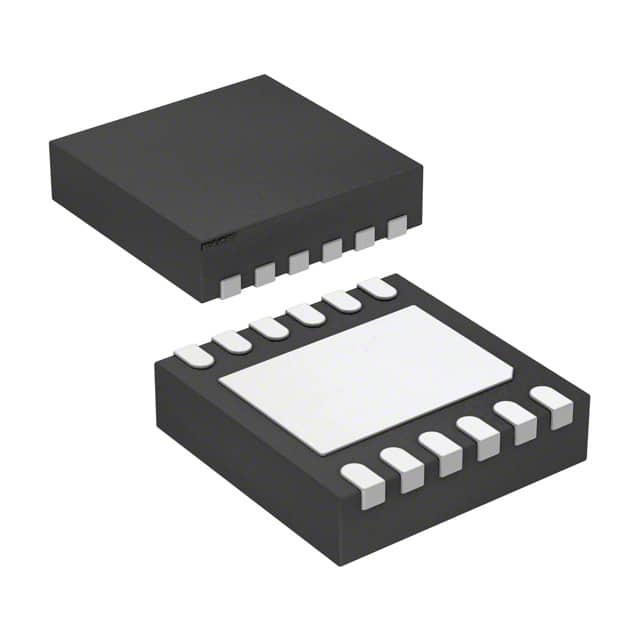
Texas Instruments LMR23630FDRRT
- Part No.:
- LMR23630FDRRT
- Manufacturer:
- Texas Instruments
- Package:
- 12-WFDFN Exposed Pad
- Datasheet:
-
 LMR23630FDRRT.pdf
- Description:
- IC REG BUCK ADJ 3A 12SON
- Quantity:
- Payment:

- Shipping:

Inventory:1,126
Please send an inquiry. Send us your inquiry, and we will respond immediately.
Product details
Overview
LMR23630FDRRT from Texas Instruments is a 36-V, 3-A synchronous step-down DC-DC converter in a 12-pin WSON package with wettable flanks, featuring adjustable switching frequency (200–2200 kHz), FPWM mode for low ripple, 75-µA quiescent current in PFM, and integrated high- and low-side MOSFETs with RDS(on) of 160 mΩ/95 mΩ. It delivers stable 1–28 V output for industrial power conditioning from unregulated sources.
For engineers reviewing the LMR23630FDRRT datasheet, LMR23630FDRRT pinout, LMR23630FDRRT application, or LMR23630FDRRT equivalent, key selection considerations include its RT-pin-based frequency adjustability, FPWM vs PFM mode trade-offs, thermal performance in compact WSON layout, and compatibility with prebiased soft-start and precision enable sequencing in PLC and HVAC control systems.
Technical Context
The LMR23630FDRRT implements peak-current-mode control with internal compensation, enabling stable regulation across wide input (4–36 V) and output (1–28 V) ranges without external loop components. Its 60 ns minimum on-time supports high-duty-cycle operation down to 1.5 V output at 36 V input.
It features dual operating modes: PFM for ultra-low IQ (75 µA) at light load and FPWM for fixed-frequency, low-ripple performance. Frequency synchronization (200–2200 kHz) and RT-pin programmability allow EMI optimization, while hiccup-mode short-circuit protection and thermal shutdown ensure robustness in factory automation environments.
Key Specifications
| Parameter | Value and Actual Design Meaning |
|---|---|
| Input Voltage Range | 4 V to 36 V - supports direct connection to industrial 24-V rails and automotive battery inputs with margin. |
| Output Current | 3 A continuous - sufficient for powering PLC CPU cores, I/O modules, and sensor interface circuitry. |
| Switching Frequency | Adjustable 200–2200 kHz via RT pin - enables EMI-sensitive designs to avoid noise bands and optimize inductor size. |
| Quiescent Current | 75 µA in PFM mode - extends battery life in asset-tracking devices with intermittent wake-up cycles. |
| Min. On-Time | 60 ns - allows high step-down ratios (e.g., 36 V → 3.3 V) without pulse-skipping instability. |
| Thermal Shutdown | 170 °C threshold with 15 °C hysteresis - protects against sustained overload in enclosed HVAC control enclosures. |
| Enable Threshold | 1.55 V typical rising threshold with 0.4 V hysteresis - ensures clean power sequencing in multi-rail industrial systems. |
Pinout & Package
The LMR23630FDRRT uses a 12-pin WSON package (3.00 mm × 3.00 mm) with wettable flanks for automated optical inspection and enhanced thermal dissipation via exposed thermal pad connected to PGND.
| Pin/Terminal | Circuit Role | Design Meaning |
|---|---|---|
| SW | Switch node | Connects to power inductor; carries high di/dt switching current - requires tight layout to minimize EMI and voltage spikes. |
| BOOT | High-side gate driver supply | Requires 100 nF–470 nF ceramic capacitor to SW; critical for reliable high-side FET turn-on. |
| VCC | Internal LDO output | Supplies bias for control circuitry; must be bypassed with 2.2-µF/16-V capacitor to AGND - no external loading permitted. |
| FB | Feedback input | Monitors output via resistor divider; 1-V reference enables precise 1–28 V output programming with 1% resistors. |
| EN/SYNC | Enable & sync input | Active-high enable with undervoltage lockout; accepts external clock (200–2200 kHz) for system-wide timing alignment. |
| RT | Frequency set | Connect resistor to AGND to program switching frequency; floating = 400 kHz default - not shorted to ground. |
| PGOOD | Power-good flag | Open-drain output indicating ±7% output regulation; requires 10–100 kΩ pullup - used for system reset or sequencing. |
| AGND / PGND / PAD | Analog/power ground | Separate AGND (reference) and PGND (power return); thermal pad (PAD) must connect to PCB ground plane for thermal management. |
Key Features
| Feature | Design Value |
|---|---|
| Integrated synchronous rectification | Eliminates external Schottky diode, reducing solution size and improving efficiency by >5% at full load versus asynchronous designs. |
| Internal compensation | Removes need for external Type-II/III compensation network - cuts BOM count by ≥3 components and accelerates design validation. |
| Soft start into prebiased load | Prevents output overshoot when powering up partially charged rails - essential for hot-swap and redundant power systems. |
| Precision enable input | 0.4 V hysteresis and 100 nA leakage enable accurate power sequencing across multiple regulators in PLC backplanes. |
| Hiccup-mode short-circuit protection | Enters 10-ms retry cycle after 64 consecutive current-limit events - prevents thermal runaway during sustained output faults. |
Applications
| PLC CPU Power Supply | HVAC Control Unit |
|---|---|
Use Scenario: Powers 3.3-V or 5-V microcontroller core and peripherals in modular programmable logic controllers with 24-V field bus input. IC Role / Device Role / Timing Role: Primary buck regulator delivering regulated rail with fast transient response to handle CPU burst loads during ladder logic execution. Use Value: 3-A capability and 60 ns min on-time support 24-V-to-3.3-V conversion without external post-regulation; FPWM mode ensures clean supply for ADC references. | Use Scenario: Supplies 5-V and 3.3-V rails for temperature sensors, fan drivers, and communication interfaces in wall-mounted HVAC controllers. IC Role / Device Role / Timing Role: Main DC-DC converter handling wide-input transients (e.g., 12–36 V from solar-charged batteries or building power). Use Value: 4–36 V input range accommodates brownout and surge conditions; PFM mode extends battery runtime during standby monitoring cycles. |
| Industrial Asset Tracker | Factory Automation I/O Module |
Use Scenario: Powers GPS, cellular modem, and MCU in battery-operated equipment tracking units deployed in warehouses or logistics yards. IC Role / Device Role / Timing Role: Efficient step-down regulator enabling long-term operation on primary lithium-thionyl chloride cells. Use Value: 75-µA quiescent current and 2-µA shutdown current maximize shelf life; soft-start prevents inrush into capacitive modem loads. | Use Scenario: Generates isolated 5-V and 24-V auxiliary rails for digital I/O expansion modules interfacing with sensors and actuators. IC Role / Device Role / Timing Role: High-reliability buck stage providing stable supply under variable load (0–3 A) and ambient temperatures (−40°C to +85°C). Use Value: Thermal shutdown and hiccup protection prevent field failures during cable short circuits; wettable-flank WSON aids AOI in high-volume manufacturing. |
Equivalent & Alternatives
The following parts are listed as comparable options for similar synchronous buck regulator applications.
| Alternative Part | Technical Difference | Application Difference | Selection Advice |
|---|---|---|---|
| LMR23630DRR | No PGOOD pin; RT pin present - same frequency adjustability but lacks power-good flag. | Suitable where system-level monitoring replaces per-rail PGOOD signaling. | Select LMR23630DRR when board space permits omission of PGOOD pullup and sequencing logic. |
| LMR23625FDDA | 8-pin HSOIC package; fixed 400-kHz frequency; 2.5-A rating; no RT or PGOOD pins. | Lower current requirement; simpler layout with fewer pins; no frequency tuning needed. | Choose LMR23625FDDA for cost-sensitive, lower-power industrial controls where 2.5 A suffices and EMI constraints allow fixed frequency. |
Compared with LMR23630FDRRT, LMR23630DRR trades PGOOD functionality for identical frequency flexibility, while LMR23625FDDA offers pin-count reduction and fixed-frequency simplicity at the expense of current headroom and feature set - making LMR23630FDRRT optimal for designs requiring both programmable frequency and power-good signaling in minimal area.
Availability
LMR23630FDRRT is available at Aetrix Electronics and suitable for factory automation systems, HVAC control units, and industrial asset trackers requiring stable component supply, long-lifecycle support, and consistent parametric performance across production batches.
Supply support for LMR23630FDRRT includes scheduled delivery planning, volume procurement assistance, BOM continuity management, traceable sourcing, and lifecycle availability coordination for OEM customers, industrial embedded developers, connected-device designers, and electronics production programs.
Manufacturer
Texas Instruments is a global semiconductor leader specializing in analog and embedded processing technologies, with decades of expertise in power management ICs for industrial and automotive markets.
The LMR23630FDRRT belongs to TI's SIMPLE SWITCHER® family, designed specifically for rugged, easy-to-use DC-DC conversion in harsh industrial environments where reliability, wide input range, and minimal external components are critical.
FAQ
What is the function of the RT pin on the LMR23630FDRRT?
The RT pin on the LMR23630FDRRT sets the switching frequency by connecting an external resistor to AGND. With RT open, the device defaults to 400 kHz; using resistors from 17.8 kΩ to 198 kΩ adjusts frequency from 2200 kHz down to 200 kHz. This pin is not intended to be shorted to ground, and its impedance directly determines oscillator timing - enabling EMI mitigation and inductor size optimization in the final LMR23630FDRRT design.
Does the LMR23630FDRRT support synchronization to an external clock?
Yes, the LMR23630FDRRT supports frequency synchronization via its EN/SYNC pin. An AC-coupled external clock signal (200–2200 kHz, 2.8–5.5 V amplitude) can be injected through a small capacitor to align switching edges with system clocks or other converters. This capability reduces beat frequencies and simplifies EMI filtering in multi-rail LMR23630FDRRT-based power systems used in PLCs and motion controllers.
How does the PGOOD pin on the LMR23630FDRRT operate?
The PGOOD pin on the LMR23630FDRRT is an open-drain output that asserts low when output voltage deviates beyond ±7% of the target (e.g., 92–107% of VREF). It features deglitch delays of 150 µs (rise) and 18 µs (fall) to reject transients. A 10–100 kΩ pullup to ≤12 V is required. This signal enables safe power sequencing and fault detection in LMR23630FDRRT-powered systems like HVAC controllers where rail integrity must be verified before firmware initialization.
Can the LMR23630FDRRT start up into a prebiased output?
Yes, the LMR23630FDRRT supports soft-start into a prebiased output. Its internal soft-start circuitry monitors the FB pin voltage during startup and modulates the duty cycle to prevent reverse current flow or output overshoot when powering into an already charged rail. This behavior is critical in redundant power architectures and hot-swap applications where the LMR23630FDRRT may be inserted into a live system - ensuring seamless transition without disrupting downstream logic.
What thermal performance can be expected from the LMR23630FDRRT in its WSON package?
The LMR23630FDRRT in the 12-pin WSON package has a junction-to-board thermal resistance (RθJB) of 16.3 °C/W and junction-to-ambient (RθJA) of 41.5 °C/W with standard 2-layer PCB layout. With proper thermal pad soldering to a solid ground plane, it sustains 3-A continuous output at ambient temperatures up to +85°C without derating. The exposed thermal pad (Pin 9) must be connected to PGND and routed with ≥4 thermal vias to inner ground layers to achieve rated performance in the final LMR23630FDRRT implementation.
LMR23630FDRRT Specifications
- Product attributes
- Attribute value
- Manufacturer:
- Texas Instruments
- Series:
- SIMPLE SWITCHER®
- Package/Case:
- 12-WFDFN Exposed Pad
- Packaging:
- Tape & Reel (TR)
- Product Status:
- Active
- Function:
- Step-Down
- Output Configuration:
- Positive
- Topology:
- Buck
- Output Type:
- Adjustable
- Number of Outputs:
- 1
- Voltage - Input (Min):
- 4V
- Voltage - Input (Max):
- 36V
- Voltage - Output (Min/Fixed):
- 1V
- Voltage - Output (Max):
- 28V
- Current - Output:
- 3A
- Frequency - Switching:
- 150kHz ~ 2.425MHz
- Synchronous Rectifier:
- Yes
- Operating Temperature:
- -40°C ~ 125°C (TJ)
- Grade:
- -
- Qualification:
- -
- Mounting Type:
- Surface Mount, Wettable Flank
- Supplier Device Package:
- 12-SON (3x3)
LMR23630FDRRT FAQ
1.How can I place an order for LMR23630FDRRT through Aetrix?
Please submit a Request for Quotation (RFQ) for LMR23630FDRRT on Aetrix. Our sales agent will provide a competitive quotation and guide you through the order confirmation once you accept the terms.
2.Are the price and stock information for LMR23630FDRRT reliable?
The price and inventory of LMR23630FDRRT are updated periodically and may fluctuate due to market conditions. Stock and pricing data are typically refreshed every 24 hours. Quotation validity for LMR23630FDRRT is usually 5 days.
3.What payment methods are accepted for LMR23630FDRRT?
We accept Wire Transfer, PayPal, Credit Card, Western Union, MoneyGram, and Escrow for LMR23630FDRRT transactions.
Note: Certain payment methods may incur a processing fee.
4.How is shipping managed for LMR23630FDRRT?
LMR23630FDRRT orders can be shipped via leading logistics carriers, including DHL, UPS, FedEx, TNT, or Registered Mail.
Once your LMR23630FDRRT order is processed, you will receive an email with the shipment details and tracking number.
Note: Tracking information may take up to 24 hours to appear. Express delivery typically takes 3–5 business days.
5.How can I obtain technical support or documentation for LMR23630FDRRT?
For technical support, including LMR23630FDRRT datasheets, pinout diagrams, or application guidance, please contact our engineering support team. They can provide detailed documentation and assistance for your LMR23630FDRRT requirements.
6.How does Aetrix verify that LMR23630FDRRT is sourced from the original manufacturer or authorized distributors?
All LMR23630FDRRT products on Aetrix are procured from qualified distributors and authorized channels. Our dedicated quality assurance team conducts strict verification, including traceability checks and, if necessary, third-party testing. This ensures that LMR23630FDRRT meets industry standards.
7.What is the process for return or replacement of LMR23630FDRRT?
All LMR23630FDRRT units undergo pre-shipment inspection (PSI). If there is an issue with LMR23630FDRRT, returns or replacements are accepted under the following conditions:
1.Quantity discrepancies, incorrect items, or visible external defects (such as breakage or corrosion), acknowledged by Aetrix.
2.The issue is reported within 90 days of delivery.
3.The LMR23630FDRRT part is unused and in its original packaging.
Return procedure for LMR23630FDRRT:
1.Submit a request within 90 days.
2.Obtain a Return Material Authorization (RMA) from Aetrix.
LMR23630FDRRT Tags
-
TPS562201DDCR
Texas Instruments
-
MC34063ABD-TR
STMicroelectronics
-
TPS561201DDCR
Texas Instruments

-
MC33063ADR
Texas Instruments
-
MC34063ADR
Texas Instruments
-
TPS560200DBVR
Texas Instruments
-
AP3012KTR-G1
Diodes Incorporated
-
TLV61048DBVR
Texas Instruments
-
AZ34063UMTR-G1
Diodes Incorporated
-
TPS562200DDCR
Texas Instruments
-
AP62300TWU-7
Diodes Incorporated
-
MC34063EBD-TR
STMicroelectronics
Tech Hub

A practical engineering guide to 3.3V and 5V logic compatibility, input thresholds, resistor dividers, translator ICs, MOSFET level shifting, I2C pull-ups, timing limits and power-sequencing risks.

The 74HC595 uses push-pull logic outputs, while the TPIC6B595 uses 50 V open-drain DMOS sinks for higher-power loads. This guide compares timing, current limits, 3.3 V interfacing, load wiring, thermal…

The 74HC595 converts serial data into eight stable parallel outputs. This guide covers pin functions, shift and storage timing, OE and MR behavior, drive-current limits, cascading, voltage compatibilit…

A technical comparison of level-sensitive latches and edge-triggered flip-flops, covering timing windows, setup and hold limits, master–slave operation, time borrowing, race-through, HDL inference and…

A D latch stores one bit while Enable controls when data can pass. This reference covers gate-level operation, truth tables, transparency, setup and hold timing, LE versus OE, common ICs and practical …

An SR latch stores one bit through cross-coupled feedback. This engineering reference covers NOR and NAND implementations, truth tables, forbidden-state recovery, gated operation, switch debouncing, fa…

Latch circuits retain one bit through feedback. This technical reference covers SR and D latches, truth tables, transparency, timing limits, latch-versus-flip-flop behavior, applications and common log…

An engineering guide to LED driver operation, constant-current and constant-voltage outputs, linear and switching topologies, dimming, IC selection, calculations, replacement compatibility, and fault c…

Operational amplifier guide covering op amp basics, feedback, ideal vs real op amps, common configurations, buffer circuits, offset, bias current, gain-bandwidth, slew rate, rail-to-rail limits and sel…

Jumper cables guide covering safe connection order, red and black clamp placement, final ground connection, cable gauge, length, clamp quality, copper vs CCA cables, jump starter comparison and battery…


