
 My Inquiry
 My Account


Texas Instruments LMT01QDQXRQ1
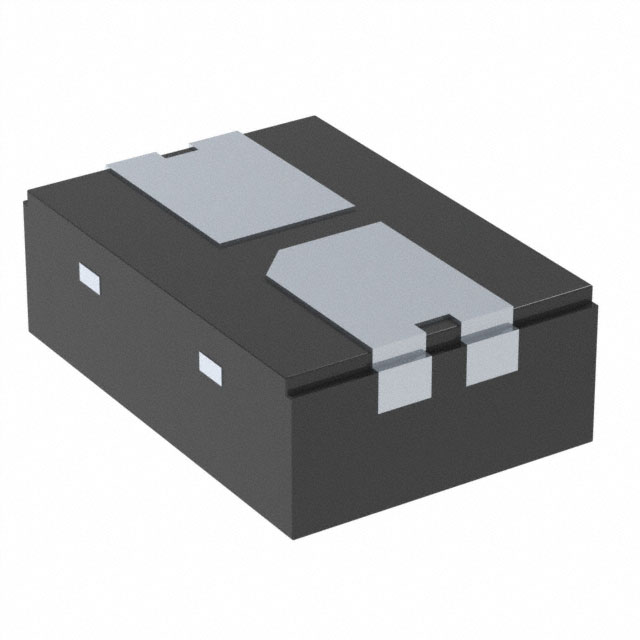
- Part No.:
- LMT01QDQXRQ1
- Manufacturer:
- Texas Instruments
- Category:
- Analog and Digital Output
- Package:
- 2-WDFN
- Datasheet:
-
 LMT01QDQXRQ1.pdf
- Description:
- SENSOR DIGITAL -40C-125C 2WSON
- Quantity:
- Payment:

- Shipping:

Inventory:1,391
Please send an inquiry. Send us your inquiry, and we will respond immediately.
Product details
Overview
LMT01QDQXRQ1 from Texas Instruments is a high-accuracy, AEC-Q100 Grade 1 qualified 2-pin digital temperature sensor with pulse-count current-loop output, ±0.5°C max accuracy from –20°C to 90°C, 0.0625°C resolution, and 88 kHz pulse frequency-designed for automotive battery management and engine control systems where EMI immunity and minimal GPIO resource usage are critical.
For engineers reviewing the LMT01QDQXRQ1 datasheet, LMT01QDQXRQ1 pinout, LMT01QDQXRQ1 application, or LMT01QDQXRQ1 equivalent, this page delivers verified technical context, real-world timing behavior, package-specific thermal response, GPIO-compatible interface design guidance, and validated alternative options for automotive-grade temperature sensing.
Technical Context
The LMT01QDQXRQ1 uses an internal thermal diode, ΣΔ ADC, and regulated current-output stage to convert junction temperature into a proportional pulse count. Its output toggles between 34 µA (low) and 125 µA (high) at ~88 kHz, with total conversion + transmission time ≤104 ms and continuous 100-ms update rate.
It operates across VP–VN = 2.15 V to 5.5 V, supports floating supply architecture, and features integrated EMI suppression. The WSON (DQX) package enables compact PCB layout with wettable flanks, and its 1.70 mm × 2.50 mm footprint is optimized for space-constrained automotive modules.
Key Specifications
| Parameter | Value and Actual Design Meaning |
|---|---|
| Accuracy (–20°C to 90°C) | ±0.5°C maximum - enables direct replacement of calibrated thermistors without system-level compensation |
| Resolution | 0.0625°C per pulse - allows precise thermal monitoring in battery cell voltage derating and ADAS thermal throttling |
| Pulse frequency | 82–94 kHz typical - ensures reliable detection using standard MCU timer capture or comparator input |
| Conversion + transmission time | ≤104 ms - guarantees deterministic timing for real-time thermal safety checks in ISO 26262 ASIL-B systems |
| Operating temperature range | –40°C to +125°C - qualified for under-hood engine control and powertrain applications |
| Supply voltage range (VP–VN) | 2.15 V to 5.5 V - supports direct connection to 3.3 V or 5 V rails without external regulation |
| Thermal response (stirred oil) | 0.4 s to 63% - enables fast transient detection in coolant or oil temperature feedback loops |
Pinout & Package
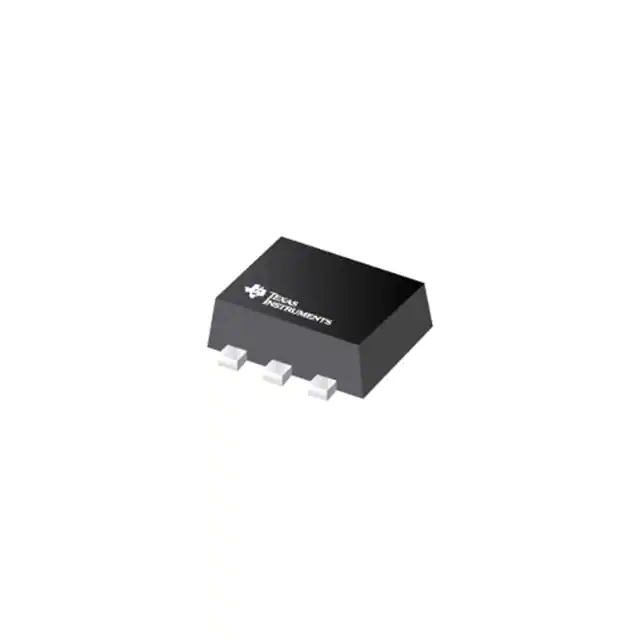
Package: WSON (DQX), 1.70 mm × 2.50 mm, 2-pin, wettable flanks - optimized for automated optical inspection and high-reliability automotive reflow.
| Pin/Terminal | Circuit Role | Design Meaning |
|---|---|---|
| VP | Positive voltage terminal | Connects to system supply or bias resistor; regulates internal chip VDD for ADC and logic stability |
| VN | Negative voltage terminal | Serves as current-sink output node; forms pulse-count current loop with VP - no ground reference required |
Key Features
| Feature | Design Value |
|---|---|
| 2-pin pulse-count interface | Eliminates need for dedicated ADC channel or I²C/SPI bus - reduces BOM count and firmware overhead in MCU-limited designs |
| AEC-Q100 Grade 1 qualification | Validated for –40°C to +125°C operation with HBM ±2000 V and CDM ±750 V ESD robustness - meets automotive electronics reliability requirements |
| EMI-immune current-loop output | Immune to noise coupling on long wires up to 2 m - enables offboard probe integration without shielding or differential receivers |
| Low-voltage operation (2.15 V min) | Supports direct interface with low-power microcontrollers and battery-backed systems - extends operational window during brown-out conditions |
| WSON package with wettable flanks | Enables 100% solder joint inspection via AOI - improves manufacturing yield and field reliability in automotive production |
Applications
| Battery Management Systems | Engine Control Units |
|---|---|
Use Scenario: Monitoring individual Li-ion cell temperature in 48 V mild-hybrid battery packs with wire lengths up to 2 m. IC Role / Device Role / Timing Role: Provides isolated, noise-immune digital temperature data via pulse count to MCU GPIO - no ADC or communication peripheral required. Use Value: Enables cell-level thermal derating and overtemperature cutoff within <104 ms, meeting ASIL-B thermal safety reaction time targets. |
Use Scenario: Measuring cylinder head or exhaust manifold temperature in gasoline direct injection engines. IC Role / Device Role / Timing Role: Acts as a rugged, floating-point temperature transducer interfaced directly to engine control MCU comparator input. Use Value: Delivers ±0.5°C accuracy across –40°C to +125°C without calibration - improves air-fuel ratio control and knock mitigation algorithms. |
| HVAC Blower Motor Control | ADAS Radar Module Thermal Monitoring |
Use Scenario: Sensing motor winding temperature in automotive HVAC blower assemblies exposed to cabin ambient extremes. IC Role / Device Role / Timing Role: Serves as compact, 2-pin thermal feedback element mounted directly on motor PCB with minimal trace area. Use Value: Supports real-time thermal foldback to prevent insulation breakdown - enabled by 0.4 s stirred-oil thermal response and WSON package thermal performance. |
Use Scenario: Monitoring RF IC die temperature inside sealed radar front-end modules operating near 77 GHz. IC Role / Device Role / Timing Role: Functions as embedded, EMI-hardened temperature sensor with floating supply - immune to RF coupling on shared power rails. Use Value: Maintains ±0.625°C accuracy at 120°C - ensures stable phase calibration and prevents thermal drift-induced false object detection. |
Equivalent & Alternatives
The following parts are listed as comparable options for similar digital-output temperature sensing applications.
| Alternative Part | Technical Difference | Application Difference | Selection Advice |
|---|---|---|---|
| LM71QIMF/NOPB | 12-bit SPI output, 3-pin package, ±1.5°C accuracy, 0.0625°C LSB - requires dedicated SPI peripheral and external VDD/GND | Used in infotainment and body control modules where SPI bandwidth and multi-sensor daisy-chaining are prioritized | Select when system already uses SPI sensors and higher accuracy tolerance is acceptable; not drop-in due to interface and pin count mismatch |
| MAX31820MUA+ | 1-Wire interface, TO-92 package, ±0.5°C accuracy, 0.0625°C resolution - requires parasitic power or separate VDD, slower 200+ ms conversion | Favored in legacy industrial controllers with existing 1-Wire infrastructure and lower update-rate requirements | Choose for retrofit compatibility with 1-Wire master devices; avoid in time-critical automotive applications due to longer latency |
Compared with LM71QIMF/NOPB and MAX31820MUA+, the LMT01QDQXRQ1 uniquely combines AEC-Q100 Grade 1 qualification, 2-pin simplicity, sub-105 ms deterministic timing, and EMI-hardened current-loop output - making it the only option qualified for new automotive powertrain and ADAS thermal sensing designs requiring zero-ADC, zero-communication-peripheral implementation.
Availability
LMT01QDQXRQ1 is available at Aetrix Electronics and suitable for automotive battery management systems, engine control units, HVAC blower motor control, and ADAS radar module thermal monitoring requiring stable component supply across extended product lifecycles.
Supply support for LMT01QDQXRQ1 includes scheduled delivery planning, volume procurement assistance, BOM continuity management, traceable sourcing, and lifecycle availability coordination for OEM customers, industrial embedded developers, connected-device designers, and electronics production programs.
Manufacturer
Texas Instruments is a global semiconductor company specializing in analog and embedded processing technologies, with leadership in automotive, industrial, and power management solutions.
The LMT01QDQXRQ1 belongs to TI's AEC-Q100-qualified precision temperature sensor family, designed specifically for automotive subsystems demanding high accuracy, EMI resilience, and minimal MCU resource usage in harsh environments.
FAQ
What is the maximum wire length supported by the LMT01QDQXRQ1 pulse-count interface?
The LMT01QDQXRQ1 supports up to 2 meters of wire length in two-wire probe configurations. This capability relies on its current-loop output architecture and integrated EMI suppression, which maintain signal integrity without requiring shielded cable or differential receivers - confirmed in TI's Application Report SBAA242 for automotive wiring harness implementations.
Does the LMT01QDQXRQ1 require a ground connection to operate?
No, the LMT01QDQXRQ1 does not require a ground connection. It operates as a floating 2-pin device with VP and VN terminals forming a current loop - enabling isolation from system ground and simplifying installation in electrically noisy or high-common-mode-noise environments such as motor drives and battery packs.
How is temperature calculated from the pulse count output of the LMT01QDQXRQ1?
Temperature is derived from pulse count (PC) using linear interpolation of the WSON/DQX Pulse Count to Temperature LUT in the datasheet (Section 6.7), achieving ±0.5°C accuracy. A simplified first-order equation Temp = (PC/4096 × 256°C) – 50°C is provided but yields reduced accuracy outside –20°C to 80°C - TI explicitly recommends LUT interpolation for production automotive use.
What is the thermal response time of the LMT01QDQXRQ1 in still air?
The LMT01QDQXRQ1 exhibits a 9.4-second thermal response time to 63% of final value in still air, measured on the WSON (DQX) package per Section 6.5. This value reflects package-only thermal mass and is critical for evaluating suitability in low-airflow environments like enclosed ECUs or sealed radar housings.
Is the LMT01QDQXRQ1 compatible with 3.3 V microcontroller GPIO inputs?
Yes, the LMT01QDQXRQ1 is fully compatible with 3.3 V MCUs. Using a 10 kΩ pull-up resistor, its 34 µA–125 µA current output generates 340 mV–1.25 V voltage swing - easily interpreted by standard CMOS GPIO or comparator inputs. TI confirms this configuration in Figure 12 and Section 7.3.3 of the datasheet.
LMT01QDQXRQ1 Specifications
- Product attributes
- Attribute value
- Manufacturer:
- Texas Instruments
- Series:
- -
- Package/Case:
- 2-WDFN
- Packaging:
- Tape & Reel (TR)
- Product Status:
- Active
- Sensor Type:
- Digital, Local
- Sensing Temperature - Local:
- -40°C ~ 125°C
- Sensing Temperature - Remote:
- -
- Output Type:
- Pulse Count
- Voltage - Supply:
- 2V ~ 5.5V
- Resolution:
- 0.0625°C
- Features:
- -
- Accuracy - Highest (Lowest):
- ±0.5°C (±0.625°C)
- Test Condition:
- -20°C ~ 90°C (-40°C)
- Operating Temperature:
- -40°C ~ 125°C
- Mounting Type:
- Surface Mount, Wettable Flank
- Grade:
- Automotive
- Qualification:
- AEC-Q100
- Supplier Device Package:
- 2-WSON (1.7x2.5)
LMT01QDQXRQ1 FAQ
1.How can I place an order for LMT01QDQXRQ1 through Aetrix?
Please submit a Request for Quotation (RFQ) for LMT01QDQXRQ1 on Aetrix. Our sales agent will provide a competitive quotation and guide you through the order confirmation once you accept the terms.
2.Are the price and stock information for LMT01QDQXRQ1 reliable?
The price and inventory of LMT01QDQXRQ1 are updated periodically and may fluctuate due to market conditions. Stock and pricing data are typically refreshed every 24 hours. Quotation validity for LMT01QDQXRQ1 is usually 5 days.
3.What payment methods are accepted for LMT01QDQXRQ1?
We accept Wire Transfer, PayPal, Credit Card, Western Union, MoneyGram, and Escrow for LMT01QDQXRQ1 transactions.
Note: Certain payment methods may incur a processing fee.
4.How is shipping managed for LMT01QDQXRQ1?
LMT01QDQXRQ1 orders can be shipped via leading logistics carriers, including DHL, UPS, FedEx, TNT, or Registered Mail.
Once your LMT01QDQXRQ1 order is processed, you will receive an email with the shipment details and tracking number.
Note: Tracking information may take up to 24 hours to appear. Express delivery typically takes 3–5 business days.
5.How can I obtain technical support or documentation for LMT01QDQXRQ1?
For technical support, including LMT01QDQXRQ1 datasheets, pinout diagrams, or application guidance, please contact our engineering support team. They can provide detailed documentation and assistance for your LMT01QDQXRQ1 requirements.
6.How does Aetrix verify that LMT01QDQXRQ1 is sourced from the original manufacturer or authorized distributors?
All LMT01QDQXRQ1 products on Aetrix are procured from qualified distributors and authorized channels. Our dedicated quality assurance team conducts strict verification, including traceability checks and, if necessary, third-party testing. This ensures that LMT01QDQXRQ1 meets industry standards.
7.What is the process for return or replacement of LMT01QDQXRQ1?
All LMT01QDQXRQ1 units undergo pre-shipment inspection (PSI). If there is an issue with LMT01QDQXRQ1, returns or replacements are accepted under the following conditions:
1.Quantity discrepancies, incorrect items, or visible external defects (such as breakage or corrosion), acknowledged by Aetrix.
2.The issue is reported within 90 days of delivery.
3.The LMT01QDQXRQ1 part is unused and in its original packaging.
Return procedure for LMT01QDQXRQ1:
1.Submit a request within 90 days.
2.Obtain a Return Material Authorization (RMA) from Aetrix.
LMT01QDQXRQ1 Tags
-
MCP9700T-E/TT
Microchip Technology
-
MCP9700T-E/LT
Microchip Technology
-
MCP9701T-E/TT
Microchip Technology
-
MCP9701T-E/LT
Microchip Technology
-
TMP235A4DBZR
Texas Instruments
-
MCP9700AT-E/TT
Microchip Technology
-
MCP9700AT-E/LT
Microchip Technology
-
MCP9701AT-E/LT
Microchip Technology
-
MCP9701AT-E/TT
Microchip Technology
,TO-226_straightlead.jpg)
-
LM335Z
STMicroelectronics
-
TMP1075NDRLR
Texas Instruments
-
TMP1075DGKR
Texas Instruments
Tech Hub

A practical engineering guide to 3.3V and 5V logic compatibility, input thresholds, resistor dividers, translator ICs, MOSFET level shifting, I2C pull-ups, timing limits and power-sequencing risks.

The 74HC595 uses push-pull logic outputs, while the TPIC6B595 uses 50 V open-drain DMOS sinks for higher-power loads. This guide compares timing, current limits, 3.3 V interfacing, load wiring, thermal…

The 74HC595 converts serial data into eight stable parallel outputs. This guide covers pin functions, shift and storage timing, OE and MR behavior, drive-current limits, cascading, voltage compatibilit…

A technical comparison of level-sensitive latches and edge-triggered flip-flops, covering timing windows, setup and hold limits, master–slave operation, time borrowing, race-through, HDL inference and…

A D latch stores one bit while Enable controls when data can pass. This reference covers gate-level operation, truth tables, transparency, setup and hold timing, LE versus OE, common ICs and practical …

An SR latch stores one bit through cross-coupled feedback. This engineering reference covers NOR and NAND implementations, truth tables, forbidden-state recovery, gated operation, switch debouncing, fa…

Latch circuits retain one bit through feedback. This technical reference covers SR and D latches, truth tables, transparency, timing limits, latch-versus-flip-flop behavior, applications and common log…

An engineering guide to LED driver operation, constant-current and constant-voltage outputs, linear and switching topologies, dimming, IC selection, calculations, replacement compatibility, and fault c…

Operational amplifier guide covering op amp basics, feedback, ideal vs real op amps, common configurations, buffer circuits, offset, bias current, gain-bandwidth, slew rate, rail-to-rail limits and sel…

Jumper cables guide covering safe connection order, red and black clamp placement, final ground connection, cable gauge, length, clamp quality, copper vs CCA cables, jump starter comparison and battery…


