
 My Inquiry
 My Account


Texas Instruments LMX2531LQ1570E/NOPB
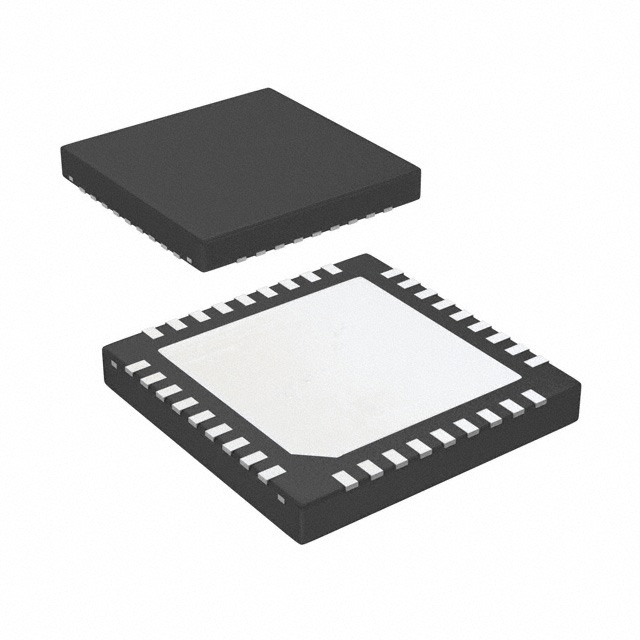
- Part No.:
- LMX2531LQ1570E/NOPB
- Manufacturer:
- Texas Instruments
- Package:
- 36-WFQFN Exposed Pad
- Datasheet:
-
 LMX2531LQ1570E/NOPB.pdf
- Description:
- IC FREQ SYNTH 36WQFN
- Quantity:
- Payment:

- Shipping:

Inventory:2,488
Please send an inquiry. Send us your inquiry, and we will respond immediately.
Product details
Overview
LMX2531LQ1570E/NOPB from Texas Instruments is a high-performance fractional-N delta-sigma PLL frequency synthesizer with integrated VCO, operating in the 1530–1636 MHz high-band and 765–818 MHz low-band ranges. It delivers ultra-low phase noise (–93 dBc/Hz @ 10 kHz offset at 1583 MHz), supports 1.8-V MICROWIRE serial interface, and integrates LDOs for PLL/VCO supply-noise immunity. It serves as a local oscillator in wireless radios and broadband access equipment.
For engineers reviewing the LMX2531LQ1570E/NOPB datasheet, LMX2531LQ1570E/NOPB pinout, LMX2531LQ1570E/NOPB application, or LMX2531LQ1570E/NOPB equivalent, key selection criteria include its dual-band VCO tuning range, FastLock capability with timeout, programmable fourth-order delta-sigma modulator, integrated loop filter support, and 36-pin WQFN package with dedicated Vtune, CPout, and Ftest/LD monitoring pins.
Technical Context
The LMX2531LQ1570E/NOPB implements a fully integrated delta-sigma PLL architecture with a programmable fourth-order modulator to suppress fractional spurs and enable fine frequency resolution. Its VCO includes an on-die tank inductor and adjustable third/fourth poles for optimized loop stability across its 1530–1636 MHz high-band output range.
It features three independent LDOs-VregPLL1, VregVCO, and VregBUF-each internally regulated and externally bypassed, providing supply-noise rejection critical for low-phase-noise RF synthesis. The MICROWIRE interface (DATA/CLK/LE/CE) enables register configuration with precise timing requirements (e.g., tCS ≥25 ns, tCWH ≥25 ns).
Key Specifications
| Parameter | Value and Actual Design Meaning |
|---|---|
| Output Frequency Range | 1530–1636 MHz (high-band); 765–818 MHz (low-band) - defines usable RF LO generation window without external dividers |
| Phase Noise @ 10 kHz | –93 dBc/Hz @ 1583 MHz - enables high-sensitivity receivers by minimizing reciprocal mixing |
| Vtune Sensitivity (KVtune) | 4–7 MHz/V - determines loop filter component values and tuning linearity across band |
| Supply Voltage | 2.8–3.2 V - compatible with standard 3.0-V system rails; requires local bypassing per power domain |
| Power Consumption | 37–46 mA (divider enabled) - impacts thermal design and battery life in portable RF systems |
| MICROWIRE Interface | 1.8-V logic compatible - allows direct connection to low-voltage microcontrollers without level shifters |
| Max Temp Drift for Lock | ±90 °C - specifies allowable ambient temperature swing before R0 reload required to maintain lock |
Pinout & Package
The LMX2531LQ1570E/NOPB is housed in a 36-pin 6 mm × 6 mm × 0.8 mm WQFN package (NJG0036A variant), with exposed thermal pad for enhanced heat dissipation and GND connections on pins 3, 19, 20, and 34.
| Pin/Terminal | Circuit Role | Design Meaning |
|---|---|---|
| CPout (24) | Charge pump output | Drives external passive loop filter; must be isolated from Vtune via RC network for stable PLL operation |
| Vtune (23) | VCO tuning voltage input | Accepts filtered CPout voltage; sensitivity of 4–7 MHz/V dictates loop bandwidth and settling time |
| Fout (21) | Buffered RF output | Delivers 1530–1636 MHz signal into 50-Ω load at +1 to +6 dBm; requires AC coupling and impedance matching |
| Ftest/LD (30) | Lock detect multiplexed output | CMOS-level indicator of PLL lock status; used for system fault detection and startup sequencing |
| DATA/CLK/LE/CE (8,9,10,11) | MICROWIRE serial interface | Configures all registers; CE enables power-up, LE latches data, CLK clocks MSB-first 24-bit words |
Key Features
| Feature | Design Value |
|---|---|
| Fractional-N Delta-Sigma Modulator | Programmable up to fourth order - reduces fractional spurs and enables sub-Hz frequency resolution |
| Integrated VCO Tank Inductor | Eliminates external inductor - reduces BOM count, layout area, and tuning variability across production |
| FastLock with Timeout | Reduces frequency acquisition time and prevents infinite lock attempts - improves system boot speed and reliability |
| Dual Independent LDOs | VregPLL1 and VregVCO provide >60 dB PSRR - isolates sensitive analog blocks from digital switching noise |
| Adjustable Loop Filter Poles | Third and fourth poles integrated and configurable - simplifies loop compensation for varying VCO gain and reference frequencies |
Applications
| Cellular Base Stations | Wireless LANs |
|---|---|
Use Scenario: Local oscillator generation for up/down conversion in macrocell and small-cell transceivers operating in 700–900 MHz bands. IC Role / Device Role / Timing Role: Primary frequency synthesizer providing clean, stable LO signals synchronized to baseband clock. Use Value: –93 dBc/Hz phase noise at 10 kHz offset minimizes adjacent-channel interference in dense spectral environments. | Use Scenario: Channel-select LO source in 802.11ac/a/n access points supporting 5 GHz UNII bands. IC Role / Device Role / Timing Role: Programmable RF synthesizer enabling rapid channel hopping and DFS compliance. Use Value: FastLock feature achieves sub-100 µs frequency settling, meeting IEEE 802.11h radar detection timing constraints. |
| Broadband Wireless Access | Satellite Communications |
Use Scenario: LO generation for point-to-multipoint microwave backhaul links in 7–8 GHz licensed bands. IC Role / Device Role / Timing Role: High-stability synthesizer driving upconverter mixers with minimal close-in phase jitter. Use Value: Integrated VCO tank and LDOs ensure consistent performance across –40°C to +85°C without recalibration. | Use Scenario: Reference clock synthesis for L-band downconverters in mobile satellite terminals (e.g., Inmarsat, Iridium). IC Role / Device Role / Timing Role: Low-power, radiation-tolerant frequency source for telemetry and command receivers. Use Value: 7 µA power-down current enables long-term standby operation during orbital eclipse periods. |
Equivalent & Alternatives
The following parts are listed as comparable options for similar frequency synthesizer applications.
| Alternative Part | Technical Difference | Application Difference | Selection Advice |
|---|---|---|---|
| LMX2531LQ1515E/NOPB | 1450–1580 MHz high-band; lower KVtune (4–7 MHz/V same), identical package and interface | Optimized for 1.45–1.58 GHz LTE Band 17/18/20; narrower high-band than LMX2531LQ1570E/NOPB | Select when targeting 1.45–1.58 GHz with identical footprint and software compatibility |
| LMX2531LQ1650E/NOPB | 1590–1700 MHz high-band; same phase noise performance and power consumption | Supports 1.59–1.70 GHz WiMAX and 5G NR n77; extends upper frequency beyond LMX2531LQ1570E/NOPB | Select when requiring >1636 MHz output without external multiplication |
Compared with LMX2531LQ1515E/NOPB and LMX2531LQ1650E/NOPB, the LMX2531LQ1570E/NOPB fills the 1530–1636 MHz gap with identical architecture, enabling seamless band coverage across 1.45–1.70 GHz without changing PCB layout or firmware.
Availability
LMX2531LQ1570E/NOPB is available at Aetrix Electronics and suitable for cellular base stations, wireless LAN infrastructure, and broadband wireless access equipment requiring stable component supply, long-term lifecycle support, and traceable sourcing.
Supply support for LMX2531LQ1570E/NOPB includes scheduled delivery planning, volume procurement assistance, BOM continuity management, traceable sourcing, and lifecycle availability coordination for OEM customers, industrial embedded developers, connected-device designers, and electronics production programs.
Manufacturer
Texas Instruments is a global semiconductor leader delivering analog and embedded processing solutions, with over 90 years of innovation in precision analog, RF, and power management technologies.
The LMX2531 product line delivers highly integrated, low-noise PLL+VCO synthesizers for wireless infrastructure and test equipment, designed to replace discrete PLL/VCO modules while maintaining superior phase noise and supply rejection.
FAQ
What frequency bands does the LMX2531LQ1570E/NOPB support?
The LMX2531LQ1570E/NOPB supports two distinct bands: a low-band range of 765–818 MHz and a high-band range of 1530–1636 MHz. These ranges are fixed per device variant and cannot be extended beyond specification. The high-band output is generated directly by the integrated VCO, while the low-band is achieved using an internal divider. Both bands are validated across –40°C to +85°C ambient temperature with full electrical characterization in the official TI datasheet SNAS252S.
Does the LMX2531LQ1570E/NOPB require external loop filter components?
Yes, the LMX2531LQ1570E/NOPB requires an external passive loop filter between CPout (Pin 24) and Vtune (Pin 23). Although the device integrates adjustable third and fourth poles, the primary RC network-including resistors and capacitors-is external and must be designed based on the target loop bandwidth, phase margin, and VCO gain (KVtune = 4–7 MHz/V). TI provides design tools and reference schematics to calculate optimal component values for specific stability and settling-time requirements.
What is the function of the Ftest/LD pin on the LMX2531LQ1570E/NOPB?
The Ftest/LD pin (Pin 30) on the LMX2531LQ1570E/NOPB is a multiplexed CMOS output that defaults to lock-detect functionality. When configured via register settings, it asserts a high signal once the PLL achieves frequency and phase lock, providing real-time status for system initialization and fault monitoring. It can also be repurposed as a general-purpose test output for internal node observation during debug, but lock detection is its primary operational mode in production systems.
Can the LMX2531LQ1570E/NOPB operate with a 1.8-V digital interface supply?
Yes, the LMX2531LQ1570E/NOPB supports 1.8-V MICROWIRE serial interface operation on DATA (Pin 8), CLK (Pin 9), LE (Pin 10), and CE (Pin 11). Input voltage thresholds are specified for VIH ≥1.6 V and VIL ≤0.4 V, ensuring reliable communication with 1.8-V microcontrollers without level-shifting circuitry. All timing parameters-including tCS ≥25 ns and tCWH ≥25 ns-are guaranteed under these conditions, as verified in the SNAS252S datasheet Section 7.6.
How does temperature affect lock stability in the LMX2531LQ1570E/NOPB?
The LMX2531LQ1570E/NOPB maintains continuous lock across ±90 °C ambient temperature drift from the point of last R0 register programming. Beyond this drift, the VCO calibration routine must be re-executed by reloading R0 to retain lock-this is not a failure but a defined operational behavior. The device remains functional across the full –40°C to +85°C range; however, exceeding the ±90 °C drift threshold triggers a required recalibration step to compensate for VCO center-frequency drift due to temperature-dependent varactor capacitance.
LMX2531LQ1570E/NOPB Specifications
- Product attributes
- Attribute value
- Manufacturer:
- Texas Instruments
- Series:
- -
- Package/Case:
- 36-WFQFN Exposed Pad
- Packaging:
- Tape & Reel (TR)
- Product Status:
- Active
- Programmable:
- Not Verified
- Type:
- Frequency Synthesizer (RF)
- PLL:
- Yes
- Input:
- Clock
- Output:
- CMOS
- Number of Circuits:
- 1
- Ratio - Input:Output:
- 2:2
- Differential - Input:Output:
- No/No
- Frequency - Max:
- 1.636GHz
- Divider/Multiplier:
- Yes/No
- Voltage - Supply:
- 2.8V ~ 3.2V
- Operating Temperature:
- -40°C ~ 85°C
- Mounting Type:
- Surface Mount
- Grade:
- -
- Qualification:
- -
- Supplier Device Package:
- 36-WQFN (6x6)
LMX2531LQ1570E/NOPB FAQ
1.How can I place an order for LMX2531LQ1570E/NOPB through Aetrix?
Please submit a Request for Quotation (RFQ) for LMX2531LQ1570E/NOPB on Aetrix. Our sales agent will provide a competitive quotation and guide you through the order confirmation once you accept the terms.
2.Are the price and stock information for LMX2531LQ1570E/NOPB reliable?
The price and inventory of LMX2531LQ1570E/NOPB are updated periodically and may fluctuate due to market conditions. Stock and pricing data are typically refreshed every 24 hours. Quotation validity for LMX2531LQ1570E/NOPB is usually 5 days.
3.What payment methods are accepted for LMX2531LQ1570E/NOPB?
We accept Wire Transfer, PayPal, Credit Card, Western Union, MoneyGram, and Escrow for LMX2531LQ1570E/NOPB transactions.
Note: Certain payment methods may incur a processing fee.
4.How is shipping managed for LMX2531LQ1570E/NOPB?
LMX2531LQ1570E/NOPB orders can be shipped via leading logistics carriers, including DHL, UPS, FedEx, TNT, or Registered Mail.
Once your LMX2531LQ1570E/NOPB order is processed, you will receive an email with the shipment details and tracking number.
Note: Tracking information may take up to 24 hours to appear. Express delivery typically takes 3–5 business days.
5.How can I obtain technical support or documentation for LMX2531LQ1570E/NOPB?
For technical support, including LMX2531LQ1570E/NOPB datasheets, pinout diagrams, or application guidance, please contact our engineering support team. They can provide detailed documentation and assistance for your LMX2531LQ1570E/NOPB requirements.
6.How does Aetrix verify that LMX2531LQ1570E/NOPB is sourced from the original manufacturer or authorized distributors?
All LMX2531LQ1570E/NOPB products on Aetrix are procured from qualified distributors and authorized channels. Our dedicated quality assurance team conducts strict verification, including traceability checks and, if necessary, third-party testing. This ensures that LMX2531LQ1570E/NOPB meets industry standards.
7.What is the process for return or replacement of LMX2531LQ1570E/NOPB?
All LMX2531LQ1570E/NOPB units undergo pre-shipment inspection (PSI). If there is an issue with LMX2531LQ1570E/NOPB, returns or replacements are accepted under the following conditions:
1.Quantity discrepancies, incorrect items, or visible external defects (such as breakage or corrosion), acknowledged by Aetrix.
2.The issue is reported within 90 days of delivery.
3.The LMX2531LQ1570E/NOPB part is unused and in its original packaging.
Return procedure for LMX2531LQ1570E/NOPB:
1.Submit a request within 90 days.
2.Obtain a Return Material Authorization (RMA) from Aetrix.
LMX2531LQ1570E/NOPB Tags
-
CD74HCT4046AM96
Texas Instruments
-
MC14046BDWR2G
onsemi

-
501MILFT
Renesas
-
CD74HC7046AM
Texas Instruments
-
CDCVF2505PWR
Texas Instruments

-
RC19004A100GNL#KB0
Renesas
-
SI5351A-B-GTR
Skyworks Solutions Inc.
-
CY2305SXI-1T
Infineon Technologies
-
570BILFT
Renesas
-
CDCE913PWR
Texas Instruments
-
CY2305SXI-1HT
Infineon Technologies
-
DS1086LU+T
Analog Devices Inc./Maxim Integrated
Tech Hub

A practical engineering guide to 3.3V and 5V logic compatibility, input thresholds, resistor dividers, translator ICs, MOSFET level shifting, I2C pull-ups, timing limits and power-sequencing risks.

The 74HC595 uses push-pull logic outputs, while the TPIC6B595 uses 50 V open-drain DMOS sinks for higher-power loads. This guide compares timing, current limits, 3.3 V interfacing, load wiring, thermal…

The 74HC595 converts serial data into eight stable parallel outputs. This guide covers pin functions, shift and storage timing, OE and MR behavior, drive-current limits, cascading, voltage compatibilit…

A technical comparison of level-sensitive latches and edge-triggered flip-flops, covering timing windows, setup and hold limits, master–slave operation, time borrowing, race-through, HDL inference and…

A D latch stores one bit while Enable controls when data can pass. This reference covers gate-level operation, truth tables, transparency, setup and hold timing, LE versus OE, common ICs and practical …

An SR latch stores one bit through cross-coupled feedback. This engineering reference covers NOR and NAND implementations, truth tables, forbidden-state recovery, gated operation, switch debouncing, fa…

Latch circuits retain one bit through feedback. This technical reference covers SR and D latches, truth tables, transparency, timing limits, latch-versus-flip-flop behavior, applications and common log…

An engineering guide to LED driver operation, constant-current and constant-voltage outputs, linear and switching topologies, dimming, IC selection, calculations, replacement compatibility, and fault c…

Operational amplifier guide covering op amp basics, feedback, ideal vs real op amps, common configurations, buffer circuits, offset, bias current, gain-bandwidth, slew rate, rail-to-rail limits and sel…

Jumper cables guide covering safe connection order, red and black clamp placement, final ground connection, cable gauge, length, clamp quality, copper vs CCA cables, jump starter comparison and battery…


