
 My Inquiry
 My Account


Texas Instruments LMX9838SB/NOPB
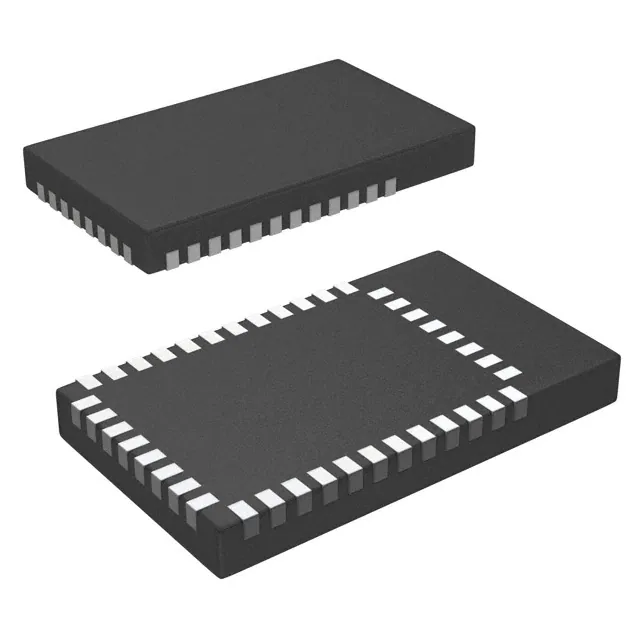
- Part No.:
- LMX9838SB/NOPB
- Manufacturer:
- Texas Instruments
- Category:
- RF Transceiver ICs
- Package:
- 70-LGA
- Datasheet:
-
 LMX9838SB/NOPB.pdf
- Description:
- IC RF TXRX+MCU BLUETOOTH 70LGA
- Quantity:
- Payment:

- Shipping:

Inventory:3,515
Please send an inquiry. Send us your inquiry, and we will respond immediately.
Product details
Overview
LMX9838SB/NOPB from Texas Instruments is a fully certified Bluetooth 2.0 serial port module integrating baseband controller, 2.4 GHz radio, on-board antenna, 32.768 kHz crystal oscillator, LDO regulator, CompactRISC processor, ROM, and Patch RAM in a single PLGA package. It delivers SPP-based cable replacement with UART interface up to 921.6 kbps, supports up to 7 active data links and 1 SCO link, and operates across –40°C to +85°C for industrial telematics and medical telemetry.
For engineers reviewing the LMX9838SB/NOPB datasheet, LMX9838SB/NOPB pinout, LMX9838SB/NOPB application, or LMX9838SB/NOPB equivalent, key selection criteria include FCC/CE/MIC regulatory certification, integrated Bluetooth stack (L2CAP/RFCOMM/SDP/GAP/SDAP/SPP), UART hardware flow control (RTS#/CTS#), 32 kHz low-power oscillator support, and configurable GPIOs (PG4/PG6/PG7) for link/RF status indication.
Technical Context
The LMX9838SB/NOPB implements Bluetooth 2.0+EDR baseband and link management using TI's CompactRISC 16-bit processor executing firmware from on-chip ROM and 16 kB Patch RAM. Its Digital Smart Radio employs a heterodyne receiver with 2 MHz IF, poly-phase BPF, hard limiters, and frequency discriminator, plus IQ-modulated transmitter with Gaussian filtering and integrated PA.
It integrates full RF path including antenna, on-die voltage regulator, and crystal oscillator - eliminating external RF matching or clock components. The module supports automatic slave operation, transparent UART mode, and host-controlled profile extension via configurable service database for DUN, HSP, FTP, OPP, and other SPP-dependent profiles.
Key Specifications
| Parameter | Value and Actual Design Meaning |
|---|---|
| Bluetooth Version | 2.0+EDR - Full compliance with Baseband, Link Manager, L2CAP, RFCOMM, SDP, GAP, SDAP, and SPP protocols. |
| RF Frequency Range | 2.402–2.480 GHz - Covers all 79 Bluetooth hop channels with adaptive frequency hopping at 1600 hops/sec. |
| Receiver Sensitivity | –80 dBm @ BER < 0.001 - Enables reliable short-range wireless communication in noisy industrial environments. |
| Transmit Output Power | –4 to +3 dBm - Class 2 operation supporting up to 10 m range without external PA or antenna tuning. |
| UART Max Baud Rate | 921.6 kbps - Supports high-throughput serial bridging for real-time data logging and POS terminal applications. |
| Operating Temperature | –40°C to +85°C - Qualified for factory automation, telematics, and medical/telemedicine deployments. |
| Supply Voltage Range | 2.5 V to 3.6 V (VCC), 1.8 V to 3.6 V (VCC_IO) - Compatible with common 3.3 V embedded systems and low-voltage microcontrollers. |
| Regulatory Certifications | FCC, IC, CE, Japan MIC - Pre-certified end-product; no additional RF testing or licensing required for integration. |
Pinout & Package
LMX9838SB/NOPB uses a 70-pin PLGA (NAW0070A) package measuring 17.00 mm × 10.00 mm × 2.0 mm, optimized for surface-mount assembly with underside lead grid array and thermal pad grounding.
| Pin/Terminal | Circuit Role | Design Meaning |
|---|---|---|
| TXD / RXD | UART Data Output / Input | Full-duplex serial interface to host MCU; supports 8N1/8E1/8O1 framing and DMA transfers. |
| RTS# / CTS# | Hardware Flow Control | Active-low handshake signals enabling reliable high-speed UART operation; CTS# must be grounded if unused. |
| RESET# | Asynchronous Reset Input | Active-low signal forcing complete radio/baseband reset; requires external pull-up for proper boot sequencing. |
| PG6 / PG7 | GPIO / Status Indication | Configurable as general-purpose I/O or default Link Status (PG6) and RF Traffic (PG7) LEDs - no external driver needed. |
| OP3 / OP4/PG4 / OP5 | Boot Configuration Inputs | Strapped pins setting UART baud rate (9.6/115.2/921.6 kbps) and transport layer options at power-up. |
| 32K+ / 32K– | 32.768 kHz Crystal Interface | Differential input for low-power oscillator enabling Sniff Mode current of 6.5 mA and extended battery life. |
| SCLK / SFS / STD / SRD | PCM Audio Interface | Full-duplex synchronous audio port supporting OKI MSM7717, Winbond W6813x, or PCM slave codecs. |
| VCC_CORE / VCC_IO / MVCC | Power Supply Inputs | Dedicated rails for core logic (1.8 V), I/O (1.8–3.6 V), and internal regulator input (3.0–3.6 V) - decoupling critical for RF stability. |
Key Features
| Feature | Design Value |
|---|---|
| Prequalified Bluetooth Stack | Firmware includes full GAP, SDAP, SPP, L2CAP, RFCOMM, and SDP - eliminates host-side protocol stack development and qualification effort. |
| Integrated RF Front-End | On-die antenna, LNA, mixer, IF filter, and PA - removes need for external RF components, impedance matching, or antenna calibration. |
| Configurable Service Database | Enables host-driven profile extension (e.g., DUN, HFP, OPP) via UART commands - supports custom service discovery without firmware reflash. |
| Low-Power Operation Modes | Sniff Mode (6.5 mA), Scanning (1.1 mA), and 32 kHz oscillator support - extends battery life in portable medical and data logging devices. |
| Hardware UART Flow Control | RTS#/CTS# handshake prevents buffer overflow during 921.6 kbps transparent mode - essential for lossless POS and test equipment interfaces. |
| Lead-Free & RoHS Compliant | NOPB suffix confirms Pb-free PLGA packaging meeting JEDEC J-STD-20C reflow standards - suitable for automotive and industrial production. |
Applications
| Factory Automation | Medical Telemetry |
|---|---|
Use Scenario: Wireless sensor node transmitting PLC status and analog readings to HMI panel over RS-232/RS-485 converter. IC Role / Device Role / Timing Role: Bluetooth serial bridge converting UART traffic to secure, low-latency RF link with automatic reconnection. Use Value: Eliminates wiring costs and enables rapid deployment in hazardous or rotating machinery zones without compromising EMI immunity. |
Use Scenario: Portable ECG monitor streaming real-time waveform data to nurse station tablet via SPP. IC Role / Device Role / Timing Role: Certified end-product node handling encrypted RFCOMM transport and automatic pairing per HIPAA-compliant workflow. Use Value: Reduces time-to-market by avoiding FCC/CE RF certification burden while maintaining clinical-grade data integrity and latency. |
| POS Terminals | Telematics Gateways |
Use Scenario: Credit card reader wirelessly relaying EMV transaction data to countertop terminal via UART. IC Role / Device Role / Timing Role: Secure SPP endpoint enforcing PIN entry encryption and session timeout policies before forwarding to host. Use Value: Achieves PCI PTS v6.0 compliance through integrated cryptographic boundary and tamper-resistant boot sequence. |
Use Scenario: In-vehicle OBD-II adapter aggregating CAN bus diagnostics and sending alerts to fleet manager smartphone. IC Role / Device Role / Timing Role: Dual-role master/slave node managing simultaneous connections to vehicle ECU (slave) and mobile app (master). Use Value: Supports 7 concurrent data links for multi-sensor aggregation and prioritized SCO voice channel for handsfree alerts. |
Equivalent & Alternatives
The following parts are listed as comparable options for similar Bluetooth serial port applications.
| Alternative Part | Technical Difference | Application Difference | Selection Advice |
|---|---|---|---|
| BLUENRG-M2SP | Bluetooth 5.0 LE only; no BR/EDR or SPP support; requires external host MCU for UART bridging. | Targets ultra-low-power sensor networks, not legacy RS-232/RS-485 replacement. | Select when BLE-only connectivity suffices and host handles profile logic. |
| BTM501-101 | Bluetooth 2.1+EDR module with identical SPP/UART functionality but larger 20 mm × 15 mm footprint and no integrated antenna. | Requires external antenna design and RF validation; suited for cost-sensitive non-certified designs. | Select only if board space allows larger module and regulatory budget permits additional certification. |
Compared with BLUENRG-M2SP and BTM501-101, the LMX9838SB/NOPB uniquely combines pre-certified BR/EDR SPP operation, integrated antenna, and compact 10 mm × 17 mm form factor - reducing BOM count by 12 components and eliminating RF compliance risk in industrial serial gateway designs.
Availability
LMX9838SB/NOPB is available at Aetrix Electronics and suitable for factory automation, medical telemetry, and telematics applications requiring stable component supply, long-term lifecycle assurance, and drop-in replacement capability for legacy Bluetooth modules.
Supply support for LMX9838SB/NOPB includes scheduled delivery planning, volume procurement assistance, BOM continuity management, traceable sourcing, and lifecycle availability coordination for OEM customers, industrial embedded developers, connected-device designers, and electronics production programs.
Manufacturer
Texas Instruments is a global semiconductor leader specializing in analog, embedded processing, and wireless connectivity solutions, with decades of RF design expertise and broad industrial qualification.
The LMX9838SB/NOPB belongs to TI's certified Bluetooth module product line, engineered specifically for seamless integration into industrial serial gateways, medical telemetry systems, and point-of-sale terminals without requiring RF engineering resources.
FAQ
Is LMX9838SB/NOPB a standalone Bluetooth module or does it require an external host processor?
The LMX9838SB/NOPB is a fully standalone Bluetooth module containing its own CompactRISC 16-bit processor, ROM-based Bluetooth stack (GAP/SDAP/SPP/L2CAP/RFCOMM), and Patch RAM for firmware updates. It requires no external host processor to operate as a serial port replacement - only a UART-connected microcontroller or PC is needed for command configuration and data exchange. The LMX9838SB/NOPB handles all Bluetooth link management, packet formatting, and RF timing autonomously.
What regulatory certifications does LMX9838SB/NOPB hold, and can it be used as an end-product without further testing?
The LMX9838SB/NOPB is a pre-certified Bluetooth end-product with FCC (USA), IC (Canada), CE (Europe), and Japan MIC approvals - confirmed by QD ID B012394. It meets all RF emission, immunity, and spectrum usage requirements out-of-the-box. Engineers can integrate the LMX9838SB/NOPB directly into final products without additional RF testing, licensing, or certification costs, significantly accelerating time-to-market for medical, industrial, and consumer applications.
Does LMX9838SB/NOPB support both master and slave roles in Bluetooth connections?
Yes, the LMX9838SB/NOPB supports both master and slave roles. As a slave, it enables automatic connection to host devices (e.g., smartphones or PCs) using SPP. As a master, it can initiate inquiries, perform service discovery, and establish serial port connections with up to seven remote slaves simultaneously. The firmware provides a UART command interface to configure role behavior, link policies, and multipoint settings - making the LMX9838SB/NOPB suitable for bidirectional telematics and gateway applications.
What audio interfaces does LMX9838SB/NOPB support, and is external codec hardware required?
The LMX9838SB/NOPB features an Advanced Audio Interface (AAI) supporting full-duplex PCM with OKI MSM7717, Winbond W681310/W681360, or generic PCM slave codecs. It generates bit/frame clocks internally for master-mode operation. An external codec is required only when using non-integrated audio paths; the LMX9838SB/NOPB itself does not include an on-die audio codec. SCO link support is limited to one active channel, consistent with Bluetooth 2.0 specifications.
How is UART baud rate configured on LMX9838SB/NOPB, and what is the maximum supported speed?
The UART baud rate on LMX9838SB/NOPB is set at power-up via strapping of OP3, OP4/PG4, and OP5 pins - allowing selection of 9.6 kbps, 115.2 kbps, or 921.6 kbps without software configuration. The maximum supported speed is 921.6 kbps, verified under recommended operating conditions (VCC = 3.3 V, TA = +25°C). Hardware flow control (RTS#/CTS#) is strongly recommended at this rate to prevent data loss during sustained transmission.
LMX9838SB/NOPB Specifications
- Product attributes
- Attribute value
- Manufacturer:
- Texas Instruments
- Series:
- -
- Package/Case:
- 70-LGA
- Packaging:
- Tray
- Product Status:
- Discontinued at Digi-Key
- Programmable:
- Not Verified
- Type:
- TxRx + MCU
- RF Family/Standard:
- Bluetooth
- Protocol:
- Bluetooth v2.0
- Modulation:
- -
- Frequency:
- 2.4GHz
- Data Rate (Max):
- 704kbps
- Power - Output:
- 0dBm
- Sensitivity:
- -80dBm
- Memory Size:
- 16kB RAM
- Serial Interfaces:
- UART
- GPIO:
- 3
- Voltage - Supply:
- 2.5V ~ 3.6V
- Current - Receiving:
- 65mA
- Current - Transmitting:
- 65mA
- Operating Temperature:
- -40°C ~ 85°C
- Grade:
- -
- Qualification:
- -
- Supplier Device Package:
- 70-PLGA
LMX9838SB/NOPB FAQ
1.How can I place an order for LMX9838SB/NOPB through Aetrix?
Please submit a Request for Quotation (RFQ) for LMX9838SB/NOPB on Aetrix. Our sales agent will provide a competitive quotation and guide you through the order confirmation once you accept the terms.
2.Are the price and stock information for LMX9838SB/NOPB reliable?
The price and inventory of LMX9838SB/NOPB are updated periodically and may fluctuate due to market conditions. Stock and pricing data are typically refreshed every 24 hours. Quotation validity for LMX9838SB/NOPB is usually 5 days.
3.What payment methods are accepted for LMX9838SB/NOPB?
We accept Wire Transfer, PayPal, Credit Card, Western Union, MoneyGram, and Escrow for LMX9838SB/NOPB transactions.
Note: Certain payment methods may incur a processing fee.
4.How is shipping managed for LMX9838SB/NOPB?
LMX9838SB/NOPB orders can be shipped via leading logistics carriers, including DHL, UPS, FedEx, TNT, or Registered Mail.
Once your LMX9838SB/NOPB order is processed, you will receive an email with the shipment details and tracking number.
Note: Tracking information may take up to 24 hours to appear. Express delivery typically takes 3–5 business days.
5.How can I obtain technical support or documentation for LMX9838SB/NOPB?
For technical support, including LMX9838SB/NOPB datasheets, pinout diagrams, or application guidance, please contact our engineering support team. They can provide detailed documentation and assistance for your LMX9838SB/NOPB requirements.
6.How does Aetrix verify that LMX9838SB/NOPB is sourced from the original manufacturer or authorized distributors?
All LMX9838SB/NOPB products on Aetrix are procured from qualified distributors and authorized channels. Our dedicated quality assurance team conducts strict verification, including traceability checks and, if necessary, third-party testing. This ensures that LMX9838SB/NOPB meets industry standards.
7.What is the process for return or replacement of LMX9838SB/NOPB?
All LMX9838SB/NOPB units undergo pre-shipment inspection (PSI). If there is an issue with LMX9838SB/NOPB, returns or replacements are accepted under the following conditions:
1.Quantity discrepancies, incorrect items, or visible external defects (such as breakage or corrosion), acknowledged by Aetrix.
2.The issue is reported within 90 days of delivery.
3.The LMX9838SB/NOPB part is unused and in its original packaging.
Return procedure for LMX9838SB/NOPB:
1.Submit a request within 90 days.
2.Obtain a Return Material Authorization (RMA) from Aetrix.
LMX9838SB/NOPB Tags
-
ESP32-D0WD-V3
Espressif Systems
-
ESP8266EX
Espressif Systems

-
ESP32-S3
Espressif Systems
-
NRF24L01P-R7
Nordic Semiconductor ASA
-
NRF24L01P-R
Nordic Semiconductor ASA
-
ESP32-U4WDH
Espressif Systems
-
DA14531-00000OG2
Renesas
-
ESP32-C6FH4
Espressif Systems
-
DA14531-00000FX2
Renesas
-
NRF24L01P-T
Nordic Semiconductor ASA
-
NRF52810-QCAA-R
Nordic Semiconductor ASA
-
ESP32-S3FN8
Espressif Systems
Tech Hub

A practical engineering guide to 3.3V and 5V logic compatibility, input thresholds, resistor dividers, translator ICs, MOSFET level shifting, I2C pull-ups, timing limits and power-sequencing risks.

The 74HC595 uses push-pull logic outputs, while the TPIC6B595 uses 50 V open-drain DMOS sinks for higher-power loads. This guide compares timing, current limits, 3.3 V interfacing, load wiring, thermal…

The 74HC595 converts serial data into eight stable parallel outputs. This guide covers pin functions, shift and storage timing, OE and MR behavior, drive-current limits, cascading, voltage compatibilit…

A technical comparison of level-sensitive latches and edge-triggered flip-flops, covering timing windows, setup and hold limits, master–slave operation, time borrowing, race-through, HDL inference and…

A D latch stores one bit while Enable controls when data can pass. This reference covers gate-level operation, truth tables, transparency, setup and hold timing, LE versus OE, common ICs and practical …

An SR latch stores one bit through cross-coupled feedback. This engineering reference covers NOR and NAND implementations, truth tables, forbidden-state recovery, gated operation, switch debouncing, fa…

Latch circuits retain one bit through feedback. This technical reference covers SR and D latches, truth tables, transparency, timing limits, latch-versus-flip-flop behavior, applications and common log…

An engineering guide to LED driver operation, constant-current and constant-voltage outputs, linear and switching topologies, dimming, IC selection, calculations, replacement compatibility, and fault c…

Operational amplifier guide covering op amp basics, feedback, ideal vs real op amps, common configurations, buffer circuits, offset, bias current, gain-bandwidth, slew rate, rail-to-rail limits and sel…

Jumper cables guide covering safe connection order, red and black clamp placement, final ground connection, cable gauge, length, clamp quality, copper vs CCA cables, jump starter comparison and battery…


