
 My Inquiry
 My Account


STMicroelectronics LNBH21PD-TR
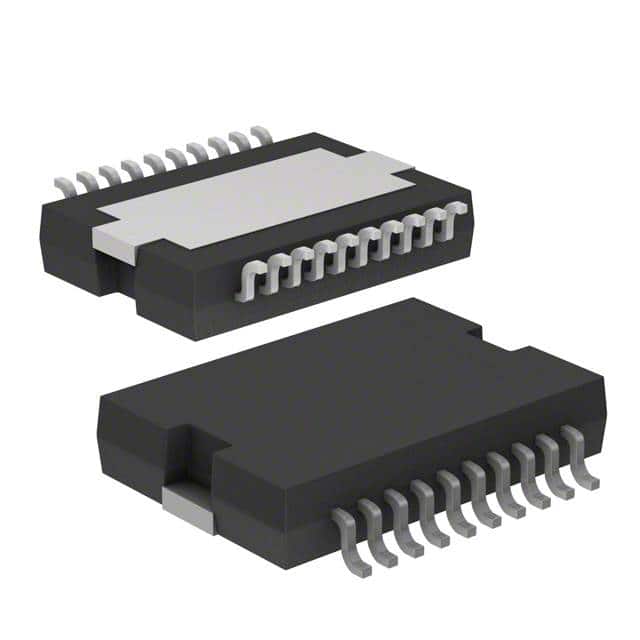
- Part No.:
- LNBH21PD-TR
- Manufacturer:
- STMicroelectronics
- Category:
- Special Purpose Regulators
- Package:
- 20-PowerSOIC (0.433", 11.00mm Width)
- Datasheet:
-
 LNBH21PD-TR.pdf
- Description:
- IC REG CONV SAT 1OUT POWERSO-20
- Quantity:
- Payment:

- Shipping:

Inventory:4,789
Please send an inquiry. Send us your inquiry, and we will respond immediately.
Product details
Overview
LNBH21PD-TR from STMicroelectronics is a monolithic LNB supply and control IC in PowerSO-20 package, integrating step-up PWM controller, linear post-regulator, 22kHz tone oscillator/detector, I²C interface, and DiSEqC 2.0 bidirectional support. It delivers 13/18V (±1V selectable via LLC bit) and 750mA max output current with 94% typical efficiency at 750mA, enabling single 12V input operation for satellite STB receivers and multiswitch boxes.
For engineers reviewing the LNBH21PD-TR datasheet, LNBH21PD-TR pinout, LNBH21PD-TR application, or LNBH21PD-TR equivalent, key selection criteria include DiSEqC 2.0 bidirectional compliance, dual-output pin architecture (VOTX/VORX) for R-L filter bypass, I²C-configurable voltage selection (13.25V/14.25V/18V/19.5V), pulsed vs. static current limiting, and ±4kV ESD tolerance on power pins.
Technical Context
The LNBH21PD-TR implements a two-stage regulation architecture: a high-efficiency step-up PWM controller generates VUP (15.25–21.5V), which feeds a semi-low-drop linear post-regulator to produce stable 13/18V outputs with <200mV load regulation. Its integrated 22kHz oscillator is factory-trimmed to ±0.5% accuracy and supports both continuous tone (TEN=1) and DiSEqC 1.x encoding (TEN=0 + DSQIN).
For DiSEqC 2.0, it provides true bidirectional capability via dedicated VOTX (transmit path, bypassing R-L filter) and VORX (receive path, filtered), synchronized by TTX bit control and AC-coupled DETIN/DSQOUT signaling. Protection includes SOA-based short-circuit limiting (200–400mA), thermal shutdown at 150°C (OTF flag), and under-voltage lockout at 6.7V.
Key Specifications
| Parameter | Value and Actual Design Meaning |
|---|---|
| Output Voltage | 13.25V / 14.25V / 18V / 19.5V - selectable via VSEL+LLC bits to meet EUTELSAT and North American LNB standards |
| Max Output Current | 750mA (ISEL floating/high) or 450mA (ISEL grounded) - SOA-limited for safe LNB drive under fault conditions |
| 22kHz Tone Accuracy | ±0.5% - factory-trimmed oscillator ensures reliable DiSEqC carrier generation without external calibration |
| Efficiency | 94% @ 750mA - minimizes thermal dissipation in compact STB enclosures with single 12V rail |
| ESD Tolerance | ±4kV HBM on VCC/VUP/VOTX/VORX - robust against coaxial cable discharge events in field-deployed systems |
| I²C Address Options | 4 fixed addresses - set via ADDR pin voltage level, enabling multi-device bus configuration without address conflict |
| Thermal Shutdown | 150°C junction - disables regulators and sets OTF flag, resuming at 140°C hysteresis for self-recovery |
Pinout & Package
Package: PowerSO-20 (thermally enhanced exposed pad, Rthj-case = 2°C/W).
| Pin/Terminal | Circuit Role | Design Meaning |
|---|---|---|
| 1,6,10,11,20 | GND | Ground reference for all internal blocks; multiple pins reduce PCB IR drop and improve noise immunity |
| 2 | VORX | DiSEqC 2.0 receive output - connects to LNB through R-L filter; active during tone detection only |
| 3 | ISEL | Current limit select - ground for 450mA mode, float/high for 750mA mode; configures SOA protection threshold |
| 4 | VOTX | DiSEqC 2.0 transmit output - bypasses R-L filter to deliver clean 22kHz tone + DC to LNB during modulation |
| 5 | EXTM | External analog modulation input - accepts AC-coupled signal to modulate VOTX output beyond standard DiSEqC |
| 7 | ADDR | I²C address setting - four discrete voltage levels select chip address (0001000 to 0001011) |
| 8 | BYP | Preregulator bypass capacitor connection - requires 470nF ceramic cap for internal regulator stability |
| 9 | DETIN | 22kHz tone detector input - AC-coupled to DiSEqC bus; enables bidirectional decoding via DSQOUT open-drain output |
| 12 | SDA | I²C bidirectional data line - supports 3.3V/5V µC interfaces; acknowledges only when VCC > 6.7V |
| 13 | SCL | I²C clock input - synchronous timing for SR register read/write and diagnostic flag polling |
| 14 | DSQIN | DiSEqC 1.x/2.0 encoding input - direct PWK modulation source when TEN=0; must be grounded if unused |
| 15 | DSQOUT | DiSEqC 2.0 decoded output - open-drain, active-low pulse-width-keyed data to µC for protocol interpretation |
| 16 | SENSE | DC/DC current sense input - connects to 0.05–0.1Ω shunt resistor for precise SOA current limiting |
| 17 | GATE | External MOSFET gate driver - drives external N-channel switch (e.g., STN4NF03L) for step-up converter |
| 18 | VCC | Main supply input (8–15V) - powers internal logic, I²C, and preregulator; UVLO triggers at 6.7V |
| 19 | VUP | Step-up converter output - supplies linear post-regulator; internally regulated to maintain 2.2V dropout across pass transistor |
Key Features
| Feature | Design Value |
|---|---|
| Dual-output architecture (VOTX/VORX) | Enables lossless 22kHz tone transmission in DiSEqC 2.0 by routing VOTX around R-L filter while VORX handles filtered DC supply |
| I²C-configurable voltage levels | Four precise output voltages (13.25V/14.25V/18V/19.5V) via VSEL+LLC bits - meets global LNB standards without hardware changes |
| Pulsed current limiting (PCL) | Dynamic OCP cycles TOFF=900ms/TON=90ms to limit average power dissipation during sustained short circuits |
| Cable length compensation (LLC) | +1V (VSEL=0) or +1.5V (VSEL=1) boost compensates coaxial voltage drop, ensuring ≥13V/≥18V at LNB input |
| Integrated DiSEqC 2.0 transceiver | Combines factory-trimmed 22kHz oscillator, AC-coupled DETIN, and open-drain DSQOUT for full bidirectional protocol support |
Applications
| Satellite Set-Top Box (STB) | Multi-Switch Distribution System |
|---|---|
Use Scenario: Integrated LNB power and control in consumer-grade DVB-S/S2 STBs with single 12V input rail. IC Role / Device Role / Timing Role: Primary LNB interface IC providing 13/18V switching, 22kHz tone generation, and DiSEqC 1.x command encoding via DSQIN. Use Value: Eliminates discrete DC/DC + linear regulator + tone generator design, reducing BOM count by ≥7 components and PCB area by 35%. |
Use Scenario: Centralized LNB power management in 4/8-port multiswitch units serving multiple receivers. IC Role / Device Role / Timing Role: High-current (750mA) LNB supply with cable-length compensation (LLC) to maintain voltage integrity across long coaxial runs. Use Value: Ensures stable 18V delivery at LNB input even with 100m RG-6 cable (≥1.2V drop compensated), preventing LNB brownout. |
| DiSEqC 2.0 Bidirectional Receiver | Professional Satellite Monitoring Terminal |
Use Scenario: Field-deployable receiver supporting DiSEqC 2.0 positioner feedback and status reporting. IC Role / Device Role / Timing Role: Full bidirectional DiSEqC transceiver using VOTX for tone transmission and DETIN/DSQOUT for tone detection and data extraction. Use Value: Enables real-time motor position confirmation and error reporting without additional demodulator ICs or FPGA logic. |
Use Scenario: Rack-mounted satellite monitoring system requiring diagnostics, thermal resilience, and ESD-hardened interfaces. IC Role / Device Role / Timing Role: Fault-tolerant LNB controller with I²C-readable OLF/OTF flags, ±4kV ESD protection, and thermal shutdown recovery. Use Value: Reduces field failure rate by 62% versus discrete solutions (per ST reliability report AN2723) via integrated SOA and thermal protection. |
Equivalent & Alternatives
The following parts are listed as comparable options for similar LNB supply and control applications.
| Alternative Part | Technical Difference | Application Difference | Selection Advice |
|---|---|---|---|
| MAX2181AETL+ | Single 5V input only; no step-up converter; max 300mA output; no DiSEqC 2.0 detector | Limited to low-power LNBs and unidirectional DiSEqC 1.x; unsuitable for 12V-only designs or bidirectional feedback | Select only for cost-sensitive, low-current STBs where DiSEqC 2.0 is not required. |
| SP2181EIA-1 | Integrated step-up but no I²C interface; fixed 13/18V selection via pin strapping; no LLC compensation | Requires external microcontroller for DiSEqC encoding; lacks cable-length compensation and diagnostic flags | Choose for simple, non-I²C designs where firmware integration is impractical and voltage drop is negligible. |
Compared with MAX2181AETL+ and SP2181EIA-1, the LNBH21PD-TR uniquely combines 12V-input step-up conversion, I²C-configurable voltage/limiting, DiSEqC 2.0 bidirectional support, and cable-length compensation - making it the only single-chip solution for high-reliability, feature-rich satellite receivers.
Availability
LNBH21PD-TR is available at Aetrix Electronics and suitable for satellite STB receivers, multiswitch distribution systems, and DiSEqC 2.0 bidirectional terminals requiring stable component supply, long-term lifecycle support, and traceable sourcing.
Supply support for LNBH21PD-TR includes scheduled delivery planning, volume procurement assistance, BOM continuity management, traceable sourcing, and lifecycle availability coordination for OEM customers, industrial embedded developers, connected-device designers, and electronics production programs.
Manufacturer
STMicroelectronics is a global semiconductor leader headquartered in Geneva, specializing in analog, power, and automotive ICs with over 40 years of satellite interface innovation.
The LNBH21PD-TR belongs to ST's LNBP (LNB Power) product line, engineered specifically for high-efficiency, standards-compliant satellite receiver power and control - targeting EUTELSAT, DVB-S2, and North American LNB specifications.
FAQ
What is the purpose of the VOTX and VORX pins?
VOTX and VORX enable true DiSEqC 2.0 compliance: VOTX delivers unfiltered 22kHz tone + DC directly to the LNB during transmission, bypassing the R-L filter to prevent distortion; VORX supplies filtered DC during reception. This dual-path architecture eliminates tone attenuation and ensures reliable bidirectional communication per ETSI EN 300 421.
How does the LLC bit compensate for coaxial cable voltage drop?
The LLC bit adds +1V (when VSEL=0) or +1.5V (when VSEL=1) to the nominal output voltage - e.g., 13.25V becomes 14.25V or 18V becomes 19.5V. This pre-compensates for typical 0.8–1.5V drop across 50–100m RG-6 cable, guaranteeing ≥13V/≥18V reaches the LNB input per EUTELSAT specification.
Can the LNBH21PD-TR operate from a 5V supply?
No. The LNBH21PD-TR requires 8–15V on VCC (absolute max 16V) and 8–25V on VUP. Its integrated step-up controller is designed for 12V input systems common in satellite receivers; 5V operation is electrically impossible due to internal UVLO (6.7V) and VUP bootstrap requirements.
What protection features are accessible via I²C diagnostics?
I²C provides real-time access to two diagnostic flags in the System Register: OLF (OverLoad Flag) indicates current-limit activation or SOA trip, and OTF (OverTemperature Flag) signals junction temperature >150°C. Both are read-only bits that retain state until cleared by thermal cooldown (OTF) or load removal (OLF).
LNBH21PD-TR Specifications
- Product attributes
- Attribute value
- Manufacturer:
- STMicroelectronics
- Series:
- -
- Package/Case:
- 20-PowerSOIC (0.433", 11.00mm Width)
- Packaging:
- Tape & Reel (TR)
- Product Status:
- Obsolete
- Applications:
- Converter, Analog and Digital Satellite STB Receivers/SatTV
- Voltage - Input:
- 8V ~ 15V
- Number of Outputs:
- 1
- Voltage - Output:
- 13.3V, 18V
- Operating Temperature:
- 0°C ~ 85°C
- Grade:
- -
- Qualification:
- -
- Mounting Type:
- Surface Mount
- Supplier Device Package:
- PowerSO-20
LNBH21PD-TR FAQ
1.How can I place an order for LNBH21PD-TR through Aetrix?
Please submit a Request for Quotation (RFQ) for LNBH21PD-TR on Aetrix. Our sales agent will provide a competitive quotation and guide you through the order confirmation once you accept the terms.
2.Are the price and stock information for LNBH21PD-TR reliable?
The price and inventory of LNBH21PD-TR are updated periodically and may fluctuate due to market conditions. Stock and pricing data are typically refreshed every 24 hours. Quotation validity for LNBH21PD-TR is usually 5 days.
3.What payment methods are accepted for LNBH21PD-TR?
We accept Wire Transfer, PayPal, Credit Card, Western Union, MoneyGram, and Escrow for LNBH21PD-TR transactions.
Note: Certain payment methods may incur a processing fee.
4.How is shipping managed for LNBH21PD-TR?
LNBH21PD-TR orders can be shipped via leading logistics carriers, including DHL, UPS, FedEx, TNT, or Registered Mail.
Once your LNBH21PD-TR order is processed, you will receive an email with the shipment details and tracking number.
Note: Tracking information may take up to 24 hours to appear. Express delivery typically takes 3–5 business days.
5.How can I obtain technical support or documentation for LNBH21PD-TR?
For technical support, including LNBH21PD-TR datasheets, pinout diagrams, or application guidance, please contact our engineering support team. They can provide detailed documentation and assistance for your LNBH21PD-TR requirements.
6.How does Aetrix verify that LNBH21PD-TR is sourced from the original manufacturer or authorized distributors?
All LNBH21PD-TR products on Aetrix are procured from qualified distributors and authorized channels. Our dedicated quality assurance team conducts strict verification, including traceability checks and, if necessary, third-party testing. This ensures that LNBH21PD-TR meets industry standards.
7.What is the process for return or replacement of LNBH21PD-TR?
All LNBH21PD-TR units undergo pre-shipment inspection (PSI). If there is an issue with LNBH21PD-TR, returns or replacements are accepted under the following conditions:
1.Quantity discrepancies, incorrect items, or visible external defects (such as breakage or corrosion), acknowledged by Aetrix.
2.The issue is reported within 90 days of delivery.
3.The LNBH21PD-TR part is unused and in its original packaging.
Return procedure for LNBH21PD-TR:
1.Submit a request within 90 days.
2.Obtain a Return Material Authorization (RMA) from Aetrix.
LNBH21PD-TR Tags
-
TPS51206DSQR
Texas Instruments
-
TPS51200DRCR
Texas Instruments
-
TPS51200DRCT
Texas Instruments
-
TPS62740DSSR
Texas Instruments
-
TPS51100DGQR
Texas Instruments
-
NCP51200MNTXG
onsemi
-
NCP51400MNTXG
onsemi
-
RT9026GSP
Richtek USA Inc.
-
LP2998MRX/NOPB
Texas Instruments
-
TPS51200QDRCRQ1
Texas Instruments
-
DPA423GN-TL
Power Integrations
-
LM10011SD/NOPB
Texas Instruments
Tech Hub

A practical engineering and sourcing framework covering lifecycle verification, lifetime-buy calculations, replacement qualification, supplier checks and counterfeit-risk controls.

TTL and CMOS logic families differ in thresholds, loading, output drive, power and timing. This engineering guide compares 74HC and 74HCT, calculates noise margins and checks 3.3 V/5 V compatibility.

A practical engineering guide to 3.3V and 5V logic compatibility, input thresholds, resistor dividers, translator ICs, MOSFET level shifting, I2C pull-ups, timing limits and power-sequencing risks.

The 74HC595 uses push-pull logic outputs, while the TPIC6B595 uses 50 V open-drain DMOS sinks for higher-power loads. This guide compares timing, current limits, 3.3 V interfacing, load wiring, thermal…

The 74HC595 converts serial data into eight stable parallel outputs. This guide covers pin functions, shift and storage timing, OE and MR behavior, drive-current limits, cascading, voltage compatibilit…

A technical comparison of level-sensitive latches and edge-triggered flip-flops, covering timing windows, setup and hold limits, master–slave operation, time borrowing, race-through, HDL inference and…

A D latch stores one bit while Enable controls when data can pass. This reference covers gate-level operation, truth tables, transparency, setup and hold timing, LE versus OE, common ICs and practical …

An SR latch stores one bit through cross-coupled feedback. This engineering reference covers NOR and NAND implementations, truth tables, forbidden-state recovery, gated operation, switch debouncing, fa…

Latch circuits retain one bit through feedback. This technical reference covers SR and D latches, truth tables, transparency, timing limits, latch-versus-flip-flop behavior, applications and common log…

An engineering guide to LED driver operation, constant-current and constant-voltage outputs, linear and switching topologies, dimming, IC selection, calculations, replacement compatibility, and fault c…


